
Introduction
TL;DR Your best hire is not on a job board today. She has a steady job. She likes her team. She has not updated her resume in two years. A recruiter who waits for applications will never meet her. A recruiter who reaches out will.
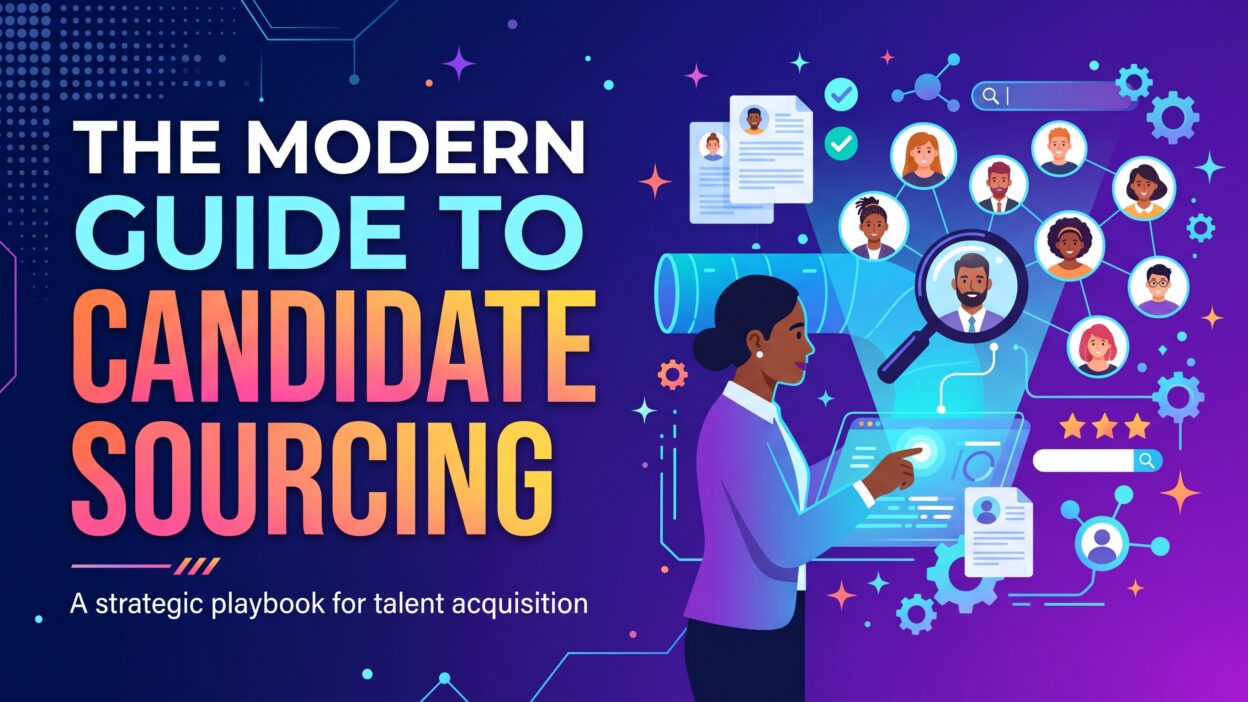
That gap explains why candidate sourcing sits at the center of modern hiring. Sourcing means finding people before they apply. It turns a passive wait into an active search. Good sourcers build pipelines. Strong pipelines fill roles faster and at lower cost.
Table of Contents
What Is Candidate Sourcing?
Candidate sourcing is the proactive search for people who could fill current or future roles. Sourcers find them, learn about them, and start a conversation. Many of these people never applied. Some do not plan to move yet. A good sourcer plants a seed and returns later.
The work blends research with salesmanship. You hunt for talent like a detective. You pitch the role like a marketer. Both skills matter.
Sourcing vs Recruiting
People use these words as if they mean the same thing. They do not. Sourcing covers the front of the funnel. A sourcer finds talent and makes first contact. Recruiting covers the whole journey. A recruiter screens, interviews, negotiates, and closes.
Small companies often give both jobs to one person. Large companies split them. A sourcer might run searches all day and hand warm leads to a recruiter. The split lets each person build deeper skill.
Active vs Passive Candidates
Active candidates apply to jobs. They read postings and send resumes. Passive candidates stay put. They work happily somewhere else. Surveys of workers often show that most professionals fall into the passive group. Your best options often sit outside your applicant pool.
Passive talent needs a different approach. You cannot post a job and wait. You must earn attention. You must show why a move makes sense. That takes research, patience, and a personal touch.
Why Candidate Sourcing Matters Now
Hiring has changed. Skilled workers have options. Strong candidates field several offers in one week. Companies that wait for applicants fight over the same small group. Companies that reach out meet people before the competition does.
Cost plays a role. Agencies charge a large share of first-year pay. A strong internal sourcing function trims that bill. Each hire a sourcer lands saves real money.
Speed matters just as much. Open roles drain productivity. Teams stretch thin. Managers lose patience. A ready pipeline cuts days or weeks from each search. Candidate sourcing gives you a bench of warm contacts before you need them.
Quality improves too. Inbound applicants include many poor fits. A sourcer picks people on purpose. Every conversation starts with someone who matches the brief.
Your brand gains as well. Thoughtful outreach tells people your company pays attention. Even those who say no remember the message. They may refer a friend or return next year.
The Best Channels for Finding Talent
No single channel wins every time. The right mix depends on the role. A nurse hides in different places than a software engineer. Test several sources and keep the ones that deliver.
Professional Networks
Professional networking sites hold hundreds of millions of profiles. Recruiters rely on them every day. Profiles show titles, skills, past employers, and sometimes interests. You can filter by location, industry, and seniority.
Spend time on profile quality. Candidates check you out before they reply. A clear photo, a strong headline, and a short pitch about your company build trust. An empty profile kills good outreach.
Job Boards and Resume Databases
Job boards still matter. Many databases let you search resumes, not just post roles. Some candidates keep their resumes live for years. Others update them only when they plan a move. Check the upload date before you reach out.
Niche boards often beat large ones. A board for finance professionals or for healthcare workers holds a focused audience. The pool is smaller. The fit is stronger.
Employee Referrals
Your own staff know talented people. Referred candidates often join faster and stay longer. They arrive with a realistic view of the company. They also trust the person who recommended them.
Make referrals easy. Share open roles every month. Give employees a short message they can forward. Pay bonuses promptly. Thank every person who tries, even when the match fails.
Talent Pools and Past Applicants
Your applicant tracking system holds a hidden asset. It stores thousands of past applicants. Many were strong people who lost out to someone slightly better. They already know your company. They already showed interest.
Search that database before you look elsewhere. Tag silver medalists. Keep notes on why they impressed you. Reach out when a fitting role opens. These contacts reply at higher rates than cold leads.
Communities and Social Media
Skilled people gather in online communities. Developers share code on open platforms. Designers post work on portfolio sites. Marketers swap ideas in group chats. Join these spaces and add value before you pitch.
Never spam a group. Answer questions. Share useful links. Build a reputation. Members notice when a recruiter shows real interest in the craft. Trust grows slowly and pays off for years.
Events and Campuses
Conferences, meetups, and job fairs put you face to face with talent. A five-minute talk beats a dozen emails. Collect contact details with permission. Follow up within two days while the conversation feels fresh.
Campuses supply early-career talent. Build relationships with professors and student clubs. Offer guest talks and workshops. Students remember the companies that helped them learn.
Boolean Search and Advanced Techniques
Boolean search turns a vague request into a precise query. You combine words with operators like AND, OR, and NOT. The engine follows your rules. You see a short list of relevant profiles instead of a flood.
Picture a request for a data engineer with cloud skills. You might type (“data engineer” OR “analytics engineer”) AND (AWS OR Azure) AND Python. That string covers title variations and the main tools. Add NOT intern to drop junior profiles. Add a city name to match the office.
Titles vary across companies. One firm says “software engineer.” Another says “member of technical staff.” OR operators catch both. Recruiters who skip them miss strong people.
Wildcards save effort. Typing manag* matches manager, managing, and management. Parentheses keep your logic in order. Always group your OR terms.
X-ray searches stretch the method further. You use a general search engine to scan a specific site. Typing site:example.com “product designer” Chicago searches only that site. This trick reaches profiles that internal search tools hide.
Practice builds speed. Save your best strings. Share them with teammates. A library of tested queries becomes a shared asset.
How to Build a Candidate Sourcing Strategy
Random effort wastes hours. A written plan keeps you focused. A strong candidate sourcing strategy answers three questions. Who do you need? Where do they live? How will you win their attention?
Define the Ideal Profile
Sit down with the hiring manager before you search. Ask what success looks like in the first year. Ask which skills matter most and which ones the team can teach. Push back on long wish lists. Few people hold fifteen must-have skills.
Write a one-page profile. List core skills, nice-to-have traits, likely titles, and target companies. Agree on it in writing. This step prevents wasted weeks later.
Build the Pipeline
A pipeline is a set of warm contacts for roles you fill often. Start before you have an urgent need. Keep a spreadsheet or use your applicant tracking system. Tag people by skill, location, and interest level.
Sort contacts into groups. Some are ready now. Some want to talk in six months. Some are long shots. Each group needs a different rhythm of contact. Check in with the warm ones quarterly. Share news, not pitches.
Set a Weekly Routine
Consistency beats bursts of effort. Block time on your calendar. Spend part of each day on research. Spend another part on outreach. Reserve time for follow-ups and notes.
Review your numbers every week. Look at reply rates, interviews booked, and hires made. Drop channels that fail. Double down on the ones that work. A small weekly adjustment adds up over a year.
Writing Outreach That Earns Replies
Great searching means nothing without a good message. Candidates see dozens of recruiter notes each month. Most read like templates. Yours must sound like a human wrote it.
The First Message
Keep it short. Four or five sentences work well. Open with something specific about the person. Mention a project, a talk, or a skill. That detail proves you did your homework.
Explain why you reached out. Name the role and one reason it might appeal to them. Think about what they care about. A senior engineer may want hard problems. A parent may want flexibility. Match the pitch to the person.
Close with a low-pressure ask. Offer a short call or a chance to learn more. Never demand a resume. Never bury them in job details. Respect their time and they will respect yours.
Write a clear subject line. Skip hype and all caps. A plain line like “Platform engineer role in Austin” beats “Amazing opportunity!!!”
Follow-Up Without Nagging
Most replies come after the second or third touch. People get busy. A single message often gets lost. Plan two or three follow-ups over two weeks. Add something new each time. Share a team update or a relevant article.
Stop when you hear no. Thank the person. Ask if you may stay in touch. Many later change their minds. Polite exits keep doors open.
Using AI and Automation in Candidate Sourcing
AI tools now touch almost every part of recruiting. They search databases, rank profiles, and draft messages. Used well, they give sourcers more hours in the day. Used poorly, they spread bad habits fast.
What AI Does Well
AI handles volume. It scans thousands of profiles in minutes. It spots matches that keyword filters miss. A model can see that “pastry chef” and “baker” overlap. It can also find similar people to your best past hires.
It speeds up drafting. A tool can write a first version of an outreach message. You edit it and add the personal detail. It can summarize long profiles into a few lines. It can schedule follow-ups and update records.
Many tools plug into your applicant tracking system. They sync notes, statuses, and contact history. That link keeps your data clean and your team aligned.
Where Humans Still Lead
AI cannot read a room. It cannot sense when a candidate hesitates. It cannot build real trust. Sourcers still need judgment, empathy, and curiosity.
Bias poses a real risk. Models learn from past data. Past data may favor certain schools, names, or backgrounds. Review results often. Ask vendors about audits. Keep humans in control of final choices.
Send nothing unread. A message written by a tool and sent without edits shows. Candidates notice generic phrases. Edit every note before it goes out. Check local laws on automated tools and candidate data too.
Building Diverse Talent Pipelines
Diverse teams make better decisions. They also reach wider markets. A narrow search produces a narrow team. Wider sourcing fixes that problem at the root.
Start by auditing your channels. Look at who your current sources reach. If every referral comes from the same circle, your pool stays the same. Add new channels on purpose. Partner with professional groups, community colleges, and veteran programs. Attend events that serve underrepresented groups.
Review your job descriptions. Long lists of requirements scare off many strong people. Studies suggest some groups apply only when they meet nearly every item. Trim the list to true needs. Use plain language. Drop jargon and gendered terms.
Widen your search terms. Skills matter more than pedigree. A self-taught developer may match a computer science graduate. Search for skills and projects, not only degrees and big-name employers.
Track the numbers at each stage. See who enters the pipeline, who moves forward, and who drops out. Gaps show where to fix the process. Share results with leaders and set clear goals.
Metrics That Show Your Sourcing Works
You cannot improve what you do not measure. Pick a few numbers and watch them closely. Too many metrics create noise.
Response rate shows how well your messages land. Divide replies by messages sent. A low rate points to weak targeting or weak writing. Test new subject lines and openers. Change one thing at a time.
Source of hire shows which channels produce people who join. Track it for every offer accepted. Some channels bring many leads and few hires. Others bring few leads and many hires. Spend your time where hires come from.
Time to fill measures days from role opening to accepted offer. Time to first contact measures how fast you reach a lead. Strong candidate sourcing shortens both numbers. Pipeline health shows how many warm contacts you hold for key roles.
Quality of hire matters most. Check performance ratings and retention after one year. Ask hiring managers for feedback. A fast hire who leaves in four months costs more than a slow hire who stays.
Share results in plain language. Use simple charts. Show trends over months. Leaders trust numbers they can read in thirty seconds.
Common Mistakes and How to Fix Them
Sending mass messages tops the list. Copy-and-paste notes get ignored. Personalize at least the opening lines. Quality beats quantity every time.
Searching too narrowly causes problems. Rigid title filters hide strong people with different labels. Use synonyms and skills. Read profiles instead of trusting a headline.
Ignoring the hiring manager creates friction. Sourcers who work alone often find the wrong people. Meet weekly. Share samples of profiles. Ask for fast feedback. Adjust the target together.
Neglecting your pipeline hurts later. Many teams chase leads only when a role opens. They start from zero each time. Keep notes and stay in touch. Warm contacts reply faster than strangers.
Poor candidate care damages your name. Silence after an interview feels rude. Send updates, even when the news is no. People talk. Reputation travels through every industry.
Skipping privacy rules invites trouble. Collect only the data you need. Tell people how you use it. Delete it on request. Follow the laws in each region where you hire.
Frequently Asked Questions
What is the difference between sourcing and recruiting?
Sourcing finds and contacts potential candidates. Recruiting manages the full process from screening to offer. Some companies split the roles. Others combine them.
What is the best tool for candidate sourcing?
No single tool wins for every team. Professional networks, resume databases, and AI search platforms all have strengths. Pick tools that match your roles, budget, and applicant tracking system. Run a short trial before you sign a contract.
How many messages should I send each day?
Quality matters more than volume. Many sourcers send twenty to forty personal messages a day. Adjust based on your response rate and the difficulty of the role.
What is a passive candidate?
A passive candidate has a job and is not actively searching. These people often make strong hires. They respond to thoughtful, relevant outreach.
How do I improve my response rate?
Personalize the opening. Keep the message short. Explain why the role fits the person. Offer a low-pressure next step. Test subject lines and track results.
Is Boolean search still worth learning?
Yes. AI tools help, but Boolean logic gives you control. You can build exact queries, repeat them, and teach them to others. Many top sourcers use both methods.
How long does it take to build a talent pipeline?
Expect three to six months for steady results. You need time to find people, start conversations, and build trust. Persistence pays off over the long run.
Can small companies compete with big brands?
Yes. Small companies offer faster growth, broader roles, and closer access to leaders. Share those strengths in every message. Many candidates want impact more than a famous logo.
What data should I keep in my talent pool?
Keep contact details, skills, role interest, and notes from past talks. Record when you last reached out. Store only what you need and follow privacy laws.
Read More:-How to Build a Sales Prospecting Workflow That Drives Pipeline
Conclusion

Great hiring starts before the job post goes live. Candidate sourcing gives you that head start. It builds a bench of talented people who already know your name. It cuts agency fees, shortens searches, and lifts the quality of every hire.
You now have a clear path. Define the ideal profile with your hiring manager. Search across many channels. Use Boolean strings to sharpen your results. Write short, personal messages and follow up with care. Let AI handle the heavy lifting while you handle the human side.
Track a few numbers and review them every week. Fix what fails. Repeat what works. Build diverse pipelines on purpose. Treat every candidate with respect, even when the answer is no.