
Introduction
TL;DR Pipeline does not appear by magic. Someone has to find the right buyers and start the right conversations. Most teams leave that work to habit. Reps chase whatever looks shiny. They send messages when the mood strikes. Results swing from week to week.
A clear sales prospecting workflow changes that pattern. It gives every rep the same map. It shows who to contact, what to say, and when to follow up. Managers see what works. Reps stop guessing.
Table of Contents
What Is a Sales Prospecting Workflow and Why It Matters
A Simple Definition
A sales prospecting workflow is a repeatable path from stranger to sales conversation. It lists every action a rep takes to find, research, and contact a buyer. It sets rules for who owns each action. It sets targets for how much work each rep completes.
Think of it as a recipe. A good recipe works for any cook. A good process works for any rep. New hires follow the steps and produce results faster. Veterans sharpen the steps and produce better results.
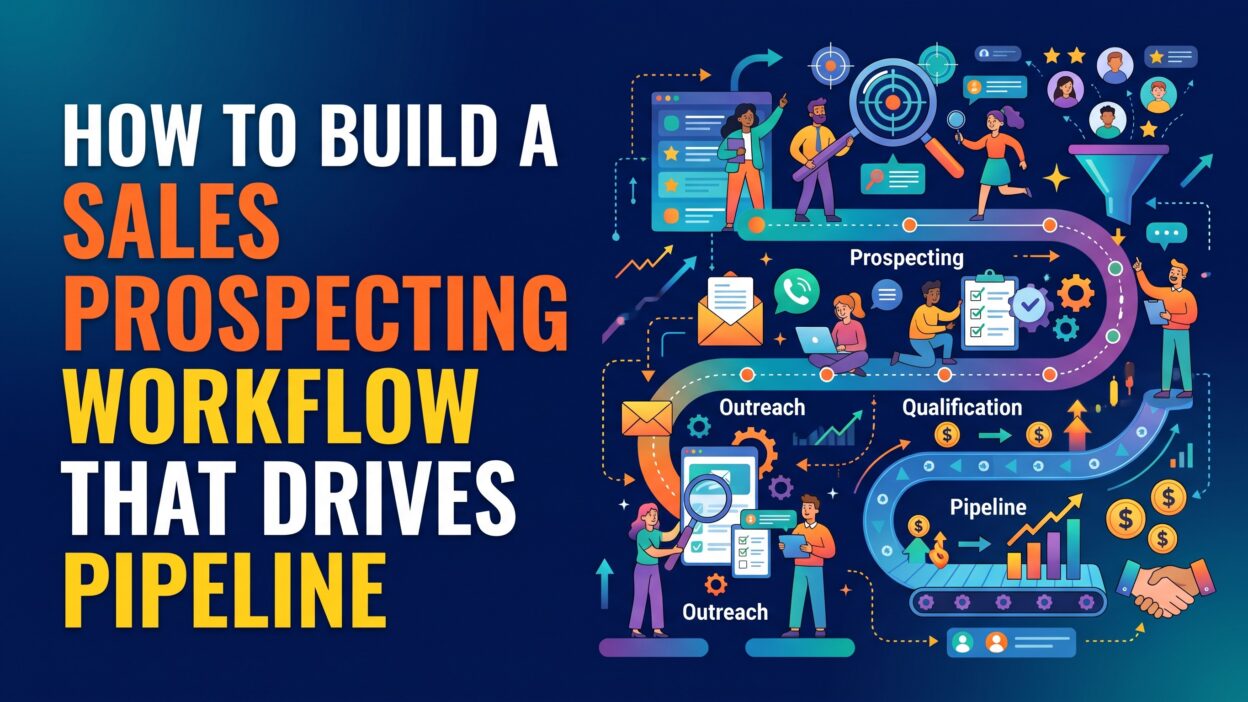
The process covers four stages. Targeting picks the right accounts. Research finds a reason to reach out. Outreach starts the conversation. Qualification decides whether the conversation deserves a seller’s time. Each stage feeds the next one.
Why Structure Beats Hustle
Hustle matters. Hustle alone burns people out. A rep who works twelve hours with no system still misses quota. A rep who works eight hours with a clear system often hits it.
Structure protects the company from chaos. When a top rep leaves, the method stays. Leaders can coach against a visible path. They can spot the weak step and fix it.
Data improves too. Every step produces numbers. Teams learn how many contacts it takes to book one meeting. They forecast the sales pipeline months ahead. Real ratios beat hope every time.
Consistency helps buyers as well. A buyer who gets one clear message from one rep feels respected. A buyer who gets five random messages from five reps feels like a target. Respect earns replies.
Signs Your Current Process Is Broken
Some teams do not know they have a problem. They see a slow pipeline and blame the market. Look closer. The cause often sits inside the process.
Watch for a few warning signs. Reps use five different scripts. Nobody agrees on what a good lead looks like. Sales and marketing argue about lead quality. Prospects get three emails from three reps in one week. Booked meetings stall or vanish.
Reps may spend hours on research with little to show for it. They paste the same note into every message. Buyers delete those notes in seconds. Reps may do the opposite and skip research entirely. They blast a thousand contacts and wonder why nobody answers.
Managers feel the pain too. They cannot explain why one rep books ten meetings while another books two. Without a shared method, they have nothing to compare. Coaching turns into vague advice like “work harder.”
Pay attention to the mood on the team. Reps who dread the phone often lack a clear plan. Reps who feel lost in the data need a simpler path. Morale reflects process quality.
If two or more of these signs sound familiar, a stronger sales prospecting workflow will pay off fast. The fix does not require new software. It requires clear decisions and written steps. Write them down, share them, and test them.
Define Your Ideal Customer Profile
Start With Fit
Every strong process starts with a target. A vague target wastes effort. Your ideal customer profile names the companies most likely to buy, stay, and grow.
Look at your best customers. Study the ones who closed fast, paid on time, and renewed. Note their industry, size, location, and tech stack. Note the problem they had before they bought. Patterns appear quickly.
Take a software firm that sells to HR teams. Its best customers may run companies of 200 to 1,000 employees. They may hire fast and use an outdated payroll tool. That pattern becomes the filter. Anyone outside it gets lower priority.
Add Personas and Triggers
Companies do not buy. People buy. Pick the roles that feel the pain, hold the budget, or influence the choice. Write a short profile for each role. Describe their goals, fears, and daily tasks. Note the words they use for their own problems.
Add trigger events to the profile. A trigger is a change that creates urgency. A new executive arrives. A company raises funding. A rival launches a product. A team posts ten open roles. Triggers turn cold outreach into timely outreach.
Keep the profile short. One page works well. Share it with sales, marketing, and customer success. Review it every quarter. Markets shift, and your target should shift with them.
Build and Clean Your Prospect List
Choose Your Sources
A great message sent to the wrong person fails. List building decides who receives your effort. Use several sources and compare results.
Your CRM holds past leads and lost deals. Many of those contacts deserve a second look. Professional networks show job titles and company news. Data providers sell verified emails and phone numbers. Industry directories, conference lists, and review sites reveal active buyers. Customers can introduce you to peers. Referrals convert at higher rates than any cold source.
Tell reps which source fits which segment. Enterprise accounts may need hand-picked lists. Smaller accounts may allow bulk lists. Match the effort to the deal size.
Keep Data Clean
Bad data kills outreach. Bounced emails hurt your sender reputation. Wrong titles embarrass reps. Duplicate records cause two reps to chase the same buyer.
Set simple rules. Verify emails before sending. Remove contacts who changed jobs. Merge duplicates weekly. Tag every record with a source and a date. Assign an owner to each account.
Cap list size by rep capacity. A rep can work about fifty to one hundred active accounts well. A longer list leads to shallow work. A shorter list leads to idle time. Test the right size for your team and adjust.
Research Before You Reach Out
Research separates a relevant message from spam. It does not need to take an hour. Five to ten minutes per account often does the job. Spend more time on large accounts and less on small ones.
Start with the company. Read the website, the latest news, and the recent earnings call. Check the careers page. Hiring patterns reveal priorities. Look at the tools the company uses. Many tech stacks appear in public job posts.
Move to the person. Read their profile and recent posts. Note their tenure, past roles, and shared connections. A person new in a role often seeks quick wins. A person with ten years of tenure may care about stability.
Look for one useful insight. An insight is a fact that links the buyer’s world to your solution. A retailer opens twelve new stores. Your tool helps teams scale training. That link becomes the opening line.
Write your notes in the CRM in two or three short lines. Include the trigger, the likely pain, and the best angle. These notes help the next rep who touches the account. They also help marketing sharpen campaigns.
Resist the urge to over-research. Perfect knowledge does not exist. A good guess backed by one real fact beats a polished message that never goes out.
Design Outreach Sequences That Fit Your Sales Prospecting Workflow
Pick Your Channels
A sequence is a planned series of touches. Each touch uses a channel. Email, phone, social messages, and video all work. Buyers respond to different channels at different times.
Mix channels in every sequence. A buyer who ignores email may answer a call. A buyer who dislikes calls may reply to a short social note. Multichannel outreach raises response rates because it meets buyers where they already spend time.
Match channels to the persona. Executives often favor short, direct emails and referrals. Technical buyers prefer detail and proof. Frontline managers answer the phone more often. Study your own data to confirm these habits.
Set Cadence and Timing
Cadence is the rhythm of touches. Too few touches leave deals on the table. Too many touches annoy buyers. Most teams find a sweet spot between eight and twelve touches over three to four weeks.
Space the touches. Day one may bring an email. Day two may bring a social view or connection request. Day four may bring a call. Day seven may bring a follow-up email with a useful resource. Keep spacing short at the start and longer later.
Time of day matters. Many buyers check email early in the morning and late in the afternoon. Calls often connect best around mid-morning or late afternoon. Test your own windows and keep the winners.
End every sequence with a clear closing touch. Tell the buyer you will stop reaching out. Leave the door open. Many replies arrive on that final message.
Build in Rules
Your sales prospecting workflow needs rules for exceptions. Decide what happens when a buyer replies. Decide what happens when a buyer says “not now.” Decide how long a lead rests before the next attempt. Decide who may contact an account that another rep already touched.
Write these rules on one page. Rules prevent conflict and protect buyer experience.
Write Messages That Earn Replies
Keep Emails Short and Specific
Buyers skim. They decide in seconds. Your email must earn the next five seconds.
Open with something about them. Mention the trigger, the role, or the goal. Skip the long introduction about your company. State the problem you solve in one line. Offer one small proof, such as a result from a similar customer. Close with one clear, low-effort question.
Aim for fifty to one hundred twenty words. Use plain words. Cut jargon. Read the message aloud. If you stumble, rewrite it.
Subject lines should look like a note from a colleague. Short and lowercase often works. Avoid hype and all-caps. Curiosity beats cleverness.
Make Calls Count
Many reps fear the phone. A plan removes the fear. Write a short opener that states who you are and why you called. Ask for permission to continue. Give the buyer a quick reason to stay.
Prepare for the common replies. A buyer may say they have no time. A buyer may say they already use a rival. Practice a calm answer to each. Keep the answer under two sentences. Then ask a question.
Leave short voicemails. Twenty seconds works. State your name, one insight, and your number. Mention that you will send an email so the buyer can look for it.
Use Social Touches With Care
Social channels reward patience. Like a post. Leave a thoughtful comment. Send a connection request with a short note. Skip the pitch in the first message.
Share useful content, not ads. A short article or a data point can start a chat. Treat these touches as warm-ups for email and calls.
Personalize at Scale
Full personalization for every contact does not scale. Use tiers. Give top accounts a fully custom message. Give mid accounts a template with two custom lines. Give long-tail accounts a segmented template tied to industry or role.
Test tone and offers. Compare a question-based opener with a statement opener. Compare a case study with a free audit. Small changes can double replies.
Qualify Leads and Hand Them Off Cleanly
A reply is not a deal. Qualification decides whether the buyer deserves a full sales cycle. Done well, it saves your closers hours of wasted calls.
Choose a simple framework. Many teams use budget, authority, need, and timing. Others use pain, champion, and decision process. The framework matters less than the habit. Pick one and use it every time.
Ask real questions on the first call. What problem prompted the conversation? What happens if nothing changes? Who else joins the decision? When does the team need a solution? Listen more than you talk.
Score each lead on a basic scale. A strong lead matches the ideal customer profile and shows urgency. A weak lead matches nothing and shows no pain. Middle leads go into a nurture track. Do not discard them. Many buy within six months.
Handoff rules protect momentum. Define what a sales-ready lead looks like. Define the information the rep must pass along. Include the trigger, the pain, the stakeholders, and the next step. Book the meeting on the closer’s calendar during the call when possible.
Set a service window. The closer responds within a day. The prospecting rep checks in after the first meeting. Both sides learn from the outcome. That feedback loop sharpens the entire sales prospecting workflow.
Hold a short weekly meeting between prospecting reps and closers. Review accepted and rejected leads. Ask why a lead failed. Adjust the profile. Trust grows when both sides see the same data.
Choose Tools for Your Sales Prospecting Workflow
Start With the Core
Tools should serve the process. Never pick the tool first. Write the steps, then match the software.
The CRM holds everything. It stores contacts, accounts, notes, and activity. A messy CRM ruins every other tool. Set required fields and clean them often.
A sales engagement platform runs sequences. It schedules emails, calls, and tasks. It tracks opens, clicks, and replies. It keeps reps on pace without sticky notes.
A data provider supplies contact details and company facts. Choose one with strong accuracy in your region. Test a sample list before you sign a contract.
Add Helpers
Call tools can dial faster and record conversations for coaching. Meeting schedulers remove back-and-forth email. Intent data tools show which accounts research your category. Conversation analysis tools surface patterns across hundreds of calls.
Artificial intelligence now helps with research summaries and message drafts. Use it as an assistant, not an author. Review every draft. Buyers spot generic text quickly, and personal touches still win.
Avoid Tool Overload
Teams often buy too much. Every extra tool adds training time, cost, and data silos. Start with the core. Add one helper at a time. Measure the lift before adding another.
Ask a hard question before every purchase. Which step does this tool improve, and by how much? If nobody can answer, wait.
Measure, Test, and Improve
Track the Right Numbers
What you measure shapes what reps do. Pick metrics that show both effort and results.
Activity metrics show effort. Count calls, emails, and social touches. Conversion metrics show quality. Track reply rate, meeting rate, and the share of meetings that become opportunities. Outcome metrics show impact. Watch pipeline value, win rate, and sales cycle length.
Look at the full funnel. A rep with low activity needs coaching on habits. A rep with high activity and low replies needs coaching on message quality. A rep with many meetings and few opportunities needs coaching on qualification.
Build a simple dashboard. Five to seven numbers fit on one screen. Review it weekly with the team. Share wins and gaps without blame.
Run Small Experiments
Treat the process as a living system. Change one variable at a time. Test a new subject line on half the list. Test a new call opener for two weeks. Compare results with the old version.
Wait for enough data. Fifty responses beat five. Avoid declaring winners too early. Document each test and its result in a shared note. The team builds a library of proven ideas.
Coach With Evidence
Use call recordings and message samples in coaching sessions. Pick one skill per session. Praise a strength. Correct a single habit. Ask the rep to try the new approach during the week.
Review the written process every quarter. Remove steps that add no value. Add steps that solve new problems. A workflow that never changes goes stale. A workflow that changes every week confuses people. Aim for steady, deliberate updates.
Frequently Asked Questions
What is a sales prospecting workflow?
A sales prospecting workflow is a documented set of steps that moves a stranger toward a sales conversation. It covers targeting, list building, research, outreach, and qualification. It gives reps a shared playbook and gives managers a way to measure results.
How long should a prospecting sequence last?
Most sequences run three to four weeks with eight to twelve touches. Enterprise sequences may run longer because buying groups move slowly. Test your own market and adjust. End every sequence with a clear final message.
How many prospects can one rep handle?
A rep can work about fifty to one hundred active accounts with real personalization. Simple, high-volume segments may allow more. Quality drops fast when lists grow too long. Watch reply rates as you scale.
Which channel works best for outreach?
No single channel wins. Email scales well. Phone creates fast conversations. Social channels build warmth. A mix of all three beats any one alone. Let your data reveal which channel suits each persona.
How often should I update my process?
Review it every quarter. Check conversion numbers, rep feedback, and market changes. Test small changes between reviews. Avoid rewriting the whole plan unless results drop sharply.
What is the biggest mistake teams make?
Many teams skip the target. They chase every possible buyer and wear out their reps. A tight ideal customer profile fixes that problem. Focus brings better replies, shorter cycles, and happier teams.
Read More:-B2B Cold Calling Scripts: 15+ Templates That Book More Meetings in 2026
Conclusion

Pipeline growth starts with a plan. Teams that write down their steps outperform teams that rely on mood and memory. A strong sales prospecting workflow gives reps clarity, managers insight, and buyers a better experience.
Start with your target. Define the ideal customer profile and build a clean list. Research each account long enough to find one real insight. Design sequences that mix channels and respect the buyer’s time. Write short messages that sound human. Qualify with care and hand off with clear notes. Pick tools that serve the process. Measure the right numbers and test small changes.