

Introduction
TL;DR Every sales team faces the same problem. Leads pour in from forms, ads, events, and emails. Reps cannot call them all. Some leads are ready to buy. Many are not. Sorting them by hand eats hours that reps should spend selling.
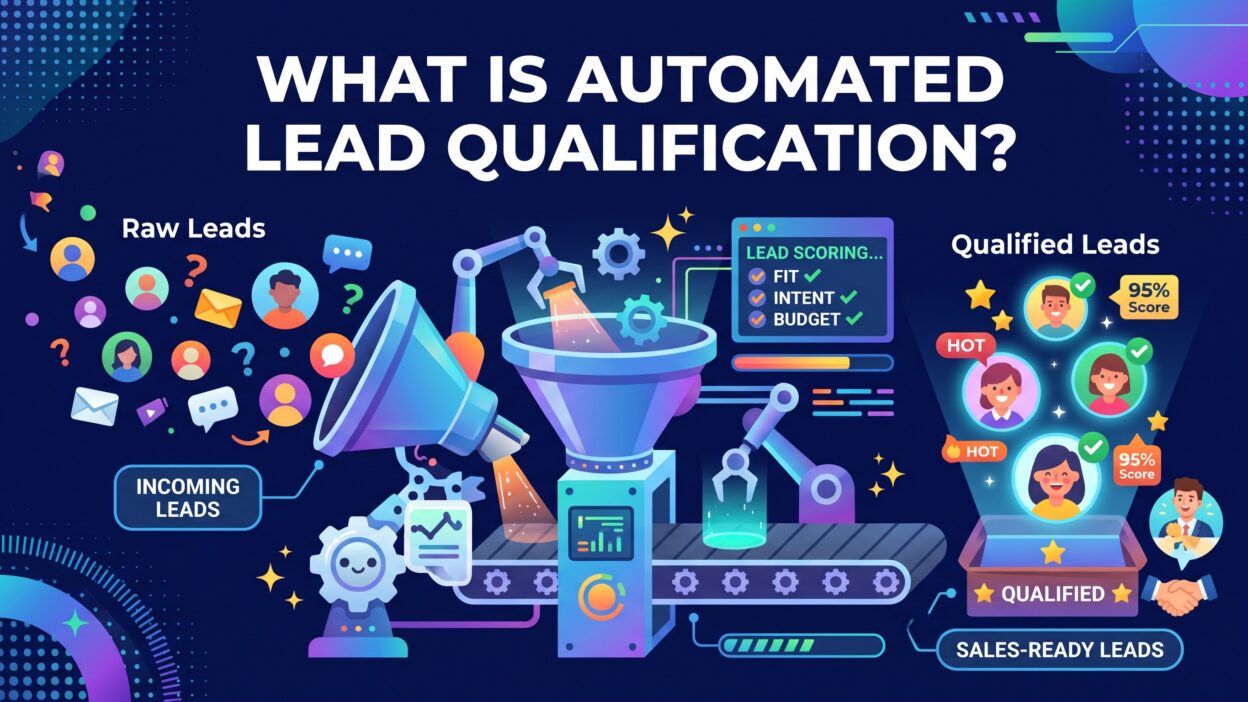
Automated lead qualification solves that problem. Software checks each lead against rules you set. It scores the lead, sorts it, and sends it to the right place. Strong leads reach reps in minutes. Weak leads move into a nurture track.
Table of Contents
A Plain Definition of Automated Lead Qualification
The Core Idea
Lead qualification means deciding if a person deserves a salesperson’s time. A qualified lead fits your target buyer and shows real interest. An unqualified lead does not. Teams have made this call by hand for decades. A rep reads a form, checks a website, and picks up the phone.
Automated lead qualification moves that judgment into software. Rules and scores replace the manual check. Some systems add machine learning. The tool reads data about each lead. It compares that data with your ideal customer profile. It assigns a score or a label. It sends the lead to the next step.
Speed marks the biggest change. A human review takes minutes or hours. A system finishes in seconds. A buyer who fills out a form at noon can book a meeting by five past twelve.
Scoring, Routing, and Qualification
People mix up three terms. Lead scoring gives points to a lead. Lead routing sends a lead to an owner. Lead qualification decides if a lead is ready for sales. Automation links all three. Scores feed the decision. The decision drives the routing. One flow handles the whole job.
Where It Fits in the Funnel
The system sits between lead capture and the first sales conversation. Marketing creates the lead. The system checks it. A rep takes over when the lead meets your bar. Many teams call the early stage a marketing-qualified lead. They call the ready stage a sales-qualified lead. Automation draws a clear line between the two.
Qualification does not end at the line. Leads that miss the bar stay in play. They enter lead nurturing, where emails and content build interest over time. Many of those leads become buyers months later.
Why Sales Teams Need It Now
Buyers moved online. They read reviews, download guides, and compare vendors without talking to anyone. Each action creates a lead record. Volume climbs every quarter. A small team can collect thousands of contacts in a month.
Manual review cannot keep up. Reps sort the list by gut feeling. They call the names they recognize. They skip the rest. Good leads sit untouched while reps chase poor ones.
Speed decides many deals. Studies on lead response time show that contact within minutes beats contact within hours by a wide margin. Buyers lose interest fast. A rival may answer first. A slow reply costs money.
Reps lose time to admin work. Surveys often show that sellers spend less than half their week actually selling. Research, data entry, and list cleanup eat the rest. Software can take over much of that load. Reps return to conversations.
Consistency matters too. Two reps can judge the same lead in two ways. One sees promise. The other sees a waste. Personal bias creeps in. Automation applies the same rules to every lead. Every buyer gets a fair review.
Alignment improves as well. Sales and marketing often argue about lead quality. Marketing says the leads are good. Sales says they are junk. Shared rules end the argument. Both teams agree on the definition of a ready lead. Both teams can see the data behind each decision.
How Automated Lead Qualification Works
Capture the Data
The process starts when a lead enters your system. A form fill, a chat message, a demo request, or an event scan can trigger it. The system records what the lead said. It records what the lead did, such as pages visited, emails opened, and files downloaded.
Enrich the Record
Forms stay short because long forms scare buyers. Short forms leave gaps. Enrichment tools fill them. The system takes an email address and finds the company name, size, industry, and location. It may add job title, tech stack, and funding news. A thin record becomes a rich profile in seconds.
Score and Sort
Next comes the core step. The system measures two things. Fit asks whether the lead matches your ideal buyer. Interest asks whether the lead acts like a buyer. A director at a mid-size firm in your target industry scores high on fit. A visit to your pricing page twice in one week scores high on interest.
Each trait earns points. The total sets the lead’s status. A high score marks the lead as ready for sales. A middle score sends it to nurture. A low score sends it to a long-term list or removes it.
Negative scoring protects your time. Students, job seekers, and competitors earn minus points. Personal email addresses may lose points in a business-to-business setting. The score drops, and the lead stays out of the rep’s queue.
Route and Act
The last step turns the decision into action. A ready lead goes to a rep by territory, industry, deal size, or round robin. The system creates a task in the CRM. It sends an alert. It may book a meeting through a shared calendar link. A nurture lead enters an email series. A poor fit gets a polite automated reply or nothing at all.
Every step leaves a record. Managers can see why the system made each call. That record lets teams audit and improve the rules.
Common Models and Approaches
Rule-Based Scoring
Rule-based scoring is the simplest model. You write the rules. A lead from a company with over 200 employees earns ten points. A pricing page visit earns fifteen. A request for a demo earns thirty. You pick a threshold, such as sixty, and every lead above it goes to sales.
This model is easy to explain. Anyone on the team can read the rules. It works well for small teams and clear buyer profiles. It needs regular updates. Markets change, and old rules grow stale.
Predictive Scoring
Predictive models learn from history. The system studies thousands of past leads. It finds the traits that separated buyers from non-buyers. It builds a model that scores new leads on the chance of closing.
This approach can spot patterns no human would notice. It needs lots of clean data. A team with a few hundred deals may not have enough. Predictive scores can also feel like a black box. Reps may distrust a number they cannot explain. Pick tools that show the top factors behind each score.
Conversational Qualification
Chatbots and virtual assistants talk to visitors in real time. They ask a few questions about role, need, budget, and timing. They read the answers and decide the next move. A strong lead can book a meeting inside the chat window. A weak lead gets a helpful resource.
This model works well for busy websites with after-hours traffic. Keep the bot’s script short and friendly. Give visitors an easy path to a human. Buyers dislike dead ends.
Framework-Based Logic
Many teams build rules on a classic framework. Budget, authority, need, and timing is the best known. Others use pain, champion, and decision process. You can turn each part of a framework into a question on a form or in a chat. The answers feed the score. Frameworks give structure to your rules and give reps a shared language.
Most mature teams blend the models. They use rules for fit, behavior scores for interest, and chat for instant response. Start simple and add layers as your data grows.
Key Benefits of Automated Lead Qualification
Faster Response
Speed wins deals. A system that scores and routes in seconds lets reps call while the buyer still has the problem in mind. Alerts reach the right person at once. Meeting links turn interest into a booked slot before the buyer closes the tab.
Better Rep Focus
Reps work the best leads first. They stop guessing. Their queue shows the hottest names at the top, with notes on why each lead scored high. Time goes into conversations, not spreadsheets. Morale rises when reps see results from their effort.
Stronger Alignment
Shared rules end the lead quality debate. Marketing sees which campaigns produce ready leads. Sales sees why leads arrive. Both teams can adjust. A weekly review of accepted and rejected leads sharpens the rules every month.
Cleaner Data
Automation enforces the same fields and formats on every record. Enrichment fills gaps. Duplicate checks keep the CRM tidy. Better data improves forecasts, reports, and every later campaign.
Lower Cost per Opportunity
Fewer hours go to weak leads. More hours go to strong ones. The same team handles more volume without new hires. Cost per opportunity drops. Revenue per rep climbs.
A Better Buyer Experience
Buyers want quick, relevant help. A buyer ready to talk gets a call fast. A buyer still learning gets useful content instead of a pushy pitch. Respect for the buyer’s stage builds trust, and trust shortens sales cycles.
Risks to Watch Before You Automate
Automation is not magic. Poor setup creates new problems. Know the common traps before you build.
Bad data tops the list. A system that scores on wrong titles or outdated company details makes wrong calls. Clean your CRM before you switch on rules. Verify emails. Remove duplicates. Set required fields.
Rigid rules cause trouble too. A lead from a small company may still hold huge potential. A founder of a startup can sign a contract in a day. Rules that punish small firms would hide that lead. Review low-score leads on a regular basis. Look for good ones that slipped through.
Over-automation can chill the relationship. A buyer who wants a human but meets a bot at every turn gets frustrated. Offer a clear path to a person. Let reps override the system when they spot something the rules missed.
Scores can drift. Your product changes. Your market shifts. A rule that worked last year may fail today. Schedule a review each quarter. Compare scores with real outcomes. Adjust the weights.
Privacy deserves care. Enrichment and tracking use personal data. Follow the laws in your regions. Be honest in your privacy notices. Collect only what you need.
Finally, avoid black-box blind trust. Whatever model you use, ask for the reason behind a score. A rep who understands the reason can use it in the first call.
How to Set Up Automated Lead Qualification Step by Step
Define Your Ideal Buyer
Start with people, not software. Study your best customers. Note their industry, size, region, and role. Note the problems they had before they bought. Write a one-page profile. This profile becomes the backbone of your fit score.
Agree on What Ready Means
Bring sales and marketing into one room. Define a marketing-qualified lead and a sales-qualified lead in plain words. Decide which actions and traits move a lead from one stage to the next. Write the definitions down. Both teams sign off.
Build the Scoring Model
List the fit traits and assign points. List the interest actions and assign points. Give more weight to strong signals such as demo requests and pricing page visits. Give less weight to weak signals such as a single blog view. Add negative points for poor-fit signals. Set a threshold for sales-ready leads.
Keep the first version simple. Ten to fifteen rules are plenty. You can add depth later.
Design Routing Rules
Decide who owns each lead type. Use territory, industry, account ownership, or round robin. Set a backup owner for each path. Define a response time. A ready lead should get contact within minutes during business hours. Build alerts that reach reps where they already work, such as email, chat, or the mobile app.
Plan the Nurture Path
Not every lead is ready today. Build automated email series for middle-score leads. Match the content to the stage. Early leads need education. Later leads need proof. Add a trigger that sends a lead back to sales when its score crosses the line.
Test Before You Launch
Run the model on past leads. Compare its scores with real outcomes. Check whether closed deals scored high. Check whether lost deals scored low. Adjust the weights until the model matches reality. Launch with a small group of reps and gather their feedback for two weeks.
Train the Team
Show reps how scores work. Explain the top factors behind each lead. Teach them how to give feedback. Reps who understand the system trust it. Reps who trust it use it.
Review and Refine
Set a monthly check at first. Look at accepted leads, rejected leads, and missed leads. Ask what the system got right and wrong. Update the rules. After three months, move to a quarterly rhythm.
Tools That Power Automated Lead Qualification
The CRM
The CRM holds your data and your workflows. It stores leads, accounts, and activity. Most modern CRM platforms include scoring and routing features. A clean CRM makes every other tool work better.
Marketing Automation
Marketing automation platforms track behavior across email, web, and forms. They run lead scoring and nurture programs. They pass ready leads to the CRM. Teams that already use one often find that its native scoring covers early needs.
Data Enrichment Providers
These tools add company and contact details to thin records. Test accuracy on a sample list before you commit. Accuracy varies by region and industry.
Chat and Scheduling Tools
Chatbots engage visitors in real time. Scheduling tools let buyers book time with the right rep at once. Together they shorten the path from interest to conversation.
Predictive and Intent Platforms
Some vendors offer predictive scores and intent signals. Intent data shows which companies research your topic across the web. These tools help larger teams with enough data to train a model.
Choose tools that fit your process. Do not buy a platform and then bend your process around it. Start with the CRM and one helper. Add more only when a clear gap appears.
Metrics That Prove Your System Works
Numbers show whether the system earns its keep. Pick a handful and track them from day one.
Speed to lead measures the time from form fill to first contact. Aim for minutes. A fast average with a few slow outliers tells you where routing breaks.
Conversion rates track each stage. Watch the share of leads that become marketing-qualified, the share that become sales-qualified, and the share that become opportunities. Compare rates by source and by score band. High scores should convert at much higher rates than low ones. If they do not, the model needs work.
Acceptance rate tells you how often reps agree with the system. Ask reps to accept or reject each routed lead and give a reason. A low acceptance rate signals a mismatch between the rules and reality.
Win rate and sales cycle length show downstream impact. Leads that arrive through automated lead qualification should close faster and at higher rates than leads sorted by hand. Track that comparison for a few quarters.
Finally, watch rep productivity. Count meetings per rep, opportunities per rep, and pipeline per rep. The goal is more good conversations from the same hours.
Share a simple dashboard with both sales and marketing. Review it weekly. Celebrate gains and fix gaps without blame.
Frequently Asked Questions
What is automated lead qualification?
Automated lead qualification is the use of software to score, sort, and route leads based on rules or models. It checks fit and interest. It sends the best leads to reps fast and places the rest into nurture tracks.
How is it different from lead scoring?
Lead scoring is one part of the process. It assigns points. Qualification uses those points to decide whether a lead is ready for sales. Routing then sends the lead to the right owner. The full system covers all three steps.
Will automation replace sales reps?
No. It handles sorting and speed. Reps handle conversations, trust, and negotiation. Automation clears the clutter so reps can sell. Human judgment still matters, especially on edge cases.
How long does it take to set up?
A simple rule-based system can go live in a few weeks. Most of the time goes to defining the ideal buyer and cleaning data. Predictive and chat-based systems take longer. Start small and expand in stages.
What data do I need to start?
You need basic lead details, such as email, company, and title. You need behavior data, such as page visits and email clicks. You need past deal outcomes to test your rules. Enrichment tools can fill many gaps.
Is it only for large companies?
No. Small teams often gain the most. They have the fewest hours to waste. A simple scoring model inside a standard CRM can pay off within one quarter.
Read More:-B2B Cold Calling Scripts: 15+ Templates That Book More Meetings in 2026
Conclusion

Leads are only valuable when the right person acts on them at the right time. Manual review slows that process and hides good opportunities. Automated lead qualification fixes both problems. It scores each lead, sorts it by fit and interest, and routes it in seconds.
The benefits reach every corner of the revenue team. Reps focus on strong leads. Marketing sees which campaigns work. Buyers get fast, relevant replies. Managers see clear numbers. The risks are real, so clean your data, keep your rules flexible, and let humans override the system when needed.