
Introduction
TL;DR Tech talent moves fast. Strong engineers field several offers in one week. Slow teams lose them. Hiring for Tech Roles rewards speed, clarity, and a solid plan.
Many teams still run tech recruitment from spreadsheets. Recruiters chase résumés through email. Managers forget to share feedback. Candidates wait days for a reply. That mess costs you great people.
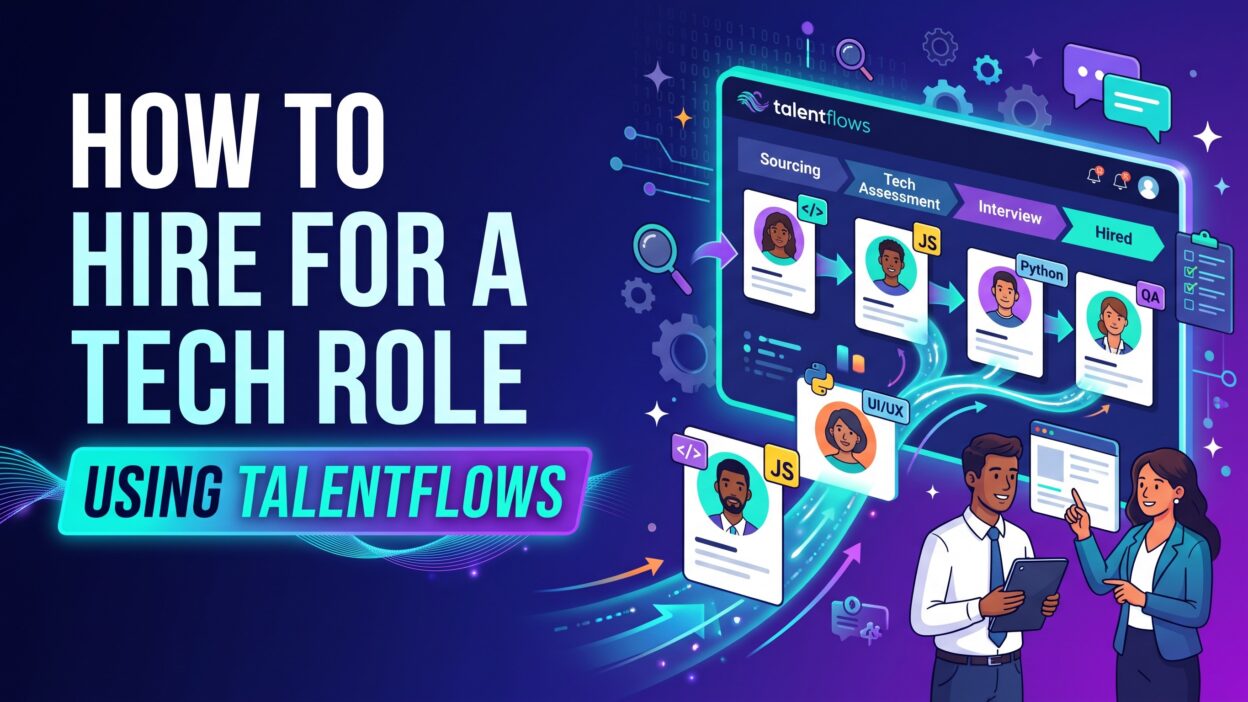
Talentflows gives you a better way. A workflow platform puts jobs, candidates, tests, and interview notes in one place. Every person on the team sees the same hiring pipeline. Every decision rests on the same facts.
This guide walks you through Hiring for Tech Roles with Talentflows from start to finish. You will learn how to define the role.
Table of Contents
Why Hiring for Tech Roles Is Different From Other Hiring
Tech jobs change fast. A tool that leads the market today may fade in three years. A résumé lists tools. It does not prove skill. You must test the work itself.
Demand runs high. Developers, data analysts, and security experts hold many options. They read job posts quickly. They leave slow processes without a word. A week of silence can end a deal.
Titles confuse buyers. One company gives the title senior engineer to a person with ten years of experience. Another company gives it to a person with three. Your team needs real evidence of skill.
Culture carries weight. Tech work depends on code reviews, shared ownership, and honest feedback. A brilliant person who dismisses teammates slows the whole group.
These facts shape Hiring for Tech Roles at every stage. You need a fast process. You need fair tests. You need clear communication. Talentflows supports all three.
The Cost of a Slow Process
A long time to hire hurts the team. Top candidates accept other offers. Your engineers carry extra work while the seat stays empty. Product launches slip.
Many teams never measure this cost. They feel it every sprint. Track your time to hire from the day you open the role to the day the candidate accepts. That number shows you where to improve.
What Talentflows Brings to Hiring for Tech Roles
Talentflows is a hiring workflow platform. It manages the path from job opening to signed offer. Several vendors use similar names, so check the exact features of your version. Most share a common core.
One Home for Every Candidate
Applicant tracking sits at the center. Each candidate gets a profile. The profile holds the résumé, notes, test scores, and messages. Nobody digs through inbox threads. Anyone on the team can open a profile and read the full story.
Custom Hiring Stages
You design the stages. A tech pipeline might run from applied to recruiter screen, technical assessment, team interview, final interview, and offer. Candidates move through the stages as work progresses. The board shows where each person stands.
Automation That Saves Hours
The platform parses résumés into structured data. It schedules interviews. It sends reminders and status updates. These tasks eat a recruiter’s day. Automation hands that time back so recruiters can talk to people.
Reports and Analytics
Dashboards show where candidates drop out. They show how long each stage takes. They show which sources bring the best hires. Data replaces guesswork.
Step 1: Define the Role Before Hiring for Tech Roles
Clear roles attract clear candidates. Vague roles attract noise. Spend an hour with the hiring manager before you post anything.
Write the Outcomes
Describe what success looks like after six months. Name the systems the person will own. Name the problems the person will solve. A line such as “cut page load time by 30 percent” beats a list of buzzwords. Candidates see the real work and decide if they want it.
Separate Must-Haves From Nice-to-Haves
Pick three to five skills the person needs on day one. The rest can be learned on the job. Long wish lists scare away strong people. Some talented candidates skip a post when they miss a single item. Keep the list honest and short.
Build the Scorecard
Create a scorecard in Talentflows. List the skills and traits you need. Add a rating scale from one to four. Attach the scorecard to the job. Every interviewer scores the same criteria. Scores become comparable. Opinions become evidence.
Share the scorecard with the full team before the first interview. Everyone learns what great looks like. Nobody invents new rules halfway through.
Step 2: Build Your Hiring Pipeline in Talentflows
Set up the pipeline once. Reuse it for every similar role. Name each stage in plain language. Assign an owner to each stage.
Add a time limit to every stage. Set a rule such as “respond to every applicant within two business days.” Talentflows can flag candidates who wait too long. Alerts keep the process moving.
Keep the number of stages low. Five or six stages work for most roles. Each extra stage adds days. Each extra day drops candidates. Ask whether a stage predicts job success. Cut it when the answer is no.
Lean pipelines make Hiring for Tech Roles faster and fairer. Candidates feel respected when the process moves with purpose. Your team spends energy on the people who matter.
Step 3: Write a Job Post That Attracts Tech Talent
Developers read job posts the way users read apps. They scan. Make your post easy to scan.
Lead With the Work
Open with the mission and the problem. Tell candidates what they will build. Describe the team size, the stack, and the way you ship code. Engineers love specifics. Vague praise about a “fast-paced environment” tells them nothing.
Share Pay and Setup
Post a salary range. Say whether the role is remote, hybrid, or on site. List the interview steps. Clarity builds trust. Candidates apply with confidence when they know what to expect.
Use Inclusive Language
Cut words like “rockstar” and “ninja.” Cut phrases that hint at age or gender. Keep sentences short. Use plain English.
Talentflows can publish the post to several job boards at once. Every applicant lands in one list. Nobody copies names into a spreadsheet. A strong post sets the tone for Hiring for Tech Roles before a candidate even applies.
Step 4: Source and Screen Candidates
Source Beyond Job Boards
Job boards reach active seekers. Many strong engineers do not search. Reach them through referrals, open-source communities, meetups, and professional networks. Tag each source in Talentflows. The tags show which channel brings the best hires.
Referrals deserve special care. Ask your engineers to refer people they trust. Reward good referrals. Track them in the same pipeline so nothing gets lost.
Screen on Skills, Not Pedigree
Skills matter more than school names. Read portfolios, repositories, and project write-ups. Look for real work. A candidate with a small, clean project may beat one with a famous employer on the résumé.
Use résumé parsing to sort applications fast. Treat the ranking as a guide. Humans make the final call. Automated scores can miss unusual backgrounds. Review a sample of rejected applications each month to catch mistakes. Fair screening raises the quality of Hiring for Tech Roles.
Run a Short Recruiter Call
Keep the call to twenty minutes. Confirm interest, salary range, location, and timing. Explain the process. Log notes in the candidate profile. Move strong people forward within a day.
Step 5: Use a Technical Assessment That Respects Time
Tests prove skill. Bad tests drive people away. Design yours with care.
Match the Test to the Job
A backend engineer should solve a backend problem. A data analyst should explore a dataset. A front-end developer should build a small interface. Skip puzzle questions with no link to daily work. Candidates notice, and they judge your company by it.
Keep It Short
Aim for sixty to ninety minutes. Long take-home projects favor people with free evenings. They shut out parents, caregivers, and anyone with a busy job. Offer to pay for any task that runs longer than two hours.
Score With a Rubric
Write the criteria before you review a single submission. Rate correctness, code quality, clarity, and testing. Have two reviewers score each submission alone. Compare notes in Talentflows. Differences spark useful talk.
Many setups connect with assessment tools. Results flow into the candidate profile. Nobody retypes scores. That saves hours and cuts errors. Strong assessments sit at the heart of Hiring for Tech Roles.
Step 6: Run Structured Interviews
Unstructured chats favor charm. Structured interviews favor skill. Ask each candidate the same core questions. Score each answer on the same scale.
Plan the Interview Loop
Give each interviewer one focus. One person covers system design. One covers coding. One covers teamwork. One covers motivation. Overlap wastes time. Share the plan in Talentflows so everyone knows their part.
Ask Better Questions
Ask about real work. Try “Tell me about a bug that took you days to fix.” Try “Describe a time you disagreed with a teammate on design.” Try “Walk me through a system you built.” Follow up with “why” and “what happened next.” Listen for ownership and learning.
Run Pair Sessions
Let the candidate code with an engineer. Watch how the candidate thinks. Watch how the candidate asks for help. Real collaboration shows more than a silent whiteboard test.
Log Feedback Fast
Ask interviewers to log scores within two hours. Memory fades quickly. Talentflows can hide other scores until you submit your own. That rule prevents groupthink. Teams that score alone make sharper calls.
Disciplined interviews make Hiring for Tech Roles predictable. You compare candidates on evidence. You defend each decision with facts.
Step 7: Decide as a Team
Hold a short debrief. Open the scorecards in Talentflows. Start with the data. Ask each interviewer to share a rating and one piece of evidence.
Discuss the gaps. Disagreement is normal. Ask what evidence would settle it. Schedule a follow-up call when the team stays split.
Watch for bias. Phrases like “gut feel” and “culture fit” need examples. Ask “What did the candidate say or do?” Evidence beats impression.
Keep the debrief under thirty minutes. Name one decision owner. The hiring manager usually holds that role. That person makes the call and explains the reasoning to the team. Clear ownership speeds up Hiring for Tech Roles and prevents long email chains.
Step 8: Close With a Strong Offer
Move quickly. Strong candidates stay available for days, not weeks. Call the candidate on the day you decide.
Build the Offer
Include salary, equity, bonus, benefits, start date, and remote policy. Explain how you set the number. Candidates respect transparency.
Sell the Role
Share what excites you about the work. Connect the candidate with a future teammate. Answer concerns openly. Ask what matters most to the candidate and speak to it.
Use Talentflows for Approvals
Route offer approvals inside the platform. Leaders approve from their phones. Generate the letter from a template. Send it for e-signature. Track when the candidate opens it.
A fast, smooth offer shows the candidate how your company works. Great offers end Hiring for Tech Roles on a high note.
Step 9: Onboard to Protect Your Investment
Hiring does not end at the signature. Send a welcome note. Prepare the laptop, accounts, and repository access before day one. Assign a buddy. Set a thirty-sixty-ninety day plan. Check in every week.
Early support cuts early exits. New hires who feel prepared ship code sooner. Talentflows can pass candidate data into onboarding tasks, so nothing falls through the cracks.
Improve the Candidate Experience
Candidate experience shapes your reputation. Developers talk to each other. A rude or silent process spreads fast.
Send quick updates at each stage. Tell rejected candidates the outcome. Offer a line of feedback when you can. Thank every person for the time they gave.
Ask for feedback after the process ends. Send a short survey through Talentflows. Read the answers. Fix what hurts. Strong candidate experience brings referrals, even from people you did not hire.
Metrics That Improve Hiring for Tech Roles
Track a few numbers. Review them every month. Numbers show where your process leaks.
Time to hire comes first. It measures speed from opening to acceptance. Compare it across roles and teams. Long gaps point to slow stages.
Time in stage digs deeper. It shows where candidates wait. A five-day wait for interview feedback signals a problem you can fix this week.
Offer acceptance rate measures your pitch. A low rate means pay, speed, or fit needs attention. Ask declined candidates why they said no.
Source quality shows where great hires come from. Compare referrals, job boards, and communities. Spend more on the winners.
Quality of hire matters most. Review each new hire at six months. Ask the manager to rate performance. Link the rating back to interview scores. You learn which questions predict success.
Talentflows reports make these numbers easy to see. Share the dashboard with leaders. Data keeps Hiring for Tech Roles honest and focused.
Common Mistakes to Avoid
Teams repeat the same errors. Learn from them.
Vague roles top the list. Without clear outcomes, interviewers judge by taste. Define the work before you start.
Too many stages come next on the list. Seven rounds exhaust candidates. Cut any round that adds no new information.
Heavy reliance on automation hurts. Tools sort and schedule. People judge and connect. Keep a human in every key decision.
Silence ranks high among the worst mistakes. Candidates forgive a no. They rarely forgive being ignored. Set reply rules and follow them.
Skipped debriefs cause quiet damage. Without a shared review, loud voices win. Hold the meeting every time.
Ignoring data keeps teams stuck. Review your metrics monthly. Small fixes add up to a faster, fairer process. Avoid these traps and Hiring for Tech Roles gets easier with every hire.
Frequently Asked Questions About Hiring for Tech Roles
How long should Hiring for Tech Roles take?
Most strong teams finish in three to five weeks. Fast teams close in two. Track your time to hire and aim to cut a few days each quarter.
How many interview rounds work best?
Three to four rounds suit most roles. Use a recruiter call, a technical assessment, a team interview, and a final conversation. Add more only when the role carries senior scope.
Should I use take-home tests or live coding?
Both work. Take-home tests give candidates calm and space. Live coding shows real-time thinking. Pick one that fits the role and keep it short. Pay for long tasks.
How does Talentflows reduce bias?
It standardizes scorecards and questions. It hides other reviewers’ scores until you submit yours. It tracks stage data so you can spot gaps. Humans still need to act on what the data shows.
Can small companies use Talentflows?
Yes. Small teams gain the most from one organized pipeline. A founder who hires twice a year still needs a clear record. Start with one role and build from there.
How do I hire tech talent for remote roles?
Test written communication and self-management. Ask how the candidate handled projects without direct supervision. Share your remote practices up front. Trust and clear habits drive remote success.
Read More:-A Guide to Recruiting Financial Advisors
Conclusion

Great teams do not hire by luck. They follow a clear process and improve it each round. Talentflows gives you the structure to do exactly that.
You now have a full playbook. Define the role with a scorecard. Build a lean pipeline. Write a post that speaks to engineers. Source widely and screen on skills. Use fair assessments. Run structured interviews. Decide as a team. Close fast. Onboard with care.
Each step protects the next one. Clear roles lead to fair tests. Fair tests lead to strong interviews. Strong interviews lead to confident offers. Confident offers lead to loyal hires.
Treat Hiring for Tech Roles as a skill your company builds over time. Measure your results. Fix your weak stages. Listen to candidate feedback. Small gains compound into a real advantage.