Introduction
TL;DR Choosing marketing automation software takes real research. This ActiveCampaign Review breaks down every core feature, every pricing tier, and every real tradeoff you face before you commit your budget. You will learn exactly what ActiveCampaign does well and where it falls short compared to other platforms on the market today.
This ActiveCampaign Review covers email marketing, automation, CRM tools, and the platform’s newer AI features. You will also see current pricing for 2026, along with hidden costs many buyers miss during their first look at the platform.
We tested core workflows, reviewed independent user feedback, and compared pricing against real competitor data to build this ActiveCampaign Review. Nothing here comes from marketing copy alone. Every claim ties back to a real feature, a real price point, or real user experience shared across independent review platforms.
Table of Contents
What Is ActiveCampaign
ActiveCampaign started as an email marketing tool and grew into a full marketing automation and CRM platform. The company now serves well over one hundred thousand customers across small businesses, agencies, and mid-market companies.
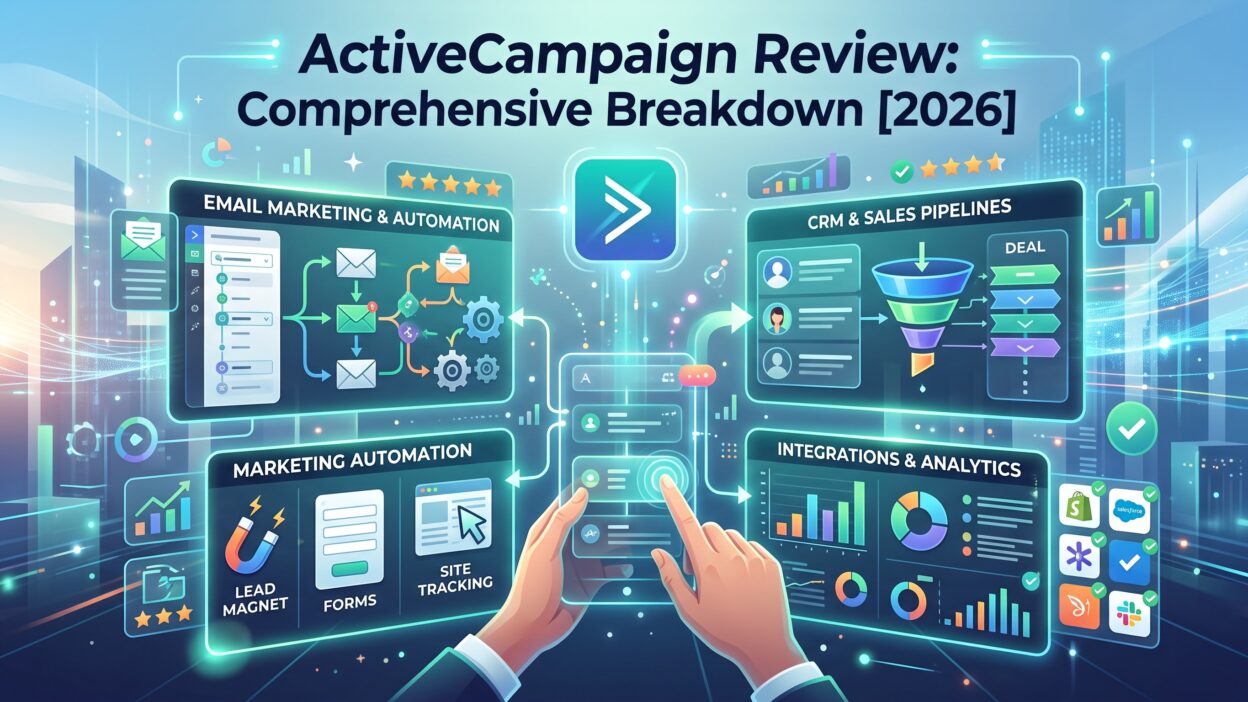
The platform combines three core functions in one place. Email marketing handles campaigns and newsletters. Marketing automation builds branching workflows based on subscriber behavior. A built-in CRM manages deals and sales pipelines for teams that sell directly to customers.
This combination sets ActiveCampaign apart from simpler email tools. A platform like Mailchimp focuses mainly on campaigns and basic automation. ActiveCampaign adds real sales pipeline management on top, which matters for any team that needs marketing and sales data in one shared system.
This ActiveCampaign Review treats the platform as a serious contender for any business ready to move past basic email software. Small teams and growing companies both find real value here, though the pricing structure requires careful planning as your contact list grows.
ActiveCampaign Core Features
ActiveCampaign packs a wide feature set into its platform. This section breaks down the five capabilities that matter most for a real buying decision.
Email Marketing and Campaign Builder
The email builder uses a drag and drop editor with a solid library of templates. You can build newsletters, product announcements, and automated sequences without any coding knowledge.
Segmentation stands out as a real strength here. You can build lists based on tags, custom fields, purchase history, and website behavior together. This depth lets you send far more relevant emails than a basic list-based tool allows.
Deliverability performance holds up well against industry benchmarks. ActiveCampaign invests heavily in sender reputation tools and inbox placement testing, which matters more than any single feature once your list grows large.
Marketing Automation Workflows
Automation sits at the center of what makes ActiveCampaign valuable. The visual workflow builder lets you create branching paths based on subscriber actions like link clicks, page visits, or purchase events.
Conditional logic goes deeper here than most competing platforms offer at a similar price point. You can split a workflow based on multiple conditions at once, then route each branch toward a different email sequence or sales task.
Pre-built automation recipes help new users get started quickly. These templates cover common use cases like welcome sequences, abandoned cart recovery, and lead scoring, so you rarely start from a completely blank canvas.
CRM and Sales Automation
The built-in CRM tracks deals through customizable pipeline stages. Sales reps can see contact history, email engagement, and automation activity right inside each deal record.
This integration removes a common gap between marketing and sales tools. A rep working a deal sees exactly which emails a contact opened and which pages they visited recently, all without switching to a separate platform.
Task automation extends into the sales process too. You can trigger a task for a rep automatically when a lead reaches a certain engagement score or takes a specific high-intent action on your site.
Site and Event Tracking
ActiveCampaign tracks website visits and specific events once you install its tracking script. This data feeds directly into your automation rules and your contact records.
A returning visitor who views your pricing page three times triggers a different automation than a first-time blog reader. This behavioral data adds real precision to timing and messaging decisions your team makes every day.
Active Intelligence and AI Tools
ActiveCampaign added AI features through its Active Intelligence engine over the past two years. These tools help write subject lines, suggest send times, and predict which contacts show the highest likelihood to convert.
Predictive sending analyzes past engagement patterns and adjusts delivery timing for each individual contact. This feature works best on larger lists with enough historical data for the model to learn from real patterns.
ActiveCampaign Pricing Breakdown [2026]
Pricing forms a huge part of any ActiveCampaign Review, since the structure grew more complex after a major overhaul in 2024. ActiveCampaign now sells four plans called Starter, Plus, Professional, and Enterprise. Prices below reflect the entry tier for 1,000 contacts, billed annually, and current as of this writing. Confirm exact numbers on ActiveCampaign’s pricing page before you buy, since software pricing shifts over time.
Anyone comparing platforms should treat this ActiveCampaign Review pricing section as a starting reference rather than a final locked number. Your actual monthly cost depends heavily on your contact count, your chosen add-ons, and any current promotional offer running at the time you sign up.
Starter Plan
The Starter plan begins around fifteen dollars per month for 1,000 contacts. This tier includes core email marketing, basic automation, and a single user seat. Small businesses just starting with automation often begin here before they outgrow its limits.
Plus Plan
The Plus plan begins around forty nine dollars per month. This tier adds more advanced automation, custom branding removal, and expanded integration options. Growing teams that need deeper segmentation usually move to this tier within their first year.
Professional Plan
The Professional plan begins around seventy nine dollars per month. This tier unlocks predictive sending, site messaging, and deeper attribution reporting. Teams running complex, multi-step automation typically need this tier to access the platform’s full workflow logic.
Enterprise Plan
The Enterprise plan begins around one hundred forty five dollars per month. This tier adds a dedicated account manager, custom reporting, and higher automation limits. Larger companies with complex compliance or reporting needs usually land here.
Hidden Costs to Watch
Contact-based pricing scales fast as your list grows. A plan that costs fifteen dollars monthly at 1,000 contacts can climb into hundreds of dollars monthly once your list reaches ten thousand contacts or more.
Add-on features like advanced sales engagement tools and SMS marketing carry separate costs on top of your base plan. Review these add-ons carefully during your trial period, since they rarely appear clearly on the main pricing page.
Annual billing saves a meaningful percentage compared to monthly billing. Budget-conscious teams should commit to annual pricing once they confirm the platform fits their workflow during the trial period first.
Free Trial Details
ActiveCampaign offers a fourteen day free trial across its plans, with no credit card required to start. This trial period gives you enough time to test core automation and email features before any purchase decision.
ActiveCampaign Strengths and Drawbacks
Where ActiveCampaign Performs Well
Automation depth stands as the platform’s clearest strength across this entire ActiveCampaign Review. Few platforms at a similar price point offer branching logic this sophisticated, and this depth pays off once your team builds complex, multi-step customer journeys.
CRM integration adds real value for teams that combine marketing and direct sales outreach. This built-in pipeline removes the need for a completely separate sales tool, which saves both money and setup time for smaller teams.
Deliverability performance holds up consistently well in independent testing. Email marketers who struggle with inbox placement on other platforms often notice a real improvement after switching to ActiveCampaign.
Support quality earns consistent praise from users across most review platforms. Live chat responds quickly during business hours, and the knowledge base covers most common setup questions in real detail.
Where ActiveCampaign Falls Short
Pricing complexity creates real friction for buyers who expect a simple, flat monthly rate. Contact-based scaling combined with tiered feature access makes it hard to predict your actual cost a year down the road.
The learning curve runs steeper than simpler tools like Mailchimp or Constant Contact. New users often need real time to learn the automation builder before they can build anything beyond a basic welcome sequence.
Reporting customization lags behind some competitors at higher price points. Teams that need highly specific custom reports sometimes need to export data into a separate business intelligence tool for deeper analysis.
Some add-on features carry unclear pricing until you reach out to sales directly. This lack of transparency frustrates buyers who prefer to see every cost clearly before they start a conversation with a sales rep.
ActiveCampaign vs Competitors
ActiveCampaign vs HubSpot
HubSpot offers a broader all-in-one platform that spans marketing, sales, and customer service together. ActiveCampaign focuses more narrowly on email and automation, which often makes it the more affordable choice for smaller teams that do not need HubSpot’s full suite.
Automation logic actually runs deeper inside ActiveCampaign at comparable price points. Teams that prioritize sophisticated workflow branching over an all-in-one platform often prefer ActiveCampaign for this reason alone.
ActiveCampaign vs Mailchimp
Mailchimp works well for simple newsletter sending and basic automation. ActiveCampaign pulls ahead once your needs grow beyond basic campaigns into complex, behavior-triggered workflows and sales pipeline management.
Pricing sits close between both platforms at smaller contact counts, though ActiveCampaign’s deeper feature set often justifies the cost difference for teams that actually use its advanced automation tools.
ActiveCampaign vs Klaviyo
Klaviyo built its reputation specifically around e-commerce integrations and revenue attribution. ActiveCampaign serves a broader range of industries beyond e-commerce alone, including service businesses and B2B companies with longer sales cycles.
E-commerce brands with deep Shopify integration needs often lean toward Klaviyo instead. Service-based businesses and B2B teams more often choose ActiveCampaign for its stronger CRM and sales pipeline tools.
Who Should Use ActiveCampaign
Small businesses ready to move past basic email tools find real value here. The Starter plan gives new users room to build real automation without an overwhelming price tag right from day one.
Agencies managing multiple client accounts benefit from the platform’s flexibility across different industries and use cases. The automation builder adapts well to very different client needs without requiring a completely different tool for each account.
Service-based B2B companies benefit heavily from the built-in CRM and sales pipeline features. Teams that combine marketing nurture sequences with direct sales outreach find this combination genuinely useful in daily work.
E-commerce brands with simple needs can use ActiveCampaign well too, though brands with complex product catalogs sometimes prefer a platform built specifically around commerce data from the ground up.
How to Get Started with ActiveCampaign
Start your free trial before you commit to any paid plan. Spend real time building one full automation workflow during this period instead of just browsing the interface casually.
Import a small test segment of your contact list first. This approach lets you test email deliverability and automation logic without risking your entire subscriber base on an unfamiliar setup.
Watch ActiveCampaign’s own training videos during your trial period. These resources walk through common setups like welcome sequences and abandoned cart automation step by step.
Map out your ideal customer journey on paper before you build anything inside the platform. A clear plan on paper translates into a cleaner, easier automation build once you start working inside the actual tool.
Talk with sales about add-on pricing early if your team plans to use CRM or SMS features. This upfront conversation prevents budget surprises once your trial period ends and your first invoice arrives.
ActiveCampaign Support and Learning Resources
Support quality often decides whether a platform earns a strong recommendation in any honest ActiveCampaign Review. Live chat sits available during business hours across most plan tiers, and response times generally stay fast based on real user feedback.
Higher tier plans add phone support and a dedicated account manager for Enterprise customers. This upgraded support matters most for larger teams running complex automation across multiple departments at once.
The knowledge base covers setup guides, automation templates, and troubleshooting articles in real depth. New users can usually solve common problems without ever opening a support ticket, since the documentation covers most everyday scenarios clearly.
ActiveCampaign also runs a certified consultant program. These outside experts help larger teams design complex automation systems beyond what in-house marketing staff can build alone. This program adds cost but saves real time for companies without dedicated marketing operations staff.
Community resources add another layer of support beyond official channels. User forums and Facebook groups share real automation examples and troubleshooting tips from people actively running campaigns on the platform daily.
Webinars and training sessions run regularly throughout the year. These live sessions cover new feature rollouts and advanced automation strategies, which helps existing customers get more value from features they might otherwise never discover on their own.
Migration Support for New Customers
Teams switching from another platform can request migration assistance during onboarding. ActiveCampaign’s team helps import contact lists, rebuild automation workflows, and set up integrations during this transition period. This hands-on support reduces the real risk of losing historical data during a platform switch.
ActiveCampaign Integrations and Ecosystem
Integration depth matters heavily for any team already running other business tools. ActiveCampaign connects with hundreds of third-party apps through its native integration marketplace and its open API.
E-commerce integrations cover major platforms like Shopify, WooCommerce, and BigCommerce directly. These connections sync purchase history and product data into your contact records, which powers more precise segmentation and automation triggers.
CRM and sales tool integrations extend the platform’s own built-in pipeline features. Teams already using Salesforce or Pipedrive can still connect ActiveCampaign for its stronger marketing automation while keeping their existing sales tool in place.
Zapier and other automation platforms extend ActiveCampaign’s reach even further. This connection lets teams link ActiveCampaign to thousands of additional apps that lack a native, direct integration.
Landing page and website builder integrations round out the ecosystem well. Tools like Unbounce and WordPress connect cleanly, which keeps lead capture and automation triggers working smoothly across your entire marketing stack.
This broad integration ecosystem stands out as another real strength across this ActiveCampaign Review. Few platforms at a similar price point connect this widely across so many different categories of business software.
What Real Users Say About ActiveCampaign
Review platforms like G2 and Capterra show consistently strong ratings for ActiveCampaign, particularly around automation depth and customer support quality. Most negative feedback centers on pricing complexity rather than core product performance.
Small business owners frequently mention the learning curve in their reviews. Many describe an initial adjustment period followed by real appreciation once they build their first successful automation sequence. This pattern appears often enough across independent reviews to treat it as a realistic expectation rather than an exception.
Agency users often praise the platform’s flexibility across different client industries. A single automation template rarely works for every client, and ActiveCampaign’s branching logic gives agencies room to customize workflows without starting from scratch each time.
E-commerce users offer more mixed feedback compared to service-based business owners. Some praise the purchase-based segmentation, while others note that dedicated e-commerce platforms handle certain commerce-specific workflows more smoothly out of the box.
This pattern of feedback across independent platforms lines up closely with what this ActiveCampaign Review found through direct feature testing. Strong automation and support, balanced against real pricing and complexity tradeoffs, sums up the honest experience most buyers should expect.
Red Flags Worth Watching
A small number of reviews mention billing confusion during the 2024 pricing restructure. ActiveCampaign capped price increases for existing customers during that transition, though some users still reported frustration with the communication process. New customers signing up today avoid this specific issue, since they start directly on the current pricing structure.
FAQs About This ActiveCampaign Review
Is ActiveCampaign worth the price in 2026? Most teams find real value once they use the automation and CRM features actively. Teams that only send basic newsletters may find a cheaper tool serves their needs just as well.
Does ActiveCampaign offer a free plan? No. ActiveCampaign offers a fourteen day free trial instead of a permanent free tier. Confirm current trial terms directly on their website before you sign up.
How does ActiveCampaign pricing scale with contact list size? Pricing rises as your contact count grows, even within the same plan tier. Budget for this growth in advance rather than planning around your current list size alone.
Is ActiveCampaign good for beginners? The platform carries a steeper learning curve than simpler email tools. Beginners can still succeed here, though expect to spend real time learning the automation builder during your first few weeks.
Does ActiveCampaign integrate with other tools? Yes. ActiveCampaign connects with hundreds of third-party apps, including popular e-commerce platforms, CRM tools, and website builders. Check their integration marketplace for your specific tech stack before you commit.
How does ActiveCampaign compare to building automation in HubSpot? ActiveCampaign generally offers deeper automation logic at a lower price point, while HubSpot offers a broader all-in-one platform. Choose based on whether you need HubSpot’s full suite or prefer ActiveCampaign’s focused automation strength.
Read More:-Target Your Customers’ Competition
Conclusion

This ActiveCampaign Review shows a platform built around genuinely strong automation and a useful built-in CRM. The learning curve runs steeper than simpler tools, and pricing grows more complex as your contact list scales upward.
Small businesses and service-based B2B teams find the strongest fit here, especially once they combine marketing automation with direct sales outreach inside one shared system. E-commerce brands with simple needs can succeed too, though complex catalogs sometimes call for a more commerce-specific platform instead.
Test the free trial before any purchase decision. Build one real automation workflow and review the actual pricing math for your contact list size. This hands-on approach gives you a far clearer picture than any single ActiveCampaign Review, including this one, ever could on its own.