Introduction
TL;DR Most lost deals do not die on price. They die in a meeting you never attended. A person you never met says no. Your champion cannot answer the question. The deal stalls and the quarter ends.
Large B2B purchases involve many people. Each person holds a different view. Each person carries a different fear. Reps who talk to one contact miss most of the story.
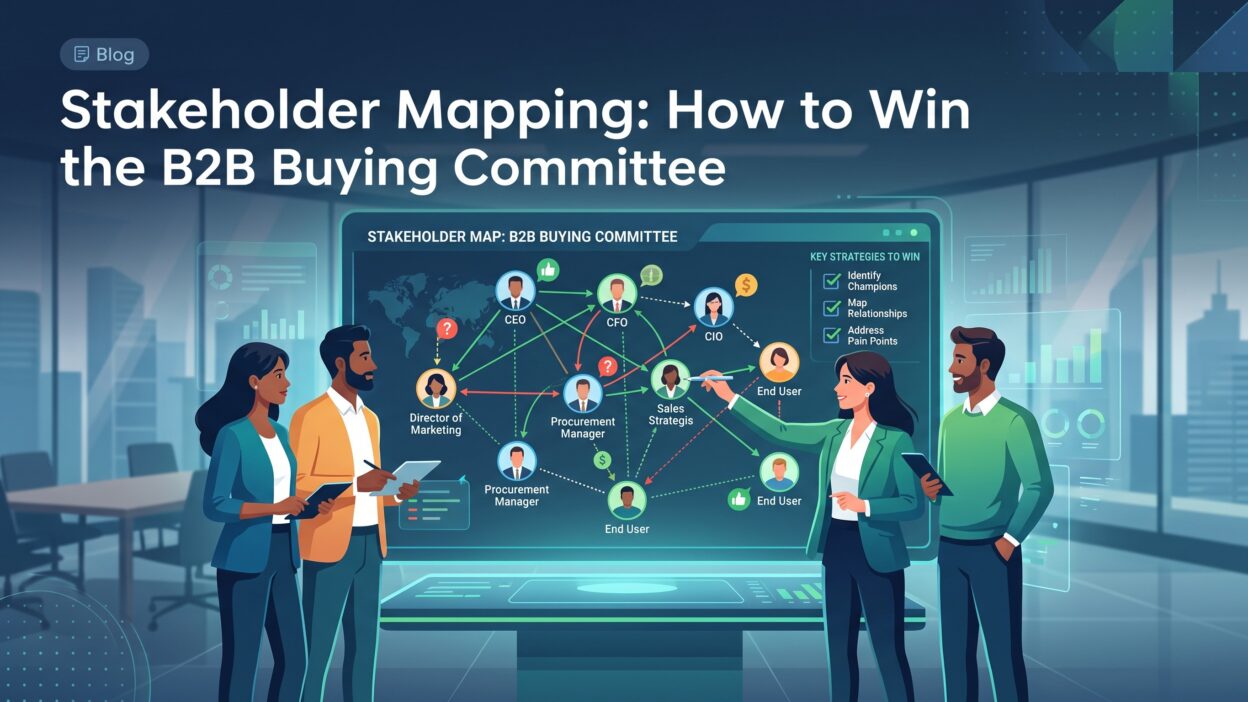
Stakeholder Mapping fixes that problem. It gives your team a clear picture of who decides, who influences, and who blocks. It shows you where to spend your time. It exposes gaps before they hurt you.
Table of Contents
What Is Stakeholder Mapping in B2B Sales?
Stakeholder Mapping is the practice of identifying every person who touches a purchase decision. It records their roles, their goals, their concerns, and their level of support. It turns a vague list of names into a working plan.
A good map answers simple questions. Who signs the contract? Who controls the budget? Who will use the product every day? Who can kill the deal? Who wants you to win?
Where It Fits in Your Sales Process
Reps start the map during account research. They refine it after each call. They share it during deal reviews. The map guides every message, every meeting, and every request for help.
How It Differs From an Org Chart
An org chart shows reporting lines. A map shows influence. The most powerful person in a deal rarely holds the highest title. A quiet security lead may hold veto power. A junior analyst may shape the final shortlist. Titles tell part of the story. Behavior tells the rest.
Who Builds It
The account executive owns the map. Solutions engineers, sales development reps, and executives add what they learn. Customer success teams contribute insight on existing accounts. Everyone feeds one shared document.
Why This Practice Matters for Complex Deals
The modern buying committee is large. Many studies put the average group at six to ten people. Some deals involve more. Each member holds a vote or a veto. Consensus takes time.
Buyers Decide Together
No single person buys a major platform. Finance reviews cost. IT reviews risk. Legal reviews terms. End users judge daily fit. A rep who convinces one person still has to win the rest.
Silent Stakeholders Kill Deals
Many deals fail because of someone the rep never met. That person joins late. They ask hard questions. Nobody on your side has an answer. Early identification of these people protects your pipeline.
Time Is Limited
Reps manage many accounts. They cannot build a relationship with everyone. A map shows where to invest effort. It separates the people who move the deal from the people who watch it.
Forecasts Improve
Managers forecast with more confidence when they see the map. A deal with one contact looks weak. A deal with broad support looks strong. Leaders spot risk early and coach reps before the deal slips.
Competitors Often Skip It
Many sellers still chase a single champion. A rep who maps the whole committee gains an edge. Buyers notice when a vendor understands their internal politics.
The Key Roles Inside a Buying Committee
Every committee looks different. Most share a common set of roles. Learn these types and watch for them in every account.
The Economic Buyer
This person controls the budget. They sign the contract or approve the spend. They care about return on investment and risk. Titles often include chief officer, vice president, or director. Reach this person early with a short, sharp business case.
The Champion
The champion wants you to win. They know the company. They understand the politics. They share information and coach you through the process. A good champion also holds influence. A friendly contact without influence cannot move a deal.
The Technical Evaluator
This person tests your product. They check security, integration, and performance. They often come from IT or engineering. They respect depth and honesty. Hide nothing from them. They will find it anyway.
The End User
End users live with your product every day. They care about ease of use and time saved. Their feedback shapes the final decision. A rollout without their support fails, even after the contract closes.
The Blocker
Blockers resist change. They may prefer a rival, fear extra work, or protect a pet project. Treat them with respect. Ask what worries them. Many blockers turn neutral once someone listens.
The Influencer
Influencers shape opinions without holding formal power. They may be an outside consultant, a respected peer, or a long-tenured employee. Their word carries weight in meetings you cannot join.
The Gatekeeper
Gatekeepers control access. Executive assistants, procurement officers, and legal reviewers all play this role. Treat them as partners. They can speed your path or slow it.
The Legal and Procurement Reviewers
These teams run formal reviews. They compare vendors, negotiate terms, and check compliance. They enter late in the sales cycle. Smart reps introduce themselves early.
How to Build a Stakeholder Mapping Process Step by Step
A clear process makes the work repeatable. Follow these steps for every large deal. Adjust the details to fit your team.
Gather What You Know
Start with your CRM. List every contact tied to the account. Add names from emails, call notes, and meeting invites. Check LinkedIn for titles and tenure. Read the company website and press releases. Review past deals with the same account.
Write down what you do not know. Gaps matter as much as facts.
Identify the Roles
Assign each person a role from the list above. Mark who plays the economic buyer. Mark the champion, the technical evaluator, and the end users. Flag anyone whose role stays unclear.
Ask your champion to confirm your guesses. Insiders spot errors fast.
Capture Goals and Concerns
Write down what each person wants. A finance leader may want lower cost. A security lead may want fewer risks. An operations manager may want faster workflows. Note the personal stakes too. A leader who sponsors your project risks a reputation.
Use real quotes from calls when you can. Real words reveal real priorities.
Rate Support and Influence
Score each person on two scales. Rate their support for your solution from strong opponent to strong advocate. Rate their influence on the final decision from low to high.
Keep the scale simple. A five-point scale works well. Honest scores matter more than precise ones.
Plot the Map
Place each person on a grid. Put influence on one axis and support on the other. High-influence opponents land in one corner. High-influence advocates land in another. The picture shows your priorities at a glance.
Plan Your Engagement
Write an action for each key person. Decide who will reach out, what message to share, and when. Assign owners from your team. Pair executives with executives. Pair technical staff with technical staff.
Set dates. A plan without dates stays a wish.
Review and Update
Update the map after every meeting. Roles shift. New people appear. Opinions change. Review the map in every deal review. A stale map misleads the team and creates false confidence.
Stakeholder Mapping works best as a living habit rather than a one-time project. Teams that update weekly stay ahead of surprises.
Scoring Influence and Support With a Simple Grid
A visual grid helps teams see priorities fast. Build one for every major deal.
The Four Quadrants
Divide the grid into four zones. High influence and high support form the champion zone. Protect these people and give them tools. High influence and low support form the danger zone. Spend your best effort here. Low influence and high support form the cheerleader zone. Keep these people informed and use them for references. Low influence and low support form the watch zone. Monitor them and avoid wasting time.
Move People Across the Grid
The goal is movement. Shift danger-zone contacts toward neutral or positive. Raise the influence of your champion by giving them strong material. Every action should push someone to a better position.
Watch for Hidden Influence
Some people look small on paper and act large in practice. Ask your champion who the group listens to. Watch who speaks first in meetings. Note who others defer to. Adjust your scores based on behavior.
Keep Scores Honest
Reps tend to rate support too high. Optimism hides risk. Ask a simple test question. Has this person taken an action that proves support? Attending a meeting does not count. Sharing an internal document does.
How to Engage Each Type of Stakeholder
A map has no value until you act on it. Tailor your approach to each person.
Engage the Economic Buyer
Lead with business outcomes. Use numbers. Show how your solution cuts cost, grows revenue, or reduces risk. Keep meetings short. Bring a senior executive from your side. Peer conversations open doors that reps cannot open alone.
Equip the Champion
Give your champion a one-page summary and a clear business case. Rehearse tough questions together. Share competitor comparisons they can use. Thank them often. A champion who feels valued works harder.
Win the Technical Evaluator
Bring your best solutions engineer. Offer a proof of value with clear goals. Share security documents early. Answer questions with honesty. Admit limits and explain workarounds. Technical buyers trust vendors who tell the truth.
Support the End Users
Run hands-on demos. Invite users to test the product. Collect their feedback and share it with decision makers. Real user voices carry weight with executives.
Respond to Blockers
Listen first. Ask what concerns them most. Address the issue with facts, examples, or references. Avoid arguing. If the blocker holds high influence, ask your champion or an executive sponsor to help.
Reach the Influencers
Share useful content with them. Offer insights from similar customers. Invite them to webinars or roundtables. Respect their expertise and they will often speak well of you.
Work With Procurement and Legal
Send standard terms and security documents early. Ask for their timeline. Offer a clear contact on your side. Fast answers keep the review moving.
Multi-Threading: Turn the Map Into Relationships
Multi-threading means building real connections with many people inside one account. The map shows who matters. Multi-threading puts you in contact with them.
Why One Thread Breaks
A single contact can leave the company. They can lose a budget fight. They can change roles. When that thread snaps, the deal collapses. Multiple threads hold the deal in place.
How Many Threads Are Enough
Aim to connect with every high-influence role. Most large deals need at least four or five active contacts. Track the number in your CRM. Review it in every deal inspection.
Build Threads Through Value
Do not ask for meetings without a reason. Offer something useful. Share a relevant case study. Invite a person to a peer briefing. Send a short insight tied to their goals. Value earns attention.
Use Your Whole Team
Bring in executives, engineers, and customer success leads. Each person builds a bond with a matching role. Shared effort spreads the load and strengthens trust across the account.
Tools and Templates That Support Stakeholder Mapping
Simple tools work well. Complex tools often go unused.
CRM Fields and Contact Roles
Most CRMs let you tag contact roles on each opportunity. Use them. Add fields for support level and influence score. Make them required before a deal moves to later stages.
Spreadsheets and Slides
A shared spreadsheet or slide works for many teams. Keep one page per account. Show names, roles, scores, and next actions. Visual layouts make deal reviews faster.
Relationship Intelligence Software
Some platforms scan email and calendar data. They show who talks to whom and how often. They flag accounts with thin coverage. These tools save time on research and expose hidden connections.
Conversation Intelligence
Call recording tools reveal who joined each meeting and what each person said. Managers hear concerns that reps miss. Transcripts help refine goals and objections on the map.
A Simple Template
A strong Stakeholder Mapping template includes seven columns. List the name, title, role, goals, concerns, support score, and next action. Add a column for the owner on your team. Keep it to one page.
Common Mistakes to Avoid
Teams repeat the same errors. Learn from them.
Many teams build the map once and forget it. Deals move fast. A map from month one tells you little in month five. Update it weekly.
Many reps map only friendly contacts. They avoid opponents. The opponents then surprise them late. Map the whole committee, including people you dislike.
Many teams confuse title with power. They chase the highest rank and miss the real influencer. Ask insiders who truly shapes the decision.
Many reps fill the map with guesses. They mark support as strong without proof. Require evidence for every high score.
Many teams keep the map in one person’s head. A rep leaves and the knowledge leaves too. Store it in a shared system.
Many leaders treat Stakeholder Mapping as paperwork. Reps then complete it to satisfy a checklist. Show them how the map wins deals and they will use it.
Many teams ignore procurement and legal until the end. Surprises appear and the quarter slips. Add these roles on day one.
How to Measure Whether Your Map Works
Track a few simple numbers. Review them monthly.
Measure stakeholder coverage. Count how many committee members each rep has engaged. Compare coverage on won deals against lost deals. The gap often surprises leaders.
Measure win rate by number of contacts. Deals with broad engagement usually close more often. Share this data with your team.
Measure sales cycle length. Good maps reduce surprises. Fewer surprises mean fewer stalls.
Measure late-stage losses. Count deals that die after proposal stage. A high number signals missed stakeholders.
Measure forecast accuracy. Managers who inspect maps predict outcomes better. Track the gap between forecast and actual results.
Frequently Asked Questions
What is Stakeholder Mapping in sales?
It is a method for identifying every person involved in a buying decision. It records roles, goals, concerns, and levels of support. Sales teams use it to plan engagement and reduce deal risk.
How many people are on a typical B2B buying committee?
Most committees include six to ten people. Larger deals may involve more. Each person brings a different concern.
How often should I update Stakeholder Mapping?
Update it after every meaningful interaction. Review it weekly for active deals. Check it again before every deal review.
How do I find the hidden decision makers?
Ask your champion who else will weigh in. Ask who has opposed past purchases. Watch meeting behavior and note who others follow. Research the company for recent hires and reorganizations.
What if I cannot reach the economic buyer?
Ask your champion for an introduction. Bring an executive from your side to open the door. Offer a short briefing tied to their goals. Persistence with value works better than pressure.
Should I share the map with the customer?
Share a version of it with your champion. Ask them to confirm roles and concerns. Keep scores and private notes internal.
Does this approach work for smaller deals?
Yes. A lighter version suits mid-market deals. Even a simple list of three or four contacts improves your odds.
Which tool is best?
Start with your CRM. Add a spreadsheet or slide if you need more detail. Choose the tool your team will actually use.
Read More:-Qualified Leads vs. Unqualified Leads: How to Tell the Difference and Grow Revenue
Conclusion

Large deals reward the teams that understand people. A buying committee holds many voices. Each voice carries its own goals and fears. A rep who hears them all wins more often.
Stakeholder Mapping gives you that view. It shows who decides, who influences, and who blocks. It guides your time, your messages, and your team. It makes forecasts honest.
Start with the basics. List every contact. Assign roles. Score support and influence. Plan an action for each key person. Update the map every week. Build threads across the account and measure the results.
Open your biggest deal today. Draw the map. Find the gaps. Pick one person you have never met and reach out this week. Small steps change outcomes.