Introduction
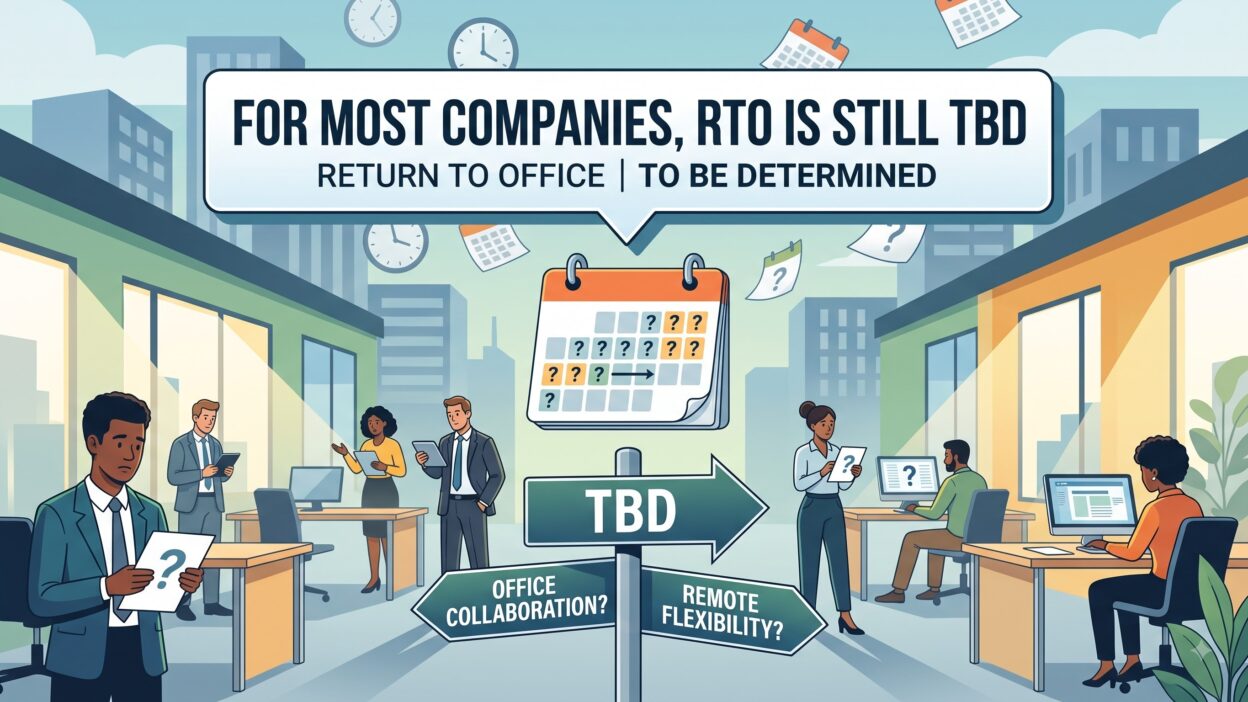
TL;DR Headlines make RTO sound settled. Amazon called workers back. JPMorgan ended remote work. The federal government did the same. A person reading the news might assume every company has picked a side by now. The real picture looks messier. Most businesses still sit somewhere between full remote and full office, adjusting their approach as they go. This guide breaks down where RTO actually stands today, why so many companies remain undecided, and what this uncertainty means for employees and leaders trying to plan ahead.
Table of Contents
What RTO Actually Means Today
RTO stands for return to office. The term describes any policy pushing employees back into a physical workplace after a stretch of remote or hybrid work. People often assume RTO means a strict five-day requirement, but the reality spans a much wider range. Some companies ask for two office days a week. Others ask for four. A smaller group asks for five days with no exceptions.
This range matters because it shapes how employees experience RTO very differently across industries. A worker at a large bank might face a strict, closely monitored RTO policy. A worker at a mid-size tech company might face a loose, barely enforced version of the same label. Both situations get called RTO, even though they feel completely different day to day.
Why RTO Headlines Feel Bigger Than Reality
Large Companies Dominate the Coverage
Big, well-known employers generate the most news coverage around RTO. When a company with hundreds of thousands of workers changes its policy, journalists cover it widely. This creates a skewed impression, since most working people do not work at companies that size. Smaller and mid-size employers rarely make headlines, even when their RTO decisions affect just as many lives collectively.
The Data Tells a Quieter Story
Broad survey data shows hybrid work has barely shifted over the past couple of years, even as RTO announcements pile up in the news. A large share of remote-capable employees still work under some kind of hybrid arrangement. Full five-day office requirements remain a minority position across the wider business world, even though they dominate public conversation.
Policy Moves Faster Than Practice
Many companies announce a stricter RTO policy well before they actually enforce it. Required in-office days can rise sharply on paper while real attendance barely moves in practice. This gap between policy and behavior shows just how unsettled RTO still feels inside many organizations, even the ones that already made a public announcement.
Why So Many Companies Still Have No Clear RTO Plan
Leadership Disagreement Behind the Scenes
Executives often disagree internally about the right RTO approach. Some believe in-person work drives stronger collaboration and culture. Others worry a strict RTO policy will push top talent toward more flexible competitors. This tension inside leadership teams slows down any final decision, leaving many companies stuck in a holding pattern.
Mixed Evidence on Productivity
Research on RTO and productivity remains genuinely mixed. Some studies suggest office attendance boosts collaboration on certain types of work. Other studies find little solid evidence that stricter RTO policies actually improve business performance. Without clear proof either way, many leadership teams hesitate to commit fully to one direction.
Real Estate and Cost Considerations
Office space costs money whether employees show up or not. Some companies already committed to long leases feel pressure to fill those seats through RTO. Others downsized their office footprint during remote years and now lack the physical space to bring everyone back even if they wanted to. These practical constraints shape RTO decisions just as much as culture or productivity debates.
Fear of Losing Talent
A strict RTO mandate can shrink a company’s hiring pool significantly, since many strong candidates now expect flexibility as a baseline. Companies competing for scarce technical or specialized talent often hesitate to enforce strict RTO rules, worried about losing candidates to more flexible competitors. This fear keeps many RTO policies deliberately vague or slow to finalize.
Industries Where RTO Looks Different
Financial services and large banks tend to push RTO harder than most other sectors, often citing culture and mentorship as reasons for stricter in-office rules. Technology companies show a much wider range, with some giants mandating five days while many mid-size tech firms lean into flexibility as a hiring advantage. Manufacturing and healthcare roles often require physical presence regardless of RTO debates, since the work itself demands it.
Professional services firms sit somewhere in the middle, often settling into a hybrid rhythm of two or three office days a week. This industry-by-industry variation explains why a single national RTO story rarely tells the full picture. A worker’s actual experience depends heavily on their specific field, not just the general headlines about RTO trends.
The Employee Side of the RTO Debate
Employees often feel caught in the middle of an unclear RTO situation. A company might announce a new policy without giving a clear timeline for enforcement. Workers plan their lives around commutes, childcare, and housing decisions, and constant RTO uncertainty makes this planning genuinely difficult.
Many employees report frustration when RTO announcements arrive with little warning or explanation. Long commutes and disrupted routines carry a real personal cost, even when a company frames its RTO decision around culture or connection. This tension explains why RTO remains one of the most emotionally charged workplace topics of the past few years, well beyond a simple policy debate.
The Employer Side of the RTO Debate
Employers weighing an RTO decision face real tradeoffs on both sides. A stricter policy might strengthen in-person collaboration and mentorship for junior staff. That same policy might also trigger turnover among senior employees who value flexibility highly. Leadership teams must weigh short-term cultural goals against longer-term retention risk.
Many employers choose a middle path instead of a firm RTO stance, asking for a few office days a week without strict enforcement. This approach buys time while leadership gathers more data on what actually works for their specific teams. It also explains why so many companies describe their RTO plans as still evolving rather than finalized.
Signs a Company’s RTO Policy Is Still Unsettled
A company frequently changing its required office days signals an unsettled RTO approach. Vague public statements about “evaluating our workplace strategy” often mean leadership has not reached internal agreement yet. Inconsistent enforcement, where some teams face strict RTO rules and others do not, points to the same underlying uncertainty.
Frequent town halls or surveys asking employees about office preferences also suggest a company is still gathering input before finalizing its RTO direction. These signals help employees read between the lines of official communication, giving a clearer sense of whether a company’s RTO policy feels stable or still very much in flux.
What Job Seekers Should Know About RTO Right Now
Job seekers should research a company’s actual RTO practice, not just its public policy statement. A listed hybrid policy can mean very different things depending on enforcement. Asking direct questions during an interview about required office days and how strictly they get tracked gives a clearer picture than a general policy page.
Candidates prioritizing flexibility often find stronger options at mid-size companies rather than the largest, most publicized employers. Smaller companies frequently use flexible RTO policies as a genuine hiring advantage, competing on lifestyle benefits rather than matching the compensation of much larger firms. Understanding this dynamic helps job seekers target companies whose RTO approach actually matches their own priorities.
What Leaders Should Consider Before Finalizing an RTO Policy
Leaders should gather real internal data before locking in a firm RTO stance. Attendance patterns, retention risk, and team-specific collaboration needs vary widely even within a single company. A blanket RTO policy applied evenly across every department often ignores these real differences.
Clear communication matters just as much as the policy itself. Employees respond better to a well-explained RTO decision, even a strict one, than to a vague or constantly shifting one. Leaders who explain their reasoning and give reasonable notice tend to see less disruption than those who announce sudden RTO changes without context.
Real World Examples of RTO Still Being Undecided
A large investment bank tightened its RTO policy for senior leaders first, while considering a broader rollout still under review. A mid-size software company kept its flexible policy unchanged, using it actively in recruiting materials to attract candidates from stricter competitors. A retail company adjusted its RTO requirement twice within a single year, responding to employee feedback and shifting business needs each time.
These examples show a pattern repeating across many industries. Companies test an RTO approach, watch how employees and business metrics respond, then adjust again. This ongoing back and forth is exactly why so many businesses describe their RTO plans as still very much a work in progress rather than a finished decision.
Frequently Asked Questions
What does RTO actually stand for? RTO stands for return to office. It refers to any policy that brings employees back into a physical workplace after a period of remote or hybrid work, ranging from a couple of office days a week to a full five-day requirement.
Are most companies requiring full-time RTO in 2026? No. Most companies still offer some form of hybrid flexibility. Full five-day RTO mandates remain more common among the largest, most publicized employers rather than the broader business world overall.
Why do so many companies delay a final RTO decision? Leadership disagreement, mixed research on productivity, real estate constraints, and fear of losing talent all contribute to delayed RTO decisions. Many companies prefer to gather more data before committing fully.
How can employees tell if a company’s RTO policy is still unstable? Frequent policy changes, vague public statements, and inconsistent enforcement across teams all signal an unsettled RTO approach. Asking direct questions during interviews helps reveal the real situation beyond an official policy page.
Does a strict RTO policy always improve company performance? Not necessarily. Research on this question remains mixed, with limited solid evidence that stricter RTO requirements directly improve business results, even though some leaders believe strongly in the benefits of in-person work.
Should job seekers prioritize RTO flexibility when evaluating offers? It depends on personal priorities, but many candidates now weigh RTO policy heavily during their job search. Mid-size companies often offer stronger flexibility than the largest, most publicized employers in the current market.
Read More:-The Real Cost of Poor Data Quality for B2B Teams
Conclusion

RTO looks settled from a distance, but a closer look reveals a much messier reality. Big, well-covered companies push strict mandates while a much larger group of businesses stays in a flexible, undecided middle ground. Leadership disagreement, mixed research, real estate pressure, and talent competition all keep RTO plans shifting month to month for many organizations. Employees and job seekers benefit from looking past the headlines and researching how RTO actually plays out inside a specific company. For most businesses today, RTO remains an open question rather than a finished policy, and that uncertainty will likely continue for a while longer.