Introduction
TL;DR Revenue targets get set every year. Team headcount rarely gets modeled with the same rigor. This gap causes missed quotas, burned-out reps, and budget surprises halfway through the year.
Sales capacity planning fixes this gap. It connects your revenue goal directly to the number of reps, managers, and support roles you actually need. Done right, it turns hiring from a guessing game into a math problem with a clear answer.
This guide walks through the full process. You’ll learn how sales capacity planning works, the inputs it depends on, and how to build a model that holds up when leadership asks hard questions. You’ll also see the common mistakes that quietly break capacity plans and the metrics that keep your model honest.
If you own revenue targets, build headcount plans, or sit in RevOps, this guide gives you a practical, repeatable framework. No guesswork. Just a clear method for sales capacity planning that scales with your business.
Table of Contents
What Is Sales Capacity Planning?
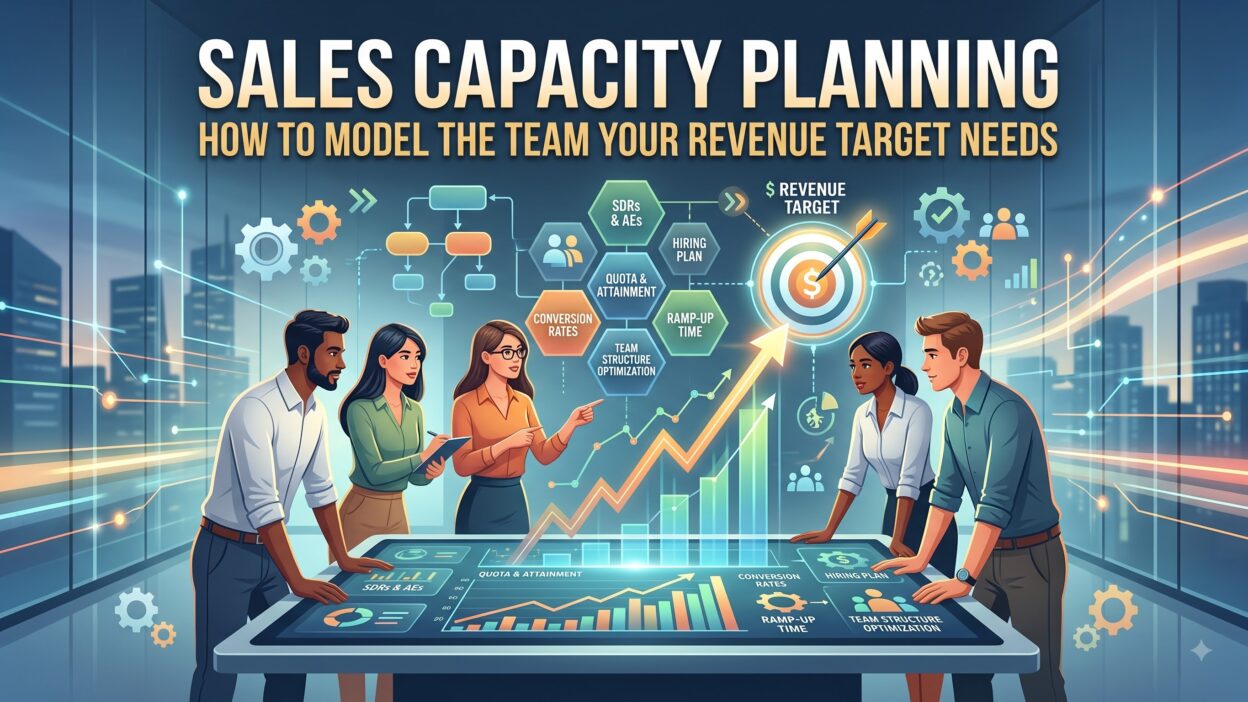
Sales capacity planning is the process of calculating how many sales reps a company needs to hit a specific revenue target. It turns a single number, like next year’s revenue goal, into a staffing plan built on real data.
This process looks at rep productivity, ramp time, quota levels, and attrition together. Each piece changes the final headcount number. Skip any of them, and the model breaks.
Why Sales Capacity Planning Matters
Without sales capacity planning, companies either overhire and waste budget, or underhire and miss targets. Both mistakes cost real money and hurt team morale.
A clear capacity plan gives finance, sales leadership, and HR a shared number to work from. Everyone plans around the same math instead of competing assumptions.
Sales Capacity Planning vs Headcount Budgeting
Headcount budgeting often starts with a fixed number set by finance. Sales capacity planning works the other way. It starts with the revenue goal and works backward to the headcount required.
This distinction matters. A budget-first approach can leave a revenue target unreachable from day one. Sales capacity planning protects against that gap by tying every hire directly to expected output.
How Sales Capacity Planning Works
Sales capacity planning follows a clear formula. Revenue target, divided by rep productivity, adjusted for ramp time and attrition, equals required headcount.
The Core Formula
Start with the revenue goal for the period. Divide that number by the average quota a fully ramped rep can carry. This gives a raw headcount number before adjustments.
This raw number rarely reflects reality on its own. Sales capacity planning requires layering in ramp time, attrition, and productivity variance before the number becomes usable.
Accounting for Ramp Time
New reps rarely hit full productivity on day one. Most take three to six months to ramp, depending on deal complexity. During this window, they contribute less revenue than a tenured rep.
Sales capacity planning accounts for this gap by weighting new hires at a lower productivity percentage during their ramp period. Ignoring ramp time leads to underhiring, since the model assumes full output from day one.
Accounting for Attrition
Reps leave. Some get promoted, some get let go, some leave voluntarily. Sales capacity planning builds in an expected attrition rate, often between 10% and 25% annually depending on the industry.
This buffer keeps the plan realistic. Without it, a single unexpected departure can create a revenue gap nobody planned for.
Key Inputs for Sales Capacity Planning
A strong sales capacity planning model depends on a handful of core inputs. Get these numbers wrong, and the entire plan shifts off course.
Average Deal Size
Average deal size shapes how many deals a rep needs to close to hit quota. Larger deal sizes mean fewer deals needed, but often longer sales cycles. Smaller deal sizes mean higher deal volume and different rep skill requirements.
Sales capacity planning uses this number to estimate realistic quota levels per rep, based on how the business actually sells.
Sales Cycle Length
Sales cycle length determines how many deals a rep can realistically work at once. A 30-day cycle allows for more velocity than a 180-day enterprise cycle.
Longer cycles mean reps carry more deals in progress at any given time, which changes how sales capacity planning models expected close rates within a given period.
Win Rate
Win rate shows what percentage of opportunities actually close. A lower win rate means more pipeline is needed to hit the same revenue number.
Sales capacity planning factors in win rate to calculate how much pipeline each rep must generate or receive to hit their individual quota.
Quota per Rep
Quota per rep sets the productivity benchmark the entire model depends on. This number should reflect realistic, historical performance, not an aspirational figure set by leadership.
Setting quota too high distorts sales capacity planning and creates a headcount number that looks efficient on paper but fails in practice.
Ramp Time and Productivity Curve
New hire productivity rarely moves in a straight line. Most reps follow a curve, starting near zero and climbing toward full quota over several months.
Sales capacity planning maps this curve carefully, since hiring too late to account for ramp time often causes revenue shortfalls in the following quarter.
Building a Sales Capacity Planning Model
A working model turns these inputs into a clear headcount number, month by month.
Set the Revenue Target
Start with the confirmed revenue goal for the period. This number anchors the entire sales capacity planning process and should come directly from finance or leadership.
Calculate Required Pipeline
Divide the revenue target by your average win rate to calculate the total pipeline needed. This step shows how much opportunity volume the sales team must generate or receive.
Determine Rep Productivity
Set a realistic quota per fully ramped rep, based on historical attainment data. Sales capacity planning fails quickly when this number gets inflated beyond what reps have actually achieved.
Layer in Ramp and Attrition
Apply your ramp time curve and expected attrition rate to the raw headcount number. This step usually increases the final headcount needed, since new hires and departures both reduce total available capacity.
Map Hiring Timeline
Spread hires across the year based on when capacity gaps will actually appear. Hiring everyone in January when the revenue gap appears in Q3 wastes budget and creates management strain early.
Sales capacity planning works best as a living model, reviewed quarterly, not a static spreadsheet built once and forgotten.
Common Sales Capacity Planning Mistakes
Even experienced RevOps teams fall into predictable traps when building these models.
Setting quota too high inflates expected output and understates true headcount needs. Ignoring ramp time creates a false sense of available capacity in the first two quarters of the year. Skipping attrition assumptions leaves no buffer when reps leave mid-year.
Treating the plan as a one-time exercise causes drift, since market conditions and rep performance shift throughout the year. Failing to segment by team or territory hides capacity gaps in specific regions or verticals, even when the overall number looks healthy.
Sales capacity planning only stays useful when reviewed and adjusted regularly against real performance data.
Sales Capacity Planning by Team Segment
A single company-wide number often hides important gaps. Breaking the model down by segment gives a clearer picture.
Modeling by Territory
Different territories carry different deal sizes, cycle lengths, and win rates. Sales capacity planning applied evenly across all territories often overstaffs weaker regions and understaffs strong ones.
Segmenting by territory reveals where additional headcount actually drives the most revenue impact.
Modeling by Deal Segment
Enterprise, mid-market, and SMB deals behave differently. Enterprise reps often carry fewer, larger deals with longer cycles. SMB reps carry higher volume with shorter cycles.
Sales capacity planning built separately for each segment produces far more accurate headcount numbers than one blended model across the entire sales org.
Modeling by Role
Account executives, sales development reps, and customer success reps all contribute differently to revenue. A complete sales capacity planning model accounts for each role separately, since a shortage in pipeline generation affects closing capacity just as much as a shortage in closing reps.
Sales Capacity Planning Metrics to Track
Tracking the right numbers keeps the model accurate over time.
Quota attainment shows what percentage of reps hit their target each period. Consistently low attainment signals the model’s productivity assumptions run too high.
Ramp time to full productivity shows how long new hires actually take to reach quota. Comparing this against the planned ramp curve reveals if hiring timelines need adjustment.
Attrition rate shows how many reps leave within a given period. A rate higher than planned signals the model needs a larger buffer going forward.
Pipeline coverage ratio shows how much pipeline exists relative to the remaining revenue target. Low coverage often means capacity gaps will show up before quarter end.
Reviewing these metrics every quarter keeps sales capacity planning grounded in real performance instead of outdated assumptions from the original plan.
FAQs on Sales Capacity Planning
What is sales capacity planning? Sales capacity planning is the process of calculating how many sales reps a company needs to hit a revenue target, based on quota, ramp time, and attrition.
How often should sales capacity planning get reviewed? Quarterly reviews work best. Market conditions, rep performance, and revenue targets shift often enough that an annual review alone leaves gaps unaddressed.
What’s a realistic ramp time for new sales reps? Most reps take three to six months to reach full productivity, though this varies based on deal complexity and sales cycle length.
How does attrition affect sales capacity planning? Attrition reduces available capacity throughout the year. Most models build in a buffer between 10% and 25% to account for expected departures.
Should sales capacity planning differ by territory? Yes. Territories vary in deal size, cycle length, and win rate, so a single blended model often misrepresents actual capacity needs in specific regions.
What happens without proper sales capacity planning? Companies risk overhiring, which wastes budget, or underhiring, which causes missed revenue targets and rep burnout from unrealistic quota loads.
Who owns sales capacity planning inside a company? RevOps typically leads the process, working closely with sales leadership and finance to align headcount numbers with revenue goals.
Read More:-Should Your Job Posting Require a Degree?
Conclusion

Sales capacity planning turns a revenue target into a real, workable staffing plan. It replaces guesswork with a model built on quota, ramp time, attrition, and pipeline data.
Companies that skip this process often discover capacity gaps too late, usually after a quarter already came up short. Companies that build a proper model catch these gaps months in advance, giving time to hire, train, and ramp reps before the shortfall hits revenue.
The formula itself stays simple. The real work lies in getting the inputs right and reviewing them often. Quota assumptions, ramp curves, and attrition rates all shift over time, and the model needs to shift with them.
Treat sales capacity planning as an ongoing practice, not a once-a-year spreadsheet exercise. Review it quarterly, segment it by territory and role, and tie every hiring decision back to the revenue math. Do this consistently, and your headcount plan will finally match the target it’s supposed to support.