
Introduction
TL;DR Your sales team needs better account data. Your current tool no longer fits. You want options before you switch.
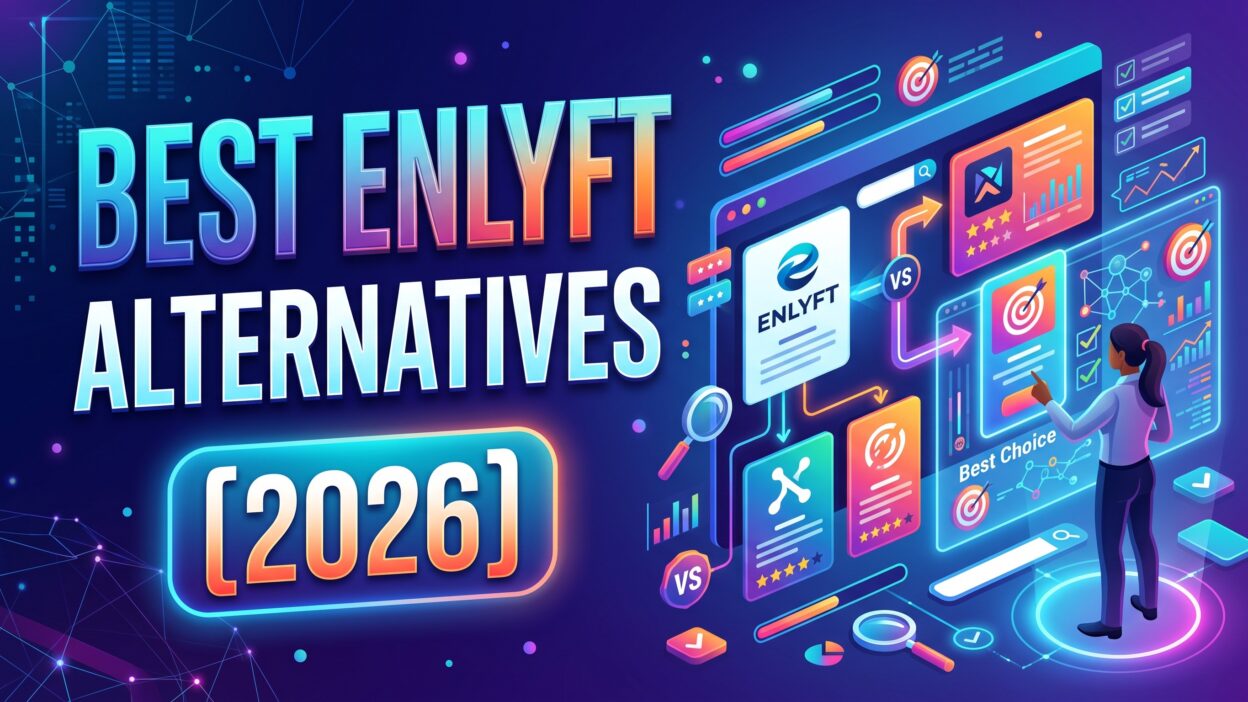
This guide covers the best Enlyft Alternatives for 2026. I compare each tool by data depth, price, ease of use, and fit. Every section gives you plain facts. You can match a tool to your own goals.
Enlyft built its name on technology data. It shows which software a company runs. Sales teams use that signal to find buyers. Many teams love the idea. Some outgrow it. Others never find the right fit.
Maybe your budget shrank. Maybe your reps want contact details on the same screen. Maybe your target market sits outside the tool’s strong regions. Any of these reasons makes a search for Enlyft Alternatives smart.
Table of Contents
What Is Enlyft?
Enlyft is a revenue intelligence company in the San Francisco Bay Area. The team started in 2013. The company sells account intelligence to business-to-business sellers. Its core strength is technographic data.
Technographic data tells you which products a company uses. You can see if a prospect runs a certain cloud platform, security tool, or marketing system. That detail helps a rep decide who to call first. A firm that runs a competing product may switch. A firm that runs a partner product may buy faster.
Enlyft collects this data from public sources across the web. Machine learning models then score accounts by fit. The scores point reps toward companies that look like your best customers. Many users connect the data to Salesforce or similar customer relationship systems. Reps see the signals inside tools they already use.
Technology vendors form the largest customer group. Software makers, hardware firms, and channel partners use Enlyft to build target lists. Marketing teams use it to shape campaigns. Sales operations teams use it to plan territories.
The tool does a narrow job well. It does not try to replace every sales database. That focus shapes the buying decision. Some teams want exactly this depth. Other teams want a broader toolkit. The next section explains why those teams look for Enlyft Alternatives.
Why Teams Search for Enlyft Alternatives
No tool fits every team. Buyers leave Enlyft for several common reasons.
Pricing and Contract Fit
Enlyft pricing does not appear on a public page. You request a quote. Small teams often find the cost high for a single data type. Annual contracts add pressure. A startup with ten reps wants flexibility. Larger platforms sometimes bundle more data for a similar price.
Missing Contact Data
Technographic insight tells you who to target. It does not always tell you whom to email. Reps still need names, phone numbers, and verified addresses. Many buyers pair Enlyft with a second contact database. Some prefer one platform that covers both jobs. That wish drives many searches for Enlyft Alternatives.
Coverage and Focus
Enlyft serves technology sellers best. Teams that sell services, manufacturing products, or financial offers may see less value. Regional coverage can also vary. A buyer in Europe or Asia should test local data before signing. Intent signals matter too. Some teams want to know who researches a topic this week. Technographic data alone cannot answer that.
How to Choose Among Enlyft Alternatives
A clear checklist saves time. Decide what you need before you watch a single demo.
Define Your Core Job
Write down the main task. Do you want to build target account lists? Do you want contact details for outreach? Do you want to spot buying intent? Each job points to a different category of tool. A tool that excels at one job may fall short at another.
Test the Data
Data quality decides value. Ask each vendor for a trial. Load a list of fifty accounts you know well. Check the technology data against reality. Verify a sample of contacts. Track bounce rates. This test takes a day and prevents a costly mistake.
Check Integrations
Your reps live inside a customer relationship system. Confirm that the new tool connects cleanly. Look at email platforms and sales engagement tools too. A great dataset that never reaches your reps has no value.
Compare Total Cost
Look beyond the license fee. Add seats, credits, onboarding, and renewal increases. Ask each vendor for a three-year price. Use that number in your comparison. When you review Enlyft Alternatives, cost per useful account beats the headline price.
Best Enlyft Alternatives in 2026
The tools below cover the main routes buyers take. Each section explains what the product does, who benefits, and where it falls short.
ZoomInfo
ZoomInfo is the best-known sales intelligence platform. It offers a huge database of companies and contacts. Reps can find direct dials, email addresses, org charts, and technology data in one place. Intent signals and engagement tools sit on the same platform.
This breadth makes ZoomInfo a common choice for buyers who leave Enlyft. You get contact data and account data together. Large sales teams like the scale. Many users also praise the integrations with customer relationship systems.
The platform costs more than most tools on this list. Contracts run annually. Renewal increases surprise some buyers. Data accuracy varies by region and role. Test the data on your own market before you commit.
In an Enlyft vs ZoomInfo comparison, the difference comes down to focus. Enlyft goes deep on technology signals. ZoomInfo goes wide across many data types. Pick ZoomInfo if you want one platform for most prospecting tasks. Pick a narrower tool if you only need specific signals.
HG Insights
HG Insights is the closest direct rival in technographic data. The company tracks technology installs, spend estimates, and contract details across millions of companies. Its data goes beyond a simple list of products. You can often see estimated spending by category.
Spend data helps sellers size an opportunity. A company that spends heavily on a competing product represents a big prize. A company with a low spend may not justify the effort. Reps can prioritize accounts with better precision.
HG Insights serves technology vendors, channel partners, and investors. Many users value the depth of the installed base data. The platform works well for teams that build account-based marketing programs.
Expect enterprise pricing. The company sells through a sales team and does not publish rates. Small teams may find the cost heavy. The interface also leans toward analysts rather than casual users. Training helps.
Choose HG Insights if technographic depth remains your top need and you want richer spend data than your current tool offers.
6sense
6sense blends account intelligence with intent data and predictive models. The platform watches signals across the web. It spots accounts that research your category before they ever fill out a form. Marketing and sales teams then act on those signals.
The company absorbed Slintel, a well-known technographic and contact provider. That move added technology data and contact details to the platform. Buyers now get intent, technographics, and outreach tools under one roof.
6sense suits mid-size and large teams that run account-based programs. Marketers love the audience-building tools. Sales leaders like the account scoring. The learning curve runs steeper than a simple database.
Pricing sits in the enterprise range. Setup takes time. You need clean data in your customer relationship system for the models to work well. Teams without a mature process may struggle.
Choose 6sense if you want to catch buyers early and your team has the process to use intent data. Skip it if you need a simple lookup tool.
Demandbase
Demandbase focuses on account-based marketing and sales. The platform combines account identification, advertising, intent data, and analytics. Teams use it to target named accounts with ads and then track engagement across channels.
Technology data forms one part of the offer. The bigger value comes from orchestration. Marketing and sales see the same account activity. They coordinate outreach with shared dashboards.
Demandbase fits companies that run structured account-based programs. Marketing teams drive most of the value. Sales-only teams may find the platform more than they need.
Expect a sales-led purchase and an enterprise price. Implementation takes effort. Plan for training and ongoing management. Teams that commit see strong results. Teams that treat it as a lookup tool waste the budget.
Apollo.io
Apollo.io attracts buyers who want power at a lower cost. The platform combines a large contact database with email sequencing, a dialer, and basic analytics. You can find prospects, enrich records, and launch outreach from one screen.
A free tier lets small teams start without a sales call. Paid plans cost far less than enterprise platforms. Startups and small sales teams often pick Apollo for this reason.
Technology filters let you search for companies that use specific tools. The depth does not match a dedicated technographic provider. Many teams find it good enough for list building. Teams that need precise install data may want a second source.
Data quality draws mixed reviews. Some users report strong accuracy. Others report outdated contacts. Run your own test and watch bounce rates. Email deliverability needs care at high volume.
Choose Apollo.io if budget matters, your team prospects daily, and you want one tool for data plus outreach.
Cognism
Cognism specializes in compliant contact data. The company offers phone-verified mobile numbers and strong coverage in Europe. Many sales teams in the United Kingdom and the European Union choose it because of its focus on privacy rules.
The platform also provides intent data through a partnership with a third-party provider. Technology filters help reps build lists. The company lets users check contacts against do-not-call lists in several regions.
Cognism fits teams that sell across Europe and need accurate mobile numbers. It does not match Enlyft on deep technographic analysis. Pair it with another source if you need that.
Pricing is quote-based. Expect mid-to-high enterprise cost. The value shines when your reps make a lot of calls and need numbers that connect.
BuiltWith and Smaller Technology Lookups
BuiltWith tracks the technology stacks of websites. You can search for sites that use a specific platform. The data suits agencies, web service providers, and marketers who sell tools to website owners.
The tool costs far less than enterprise platforms. The limits show quickly. BuiltWith sees what runs on a public website. It cannot see internal systems or back-office software. Contact data is thin.
Use it as a budget starting point or a supplement to a bigger tool. Do not expect it to replace a full account intelligence platform.
Enlyft Alternatives Compared at a Glance
A side-by-side view helps you narrow the field. Think in categories rather than product names.
ZoomInfo and Apollo.io lead on contact data. ZoomInfo offers more scale and depth. Apollo.io offers a lower price and a friendlier entry point. Cognism leads on compliant European mobile numbers.
HG Insights leads on pure technographic depth. Its spend estimates give sellers a stronger sense of deal size. BuiltWith covers website technology at a low cost.
6sense and Demandbase lead on intent and account-based orchestration. They suit teams that coordinate marketing and sales. Both need process maturity and a real budget.
Pricing follows a clear pattern. Enterprise platforms hide prices and sell annual contracts. Apollo.io and BuiltWith publish rates. Plan for negotiation with the first group. Compare quotes from at least three vendors.
Most buyers end up in one of two camps. The first camp wants an all-in-one platform with contact data and signals. ZoomInfo and 6sense fit that goal. The second camp wants specialized data to feed existing tools. HG Insights and BuiltWith fit that goal. Knowing your camp cuts the Enlyft Alternatives list from nine tools to two or three.
Best Enlyft Alternatives by Use Case
For Small Teams and Startups
Apollo.io gives the best value. The free tier lets you test the workflow. Paid plans stay affordable. BuiltWith adds cheap technology lookups. Small teams rarely need an enterprise platform in the first year.
For Technology Vendors Who Need Deep Installed Base Data
HG Insights suits this need best. Spend estimates and install details help you size accounts. Teams that already like Enlyft’s approach will find the transition easy. The data feels familiar and often goes deeper.
For Account-Based Marketing Teams
6sense and Demandbase serve this group. Both combine intent data, scoring, and advertising tools. Choose the one that matches your existing stack and your team’s skills.
For European Sales Teams
Cognism gives strong regional coverage and compliant data. Reps get verified mobile numbers. ZoomInfo also works in many European markets, though you should test the data first.
Mistakes to Avoid When Switching
Switching tools sounds simple. Mistakes cost real money.
Do not buy based on a demo alone. Vendors show polished examples. Test your own accounts. Reps will tell you quickly if the data helps.
Do not ignore adoption. A tool that reps refuse to open produces no revenue. Involve two or three reps in the trial. Ask for honest feedback.
Do not skip the integration check. Data that sits outside your customer relationship system rarely gets used. Confirm field mapping and sync speed before you sign.
Do not overlook contract terms. Auto-renewal clauses catch many buyers. Mark the notice date on your calendar. Negotiate a shorter first term if you feel unsure.
Do not forget your current data. Export your Enlyft lists and scores before the contract ends. Keep your notes and tags. A clean handoff protects your pipeline during the change.
Plan the move in phases. Run the new tool beside the old one for a month. Compare results. Cut over when the numbers favor the new choice.
Frequently Asked Questions
What are the best Enlyft Alternatives?
ZoomInfo, HG Insights, 6sense, Demandbase, Apollo.io, and Cognism lead the list. Each one fits a different need. ZoomInfo offers broad data. HG Insights offers deep technology data. 6sense adds intent signals. Apollo.io gives the best budget option. Cognism serves European teams.
Who are Enlyft competitors?
HG Insights competes most directly on technographic data. ZoomInfo, 6sense, and Demandbase compete on wider sales intelligence. BuiltWith and Apollo.io compete at lower price points. Your ideal rival depends on whether you value data depth, breadth, or cost.
How much does Enlyft cost?
Enlyft does not publish a price list. You request a quote from the sales team. Cost depends on seats, data volume, and contract length. Ask for a multi-year quote. Compare it with offers from two or three rivals before you decide.
Is there a free Enlyft alternative?
Apollo.io offers a free tier with limited credits. BuiltWith offers limited free lookups. Free options work for testing and small projects. They rarely replace a full technographic platform. Use them to learn your needs before you buy a bigger tool.
What is technographic data?
Technographic data describes the technology a company uses. It covers software, hardware, and cloud services. Sellers use it to find accounts that fit their product. A prospect that uses a compatible tool may buy faster. A prospect that uses a rival may consider a switch.
What is the difference between Enlyft and ZoomInfo?
Enlyft focuses on technology insight and account scoring. ZoomInfo covers contacts, company data, intent, and engagement tools. ZoomInfo offers more breadth. Enlyft offers a narrower focus. Teams that want one platform lean toward ZoomInfo. Teams that want specialized signals may prefer a technographic provider.
How do I test a sales intelligence tool before buying?
Request a trial. Upload fifty accounts you know well. Check the technology data against what you already know. Test a sample of emails and phone numbers. Track bounce rates. Ask reps to try the workflow for two weeks. Score the results before you talk price.
Read More:-Odoo vs. Salesforce: How Do They Compare in 2026?
Conclusion

The market offers many strong Enlyft Alternatives. No single tool wins for every team. Your goals decide the answer.
Choose ZoomInfo if you want one platform with broad data. Choose HG Insights if technology depth drives your plan. Choose 6sense or Demandbase if you run account-based programs and want intent signals. Choose Apollo.io if budget leads your decision. Choose Cognism if you sell across Europe and need verified mobile numbers.
Enlyft still serves technology sellers well. Many teams stay happy for years. The search for Enlyft Alternatives makes sense when your needs shift. New goals, tighter budgets, and new markets all change the equation.