Introduction
TL;DR Most webinars disappoint. A team spends weeks preparing slides, inviting speakers, and setting up the platform. Fifty people show up. Five engage. Two become leads. The pipeline impact is close to zero.
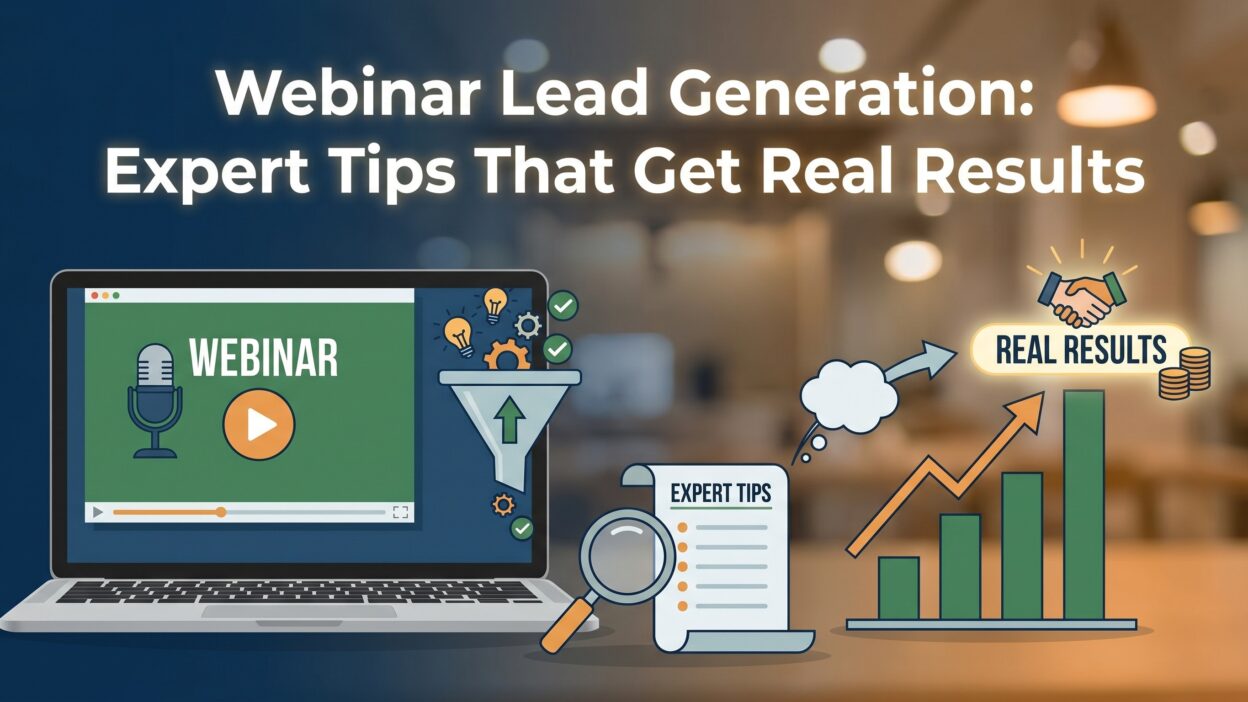
The problem is almost never the format. Webinars remain one of the most powerful formats in B2B marketing. The problem is the strategy. Webinar lead generation fails when teams treat the event as the campaign instead of treating it as a single touchpoint inside a larger revenue system.
This blog covers what actually works in webinar lead generation. It covers how to attract the right audience, convert attendees into pipeline, and build a follow-up system that turns one event into weeks of revenue opportunity.
Table of Contents
Why Webinar Lead Generation Outperforms Other B2B Channels
Webinar lead generation delivers something most B2B channels cannot. It creates a live, interactive experience between your brand and your target buyers. Buyers attend with specific learning goals. They invest 45 to 60 minutes of their time. That level of engagement signals serious interest.
A contact who downloads a PDF might skim three pages and close the tab. A contact who attends your webinar and asks a question in the Q&A has demonstrated a completely different level of intent. That intent difference changes how sales should approach them.
Webinar lead generation also gives you data that other formats do not. You know who attended. You know which questions they asked. You know how long they stayed. You know which poll responses they selected. Each data point sharpens your follow-up strategy.
The format also builds authority fast. A well-run webinar with strong speakers and useful content positions your brand as a trusted expert. Buyers remember who taught them something valuable. That memory shortens sales cycles and improves win rates.
What Makes Webinar Lead Generation Different From Other Lead Channels
Most lead generation channels produce contact information with minimal context. You get a name and an email. You know the person clicked an ad or visited a landing page. You know very little about their actual buying intent or specific challenges.
Webinar lead generation gives you behavioral context at a granular level. Attendance duration tells you how engaged a lead was. Question content tells you which challenges they face. Poll responses reveal their current stage and priorities. This context makes every follow-up conversation more relevant.
Sales reps who receive webinar-qualified leads close faster because they already know what the buyer cares about. They can reference specific moments from the event. They can address the exact question the lead asked during Q&A. That specificity builds immediate rapport.
The ROI Case for Webinar Lead Generation in 2026
Webinar lead generation delivers strong ROI when structured correctly. A single webinar can generate 200 to 500 registrations from a targeted audience. Of those, 35 to 45 percent typically attend live. Another 20 to 30 percent watch the recording within two weeks.
With proper follow-up, a well-executed webinar can generate 15 to 30 qualified pipeline opportunities from a single event. Multiply that by a consistent monthly or quarterly webinar cadence and the pipeline impact becomes significant.
The content asset also lives beyond the event. Recordings become gated assets. Clips become social content. Transcripts become blog posts. Key insights become email sequences. One webinar generates content that supports webinar lead generation for months after the live event.
Choosing the Right Webinar Topic for Maximum Lead Generation
Topic selection determines registration volume more than any other variable in webinar lead generation. A brilliant promotional strategy cannot save a topic nobody cares about. A mediocre promotional strategy cannot stop a topic that directly addresses a burning buyer problem.
The best webinar topics sit at the intersection of your expertise and your buyer’s active questions. They are specific enough to attract a qualified audience. They are broad enough to generate sufficient registration volume. Finding that intersection requires deliberate research.
Researching Topics That Drive Webinar Lead Generation Results
Start with your sales team. Ask which questions prospects ask most frequently during discovery calls. Ask which objections stall deals most often. Ask which competitor comparisons come up in late-stage conversations. Each answer reveals a high-interest topic for webinar lead generation.
Review your customer success conversations. Ask which challenges new customers mention during onboarding. Ask which use cases generate the highest satisfaction scores. These topics attract buyers facing the same challenges your best customers already solved.
Analyze search intent data using tools like Ahrefs, Semrush, or Google Search Console. Look for high-volume queries in your category that signal active research rather than casual browsing. These queries reveal what buyers type when they are actually trying to solve a problem.
Monitor industry forums, LinkedIn groups, and community platforms like Slack and Reddit. The questions practitioners ask each other in these spaces reveal their real challenges without any sales filter. This unfiltered language often produces the most compelling webinar titles.
Framing Webinar Titles That Boost Registration Rates
Your webinar title is your registration page headline. It carries the entire weight of your initial conversion. Vague titles kill webinar lead generation before it starts. Specific, outcome-oriented titles attract exactly the audience you want.
Use numbers when possible. Titles with specific numbers outperform generic titles consistently. Compare these two options. Option one: Improving Your Marketing Strategy. Option two: 7 Tactics That Cut Our Lead Costs by 40 Percent in 90 Days. The second title wins every time.
Test two title variations with a small paid audience before your full promotion launch. Run the winning title across all your channels. This simple A/B test often improves registration rates by 20 to 35 percent with minimal additional effort.
Promoting Your Webinar to Fill the Registration Funnel
Strong webinar lead generation requires a strong promotional strategy. Registrations do not appear from a single email to your list. Reaching your target audience requires a coordinated multi-channel approach that starts at least three weeks before the event date.
Your promotional plan should span email, LinkedIn, paid social, your website, partner channels, and your sales team’s personal outreach. Each channel reaches a different segment of your target audience. Combined, they maximize registration volume from the highest-quality prospects.
Email Promotion Sequences That Fill Webinar Registrations
Your email database is your highest-converting webinar lead generation channel. These contacts already know your brand. They opted in to hear from you. Their barrier to registering is much lower than a cold prospect seeing your webinar for the first time.
Send a minimum of four emails before the event. The first email goes out 21 days before the webinar and announces the topic and speakers. The second email goes out 14 days before and emphasizes what attendees will learn. The third email goes out 7 days before and creates urgency around limited spots or early registration benefits. The fourth email goes out the morning of the event as a final reminder.
Segment your email list before sending. Contacts who match your ICP should receive a more personalized version that speaks directly to their industry or role. This segmentation alone can lift webinar lead generation registration rates by 15 to 25 percent compared to one-size-fits-all blasts.
Using LinkedIn and Paid Social for Webinar Lead Generation
LinkedIn remains the strongest paid channel for B2B webinar lead generation. Its targeting capabilities let you reach buyers by job title, company size, industry, seniority level, and even specific companies. This precision keeps your cost per registration low while maintaining audience quality.
Run LinkedIn Lead Gen Form ads for the smoothest registration experience. These ads let prospects register without leaving LinkedIn. The conversion rate on Lead Gen Forms consistently outperforms traffic-to-landing-page campaigns for webinar lead generation because friction disappears.
Complement paid ads with organic LinkedIn content. Have your speakers post about the webinar from their personal profiles. Personal posts from credible practitioners reach audiences that company page content never touches. Speaker promotion consistently drives 20 to 40 percent of total registrations for high-performing webinar lead generation programs.
Consider running retargeting ads to website visitors who visited your relevant solution pages but did not register. These visitors already know your brand and showed interest in your category. They convert at significantly higher rates than cold audiences seeing your webinar for the first time.
Designing a Webinar Experience That Converts Attendees to Leads
Registrations are not pipeline. Attendees are not leads. The live webinar experience determines whether registrants become engaged prospects your sales team can actually work. A poorly structured event wastes every registration it generates.
The best webinar lead generation events balance education with engagement. They deliver genuine value first. They integrate soft conversion moments throughout. They end with a specific call to action that moves the most interested attendees into an active sales conversation.
Structuring Your Webinar for Maximum Lead Conversion
Open the webinar with a credibility hook in the first 90 seconds. State the specific outcome attendees will achieve by staying for the full session. Make a bold claim that creates curiosity. This opening determines whether your attendance rate holds or drops within the first five minutes.
Run a poll within the first three minutes. Ask attendees about their biggest challenge related to your topic. This poll serves two purposes. It engages the audience immediately and it gives you segmentation data for your webinar lead generation follow-up sequences.
Structure your content in three to four key sections with clear transitions between each. Each section should deliver a complete, actionable insight. Attendees who reach a natural content milestone feel progress. That sense of progress reduces drop-off rates and increases satisfaction scores.
Reserve the final 10 to 15 minutes for Q&A. This is the highest-engagement segment of any webinar. It is also your strongest webinar lead generation moment. Attendees who ask questions reveal their specific challenges. Each question is a sales conversation starter.
Calls to Action That Turn Webinar Attendees Into Pipeline
Every webinar needs a primary call to action presented at the end of the live session. The strongest CTAs for webinar lead generation offer something immediately valuable in exchange for a next step. Book a demo and get a custom analysis. Schedule a strategy call and receive a personalized roadmap. Request a trial and get 30 days of premium access.
Avoid offering only passive CTAs like download the slide deck or join our newsletter. These CTAs collect contacts but create no urgency and signal no buying intent. Active CTAs that require a conversation filter for genuine interest and dramatically improve pipeline quality.
Present the CTA verbally and display it on screen simultaneously. Include a direct link in the chat. Repeat it at least twice. Most attendees need multiple exposures to act. Friction at the conversion moment kills webinar lead generation results that a strong event otherwise earned.
Post-Webinar Follow-Up That Converts Registrants to Revenue
The follow-up phase determines the ultimate ROI of your webinar lead generation investment. Most teams send one generic thank-you email and move on. The best teams run segmented follow-up sequences that treat live attendees, no-shows, and recording viewers as completely different audiences.
Each segment needs a different message, a different sequence length, and a different CTA. Live attendees experienced the full event and deserve a more direct follow-up. No-shows need a reason to engage with the recording. Recording viewers need a nudge toward a live conversation.
Segmented Follow-Up Sequences for Webinar Lead Generation
Live attendees should receive a follow-up email within two hours of the event ending. This email thanks them for attending, recaps the three key insights from the session, and presents the primary CTA again. Strike while engagement is still warm.
Three days after the event, send a second email to attendees who did not click the primary CTA. This email includes a specific question related to the webinar content to restart the conversation. Ask which insight resonated most or which challenge they found most relevant.
No-shows receive a different sequence entirely. The first email delivers the recording link with two sentences explaining why they should invest 45 minutes to watch it. This email should feel personal and specific, not automated. If possible, reference their registration source or the specific topic they signed up to learn about.
Tag every webinar lead in your CRM with the event name, attendance status, questions asked, and poll responses. Sales reps should see this context before any outreach attempt. This data transforms cold follow-up calls into warm, relevant conversations that respect the buyer’s time.
How to Score and Prioritize Webinar Leads for Sales
Not all webinar leads deserve equal sales attention. Build a scoring model that ranks leads based on their engagement depth. Live attendees who stayed for the full session score highest. Attendees who asked questions score even higher. Attendees who clicked the CTA go directly to a sales-ready queue.
Layer ICP fit on top of engagement score. A live attendee from a target account in your ideal industry with the right job title deserves same-day sales outreach. A recording viewer from a small company outside your ICP can enter a nurture sequence.
Share the scored lead list with your sales team within 24 hours of the event. Every hour of delay reduces contact rates and conversion probabilities. Speed is a competitive advantage in webinar lead generation follow-up.
Repurposing Webinar Content to Extend Lead Generation Beyond the Event
A webinar recording is not just a replay. It is a content production asset that powers webinar lead generation for months after the live event. Smart teams extract maximum value from every piece of the webinar before moving to the next one.
The recording becomes a gated asset on your website. It captures leads who discover the topic through organic search or social content weeks after the live event. These on-demand registrants are high-intent because they actively sought out the content.
Content Repurposing That Multiplies Webinar Lead Generation Reach
Extract three to five short clips from the webinar recording. Each clip should capture one standalone insight that delivers value in 60 to 90 seconds. Post these clips on LinkedIn, YouTube Shorts, and your website blog. Each clip drives traffic back to the full recording registration page.
Transcribe the webinar using a tool like Otter.ai or Descript. Use the transcript as the foundation for a long-form blog post that covers the core insights from the session. This post targets the same search queries your webinar topic was designed to address and builds long-term organic traffic.
Pull the strongest quotes from your speakers and turn them into LinkedIn carousel posts or pull-quote graphics. These assets perform well organically and drive brand awareness among buyers who never registered for the live event.
Build a five-email nurture sequence from the webinar insights. Each email delivers one key idea from the event with a link to the recording for more context. This sequence re-engages cold contacts in your database and generates new webinar lead generation pipeline from an audience you already own.
Frequently Asked Questions About Webinar Lead Generation
How many leads can a single webinar generate?
The number varies widely based on topic, audience size, and follow-up quality. A well-promoted webinar to a targeted audience of 300 registrants can realistically generate 20 to 50 marketing-qualified leads. Of those, 10 to 20 may enter active sales conversations within two weeks.
Teams with strong CRM integration and scored follow-up processes consistently generate more pipeline per event than teams with generic follow-up. The leads are the same. The difference is how well each team activates them after the event ends.
What is the best webinar platform for lead generation?
The best platform depends on your audience size, integration needs, and budget. Zoom Webinars works well for teams already using Zoom for internal meetings. ON24 offers deep engagement analytics and strong CRM integrations for enterprise teams. Demio delivers a clean attendee experience with built-in marketing automation triggers.
Choose a platform that integrates natively with your CRM and marketing automation tools. The integration quality matters more than the platform’s feature set for webinar lead generation purposes. Manual data exports create friction and delay follow-up timing.
How far in advance should I promote a webinar?
Start promotion at least three weeks before the event date. The three-week window allows multiple email touches, paid social campaigns to build frequency, and organic content to gain traction before the registration deadline.
Research shows that webinar lead generation registration patterns typically peak at two times. The first peak comes within 48 hours of the initial announcement email. The second peak comes in the final 48 hours before the event as urgency increases. Plan your email sends around these windows.
Should webinars be free or paid for lead generation?
Free webinars generate significantly more registrations than paid events. For webinar lead generation purposes, free is almost always the right choice. The goal is to attract the widest possible qualified audience and then convert a subset into pipeline through strong content and follow-up.
Paid webinars work better as customer education or certification programs rather than lead generation vehicles. If monetization is the goal, gate the on-demand recording after 30 days rather than charging for the live event.
How do I improve live attendance rates for webinar lead generation?
Send a strong reminder sequence with at least three emails before the event. The morning-of reminder consistently improves live attendance rates by 15 to 25 percent. Personalize reminder emails with the registrant’s first name and reference the specific insight they will gain by attending live versus watching the recording later.
Create a live-only incentive. Announce during the registration process that live attendees receive a bonus resource, early access to a tool, or a special offer not available to on-demand viewers. This incentive motivates fence-sitters to commit to the live time slot.
Advanced Webinar Lead Generation Strategies for High-Growth Teams
Basic webinar lead generation produces basic results. Teams that consistently grow pipeline from their webinar programs use advanced strategies that most competitors never implement.
Co-hosted webinars with complementary technology partners double your promotional reach without doubling your budget. Each partner promotes to their own audience. Both brands gain exposure to a new set of qualified prospects. Lead lists split equally between both parties.
Customer story webinars outperform all other formats for late-stage lead conversion. Featuring a customer speaker who shares a specific transformation story creates social proof at scale. Prospects who see someone like themselves on stage describing their success move toward a sales conversation faster.
Panel webinars with three to four industry experts attract larger registration volumes because each panelist promotes to their own audience. The diverse perspectives create a richer content experience. Attendee engagement rates on panel formats typically exceed single-speaker formats by 20 to 30 percent.
Build a webinar series rather than isolated one-off events. A monthly series on a consistent topic creates an audience that returns each month. Return attendees show higher purchase intent than first-time viewers. A consistent series builds a community around your brand that compounds webinar lead generation results over time.
Read More:-How Demand-Side Platforms Are Changing the Future of Programmatic Advertising
Conclusion

Webinar lead generation works when you treat it as a system, not an event. The topic selection, the promotion strategy, the live experience, and the follow-up sequences must all connect into a single, cohesive pipeline engine.
Start by choosing a topic that speaks directly to your buyer’s most urgent question. Build a registration page with a specific, outcome-focused title. Promote across email, LinkedIn, and paid channels for at least three weeks before the event.
Design a live experience that delivers genuine value and integrates multiple engagement touchpoints. End with a direct, specific call to action. Follow up within hours with segmented sequences based on attendance behavior.
Score every lead and share them with sales the same day. Repurpose the recording into clips, blog content, and nurture emails that extend your webinar lead generation reach for months after the live event.
The teams that win with webinar lead generation are not the ones with the biggest budgets or the most sophisticated technology. They are the ones that execute the fundamentals with precision, learn from every event, and improve their system continuously. Build that discipline and your pipeline will show it.