Introduction
Every sales team has a list. At the top of that list sit a handful of accounts that would change everything. These are not just good-fit accounts. These are dream customers. Landing one of them can reshape your revenue trajectory for years.
The challenge is that dream customers get pitched constantly. They receive cold emails daily. Their LinkedIn inboxes are full. Generic outreach does not reach them. It annoys them.
Winning dream customers in 2026 requires a smarter path from intent signals to meaningful action. This blog breaks down that path step by step. It covers what works, what fails, and how to build a repeatable system for converting your most valuable targets.
Table of Contents
What Dream Customers Actually Look Like in 2026
Dream customers are not defined by company size alone. A Fortune 500 logo does not automatically qualify an account as a dream customer. The right definition is more specific.
A dream customer fits your ideal customer profile perfectly. They have the budget, the team size, and the business problem your solution solves best. They also have the potential to expand over time and refer other high-value accounts.
In 2026, dream customers are more research-driven than ever. They consume content before they ever speak to a salesperson. They form opinions early. They compare vendors quietly and independently.
Understanding what your dream customers care about, where they spend time, and how they evaluate vendors is the foundation of everything that follows. Without this clarity, even the best outreach misses the mark.
How to Define Your Dream Customer Profile
Pull your closed-won data from the last two years. Identify which accounts closed fastest. Look at which accounts expanded the most. Look at which accounts referred new business. These patterns reveal your real dream customer profile.
Go beyond firmographics. Look at the technology they use. Look at the team structures they have. Look at the growth signals they show before buying. This layer of insight sharpens your targeting.
Build a profile that includes industry, sub-industry, company size, tech stack, growth stage, and trigger events. Revisit this profile every quarter. Your best dream customers today may look different from those of twelve months ago.
Tier Your Target Accounts by Dream Customer Fit
Not every high-value account deserves the same level of investment. Create three tiers. Tier one holds your highest-fit dream customers. These receive fully personalized, multi-channel, high-effort campaigns.
Tier two accounts receive customized content with lighter personalization. Tier three accounts enter broader nurture tracks. This tiering ensures your team allocates resources where they produce the highest returns.
Understanding Intent Signals From Dream Customers
Intent data has transformed how B2B teams pursue dream customers. Buyers signal their interest long before they fill out a form or reply to an email. Knowing how to read these signals gives you a critical timing advantage.
Intent signals come in several forms. Some are direct, like a contact visiting your pricing page three times in one week. Others are indirect, like a company researching competitor review sites or consuming industry content related to your category.
First-Party Intent Signals Worth Tracking
Your own website is a goldmine of intent data. When a known contact from a dream customer account visits your case study page and then your integration page, that sequence tells a story. They are evaluating. They are building a business case.
Track page depth, session duration, and content type consumed. Set up alerts for when target accounts engage with high-intent pages like pricing, ROI calculators, and security documentation. These signals mean the account is close.
Feed these signals directly into your CRM. Sales reps should see a live engagement feed for every dream customer account. This context makes outreach relevant and timely.
Third-Party Intent Data for Dream Customer Accounts
Third-party intent platforms like Bombora, G2, and TechTarget track content consumption across thousands of publisher sites. When a dream customer account spikes on topics related to your category, you receive an alert.
This signal means the account is actively researching. The buying process has begun internally. Your window to engage at the right moment is open right now.
Combine third-party intent with your first-party data. When both signal high activity simultaneously, prioritize that dream customer account immediately. This double confirmation is one of the strongest buying signals in B2B.
Building a Personalization Strategy That Dream Customers Respond To
Dream customers see through surface-level personalization. Mentioning their company name in a subject line does not impress them. They want evidence that you understand their world.
Genuine personalization requires research. It requires knowing the account’s current priorities, recent company news, competitive pressures, and internal challenges. This level of preparation signals respect for the buyer’s time.
Account Research That Unlocks Real Personalization
Before reaching out to any dream customer, spend time on their website, their press releases, their job postings, and their executive LinkedIn content. Job postings reveal strategic priorities. Press releases announce recent initiatives. Executive content shows what leadership cares about.
Listen to their earnings calls if they are public. Read their annual report. Look at the technology they have recently adopted. Each data point becomes a hook for your messaging.
Use this research to build a one-page account brief. Share it with every team member involved in the account. Sales, marketing, and customer success should all speak with consistent, informed context.
Persona-Level Messaging for Buying Committees
Dream customers have complex buying committees. A single contact champion rarely closes a deal alone. The CFO evaluates cost. The CTO evaluates integration complexity. The end-user team evaluates daily workflow impact.
Each persona needs a distinct message. The CFO wants to see ROI data and cost reduction projections. The CTO wants API documentation and security certifications. The operations manager wants ease of onboarding and support quality.
Map your content library to each persona in the dream customer buying committee. Build outreach sequences that reach multiple stakeholders simultaneously. Multi-thread engagement dramatically improves conversion rates on high-value accounts.
Multi-Channel Outreach Strategies That Reach Dream Customers
Dream customers do not live in one channel. Some respond to LinkedIn messages. Others prefer email. Some engage with content before they ever engage with a person. Your outreach strategy must cover multiple channels in a coordinated sequence.
A fragmented multi-channel approach wastes effort. A coordinated one creates a surround-sound effect. The account sees your brand across channels simultaneously. Familiarity builds. Trust develops before the first conversation starts.
LinkedIn Outreach That Opens Doors With Dream Customers
LinkedIn works for dream customer outreach when done with precision. Connect with multiple stakeholders across the buying committee. Engage with their content before sending any message. Like their posts. Leave thoughtful comments that demonstrate your expertise.
When you send a connection request, skip the template. Write two sentences that reference something specific about their role or a recent post they published. This personal touch separates you from the hundreds of generic requests they ignore.
Use LinkedIn Sponsored Content to run targeted ads directly at named dream customer accounts. Serve content that addresses their specific challenges. Warm the account up before your sales rep ever sends an outreach message.
Email Sequences Built for High-Value Dream Customer Accounts
Email remains one of the highest-converting channels for dream customer outreach when personalized properly. A sequence of four to six emails over three weeks outperforms a single cold email every time.
Each email in the sequence should offer value before asking for anything. Share a relevant insight. Reference a challenge specific to their industry. Attach a case study from a similar company. Lead with usefulness, not urgency.
Keep each email short. Three to five sentences maximum. Dream customers are busy. They scan emails in seconds. A wall of text kills response rates. A crisp, specific, insight-led email earns replies.
Direct Mail and Executive Gifting for Tier-One Dream Customers
For your highest-priority dream customers, direct mail still delivers remarkable results. A well-timed, personalized physical package cuts through digital noise completely. It arrives on a desk. It gets opened. It gets remembered.
Pair a physical asset with a digital follow-up. Send a printed insight report and follow up the next day with an email referencing the package. This sequenced approach creates multiple touchpoints and significantly increases response rates from dream customer targets.
Converting Dream Customers From Interest to Active Pipeline
Getting a dream customer to engage is only the beginning. Converting that engagement into an active opportunity requires a deliberate process. This is where many B2B teams lose ground they worked hard to gain.
The moment a dream customer signals interest, speed matters enormously. A 24-hour response window is the maximum acceptable delay. Any longer and the signal fades. Other vendors fill the gap.
The Discovery Call That Dream Customers Actually Value
A discovery call with a dream customer should not feel like a standard qualification call. It should feel like a strategic conversation with a knowledgeable partner. The rep must arrive fully prepared.
Open with what you know about their business, not with a script. Ask questions that demonstrate research. Reference specific challenges their industry faces in 2026. Show that you invested time before asking for theirs.
The goal of the first call is not to pitch. It is to understand deeply and show the dream customer that you are different from every other vendor who reached out this week. Earn the second meeting. The pitch comes later.
Building a Business Case for Your Dream Customer’s Stakeholders
Dream customers rarely make purchasing decisions at the individual level. Your champion needs to sell the solution internally. Give them the tools to do it well.
Build a customized business case document for each dream customer account. Include ROI projections specific to their business size and use case. Include implementation timelines. Include references from similar companies who achieved results quickly.
When your champion walks into an internal review meeting with a polished, data-rich business case, they look prepared and confident. That confidence accelerates internal approval. It reduces procurement delays.
Retention and Expansion With Dream Customers Post-Sale
Winning a dream customer is a milestone. Keeping them and growing them is the real prize. The relationship you build during the sales process sets the tone for the long-term partnership.
Dream customers who receive exceptional onboarding and consistent value delivery become advocates. They renew faster, expand sooner, and refer peers in their network. This referral flywheel is how one dream customer win multiplies into many.
Onboarding That Sets Dream Customers Up for Early Wins
Design your onboarding process around speed to value. Dream customers want to see results before the first invoice arrives. Create a 30-day success plan tailored to their specific goals.
Assign a dedicated customer success manager for every dream customer account. This person owns the relationship. They proactively surface new use cases. They flag risks before they become problems.
Schedule a success review call at day 30, day 60, and day 90. Share metrics that show progress toward their goals. Early wins create emotional commitment to the partnership.
Turning Dream Customers Into Brand Advocates
A satisfied dream customer is a marketing asset. Ask for case studies at the six-month mark. Request introductions to peers in their network. Invite them to join advisory boards or speak at events.
When dream customers tell your story publicly, it builds credibility that no ad campaign can replicate. A peer recommendation from a respected company carries more weight than any marketing message you create internally.
Frequently Asked Questions About Winning Dream Customers
How long does it take to win a dream customer?
The timeline varies by account complexity and deal size. Most dream customer sales cycles run between three to twelve months. Larger enterprise accounts often take longer due to internal approval layers.
The key is consistent, value-driven engagement throughout the cycle. Teams that stay present and relevant during long cycles win far more often than teams that disengage after the first call.
How many dream customers should a team pursue at once?
Focus matters more than volume. Most sales teams see better results pursuing 10 to 20 tier-one dream customer accounts at any given time rather than chasing 100 targets with diluted effort.
The right number depends on your team size, deal complexity, and personalization capacity. Quality of engagement always beats quantity of outreach when pursuing dream customers.
What content works best for attracting dream customers?
Case studies from similar companies perform best at the evaluation stage. Original research and benchmark reports build authority at the awareness stage. ROI calculators and implementation guides close gaps at the decision stage.
The most effective content for dream customers is specific, credible, and directly relevant to their known challenges. Generic thought leadership content rarely breaks through with high-value targets.
Should marketing or sales lead the dream customer pursuit?
Both teams must collaborate tightly. Marketing builds awareness and warms the account through content, ads, and events. Sales converts that awareness into conversations and opportunities.
The most effective dream customer programs run with shared account plans, weekly joint reviews, and unified metrics. When marketing and sales work from the same playbook, conversion rates on high-value accounts rise significantly.
What is the biggest mistake teams make when pursuing dream customers?
The most common mistake is leading with the product pitch too early. Dream customers disengage fast when a seller focuses on features before understanding the buyer’s specific situation.
Lead with curiosity and insight. Show that you understand their world before you show them your solution. This approach builds trust and keeps dream customers engaged through longer evaluation cycles.
Building a Scalable System to Attract Dream Customers Consistently
One successful dream customer win is exciting. A repeatable system that attracts and converts dream customers consistently is transformational. Building that system requires documenting what works and eliminating what does not.
Start by recording every touchpoint that contributed to each dream customer win. Map the content, the channels, the timing, and the messaging that moved each account forward. Look for patterns across multiple wins.
These patterns become your playbook. Codify them. Train your team on them. Test variations to improve results over time. A documented playbook ensures your best strategies survive team changes and leadership transitions.
Invest in the right technology stack. A CRM that tracks full engagement history, an intent data platform, a marketing automation tool, and a content management system give your team the infrastructure to execute at scale.
Review your dream customer pipeline in monthly leadership meetings. Track which accounts are progressing and which are stalling. Assign senior resources to accounts showing strong intent signals. Speed and attention at the right moments win deals.
Metrics That Tell You If Your Dream Customer Strategy Is Working
Vanity metrics do not reveal program health. Track metrics that connect directly to dream customer revenue outcomes.
Measure account engagement score for every tier-one target. Track the number of buying committee contacts engaged per account. Monitor meeting conversion rates from first outreach to discovery call. Track deal velocity from opportunity creation to close.
Track win rates specifically for dream customer accounts versus your broader pipeline. If your win rate on dream customers is lower than your average, your targeting or personalization needs adjustment.
Measure expansion revenue from existing dream customers annually. High expansion revenue signals a strong customer success motion. It also reduces pressure on new acquisition by building revenue from within your best accounts.
Read More:-Revenue Operations Strategy: The 2026 RevOps Growth Playbook
Conclusion

Dream customers do not close by accident. They close because a team put in the work to understand them deeply, reach them at the right moment, and earn their trust through consistent value.
Start with a clear, data-backed dream customer profile. Layer intent signals on top of that profile. Build personalized, multi-channel campaigns that speak to every stakeholder in the buying committee.
Align your sales and marketing teams on shared account plans and unified metrics. Move fast when intent signals spike. Lead every conversation with insight before you ever mention your product.
When you close a dream customer, invest in their success from day one. Deliver early wins. Build advocates. Use their story to attract the next dream customer on your list.
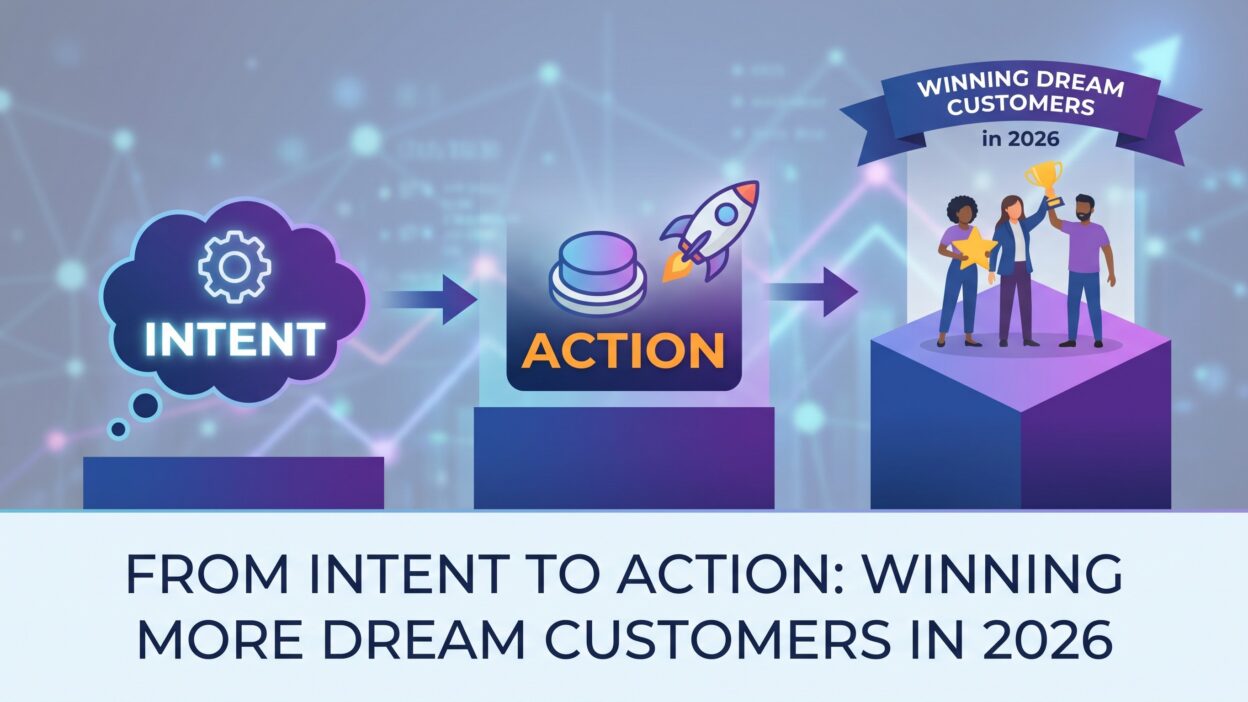
The companies that win the most valuable accounts in 2026 are not the ones with the biggest budgets. They are the ones with the sharpest focus, the deepest preparation, and the clearest system for turning intent into action.