Introduction
TL;DR Talent data drives every hiring choice you make. Recruiters touch it daily. Résumés hold it. Interview notes hold it. Pay history holds it. Most teams collect talent data and never put it to work. That gap costs time and money.
AI recruiting changes the game. Smart tools read profiles, match skills, and rank candidates in seconds. Talent autopilot goes one step further. It runs sourcing, outreach, and scheduling with little human effort. Both depend on clean, rich information. Weak inputs produce weak hires.
What Is Talent Data?
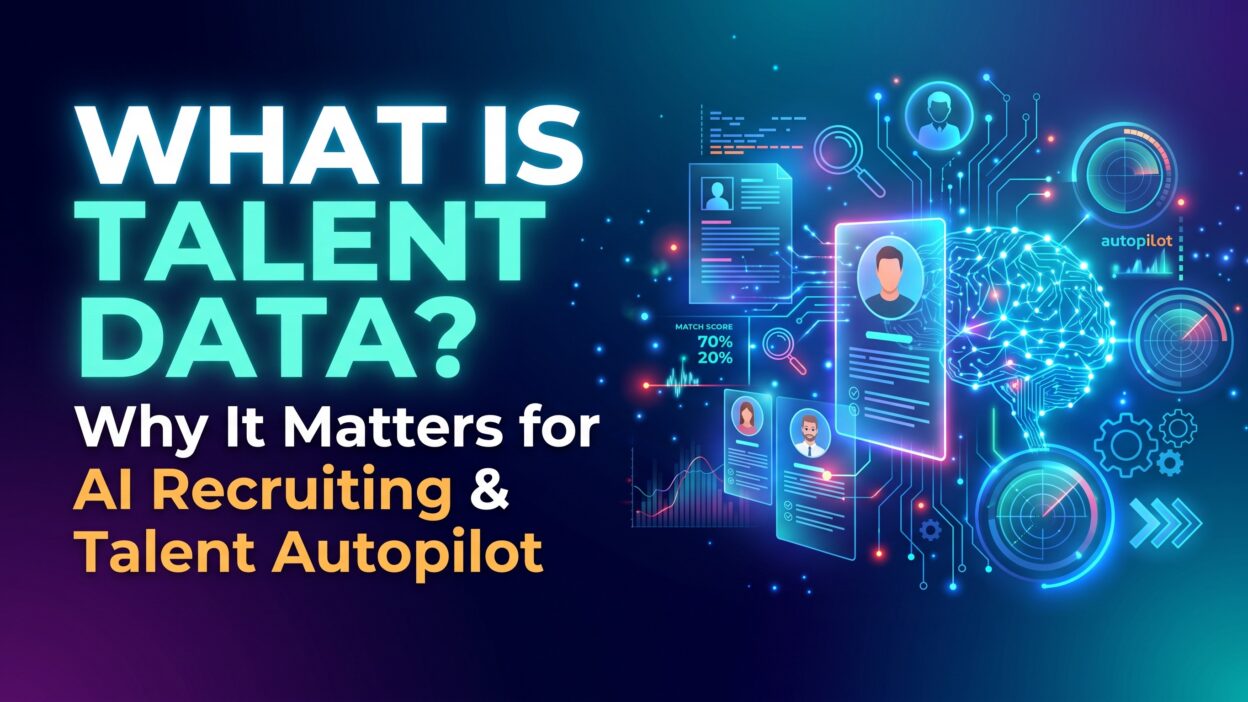
Talent data is information about people who work for you or might work for you. It covers skills, experience, education, goals, performance, and pay. It covers behavior too. A click on a job post counts. A reply to a recruiter message counts. A completed course counts.
Think of it as the full record of a person’s working life, seen through the eyes of an employer. Some of it sits in your applicant tracking system. Some of it sits in your HR platform. Some of it lives on public profiles and professional networks.
The Simple Definition
Talent data is every fact that helps you judge fit, potential, and risk for a role. A single résumé holds a little. A million records hold patterns. Patterns tell you who succeeds, who stays, and who grows.
How Talent Data Differs From HR Data
HR data tracks current employees. It covers payroll, leave, and compliance. Talent data stretches wider. It includes past applicants, silver medalists, alumni, and passive prospects. It also covers market facts such as salary ranges and skill demand.
Why the Term Matters Now
Hiring used to run on gut feel and a stack of résumés. Today software reads thousands of profiles in minutes. That software needs fuel. Talent data is the fuel. Teams that treat it as a core asset hire faster and smarter than teams that treat it as paperwork.
The Core Types of Talent Data
Talent data comes in several forms. Each form answers a different question. Strong teams gather all of them.
Candidate Data
Candidate data describes people in your pipeline. It holds names, contact details, work history, and application answers. It holds assessment scores and interview feedback. It tells you who applied, who moved forward, and who dropped out.
Skills Data
Skills data lists what a person can do. It goes beyond job titles. A title says “analyst.” Skills data says “SQL, forecasting, and stakeholder reporting.” Modern hiring leans on skills because titles vary wildly between companies.
Workforce Data
Workforce data describes your current team. It shows headcount, tenure, promotion rates, and turnover. It reveals which roles stay open longest. It shows where you lack depth.
Behavioral and Engagement Data
Behavioral data captures actions. It tracks email opens, career page visits, and event sign-ups. It shows interest before a candidate says a word.
Market Data
Market data looks outside your walls. It covers pay benchmarks, competitor hiring, and talent supply by city. Recruiters use it to set fair offers and pick search locations.
Outcome Data
Outcome data records what happened after the hire. It covers ramp time, performance ratings, and retention. This type matters most for predictive hiring. It teaches models what a good hire looks like at your company.
Why Talent Data Matters
Hiring is a prediction. You bet that one person will succeed in one role. Better information improves that bet. Talent data gives you the information.
It Speeds Up Hiring
Recruiters waste hours searching spreadsheets. Organized records cut that search to seconds. A recruiter can pull every past applicant with Python skills in one query. The role fills faster. The cost per hire drops.
It Raises Quality of Hire
Outcome records show which sources produce strong performers. Maybe referrals stay three years longer than job board hires. Maybe one assessment predicts success better than any interview. You cannot see these facts without data.
It Reduces Bias
Gut feel carries hidden bias. Structured information gives every candidate the same measuring stick. You compare skills against needs. You compare results against standards. Fairness improves when facts lead.
It Supports Smarter Planning
Leaders want to know which skills they will need next year. Workforce records show gaps today. Market records show shortages ahead. Together they guide hiring plans, training budgets, and succession choices.
It Improves Candidate Experience
Candidates hate repeating themselves. Good records let you remember past conversations. You send relevant roles. You skip pointless questions. People feel respected, and respected people accept offers.
Talent Data and AI Recruiting
AI recruiting means using machine learning and language models to handle hiring tasks. The tools read, match, rank, and predict. They never work alone. They need talent data to learn and to act.
How AI Uses Talent Data to Source Candidates
Sourcing tools scan profiles across the web and your own database. They compare each profile against the skills in your job description. They surface people you would miss by hand. Rich skills data makes the match precise. Thin data produces noise.
How AI Uses Talent Data to Screen and Rank
Screening models read applications and score them against role needs. They flag strong matches and weak ones. Recruiters review the top group instead of the whole pile. The model improves as you feed it outcome data. Each hire teaches it something.
How AI Uses Talent Data for Predictive Hiring
Predictive models estimate who will perform well and who will stay. They study past hires with similar traits. They spot patterns no human could track across thousands of records. Leaders use those estimates to adjust offers, onboarding, and manager assignments.
The Risk of Bad Inputs
AI repeats what it learns. Feed it biased history and it copies the bias. Feed it duplicate or outdated records and it makes confident mistakes. Teams must audit their inputs. They must test outputs for fairness across gender, age, and background. Human judgment stays in the loop for final calls.
What Good AI Recruiting Looks Like
Good AI recruiting saves recruiters from repetitive work. It frees them for conversations that need empathy and persuasion. The software handles the lists. The people handle the relationships.
What Is Talent Autopilot?
Talent autopilot is a hiring approach where software runs most routine steps on its own. It finds candidates. It writes personalized outreach. It follows up. It books interviews. It updates records. Recruiters step in when a person needs a human touch.
The name borrows from aviation. Pilots do not fly every minute by hand. Systems hold course while pilots watch and decide. Talent autopilot works the same way. The system keeps the pipeline moving. Recruiters steer.
What Talent Autopilot Handles
The system watches open roles and starts searching without a prompt. It ranks matches and contacts them. It tracks replies and nudges quiet prospects. It syncs calendars and confirms times. It logs every step. A recruiter wakes up to a full schedule of qualified interviews.
Where Humans Stay in Charge
People set the criteria. People approve messaging tone. People run interviews and make offers. The autopilot never makes the final hiring decision. It prepares the ground so humans spend time where they add value.
How Talent Data Powers Talent Autopilot
Autopilot without data is a plane without instruments. It cannot sense where it is or where it should go. Talent data supplies those readings.
Data Triggers Action
The system needs signals to act. A new requisition opens. A past silver medalist updates a profile. A passive prospect visits your careers page three times. Each signal is a data point. Each point can trigger outreach at the right moment.
Data Personalizes Outreach
Generic messages get ignored. Personal ones get answers. Autopilot reads skills data and career history. It writes a message that mentions a relevant project or a skill the person built. Response rates climb when the note feels like it came from someone who read the profile.
Data Closes the Learning Loop
Every reply, rejection, and hire flows back into the system. The software notices which subject lines work. It notices which sources deliver hires. It adjusts. Over months the autopilot grows sharper. That loop only works when your records stay accurate and connected.
Data Keeps the Talent Pipeline Warm
A talent pipeline is a pool of people ready for future roles. Talent autopilot nurtures that pool. It sends useful updates. It reminds people you exist. When a role opens, you already have a conversation going. Time to fill shrinks from weeks to days.
Where Talent Data Comes From
You can collect talent data from many places. Smart teams map every source and connect them.
Internal Sources
Your applicant tracking system holds applications and stage history. Your HR platform holds employee records and reviews. Your learning system holds course completions. Your survey tools hold engagement scores. Each system tells part of the story.
Candidate-Provided Sources
Applicants hand you résumés, portfolios, and assessment results. They answer screening questions. They share preferences about location and pay. Always collect this with clear consent.
External Sources
Professional networks and public profiles show careers in motion. Job boards show who searches for work. Industry reports show salary trends. Labor market feeds show skill demand by region. Vendors package these feeds for recruiting teams.
Behavioral Sources
Your website and email tools capture interest signals. They show which pages people read and which links they click. Event platforms show who attended a webinar. These signals reveal intent before a formal application.
Connecting the Sources
Silos hurt. A recruiter who sees only the ATS misses the full picture. Many companies now use a talent intelligence layer that merges records into one profile per person. That single view powers both AI recruiting and talent autopilot.
Why Talent Data Quality Decides Results
Software cannot fix bad inputs. Data quality sets the ceiling for every tool you buy.
Common Quality Problems
Duplicates top the list. One person appears three times with three emails. Outdated records follow. A prospect changed jobs two years ago and your file still shows the old employer. Missing fields hurt too. Without skills tags, the search finds nothing. Inconsistent labels cause chaos. “Sr. Engineer” and “Senior Software Engineer” look like different roles to a machine.
How Poor Quality Hurts You
Recruiters lose trust in the database. They stop using it. They start from scratch on every search. AI models learn wrong patterns. Reports mislead leaders. Candidates receive messages about jobs they left.
How to Improve Quality
Set standard formats for titles, skills, and locations. Run regular duplicate checks. Refresh records on a schedule. Ask candidates to update their profiles. Remove records that no longer serve a purpose. Assign one owner to data health. Ownership turns good intentions into habits.
Enrichment Helps
Enrichment tools add missing facts to existing records. They fill in current employers, skills, and contact details. Use them with care. Check accuracy on a sample before you trust the batch.
Measure Quality
Track the share of records with complete skills fields. Track the share with a valid email. Track the age of your freshest contact. These simple numbers show whether your data is improving or decaying.
Privacy, Ethics, and Compliance
People trust you with personal details. Protect that trust. Laws demand it too.
Know the Rules
Privacy laws such as GDPR in Europe and state laws in the United States, and India’s Digital Personal Data Protection Act, shape how you collect and store records. They require clear notice and lawful grounds for processing. They give people rights to access and delete their information. Laws on automated hiring decisions keep spreading. Some cities require bias audits for hiring algorithms.
Collect Only What You Need
More data does not always mean better hiring. Gather facts tied to job success. Skip sensitive traits that do not relate to the work. Smaller, cleaner collections carry less risk.
Keep Humans Accountable
Explain to candidates when AI plays a role. Offer a path to human review. Document how your models make decisions. Audit outputs for fairness on a regular cycle. Fix problems fast.
Secure What You Store
Limit access to people who need it. Encrypt records. Log who views them. Set retention periods and delete on schedule. A breach damages candidates and your employer brand at once.
How to Build a Talent Data Strategy
A strategy turns scattered records into an engine. Start small and grow.
Set Clear Goals
Pick two or three hiring outcomes you care about. Maybe you want to cut time to fill by 30 percent. Maybe you want to rebuild a silver medalist pool. Goals tell you which records matter most.
Audit What You Have
List every system that holds talent data. Note who owns each one. Check completeness and age. You will find surprises. Most teams discover duplicates, dead fields, and forgotten databases.
Unify and Standardize
Choose a central system of record. Connect your ATS, HR platform, and marketing tools to it. Agree on shared definitions for skills, titles, and stages. A common language lets software and people read the same map.
Choose Tools That Fit
Pick AI recruiting tools that integrate with your records. Ask vendors how their models train. Ask how they test for bias. Ask how they handle your data. Pilot one tool on one role family before you scale.
Introduce Automation Gradually
Begin with low-risk tasks such as scheduling and follow-ups. Add sourcing automation next. Move toward fuller talent autopilot as trust grows. Review results every month. Adjust rules and messaging based on what the numbers show.
Train Your Team
Recruiters need data skills. Teach them to read dashboards and question outputs. Teach them to spot odd results. Confident users catch errors that software misses.
Create Feedback Loops
Capture hiring outcomes and send them back into the system. Tag why candidates declined. Record manager ratings after six months. This feedback makes every future search smarter.
Key Metrics to Track
Numbers show whether your efforts pay off. Watch these measures.
Time to fill tells you how fast roles close. Time to first interview shows how quickly your pipeline responds. Cost per hire reveals efficiency. Quality of hire, measured through performance ratings and manager feedback, shows whether speed hurt standards.
Source effectiveness shows which channels produce hires and which waste money. Pipeline health shows how many qualified prospects sit ready for each role family. Response rate on outreach shows whether your personalization works.
Retention at twelve months tells you whether your matching predicts fit. Diversity at each funnel stage shows whether your tools treat groups fairly. Data completeness scores show whether your foundation stays strong.
Review these figures in a monthly meeting. Share them with hiring managers. Transparency builds support for the program.
The Future of Talent Data
The field moves fast. Several trends will shape the next few years.
Skills-based hiring keeps growing. Employers care more about what people can do than where they studied. Skills data will anchor job matching, internal mobility, and learning plans.
AI agents will take on larger parts of the recruiting workflow. They will source, screen, and schedule with minimal prompting. Talent autopilot will feel less like a feature and more like a standard part of every hiring stack.
Regulation will tighten. Companies will need clear audit trails and fairness testing. Teams with clean, documented records will adapt with ease. Teams with messy records will scramble.
Internal mobility will rise. Companies will mine workforce data to spot current employees who fit open roles. Hiring from within saves money and boosts retention.
The winners will treat talent data as a long-term asset. They will invest in it every quarter.
Frequently Asked Questions
What is talent data in simple terms?
Talent data is any information about current or future employees that helps you make hiring and development choices. It covers skills, experience, performance, interests, and market facts.
How is talent data different from talent intelligence?
Talent data is the raw material. Talent intelligence is the insight you draw from it. Intelligence tools analyze records and surface trends, gaps, and predictions.
Why does AI recruiting need talent data?
AI models learn from examples. They match candidates to roles by comparing patterns in records. Rich, accurate records produce better matches. Poor records produce errors.
What is talent autopilot?
Talent autopilot is a system that runs routine recruiting tasks automatically. It sources candidates, sends outreach, follows up, and schedules interviews. Recruiters guide strategy and handle human conversations.
Can talent autopilot replace recruiters?
No. It removes repetitive work. Recruiters still build relationships, assess culture fit, negotiate offers, and make final decisions. The best results come from people and software working together.
How do I keep talent data compliant with privacy laws?
Collect only what you need. Tell candidates how you use their information. Get consent where laws require it. Secure your records. Set deletion schedules. Review your process with legal counsel.
How often should I clean my talent data?
Run duplicate checks monthly. Refresh high-value records every six months. Audit your full database once a year. Fast-moving roles may need more frequent updates.
What is the best first step for a small team?
Audit what you already hold. Pick one system as your source of truth. Standardize skills and titles. Small steps build a strong base for AI tools later.
Read More:-Sales Pipeline Health: How to Measure It and Rescue At-Risk Deals
Conclusion
Talent data sits at the center of modern hiring. It tells you who people are, what they can do, and how they perform. It fuels AI recruiting. It steers talent autopilot. It guides workforce planning and fair decisions.
Great tools cannot rescue weak records. Clean, connected, ethical data makes every system smarter. Poor data wastes your budget and your recruiters’ time. The choice is yours.
Start with an audit. Map your sources. Fix duplicates and gaps. Pick clear goals. Test one AI tool on one role family. Add automation as trust grows. Track the numbers each month and share them with your leaders.
Protect candidate privacy at every step. Explain your process. Keep humans in charge of final calls. Trust earns you better applicants and stronger brand loyalty.