Introduction
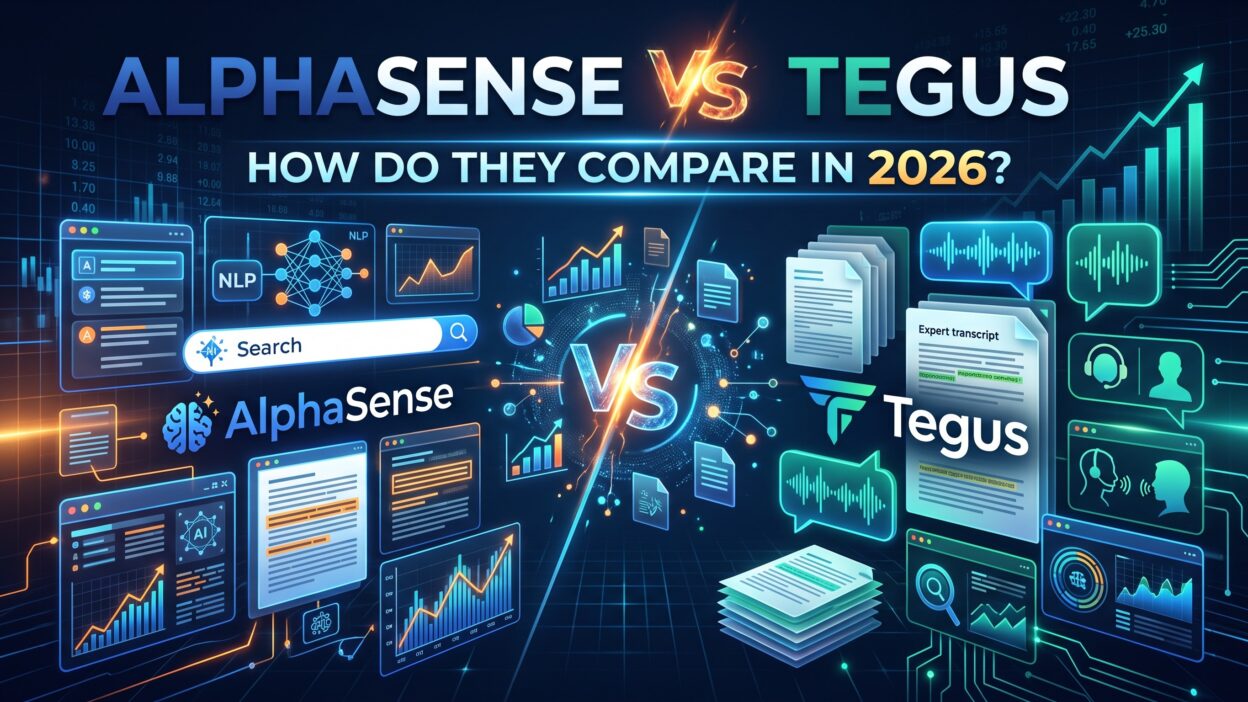
TL;DR Analysts used to pick a side. One camp loved AlphaSense for its search across filings, broker research, and news. The other camp loved Tegus for its expert call transcripts. The market changed in 2024. AlphaSense bought Tegus. The two names now sit under one company.
That shift makes the AlphaSense vs. Tegus question more interesting. You no longer weigh two rivals. You weigh how much of one combined offer your team needs.
Quick Answer: AlphaSense vs. Tegus in One Minute
Start with the short version. AlphaSense is a market intelligence platform. It searches filings, earnings transcripts, broker research, news, and your own documents with AI. Tegus is a research platform that centers on expert interviews. It offers a large transcript library, custom expert calls, and financial models.
Both products belong to one company since July 2024. Tegus content now reaches users through AlphaSense. Packaging and pricing still separate the two. Teams that need broad document coverage lean toward AlphaSense. Teams that need expert voices and private company insight lean toward Tegus. Many teams want both.
What Is AlphaSense?
AlphaSense is a market intelligence and search platform. The company started in 2011 and sits in New York City. Financial firms, corporations, and consultancies use it. The product helps them find signals inside huge piles of text.
Think of it as a search engine for business research. You type a question. The platform scans millions of documents and returns the passages that matter. You skip hours of reading. You see the answer and the source.
Analysts love the speed. A junior associate can scan ten years of earnings calls in an afternoon. A portfolio manager can track a theme across hundreds of companies. A strategy lead can monitor a competitor without reading every press release.
Core AlphaSense Features
The platform covers company filings, earnings call transcripts, press releases, broker research, trade journals, and news. Smart synonym search catches different ways of saying one idea. You type “supply chain pressure” and the engine finds related phrases too.
Sentiment tools flag tone shifts on earnings calls. Alerts watch companies and topics. They ping you when something new appears. Teams stay ahead of the news without checking ten sources each morning.
AlphaSense adds generative AI tools to the mix. They summarize documents and answer questions with citations. Teams can search their own internal notes and reports in the same place. That gives analysts one search box for outside and inside content. Citations matter here. They let you click through and verify every claim.
What Is Tegus?
Michael and Thomas Elnick founded Tegus in 2017. The company built a library of expert call transcripts. Investors held the calls with industry experts. Tegus recorded and transcribed them. Subscribers searched the transcripts and read what operators say about a market in plain language.
Tegus grew into a wider research platform. It added company filings, financial data, and Canalyst models. One product profile cites more than 260,000 transcripts in the library. Tegus launched AskTegus in April 2024. That AI chat tool returns summarized answers with citations from the transcript library.
Buyers praised the candor. A former sales director might explain why customers churn. A supplier might describe real pricing pressure. Those details rarely appear in a filing.
Core Tegus Features
The transcript library sits at the center. Analysts search by company, topic, or expert role. They read full conversations and pull exact quotes.
Tegus Call Services fills the gaps. You request a call on a specific question. The team sources and pre-qualifies the expert. Compliance checks run before and after the call. You receive a transcript when it ends.
Canalyst models give analysts a head start. They offer detailed financial models for public companies. Analysts adjust the model and skip hours of data entry.
Private company content adds another edge. Public filings do not exist for many startups. Expert views fill that hole. Venture and private equity teams value this coverage. It helps them size markets and judge competitors before they invest.
How the Acquisition Changed the Picture
AlphaSense announced the Tegus deal in June 2024. It completed the purchase in July 2024. Reports put the price near $930 million. The two companies had clashed in court months earlier. AlphaSense sued Tegus for patent infringement in September 2023. The deal arrived within a year.
Many searchers type AlphaSense vs. Tegus into Google. They expect a rivalry. The market no longer works that way. Tegus now describes itself as part of AlphaSense. Its transcripts, call services, and Canalyst models run as named product pillars inside the larger platform.
One recent comparison says the base AlphaSense tier includes Tegus transcripts next to broker research, filings, and news. Treat that claim as a starting point. Packaging changes often. Ask a sales rep which content sits in each tier.
The deal gives buyers one vendor for documents and expert views. It also removes a rival from the market. Fewer vendors mean less price pressure. Keep that in mind when you negotiate.
AlphaSense vs. Tegus: Content and Data Compared
Content drives the value of any research tool. Each product leads in a different type. The AlphaSense vs. Tegus content gap comes down to documents versus voices.
Documents and Filings
AlphaSense wins on breadth of public documents. It covers filings, earnings call transcripts, broker research, news, and trade publications. Analysts find fast answers across thousands of companies. They track themes across sectors and regions.
Tegus carries filings and financial data. The core value sits elsewhere. Teams that live in documents will find AlphaSense stronger. Equity analysts, corporate development teams, and competitive intelligence groups fall in this camp. They read, compare, and monitor all day. A deep document engine saves them hours.
Expert Transcripts
Tegus wins on expert voices. Investors led the interviews, so questions dig into pricing, churn, competition, and unit economics. You read candid views from former executives, customers, and suppliers.
AlphaSense documents show what companies say in public. Expert calls show what operators say when someone asks direct questions. The two views complete each other. A filing may claim strong demand. An expert may explain where that demand comes from and how long it will last.
Quality varies by expert. Read the expert’s role and tenure before you trust a quote.
Financial Models
Canalyst models help analysts who build forecasts. The models follow a standard structure. They update after earnings. Analysts adjust assumptions and skip the data entry. Excel users appreciate the familiar format.
Teams that never build models will skip this feature. Teams that build ten models a quarter will love it. Ask your analysts how they spend their time before you pay for the add-on.
AI and Search Features
AlphaSense built its name on AI search. Its engine understands finance language, catches synonyms, and ranks passages by relevance. Generative tools summarize documents and answer questions with citations. Teams search internal files in the same place.
AskTegus brought chat to the transcript library in 2024. You ask a question. It returns a summarized answer with citations from calls. Analysts skip reading ten transcripts to find one data point.
The AlphaSense vs. Tegus AI story now runs through one company. AlphaSense can apply its search engine to expert content. Tegus users gain access to a broader set of tools. Expect new features to land across the combined platform over time. Roadmaps change, so ask the vendor what ships next.
Test both tools on a real question from your own work. Check every citation. Good AI tools show their sources. Weak tools hide them. A summary with no source gives you no way to catch an error. Trust the tool that lets you verify.
Expert Calls and Custom Research
Library transcripts answer common questions. Some questions need a fresh call. Tegus Call Services sources experts for your project. The team pre-qualifies the experts. Compliance checks run before and after each call. You receive a transcript afterward.
Compliance matters. Your firm must protect itself from material nonpublic information. Ask how the vendor screens experts and reviews transcripts. Ask your legal team to approve the workflow.
In April 2026, AlphaSense introduced AI-led expert calls as an extension of Tegus Call Services. According to a product profile, the format keeps a human in the loop for compliance review. The pricing model stays the same: the expert’s rate plus transcription. Ask your rep how the format works. Ask whether it fits your firm’s compliance policy. New formats deserve a careful pilot before a full rollout.
AlphaSense vs. Tegus: Pricing and Packaging
Neither product publishes list prices. Both sell through annual contracts and custom quotes. Price depends on seats, content sets, and add-ons. Large firms pay more than small teams.
Budget shapes the AlphaSense vs. Tegus decision for many teams. Expect AlphaSense to bundle many content types into tiers. Tegus transcripts now appear in the AlphaSense base tier, according to a recent comparison. Canalyst models and call services may carry separate fees. Expert calls follow a pay-per-call model. You pay the expert’s rate plus transcription costs.
Ask smart questions before you sign. Which content sits in my tier? What do extra seats cost? How do renewals work? Can I add or drop modules mid-term? What happens to my price in year two? Get every answer in writing.
Negotiate with care. A single vendor now owns both products. That gives the vendor leverage. Counter with a pilot, a shorter term, or a smaller seat count. Compare the quote against your hours saved. A tool that saves ten analyst hours a week often pays for itself.
Who Should Use AlphaSense vs. Tegus
Every team has a different workload. A team that runs the AlphaSense vs. Tegus comparison on live work learns the answer in days. These profiles give you a head start.
Hedge Funds and Asset Managers
Public market investors read hundreds of documents a week. AlphaSense saves them time. Alerts catch changes in tone on earnings calls. Tegus transcripts add expert color on supply chains and demand trends. Many funds use both content types in one workflow.
Private Equity and Venture Capital
Deal teams study markets fast. Expert calls answer questions about customers, competitors, and growth before an investment committee meeting. Tegus fits that need well. Private company content helps when public filings do not exist. AlphaSense adds market context from broker research and news. Diligence timelines run short, so quick answers carry real value.
Corporate Strategy and Consulting
Strategy teams track competitors, regulators, and customer trends. AlphaSense covers news, filings, and internal documents in one search. Expert transcripts help teams test an idea before a large investment. Consultants build slides with sourced facts and expert quotes. Smaller consulting firms may start with the document search and add expert content later.
AlphaSense vs. Tegus: Which Should You Choose?
The AlphaSense vs. Tegus choice gets easier when you start with your questions. Write down the ten questions your team asked last quarter. Sort them. Some need documents. Some need expert views. Some need both. Count each group. The biggest group points to your answer.
Choose AlphaSense when documents drive your work. You get wide coverage and strong AI search. Choose Tegus content when expert views drive your work. You get candid interviews and models. Choose the combined package when you need both. Many large teams land there.
Check compliance rules. Expert calls need careful handling. Confirm that your legal team approves each workflow. Check your budget. Start small. Add seats and content later.
Check your analysts. Heavy readers love AlphaSense. Model builders love Canalyst. Deal teams love transcripts. Ask each group what saves them the most time. Their answers beat any feature list.
Plan for change. The vendor may reshape plans and bundles as the products merge further. Keep contract terms flexible. Review your usage every quarter.
Alternatives to Consider
Other tools serve similar needs. Bloomberg, FactSet, and S&P Capital IQ lead in market data and analytics. Expert networks such as GLG and Third Bridge offer live calls and their own transcripts. Each fills a different niche.
Compare them when your budget allows. A large data terminal may cover your pricing needs. An expert network may offer coverage in a niche sector. Check each vendor’s current offer. Features and packaging change often. Ask for a trial and judge each tool on your own questions.
How to Run a Trial
Ask for a trial. A product profile says AlphaSense offers trials by request. Pick three real projects. Give two analysts one week. Ask them to answer the same questions with documents and with expert content. Measure time saved. Measure answer quality. Collect their feedback.
Run the AlphaSense vs. Tegus test with your own questions, not a demo script. Vendors shine on demo scripts. Real work reveals gaps.
Include a compliance reviewer in the trial. Ask them to inspect the expert call workflow. Include a finance contact too. They can compare the quote with the hours saved. A trial that involves analysts, compliance, and finance gives you a decision everyone supports.
Common Mistakes to Avoid
Many buyers treat AlphaSense vs. Tegus as a rivalry. They push vendors to compete and miss the bundle option. The companies merged. Ask for a combined quote.
Buying every content set wastes money. Teams use a fraction of what they license. Start with core needs. Add modules when demand appears.
Trusting AI summaries without checking sources creates risk. A summary can miss context. Click the citation. Read the passage.
Skipping training leaves value on the table. Analysts who learn advanced search find answers in half the time. Book a session with the vendor in week one.
Ignoring compliance invites trouble. Expert content needs clear rules. Write them down and share them.
Forgetting renewals costs money. Auto-renewal clauses surprise busy teams. Mark the notice date on your calendar. Review usage ninety days before renewal.
A Real-World Example
Picture a mid-size growth equity firm with eight investors. The team debated AlphaSense vs. Tegus for weeks. Opinions split. Half wanted document search. Half wanted expert calls. A partner proposed a two-week test on a live deal.
The deal involved a software company in a crowded market. Analysts used document search to size the market and map competitors. They finished in hours. They used expert transcripts to test pricing power and customer loyalty. Three transcripts changed their view of churn risk. The team lowered its offer.
The firm chose the combined package with fewer seats than the vendor first proposed. Analysts reported saving about a day per deal. The partner told the team to review usage each quarter.
The lesson is simple. Real work ends debates faster than feature lists. This example is a hypothetical scenario for illustration.
Frequently Asked Questions
What is the main difference in AlphaSense vs. Tegus?
AlphaSense focuses on AI search across documents such as filings, broker research, and news. Tegus focuses on expert interviews, call services, and financial models. The two now sit under one company. You can reach both through AlphaSense. Teams choose based on whether documents or expert views drive their research.
Did AlphaSense buy Tegus?
Yes. AlphaSense completed the acquisition in July 2024. Reports put the deal near $930 million. Tegus now describes itself as part of AlphaSense. Its transcripts, call services, and Canalyst models run as product pillars inside the larger platform. Confirm current packaging with a sales rep.
Is AlphaSense vs. Tegus still a real choice?
Partly. The AlphaSense vs. Tegus decision now centers on packaging, not rivalry. You decide which content and services your team needs. You decide how many seats to buy. Some teams need only documents. Some need only expert content. Many want both. Ask for a quote on each path and compare.
How much do AlphaSense and Tegus cost?
Neither company publishes list prices. Both use annual contracts and custom quotes. Price varies by seats, content, and add-ons. Expert calls cost the expert’s rate plus transcription. Ask for a written quote. Compare it against the analyst hours you expect to save.
Can small teams use these tools?
Yes, but budgets matter. Small teams should start with one tier and a few seats. Test the platform on live projects. Add content as demand grows. Track usage from day one. Drop what nobody uses. Smaller firms often negotiate better terms with shorter contracts.
Does either product offer a free trial?
A product profile says AlphaSense offers a trial by request. Terms vary by company and by time. Ask your rep for trial length, content access, and user limits. Use the trial on real projects with a clear scorecard.
Read More:-Motion vs. Asana: Full Comparison [August 2026]
Conclusion

The AlphaSense vs. Tegus debate looks different in 2026. The companies merged in 2024. You now choose a mix of content and services, not a winner. AlphaSense brings wide document coverage and AI search. Tegus brings expert voices, call services, and financial models.
Start with your questions. Sort them into documents, expert views, and both. Ask for a combined quote and a single-product quote. Run a trial on real projects. Involve compliance early. Check every AI citation. Review usage every quarter.
Teams that decide with evidence save money and time. Teams that decide from brochures overpay. Pick three recent projects today. Note which content answered each question. You will see your answer before the first sales call.