Introduction
TL;DR Launching a product without a plan feels risky. Launching a product without a social media strategy feels riskier. Buyers spend hours scrolling feeds every single day. A brand without a presence there simply gets skipped over. A strong social media strategy gives a launch real momentum before it even starts.
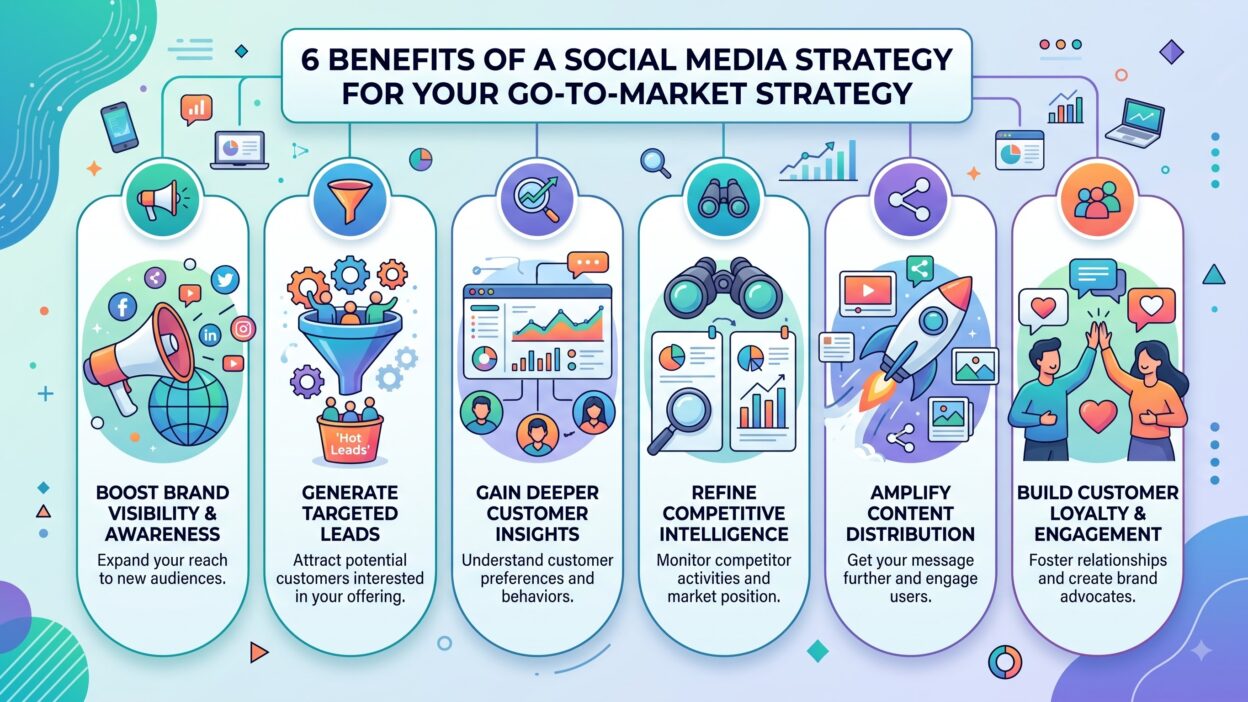
This guide breaks down six clear benefits of building a social media strategy into your go-to-market plan. You will see how it drives awareness. You will see how it drives leads and loyalty too. By the end, you will know exactly why a social media strategy deserves a seat at the planning table.
Table of Contents
What Is A Social Media Strategy?
A social media strategy is a documented plan for using social platforms to reach business goals. It covers content, timing, and audience targeting. It covers tone and voice as well. Without this plan, a brand posts randomly and hopes for results. With this plan, every post serves a clear purpose.
A go-to-market strategy describes how a company brings a product to its target market. It covers pricing, positioning, and distribution channels. A social media strategy fits inside that larger plan. It handles the awareness and engagement piece of the launch puzzle.
Core Elements Of A Strong Strategy
A strong social media strategy starts with clear goals. A team might aim for brand awareness. A team might aim for direct sales instead. Audience research comes next. A brand must know exactly who it wants to reach. Content pillars follow that research closely. These pillars keep messaging consistent across every platform.
Measurement closes the loop. A team tracks engagement, clicks, and conversions. Those numbers shape future decisions. A social media strategy without measurement runs blind.
How It Connects To Go-To-Market Plans
A go-to-market plan needs multiple channels working together. Sales teams handle outreach. Product teams handle features. Marketing teams handle the message. Social media sits inside marketing, but it touches every other team too.
A well built social media strategy supports sales conversations directly. It warms up cold leads before a call even happens. It gives product teams direct feedback from real users. This connection makes the entire go-to-market plan stronger.
Benefit One: Builds Brand Awareness Early
A new product needs eyes on it fast. A social media strategy delivers that visibility quickly. Organic posts reach existing followers. Paid promotion extends that reach even further. Both paths build awareness before a formal launch date arrives.
Reaching New Audiences Fast
Social platforms hold massive user bases already. A single well timed post can reach thousands of people in a day. Hashtags expand that reach further. Shares and comments push content into new feeds naturally. A social media strategy takes advantage of this built in distribution system.
Paid ads sharpen that reach even more. A brand can target specific job titles, interests, or locations. This precision helps a go-to-market team find its exact buyer persona. Traditional advertising rarely offers this level of control.
Creating Consistent Brand Recognition
Recognition builds through repetition. A buyer needs to see a brand name several times before trust forms. A social media strategy creates that repetition naturally through regular posting. Consistent colors, tone, and messaging reinforce the brand identity across every post.
This consistency matters most during a launch window. Buyers should recognize a brand’s voice instantly, whether they see a post, an ad, or a comment reply. A scattered approach confuses buyers and weakens the launch. A tight social media strategy keeps every touchpoint aligned.
Benefit Two: Generates Qualified Leads
Awareness matters, but leads pay the bills. A social media strategy turns casual scrollers into real prospects. It does this through targeted content and clear calls to action.
Targeting The Right Buyers
Not every follower makes a good lead. A social media strategy filters that audience through smart targeting. Content speaks directly to pain points a buyer already feels. Ads reach specific industries or company sizes. This focus attracts people who actually need the product.
Lead magnets add another layer. A free guide or template pulls interested users into an email list. That list becomes a direct line for future nurture campaigns. A social media strategy without a lead capture plan wastes much of its traffic.
Turning Followers Into Customers
Followers do not become customers by accident. A clear path must exist between a post and a purchase. Bio links, landing pages, and direct messages all move a follower closer to a sale. A social media strategy maps out that entire journey in advance.
Retargeting ads bring back users who showed interest but did not buy. These reminders keep a brand fresh in a buyer’s mind. Over time, this steady contact turns hesitant followers into paying customers.
Benefit Three: Strengthens Customer Relationships
A sale marks the beginning of a relationship, not the end. A social media strategy keeps that relationship alive long after checkout.
Real Time Engagement
Social platforms allow instant conversation. A customer can ask a question and get an answer within minutes. This speed builds confidence in a brand. A social media strategy should include a plan for fast, helpful replies.
Comments and direct messages offer a window into real customer sentiment. A support team can catch small problems before they grow into public complaints. This responsiveness protects the brand’s reputation during a busy launch period.
Building Trust Through Conversation
Trust grows through honest, two way conversation. A brand that only broadcasts messages feels distant. A brand that replies, asks questions, and shares behind the scenes content feels human. A social media strategy built around genuine conversation earns loyalty over time.
User generated content strengthens that trust even further. Customers sharing their own experience carry more weight than any advertisement. A smart social media strategy encourages and highlights this kind of content regularly.
Benefit Four: Provides Valuable Market Insights
Social platforms double as a research tool. A social media strategy gathers insight that shapes smarter business decisions.
Listening To Customer Feedback
Comments, reviews, and shares reveal what customers truly think. A product team can spot recurring complaints quickly. A marketing team can spot which messages resonate most. This feedback loop happens in real time, unlike slow traditional surveys.
Social listening tools track brand mentions across the entire internet. They flag spikes in negative sentiment early. A social media strategy that includes listening catches problems before they turn into a crisis.
Tracking Competitor Moves
Competitors post publicly too. Their campaigns, pricing changes, and product updates show up in public feeds. A sharp social media strategy studies these moves closely. This research reveals gaps a brand can fill in its own messaging.
Watching competitor engagement also shows what content style actually works within an industry. A go-to-market team can borrow proven formats while keeping its own unique voice.
Benefit Five: Supports Product Launches
Every go-to-market plan centers around a launch moment. A social media strategy builds anticipation and keeps momentum strong through that entire window.
Creating Buzz Before Launch Day
Teaser content builds curiosity weeks before a launch. Countdown posts, sneak peeks, and behind the scenes clips all pull an audience closer. A social media strategy paces this content carefully, releasing just enough to spark interest without giving everything away.
Influencer partnerships add extra reach during this phase. A trusted voice sharing early access content lends credibility a brand cannot buy through ads alone.
Coordinating Cross Team Messaging
A launch involves many teams working at once. Sales needs talking points. Support needs answers ready for common questions. Product needs to share accurate details. A social media strategy keeps this messaging aligned across every department.
Shared content calendars help teams stay on the same page. Everyone knows what goes live and when. This coordination prevents mixed signals during a critical launch window.
Benefit Six: Improves Marketing ROI
Budgets stay tight, even during a major launch. A social media strategy often delivers stronger returns than traditional advertising channels.
Lower Cost Compared To Traditional Ads
Television and print ads carry a high price tag. Social platforms offer far more flexible pricing. A small business can start with a modest daily budget and still reach a real audience. A social media strategy scales up or down based on actual performance.
Organic content adds even more value at zero extra cost. A single strong post can spread widely without any paid boost at all.
Measurable Results And Analytics
Every platform offers detailed analytics. A team can see exactly how many people viewed, clicked, or purchased. This data removes guesswork from budget decisions. A social media strategy backed by real numbers earns trust from leadership quickly.
These insights also guide future campaigns. A team learns which content style drives the strongest results. That knowledge compounds over time, making each new campaign sharper than the last.
How To Build A Social Media Strategy For Your Go-To-Market Plan
Understanding the benefits matters, but execution matters more. A few clear steps turn theory into a working plan.
Setting Clear Goals
Every social media strategy needs a defined goal from day one. A team might chase awareness during an early launch phase. A team might chase direct sales once a product gains traction. Clear goals shape every decision that follows, from content type to posting frequency.
Goals should stay specific and measurable. A vague goal like “grow our audience” gives a team nothing to aim for. A goal like “gain five thousand qualified followers before launch day” gives real direction.
Choosing The Right Platforms
Not every platform fits every product. A B2B software company might find more value on a professional network. A consumer product might thrive on a visual, fast moving platform instead. A social media strategy should match the platform to the actual audience, not chase every trend at once.
Testing helps narrow this choice. A small trial budget across two or three platforms reveals where an audience truly engages. A team can then double down on the channels that perform best.
Frequently Asked Questions on Social Media Strategy
Why does a go-to-market plan need a social media strategy?
A social media strategy builds awareness and trust before a launch. It also creates a direct channel for feedback and leads, which strengthens the entire go-to-market plan.
How long does it take to see results from a social media strategy?
Results vary by industry and goal. Awareness often grows within a few weeks. Lead generation and sales usually take a few months of consistent effort.
Which platforms work best for a product launch?
The right platform depends on the target audience. A visual product often performs well on image heavy platforms. A professional service often performs better on business focused networks.
Does a small business need a formal social media strategy?
Yes, a small business benefits just as much as a large one. A clear plan prevents wasted time and keeps limited resources focused on what actually works.
How often should a brand update its social media strategy?
A quarterly review works well for most teams. Fast moving industries may benefit from a monthly check instead, especially during an active launch period.
Read More:-How Swim Lanes Get Marketing, Sales Development, and Sales More Wins
Conclusion

A social media strategy does far more than fill a content calendar. It builds early awareness. It generates real leads. It strengthens customer relationships and feeds valuable market insight back into the business. It supports a smooth product launch and stretches a marketing budget further than most traditional channels ever could.
Any go-to-market plan without a clear social media strategy leaves real value on the table. The six benefits covered here show exactly why that gap matters. Teams that build this strategy early set their launch up for lasting success, not just a short burst of attention.