Introduction
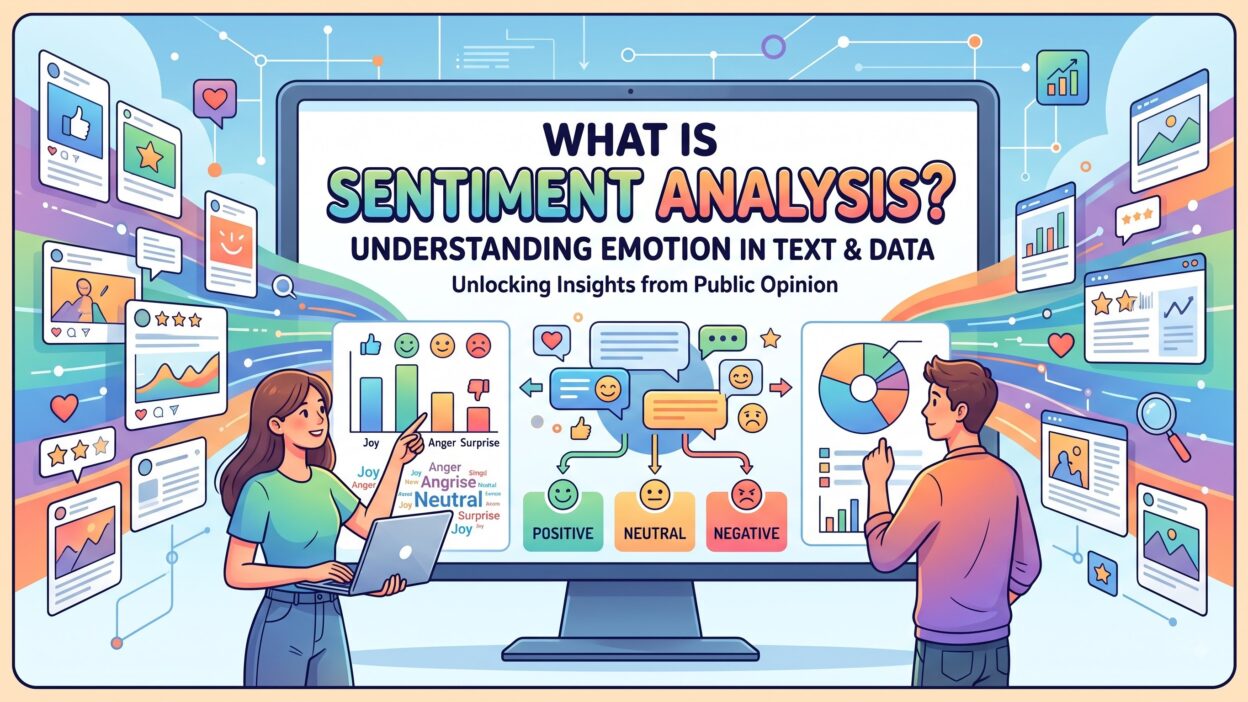
TL;DR Sentiment analysis is a process. It reads text and finds the emotion behind it. Businesses use sentiment analysis to understand how people feel. A customer review, a tweet, or a support ticket all carry emotion. Sentiment analysis pulls that emotion out and labels it.
The label is usually simple. Positive, negative, or neutral. Some systems go deeper. They detect anger, joy, sadness, or frustration. This deeper version falls under sentiment analysis too, but it adds emotion detection on top.
Sentiment analysis sits inside a bigger field called natural language processing. NLP teaches computers to understand human language. Sentiment analysis is one specific job inside that field. Its job is to judge tone, not just meaning.
Companies collect huge amounts of text every day. Reviews, emails, chat logs, social posts. No team can read all of it by hand. Sentiment analysis automates that reading. It scans thousands of messages in seconds and sorts them by feeling.
Table of Contents
Why Sentiment Analysis Matters
Sentiment analysis matters because feelings drive decisions. A customer who feels ignored leaves. A customer who feels heard stays. Businesses need a fast way to spot that difference, and sentiment analysis gives them one.
Marketing teams track brand perception through sentiment analysis. They watch how people talk about a product launch. A sudden spike in negative sentiment analysis scores signals a problem early. Teams can react before the issue grows.
Product teams also lean on sentiment analysis. Reviews mention bugs, missing features, or confusing design. Sentiment analysis groups this feedback by tone and topic. Engineers then know exactly where to focus.
Customer support teams use sentiment analysis for prioritization. An angry message jumps the queue. A calm message waits its turn. This use of sentiment analysis saves agents time and keeps customers calm.
Investors even study sentiment analysis of news and social chatter. Public mood can move stock prices. A wave of negative sentiment analysis around a company sometimes predicts a drop before the numbers confirm it.
How Sentiment Analysis Works
Text Collection
Sentiment analysis starts with raw text. This text comes from reviews, surveys, social media, or support tickets. A system pulls this data through an API or a direct upload. Clean sources give better sentiment analysis results.
Text Preprocessing
Raw text is messy. It has typos, slang, and emojis. Sentiment analysis tools clean this text first. They remove punctuation, fix spacing, and break sentences into words. This step is called tokenization.
Stop words get removed next. Words like “the” or “and” carry no emotion. Sentiment analysis ignores them and focuses on words that matter, like “amazing” or “terrible.”
Sentiment Classification
Now the real work begins. The system reads each cleaned sentence. It compares words against a trained model or a dictionary of emotional terms. Sentiment analysis then assigns a score. Positive words push the score up. Negative words pull it down.
Some tools use a simple three-way label. Others use a scale, like -1 to +1. A score near zero means neutral sentiment analysis. A high positive score means strong approval.
Output and Reporting
The final step turns raw scores into a report. Dashboards show sentiment trends over time. Teams see spikes, dips, and patterns. Good sentiment analysis output is visual and easy to read. Nobody wants to scroll through raw numbers.
Types of Sentiment Analysis
Fine-Grained Sentiment Analysis
Fine-grained sentiment analysis breaks emotion into more levels. Instead of three labels, it uses five: very positive, positive, neutral, negative, very negative. This type suits star ratings well. A five-star review needs more nuance than a simple thumbs up.
Emotion Detection
Emotion detection goes past polarity. It names the actual feeling. Happy, sad, angry, surprised, or fearful. This form of sentiment analysis helps brands understand not just approval, but the specific mood behind it.
Aspect-Based Sentiment Analysis
Aspect-based sentiment analysis looks at parts of a product, not the whole. A review might praise the camera but criticize the battery. Regular sentiment analysis misses this split. Aspect-based sentiment analysis catches it and tags each feature separately.
Intent-Based Analysis
Intent-based analysis studies what the writer wants to do next. A message might express frustration but also signal intent to cancel a subscription. This layer often pairs with sentiment analysis to predict customer actions, not just current mood.
Sentiment Analysis Techniques
Rule-Based Approach
The rule-based approach uses a dictionary of words. Each word carries a fixed score. “Great” scores positive. “Awful” scores negative. This method is fast and easy to build. But it struggles with sarcasm and context.
Machine Learning Approach
The machine learning approach trains a model on labeled examples. The model learns patterns instead of following fixed rules. This makes sentiment analysis more flexible. It handles new slang and phrasing better than static dictionaries.
Hybrid Approach
The hybrid approach combines both methods. It uses rules for speed and machine learning for accuracy. Many modern sentiment analysis tools rely on this hybrid setup. It balances performance with precision.
Real-World Use Cases of Sentiment Analysis
Brand Monitoring
Brands track mentions across social platforms. Sentiment analysis flags praise and complaints in real time. A single viral complaint can spread fast. Early sentiment analysis alerts let a brand respond before damage spreads.
Customer Feedback Analysis
Customer feedback analysis relies heavily on sentiment analysis. Surveys generate thousands of open text answers. Reading each one by hand takes weeks. Sentiment analysis sorts feedback into themes within minutes, saving real time and effort.
Market Research
Researchers study public opinion on new products, policies, or trends. Sentiment analysis of forums, reviews, and news articles reveals shifting public mood. This data shapes pricing, messaging, and product positioning.
Political Analysis
Campaigns study voter sentiment through public posts and comments. Sentiment analysis reveals which issues spark strong reactions. Analysts use this insight to adjust messaging and target specific concerns.
Benefits of Sentiment Analysis
Sentiment analysis saves time. Manual reading takes hours; automated sentiment analysis takes seconds. Teams free up time for actual problem-solving instead of sorting through raw text.
Sentiment analysis improves decision-making. Leaders see real customer mood instead of guessing. Data replaces assumption, and that shift reduces costly mistakes.
Sentiment analysis also scales easily. A company can monitor a hundred reviews or a hundred thousand. The process stays the same. This scalability makes sentiment analysis valuable for both small teams and large enterprises.
Response time improves too. Support teams catch angry customers early through sentiment analysis. Quick action often turns a bad experience into a saved relationship.
Challenges in Sentiment Analysis
Sarcasm confuses most systems. A sentence like “Great, my order arrived broken” sounds positive on the surface. Sentiment analysis tools often misread lines like this without deeper context.
Context also trips up sentiment analysis. The word “sick” means illness in one sentence and excitement in another. Slang shifts fast, and models need constant updates to keep pace.
Mixed sentiment adds another layer of difficulty. A single review can praise one feature and criticize another. Basic sentiment analysis assigns one score to the whole text, missing this split unless aspect-based methods get used.
Language and dialect differences matter too. A model trained on formal English may fail on casual slang or regional phrasing. Multilingual sentiment analysis requires separate training for each language to stay accurate.
Tools for Sentiment Analysis
Many platforms offer built-in sentiment analysis features. Some are open-source libraries built for developers. Others are no-code dashboards built for marketing and support teams.
Cloud providers offer sentiment analysis APIs that plug directly into existing apps. Teams send text through the API and receive a score back instantly. This setup works well for companies without a data science team.
Dedicated customer experience platforms also include sentiment analysis modules. These tools connect directly to review sites, social channels, and support inboxes. They centralize sentiment tracking in one dashboard, which simplifies reporting across departments.
Choosing the right sentiment analysis tool depends on the use case. A startup may only need basic positive or negative tagging. A larger company might need aspect-based sentiment analysis with multilingual support.
Best Practices for Sentiment Analysis
Clean data first. Sentiment analysis performs better on clear, well-formatted text. Remove duplicate entries and irrelevant content before analysis begins.
Train models on real examples from your own industry. Generic models miss industry-specific slang and terminology. Custom training improves sentiment analysis accuracy significantly.
Combine sentiment analysis with human review for critical decisions. Automated scores work well at scale, but a human check catches edge cases the system misses.
Update models regularly. Language changes fast, and sentiment analysis models age quickly without fresh training data. Set a schedule to retrain and test accuracy every few months
Frequently Asked Questions
What is sentiment analysis in simple terms? Sentiment analysis reads text and tells you if the tone is positive, negative, or neutral. It automates what a person would normally judge by reading.
Why do businesses use sentiment analysis? Businesses use sentiment analysis to track customer mood, monitor brand reputation, and speed up support response times.
What is the difference between sentiment analysis and emotion detection? Sentiment analysis labels tone as positive, negative, or neutral. Emotion detection goes further and names a specific feeling, like anger or joy.
Can sentiment analysis detect sarcasm? Basic sentiment analysis often struggles with sarcasm. Advanced models trained on sarcastic examples perform better but still make mistakes sometimes.
What industries use sentiment analysis the most? Retail, hospitality, finance, and technology companies use sentiment analysis heavily. Any business with customer feedback can benefit from it.
Is sentiment analysis accurate? Accuracy depends on the model and the data. Well-trained sentiment analysis models reach high accuracy, but no system is perfect.
Read More:-Are Companies More Productive Letting Employees Work from Home?
Conclusion

Sentiment analysis turns raw text into real insight. It reads reviews, posts, and messages, then tells you how people actually feel. Businesses use this insight to fix problems fast and serve customers better.
The technology keeps improving. Sentiment analysis now handles sarcasm, mixed opinions, and multiple languages with growing accuracy. Teams that adopt it early gain a real advantage over competitors who still read feedback by hand.
Every business collects opinions whether it asks for them or not. Sentiment analysis makes sure none of that feedback goes unnoticed. It turns scattered words into a clear signal, and that signal drives better decisions.