Introduction
TL;DR Programmatic advertising is automated ad buying. A computer buys ad space instead of a human negotiating each deal. This process happens in milliseconds, every time a page loads.
B2B marketers used to rely on manual placements. Slow calls. Fixed prices. Limited reach. Programmatic advertising replaces that entire process with software that buys smarter and faster.
The system runs on data. It looks at who a visitor is, what they browse, and what they might need next. Then it places the right ad in front of that exact person. This guide breaks down how programmatic advertising works and why B2B marketers should care.
Table of Contents
How Programmatic Advertising Works
The Real-Time Bidding Process
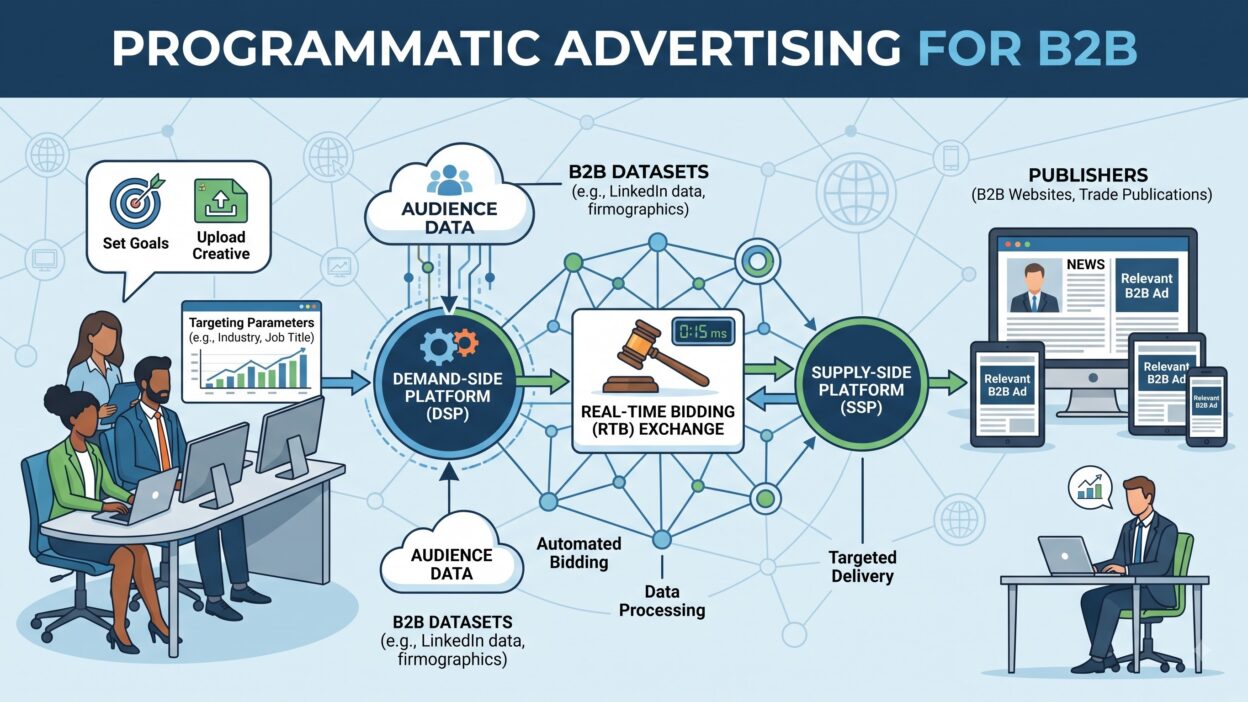
A user visits a website. That single visit triggers an auction. Advertisers bid instantly for that one ad slot. Programmatic advertising completes this entire auction before the page finishes loading.
Demand-Side Platforms Explained
A demand-side platform lets advertisers set rules for their campaigns. Budget, audience, and goals all get defined here. This platform is the control center behind most programmatic advertising campaigns today.
Supply-Side Platforms Explained
Publishers use supply-side platforms to sell their ad space. These platforms connect to the same exchange as advertisers. Programmatic advertising relies on this two-sided connection to match buyers with available space.
Ad Exchanges Connect Everything
An ad exchange acts as the marketplace. Buyers and sellers meet here in real time. Programmatic advertising could not function without this constant exchange of bids and inventory.
Types of Programmatic Advertising
Real-Time Bidding
Real-time bidding is the classic auction model. Each impression sells individually, in real time, to the highest bidder. Most people picture this model first when they hear programmatic advertising.
Private Marketplace Deals
A private marketplace limits bidding to a select group of advertisers. This setup gives more control over where ads appear. B2B marketers often prefer this version of programmatic advertising for brand safety.
Programmatic Direct
Programmatic direct skips the auction completely. A buyer and publisher agree on a fixed price ahead of time. This method still counts as programmatic advertising because software still handles the delivery and targeting.
Preferred Deals
A preferred deal gives one advertiser first access to inventory before it goes to open auction. This hybrid approach blends the speed of programmatic advertising with the certainty of a direct deal.
Why B2B Marketers Should Use Programmatic Advertising
Precise Audience Targeting
B2B sales cycles involve specific job titles and industries. Programmatic advertising targets these exact people using firmographic and behavioral data. This precision reduces wasted ad spend significantly.
Better Budget Efficiency
Manual ad buying often wastes budget on the wrong audience. Programmatic advertising adjusts bids in real time based on performance. This constant adjustment keeps spend focused on leads likely to convert.
Scalable Campaign Management
A small team cannot manually manage hundreds of ad placements. Programmatic advertising automates this entire workload. One marketer can run a campaign that once needed a full team.
Account-Based Marketing Support
Many B2B companies run account-based marketing strategies. Programmatic advertising supports this approach by targeting ads directly at named accounts, not just broad demographics.
Key Components of a Programmatic Advertising Campaign
Audience Data
Every strong campaign starts with clear audience data. Job title, industry, and company size all shape targeting. Programmatic advertising performs only as well as the data behind it.
Creative Assets
Ads still need strong creative, even in an automated system. Clear messaging and clean design matter just as much in programmatic advertising as they do in any other channel.
Bidding Strategy
A bidding strategy sets how aggressively a campaign competes for each impression. Programmatic advertising platforms let marketers adjust bids based on goals, whether that means reach, clicks, or conversions.
Frequency Capping
Frequency capping limits how often one user sees the same ad. Without this control, programmatic advertising can annoy prospects instead of persuading them.
Benefits of Programmatic Advertising for B2B Companies
Programmatic advertising saves time. Campaigns launch faster since software handles the buying process instead of manual negotiation.
Targeting improves dramatically. Programmatic advertising reaches specific buyers based on real behavior, not just broad guesses about who might be interested.
Reporting becomes clearer too. Every campaign generates real-time data on clicks, impressions, and conversions. This visibility helps marketers adjust strategy quickly instead of waiting for a monthly report.
Cost control improves as well. Programmatic advertising lets marketers set firm budget limits while the system optimizes spend within those limits automatically.
Common Challenges with Programmatic Advertising
Ad fraud remains a real concern. Bots sometimes generate fake clicks or impressions. B2B marketers need strong verification tools to keep programmatic advertising campaigns clean and trustworthy.
Brand safety issues can arise too. Ads sometimes appear next to poor-quality content. Careful placement controls help prevent this risk within programmatic advertising campaigns.
Data privacy regulations add complexity. Rules like GDPR affect how programmatic advertising platforms collect and use audience data. Marketers must stay updated on compliance requirements constantly.
Complexity itself can overwhelm new teams. Programmatic advertising involves many moving parts, and beginners often need real training before running a campaign confidently.
How to Launch a B2B Programmatic Advertising Campaign
Define Your Target Audience
Start with a clear picture of your ideal buyer. Industry, role, and company size all shape your programmatic advertising targeting from the very first step.
Choose the Right Platform
Different demand-side platforms specialize in different industries. Research which platform fits B2B audiences best before you launch your programmatic advertising campaign.
Set a Realistic Budget
Decide how much you can spend and for how long. A realistic budget keeps your programmatic advertising campaign sustainable instead of running out too fast.
Build Strong Creative
Design ads that speak directly to your audience’s pain points. Strong creative makes every dollar in your programmatic advertising budget work harder.
Monitor and Optimize Constantly
Launch is only the beginning. Watch performance daily and adjust bids or creative as needed. Programmatic advertising rewards marketers who stay active, not passive, after launch.
Frequently Asked Questions
What is programmatic advertising in simple terms? It means software buys and places ads automatically, using real-time data to target the right audience instead of manual negotiation.
Is programmatic advertising good for B2B marketing? Yes. It targets specific job titles, industries, and company sizes, which fits B2B sales cycles well.
What is the difference between programmatic advertising and real-time bidding? Real-time bidding is one type of programmatic advertising. Programmatic advertising also includes private marketplaces and direct deals.
How much does programmatic advertising cost? Costs vary by platform and industry. Most campaigns work on a flexible budget that scales up or down based on performance.
Does programmatic advertising work without cookies? Yes, though targeting methods are shifting. Many platforms now use contextual and first-party data instead of relying only on cookies.
What tools do I need to start programmatic advertising? You need a demand-side platform, clear audience data, and strong creative assets to launch a solid programmatic advertising campaign.
Read More:-B2B Sales Process Flowchart: The 7 Stages Every Deal Moves Through
Conclusion

Programmatic advertising has changed how B2B marketers reach buyers. Automated bidding, precise targeting, and real-time optimization replace slow, manual ad buying completely. Every dollar works harder inside a well-run campaign.
Start small if you are new to this space. Define your audience clearly, pick the right platform, and monitor results closely. Growth comes from steady adjustment, not a single perfect launch.
B2B marketers who master programmatic advertising gain a real edge. Better targeting means better leads, and better leads mean stronger pipeline growth over time.