Introduction
TL;DR A single champion can vanish overnight. They change jobs. They get pulled into other projects. Deals built on one relationship collapse the moment that person leaves. Multi-threaded sales solves this problem directly. It builds relationships across an entire buying committee instead of one contact. This guide breaks down what multi-threaded sales means, why it wins complex deals, and how sales teams build this approach into their daily process.
Table of Contents
What Is Multi-Threaded Sales?
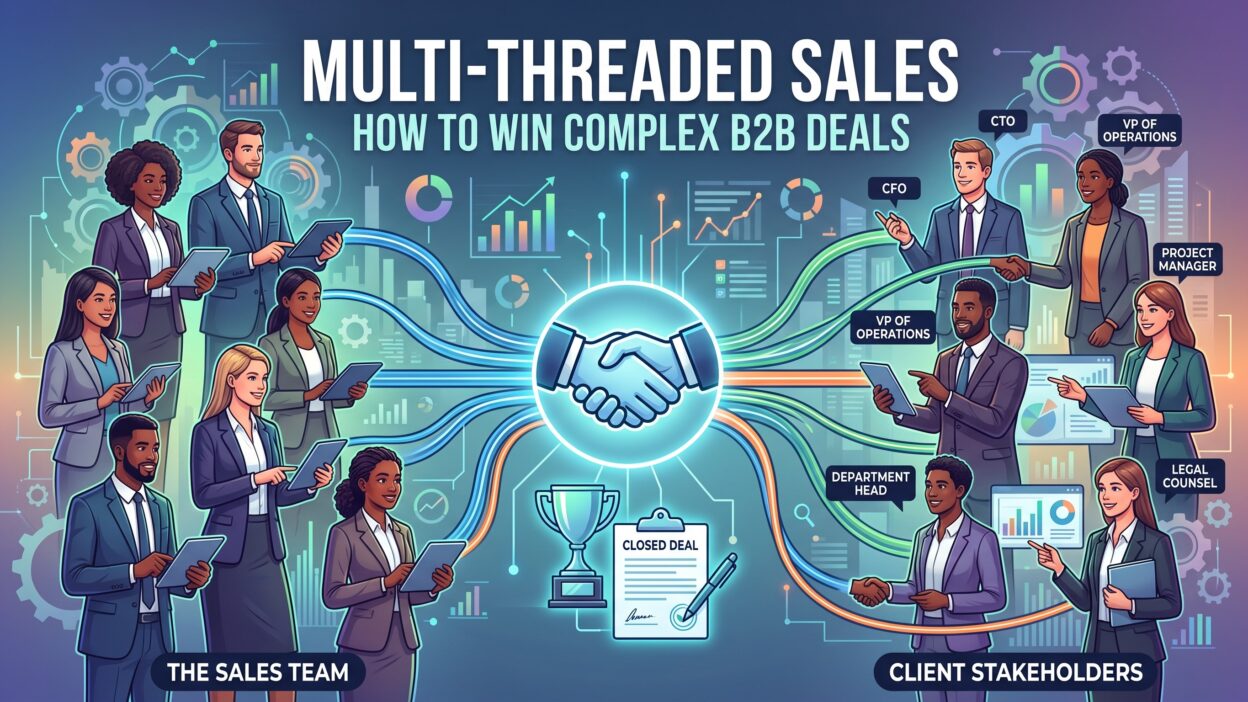
Multi-threaded sales means building relationships with multiple stakeholders inside one target account. A rep talks to the economic buyer, the technical evaluator, and the end user, not just one champion. This approach protects a deal from falling apart when a single contact leaves or goes quiet.
Multi-Threaded Sales vs Single-Threaded Deals
Single-threaded deals depend on one relationship carrying the entire sales process. This creates massive risk. Multi-threaded sales spreads that risk across several people. A deal survives even if one contact loses interest or leaves the company.
Why Buying Committees Make Multi-Threaded Sales Necessary
Modern B2B deals rarely involve one decision-maker. Buying committees now include six or more people on average. Multi-threaded sales matches this reality by engaging every stakeholder who influences the final decision.
Why Multi-Threaded Sales Wins More Complex Deals
Complex deals involve more risk, more stakeholders, and longer timelines. Multi-threaded sales addresses each of these challenges directly.
Reduces Deal Risk from Champion Turnover
Job changes happen constantly in B2B buying. A champion can leave mid-deal without warning. Multi-threaded sales keeps a deal alive because other relationships still exist inside the account.
Speeds Up Decision Making
Waiting on one contact to loop in other stakeholders slows everything down. Multi-threaded sales lets reps engage decision-makers directly. This parallel approach shortens the overall sales cycle.
Builds Consensus Across Stakeholders
Buying committees need agreement before signing a contract. Multi-threaded sales builds that consensus early by addressing each stakeholder’s specific concerns throughout the process.
Key Roles to Identify in Multi-Threaded Sales
Every buying committee includes several distinct roles. Multi-threaded sales requires reps to identify and engage each one.
Economic Buyer
The economic buyer controls budget and holds final approval power. Multi-threaded sales always includes a direct relationship with this person, even if a champion introduces the connection.
Champion
The champion believes in your solution and pushes it internally. This person remains valuable, but multi-threaded sales never relies on them alone to carry the deal.
Technical Evaluator
Technical evaluators test your product against strict requirements. Ignoring this role often kills deals during procurement. Multi-threaded sales gives this stakeholder direct access to technical answers.
End User
End users will use your product daily after the sale closes. Their feedback influences the buying committee heavily. Multi-threaded sales includes their voice early in the process.
Blocker
Blockers resist change or favor a competing solution. Multi-threaded sales identifies this person early and addresses their concerns directly instead of avoiding the conversation.
How to Build a Multi-Threaded Sales Strategy
Sales teams can follow a clear process to build multi-threaded sales into every complex deal.
Map the Buying Committee Early
Start every deal by mapping out who holds influence. Multi-threaded sales works best when this mapping happens during the first few conversations, not after a deal stalls.
Identify Your Champion
Find the person most invested in your solution’s success. This champion becomes your internal guide, helping you understand the rest of the buying committee’s structure and priorities.
Build Relationships with Multiple Stakeholders
Reach out to each stakeholder directly instead of relying only on introductions. Multi-threaded sales grows stronger every time a new relationship forms inside the account.
Tailor Messaging to Each Role
Every stakeholder cares about different outcomes. Speak to ROI with the economic buyer. Speak to ease of use with the end user. Multi-threaded sales demands this tailored approach across every conversation.
Coordinate Sales and Marketing Touchpoints
Align sales outreach with marketing campaigns aimed at the same account. Multi-threaded sales performs best when every touchpoint reinforces a consistent message across the buying committee.
Tools That Support Multi-Threaded Sales
Technology helps sales teams manage the complexity that comes with engaging multiple stakeholders.
CRM Relationship Mapping
Modern CRMs now include relationship mapping features. These tools visualize the entire buying committee. Multi-threaded sales becomes easier to manage when reps see every stakeholder connection in one place.
Intent Data Platforms
Intent data reveals which stakeholders research your solution and when. This data helps reps prioritize outreach during a multi-threaded sales motion.
Sales Engagement Tools
Sales engagement platforms manage outreach sequences across several contacts at once. These tools keep multi-threaded sales organized instead of scattered across spreadsheets and memory.
Common Mistakes in Multi-Threaded Sales
Even experienced sales teams stumble when building out this approach.
Relying on a Single Champion
Some reps still lean entirely on one internal advocate. This habit undermines the entire point of multi-threaded sales and leaves deals vulnerable to sudden turnover.
Ignoring Blockers
Avoiding a difficult stakeholder rarely works. Multi-threaded sales requires direct engagement with blockers, not silence or avoidance.
Sending Generic Messaging to Every Contact
Copying the same message to every stakeholder wastes an opportunity. Multi-threaded sales depends on messaging tailored to each person’s specific role and concerns.
How to Measure Multi-Threaded Sales Success
Track the number of stakeholders engaged per deal first. A rising number signals stronger multi-threaded sales execution. Then track win rates on deals with three or more contacts compared to single-contact deals. Finally, measure deal velocity across both groups. Faster, higher-win-rate deals confirm that multi-threaded sales delivers real results for your team.
Frequently Asked Questions
What does multi-threaded sales mean? Multi-threaded sales means building relationships with several stakeholders inside one account instead of relying on a single contact. This approach protects deals from turnover and speeds up decisions.
Why does multi-threaded sales matter in B2B deals? B2B buying committees often include six or more people. Multi-threaded sales matches this reality by engaging every stakeholder who influences the final decision.
How many contacts should a rep engage during multi-threaded sales? Most successful multi-threaded sales deals involve three to five stakeholders. This number covers the economic buyer, champion, technical evaluator, and end user without spreading effort too thin.
Does multi-threaded sales work for smaller deals? Multi-threaded sales works best for complex or high-value deals. Smaller, simple purchases may not require engaging multiple stakeholders.
How does multi-threaded sales reduce deal risk? Multi-threaded sales spreads relationship risk across several people. A deal survives even when one contact leaves or stops responding.
What tools help sales teams manage multi-threaded sales? CRM relationship mapping, intent data platforms, and sales engagement tools all support multi-threaded sales by organizing outreach across multiple stakeholders.
Read More:-B2B Data Integration: Components, Use Cases, and Platforms
Conclusion

Multi-threaded sales turns fragile, single-contact deals into resilient, committee-wide relationships. It protects revenue from unexpected champion turnover. It speeds up decisions by engaging stakeholders directly instead of waiting on one person. Map the buying committee early. Identify every key role. Tailor your message to each stakeholder’s priorities. Sales teams that commit to multi-threaded sales close more complex deals and lose fewer opportunities to silence and turnover.