Introduction
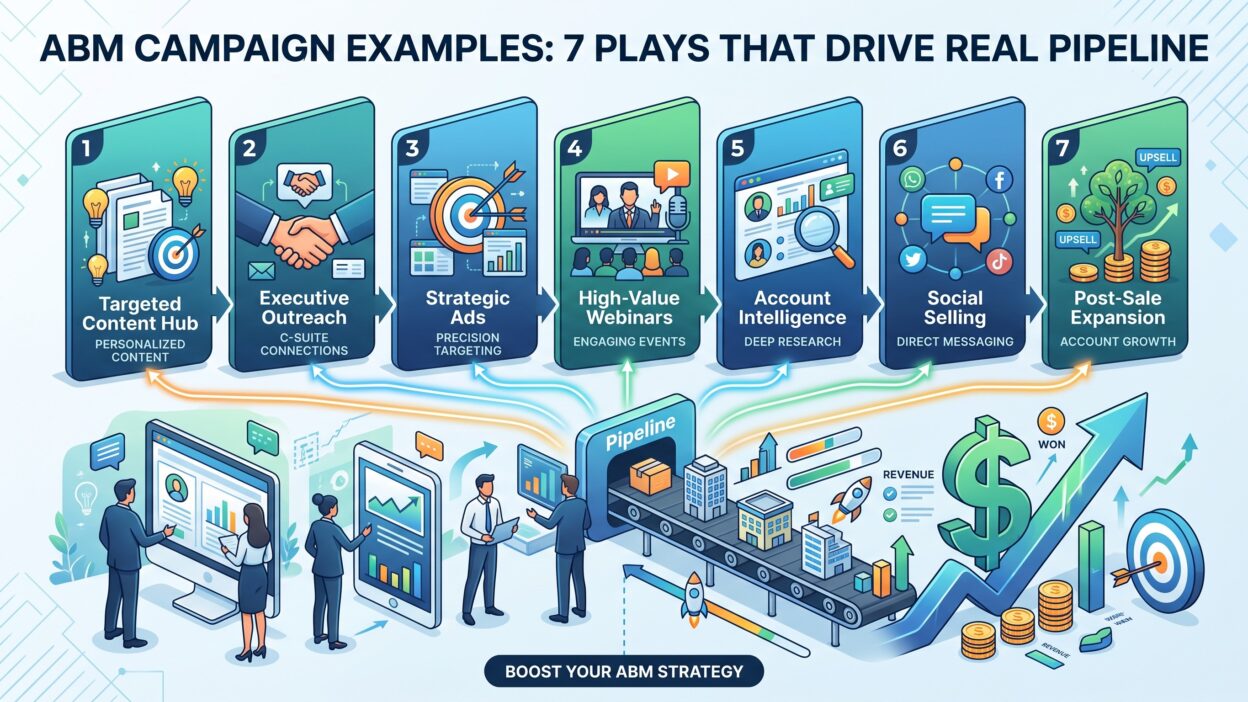
TL;DR Marketing teams often struggle to prove ROI from account-based marketing. Budgets go up, but pipeline stays flat. The problem usually comes down to strategy, not effort. Strong ABM campaign examples show exactly what separates a winning play from a wasted one. This guide walks through seven ABM campaign examples that real B2B teams use to drive pipeline today. You will see why each play works, how to execute it, and what results to expect.
Table of Contents
What Makes a Strong ABM Campaign?
A strong ABM campaign starts with a tight account list. Marketing and sales agree on target accounts before any content goes out. Every ABM campaign example in this guide follows this rule. Personalization comes next. Generic messaging kills ABM results fast. The best ABM campaign examples speak directly to a named account’s pain points.
Target Account Selection
Account selection sets the foundation for every ABM campaign. Teams pick accounts based on firmographic fit, intent signals, and deal size. A poor account list ruins even the best-designed campaign.
Personalization at Scale
Personalization used to mean slow, manual work. Modern tools now let teams personalize at scale. This shift makes advanced ABM campaign examples possible for mid-size teams, not just enterprise budgets.
7 ABM Campaign Examples That Drive Real Pipeline
Each play below works as a standalone campaign or as part of a larger ABM program. Pick the plays that fit your account list and budget.
Play 1: Target Account Direct Mail Campaigns
Direct mail still cuts through digital noise. This ABM campaign example sends a physical gift or handwritten note to a key decision-maker. Teams often pair the mail piece with a follow-up email.
Why It Works Physical mail stands out in a crowded inbox world. Executives remember a thoughtful package far longer than another cold email.
How to Execute Pick fifteen to twenty target accounts. Send a relevant, useful item tied to their business challenge. Follow up within three days through email or LinkedIn.
Play 2: Personalized Landing Pages for Key Accounts
This ABM campaign example builds a unique landing page for each target account. The page includes the account’s logo, industry data, and a tailored value proposition.
Why It Works Buyers feel seen when a page speaks directly to their company. This builds trust before a sales call even happens.
How to Execute Use dynamic content tools to swap logos and headlines automatically. Link the page inside outreach emails and ads aimed at that specific account.
Play 3: Executive Roundtable Events
Small, invite-only events bring together decision-makers from target accounts. This ABM campaign example works well for enterprise deals with long sales cycles.
Why It Works Peer conversations carry more weight than a sales pitch. Executives trust insights from other executives facing similar problems.
How to Execute Invite eight to ten senior leaders from your target account list. Keep the format conversational. Assign a sales rep to follow up with each attendee within a week.
Play 4: LinkedIn Ad Sequences for Named Accounts
LinkedIn lets marketers target specific companies by name. This ABM campaign example builds a sequence of ads that guide a buyer through awareness, consideration, and decision stages.
Why It Works Named account targeting keeps ad spend focused. Budget goes only toward accounts your sales team actually wants.
How to Execute Upload your target account list into LinkedIn’s Matched Audiences tool. Build three ad variations that map to each funnel stage. Rotate creative every two weeks to avoid fatigue.
Play 5: Custom Content Hubs for Target Accounts
A content hub gathers case studies, guides, and videos relevant to one account or industry vertical. This ABM campaign example gives sales reps a single link to share during outreach.
Why It Works Buyers research heavily before they ever talk to sales. A custom hub answers their questions before they ask.
How to Execute Group your target accounts by industry or use case. Build one hub per group instead of one per account to save time. Update the hub content every quarter.
Play 6: Sales and Marketing Alignment Sprints
This ABM campaign example focuses on internal process, not external content. Sales and marketing run short sprints to align on account priorities and messaging.
Why It Works Misalignment kills more ABM programs than bad creative does. A weekly sprint keeps both teams focused on the same accounts.
How to Execute Schedule a thirty-minute sync every week. Review account engagement data together. Adjust messaging based on what sales hears on live calls.
Play 7: Intent-Data Triggered Outreach
Intent data shows when a target account starts researching a solution like yours. This ABM campaign example triggers outreach the moment intent signals spike.
Why It Works Timing changes everything in B2B sales. Reaching a buyer during active research beats reaching them cold by a wide margin.
How to Execute Connect an intent-data platform to your CRM. Set alerts for spikes in research activity from target accounts. Trigger a personalized email or call within 24 hours of the signal.
Tools to Support ABM Campaign Examples
Technology makes these ABM campaign examples easier to run at scale.
Account-Based Advertising Platforms
Platforms like Demandbase and 6sense let teams target named accounts across display and social channels. These tools power several ABM campaign examples on this list, especially LinkedIn sequences.
Intent Data Providers
Intent data providers track buyer research behavior across the web. This data fuels timely, relevant ABM campaign examples like triggered outreach.
Personalization Software
Personalization tools swap page content based on visitor company data. This technology makes custom landing pages possible without building a new page for every account.
Common Mistakes in ABM Campaigns
Teams often repeat the same errors across their ABM campaigns.
Targeting Too Many Accounts
A long account list spreads resources thin. Strong ABM campaign examples usually target fewer, higher-value accounts with deeper personalization.
Ignoring Sales Feedback
Marketing sometimes builds campaigns without checking in with sales. This creates messaging that misses what buyers actually care about.
Measuring the Wrong Metrics
Vanity metrics like impressions do not prove pipeline impact. Focus on meetings booked, deals influenced, and revenue tied to target accounts.
How to Measure ABM Campaign Success
Track account engagement first. Look at website visits, email opens, and ad clicks from your target account list. Then track pipeline metrics. Count meetings booked and deals opened from accounts touched by your campaign. Revenue from target accounts remains the clearest proof that your ABM campaign examples actually work.
Frequently Asked Questions
What is an ABM campaign example? An ABM campaign example shows a specific tactic marketing teams use to target and engage named accounts. Direct mail, personalized landing pages, and intent-triggered outreach all count as ABM campaign examples.
How many accounts should one ABM campaign target? Most successful ABM campaign examples target between ten and fifty accounts at a time. Smaller lists allow deeper personalization and better results.
Which ABM campaign example works best for small teams? Personalized landing pages and LinkedIn ad sequences work well for small teams. Both plays scale without heavy manual effort.
Do ABM campaigns work for short sales cycles? Yes. Intent-data triggered outreach and LinkedIn ads work well even in shorter sales cycles because they reach buyers at the right moment.
How long before an ABM campaign shows results? Most ABM campaign examples take sixty to ninety days to show measurable pipeline impact. Longer sales cycles may take longer to convert into closed revenue.
Can ABM campaigns replace traditional demand generation? ABM campaigns work best alongside demand generation, not as a full replacement. Use ABM for high-value target accounts and demand generation for broader reach.
Read More:-The Best AI Sourcing Tools Start With Better Data, Not Better Prompts
Conclusion

These seven ABM campaign examples give marketing teams a real playbook for building pipeline. Each play targets specific accounts with focused, relevant messaging. Direct mail builds memorability. Personalized pages build trust. Events build relationships. Ads and intent data build timely reach. Sales and marketing alignment ties everything together. Pick two or three plays from this list and test them against your own target account list. Track engagement and pipeline closely. Strong ABM campaign examples turn account-based strategy into real, measurable revenue.