Introduction
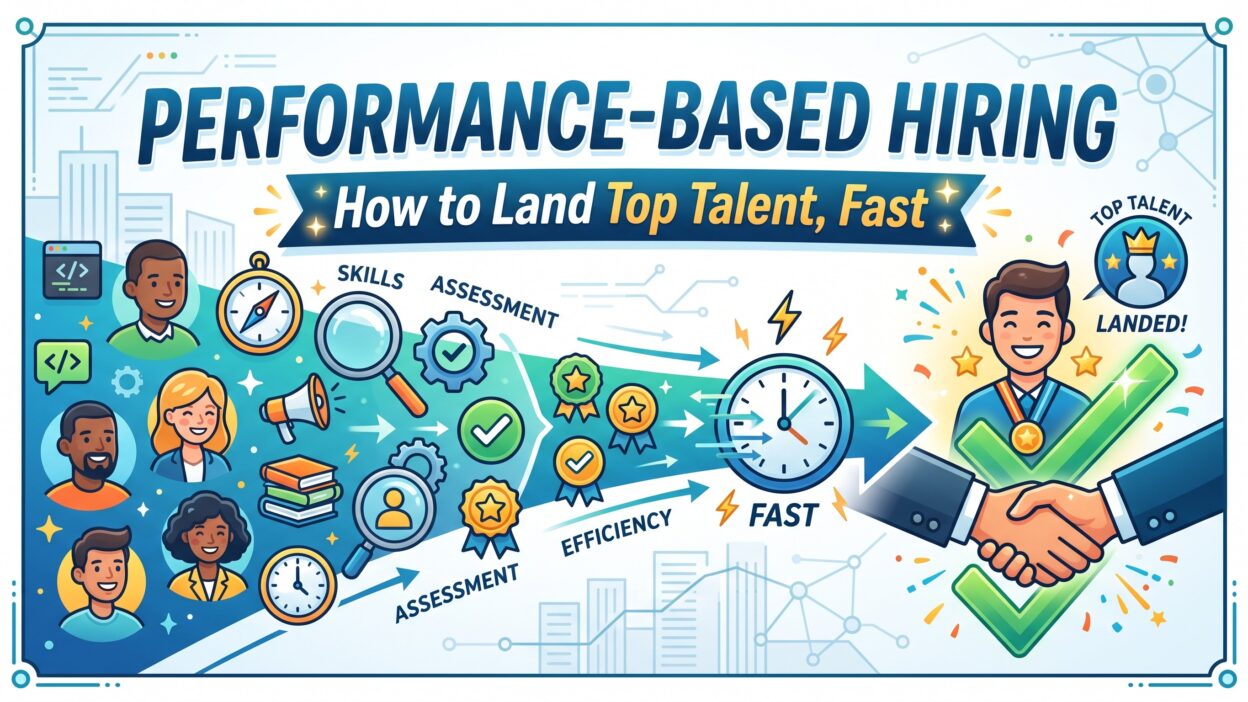
TL;DR Hiring managers waste weeks on resumes that look perfect on paper. Then the new hire struggles in the role. This gap between paper credentials and real performance costs companies money and time. Performance-based hiring fixes this problem. It shifts focus from vague qualifications to real skills and measurable outcomes. This guide breaks down everything you need to know about performance-based hiring. You will learn what it means, why it works, and how to build a process that brings you top talent fast.
Table of Contents
What Is Performance-Based Hiring?
Performance-based hiring is a recruitment method. It evaluates candidates based on their ability to perform actual job tasks. Recruiters skip generic questions about experience. Instead, they test real skills tied to the role. This method predicts job success far better than a traditional resume screen.
Companies using performance-based hiring create a performance profile for each open role. This profile lists outcomes the new hire must achieve in the first 90 days. Recruiters then match candidates against these outcomes, not just job titles.
Core Principles of Performance-Based Hiring
Performance-based hiring rests on three principles. First, define success before you search for candidates. Second, test real skills through practical tasks. Third, remove bias by focusing on measurable results. These principles keep the hiring process objective. They also speed up decision-making for hiring teams.
Performance-Based Hiring vs Traditional Hiring
Traditional hiring relies on resumes, cover letters, and years of experience. Performance-based hiring relies on tasks, assessments, and outcomes. A candidate with ten years of experience may fail a performance-based hiring test. A candidate with two years of experience may pass with ease. This method levels the playing field. It rewards actual ability over paper credentials.
Why Companies Choose Performance-Based Hiring
Businesses adopt performance-based hiring for three main reasons. Speed, quality, and fairness top the list. Let’s break down each benefit.
Faster Time to Hire
Performance-based hiring cuts down interview rounds. Recruiters skip lengthy behavioral interviews. They replace these with short, focused tasks. Candidates complete these tasks within days. This shortens the hiring timeline significantly. Many companies report cutting time-to-hire by 30 percent after switching to performance-based hiring.
Better Quality of Hire
Performance-based hiring predicts on-the-job success. Candidates prove their skills before you extend an offer. This reduces early turnover. New hires ramp up faster because they already possess proven skills. Managers spend less time training and more time growing their teams.
Reduced Bias in Recruitment
Traditional resumes carry hidden bias. School names, past employers, and personal details can sway decisions. Performance-based hiring strips away these distractions. Recruiters judge candidates on task performance alone. This creates a fairer, more inclusive hiring process.
Key Components of a Performance-Based Hiring Process
A strong performance-based hiring process includes several building blocks. Each block plays a specific role in identifying top talent.
Performance Profiles Instead of Job Descriptions
A performance profile replaces the standard job description. It lists specific outcomes a new hire must deliver. For example, a sales role might require closing five new accounts within 90 days. This profile gives candidates clarity. It also gives recruiters a clear benchmark for performance-based hiring decisions.
Skills-Based Assessments
Skills-based assessments sit at the center of performance-based hiring. These assessments mirror real job tasks. A software engineer might solve a coding problem. A marketer might draft a campaign brief. These tasks reveal true ability far better than an interview question.
Structured Interviews Focused on Outcomes
Interviews still matter in performance-based hiring. But the questions change. Instead of asking about strengths and weaknesses, recruiters ask about past outcomes. They ask candidates to describe a project they led and the results they achieved. This approach keeps interviews grounded in real performance data.
Step-by-Step Guide to Implement Performance-Based Hiring
Building a performance-based hiring process takes planning. Follow these steps to launch your own system.
Define Success Metrics Before You Post the Job
Start by defining what success looks like in the role. Write down specific, measurable goals. A customer support hire might need to resolve 50 tickets per week with a 90 percent satisfaction score. These metrics guide every later step in performance-based hiring.
Build a Performance Profile
Turn your success metrics into a performance profile. Share this profile with hiring managers and recruiters. Everyone involved in performance-based hiring should agree on these targets before the search begins.
Screen Candidates with Real Tasks
Send candidates a short task related to the job. Keep it realistic and time-boxed. A writer might submit a sample article. A data analyst might clean a small dataset. This step filters out unqualified candidates early in the performance-based hiring funnel.
Conduct Outcome-Focused Interviews
Interview only candidates who pass the task stage. Ask about specific past achievements. Request numbers and results wherever possible. This keeps the performance-based hiring interview grounded in facts, not opinions.
Make a Data-Driven Offer
Compare candidates using their task scores and interview answers. Choose the candidate whose past results best match your performance profile. This final step completes the performance-based hiring cycle and leads to a confident hiring decision.
Tools and Technology That Support Performance-Based Hiring
Technology makes performance-based hiring easier to scale. Several tool categories support this process.
Applicant Tracking Systems with Skill Scoring
Modern applicant tracking systems now include skill scoring features. These systems rank candidates based on task performance, not just keywords. This feature makes performance-based hiring faster for high-volume recruiting teams.
Pre-Employment Assessment Platforms
Assessment platforms let recruiters send standardized tests to candidates. These platforms score answers automatically. They save recruiters hours of manual review during performance-based hiring.
AI-Powered Candidate Matching
AI tools now match candidates to performance profiles automatically. These tools scan task results and flag top performers. This technology speeds up performance-based hiring without sacrificing accuracy.
Common Mistakes to Avoid in Performance-Based Hiring
Even strong hiring teams make errors when adopting performance-based hiring. Watch for these pitfalls.
Ignoring Soft Skills
Performance-based hiring focuses heavily on hard skills. Some teams forget soft skills like communication and teamwork. Balance task performance with a short conversation about collaboration style.
Overloading Candidates with Tests
Too many tests frustrate candidates. Top talent often walks away from a lengthy process. Keep your performance-based hiring tasks short and relevant.
Skipping Culture Fit Entirely
Performance-based hiring should not replace culture fit checks. A skilled candidate who clashes with your team culture may still fail. Include one conversation focused purely on values and work style.
Measuring Success After Performance-Based Hiring
Your work does not end once you extend an offer. Track results to prove your performance-based hiring process works.
Track 90-Day Performance
Check whether new hires meet the goals listed in their performance profile. This data confirms whether your performance-based hiring approach picks the right candidates.
Monitor Retention Rates
Compare retention rates before and after adopting performance-based hiring. Higher retention signals a stronger match between candidates and roles.
Industries Benefiting Most from Performance-Based Hiring
Some industries see faster results from performance-based hiring than others.
Tech and Software Companies
Coding tasks and technical challenges fit naturally into performance-based hiring. Engineering teams already test skills through code samples.
Sales Teams
Sales roles depend on measurable numbers. Performance-based hiring works well here because success metrics already exist, like closed deals and revenue targets.
Startups Scaling Fast
Startups need speed and accuracy in hiring. Performance-based hiring helps small teams avoid costly mismatches during rapid growth.
Frequently Asked Questions
What does performance-based hiring mean? Performance-based hiring means judging candidates by their ability to perform real job tasks. Recruiters test skills directly instead of relying only on resumes.
How is performance-based hiring different from skills-based hiring? Skills-based hiring checks whether a candidate has a specific skill. Performance-based hiring goes further. It ties those skills to measurable outcomes tied to the role.
Does performance-based hiring work for entry-level roles? Yes. Performance-based hiring works well for entry-level roles because it removes the need for years of experience. Candidates prove their potential through tasks instead.
What tools support performance-based hiring? Applicant tracking systems, assessment platforms, and AI matching tools all support performance-based hiring. These tools score tasks and rank candidates automatically.
Is performance-based hiring more expensive than traditional hiring? Performance-based hiring often costs less over time. Faster hiring and lower turnover offset the upfront cost of building assessments.
Can small businesses use performance-based hiring? Small businesses can absolutely use performance-based hiring. A simple task and a short interview focused on outcomes work well, even without expensive software.
Read More:-10 Best Parallel Dialers for Sales Teams in 2026
Conclusion

Performance-based hiring changes how companies find talent. It replaces guesswork with proof. Candidates show their skills through real tasks. Recruiters make decisions based on data, not gut feeling. This approach speeds up hiring and improves retention. It also reduces bias in the recruitment process. Companies across tech, sales, and startups already use performance-based hiring to build stronger teams. Start small. Define one success metric. Test one task. Watch how performance-based hiring transforms your next hire into your best hire.