Introduction
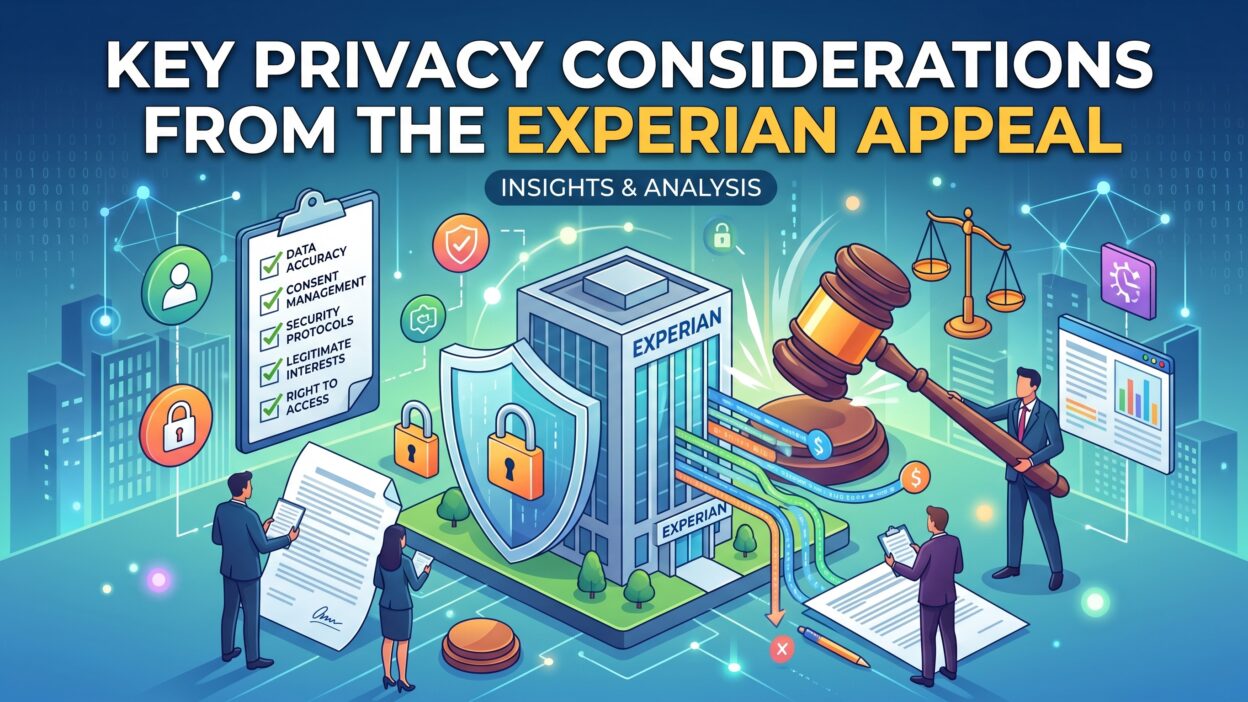
TL;DR Privacy Considerations have never been more urgent in the world of consumer data. The Experian appeal brought these concerns into sharp legal focus. Courts, regulators, and privacy advocates watched every development closely. The case raised fundamental questions about how credit bureaus collect, store, share, and protect personal data. It exposed gaps in existing privacy frameworks. It challenged assumptions about what companies can legally do with sensitive consumer information. Every compliance officer, legal team, and data professional should study this case carefully. The Privacy Considerations it surfaces are not limited to credit bureaus. They apply broadly to any organization that handles personal financial data at scale.
Table of Contents
Background: What Was the Experian Appeal About?
Experian is one of the three largest credit reporting agencies in the United States. It maintains detailed financial profiles on hundreds of millions of consumers. The appeal stemmed from a dispute over how Experian collected, used, and shared consumer data without adequate notice or consent. Plaintiffs argued that Experian violated consumer rights under multiple federal statutes. The case moved through the courts and raised significant Privacy Considerations at every stage.
At its core, the appeal challenged the boundaries of lawful data use by consumer reporting agencies. Experian argued that its data practices fell within exemptions provided by the Fair Credit Reporting Act. Plaintiffs countered that FCRA exemptions do not override broader consumer privacy rights. The tension between these two positions created a legal battleground with far-reaching implications.
The case also touched on data aggregation. Experian does not just collect credit history. It aggregates data from multiple sources including public records, financial institutions, and third-party data brokers. This aggregation creates a detailed profile of each consumer. The Privacy Considerations around this aggregation practice are enormous. Consumers rarely know the full extent of what Experian knows about them.
Regulatory interest in the case ran high. The Federal Trade Commission and the Consumer Financial Protection Bureau both monitor credit bureau practices closely. The Experian appeal gave regulators additional ammunition to push for stricter data handling standards across the consumer reporting industry. The outcome of the appeal sent signals to the entire data broker ecosystem about acceptable privacy practices.
The case is a landmark reference point for Privacy Considerations in the financial data sector. Its lessons apply beyond credit bureaus to any organization that builds detailed consumer profiles using aggregated data sources. Understanding the background puts the specific privacy issues in proper context.
Core Privacy Considerations Raised by the Appeal
The Experian appeal surfaced several core Privacy Considerations that deserve detailed examination. Each one represents a pressure point in how organizations handle personal data. Ignoring any one of them creates legal exposure and reputational risk.
The first major Privacy Consideration involves consent. Experian collected data from consumers and shared it with third parties without explicit consent. Consumers had limited awareness of this data sharing. The appeal argued that implied consent from a credit application does not cover all downstream data uses. The court had to determine where implied consent ends and explicit consent begins. This line matters enormously for any data-driven business.
The second Privacy Consideration centers on data minimization. Experian collected far more data than necessary for its core credit reporting function. It used this excess data for marketing analytics, identity verification services, and commercial data products. Privacy law increasingly demands that organizations collect only the data they genuinely need. Collecting excess data creates risk. It expands the attack surface for breaches. It creates legal exposure when that data gets used beyond its original purpose.
Third, the appeal raised serious questions about data retention. How long should a credit bureau hold consumer data? FCRA sets some limits. But the appeal revealed that Experian retained certain data categories far beyond statutory requirements. Retention policies that exceed legal necessity represent a Privacy Consideration that courts now scrutinize actively.
Fourth, consumer access rights emerged as a central Privacy Consideration. Consumers have the right to know what data credit bureaus hold about them. They have the right to dispute inaccurate information. The appeal revealed that Experian’s dispute resolution process created barriers for consumers. Long resolution timelines, inadequate investigation procedures, and poor communication all featured as evidence. Consumer access rights are not procedural niceties. They are enforceable legal requirements.
Fifth, the appeal raised concerns about data accuracy. Inaccurate data in a credit file causes real harm. It affects loan approvals, interest rates, employment decisions, and housing applications. Privacy Considerations around data accuracy require organizations to maintain robust verification and correction processes. Experian’s accuracy practices came under direct scrutiny during the appeal proceedings.
FCRA Compliance and Its Limits as a Privacy Shield
The Fair Credit Reporting Act is the primary federal law governing credit bureau data practices. Many in the industry treat FCRA compliance as a complete privacy solution. The Experian appeal exposed the flaw in that assumption. FCRA compliance is a floor, not a ceiling. Meeting FCRA requirements does not eliminate all Privacy Considerations that modern data practices generate.
FCRA was written in 1970. It has been amended several times. But its core framework predates the internet, mobile data, cloud computing, and the explosion of third-party data brokers. The law was not designed for an ecosystem where consumer data moves between dozens of organizations in milliseconds. The Experian appeal highlighted how outdated FCRA provisions create gaps that harm consumers.
FCRA permissible purpose doctrine is one of those gaps. Organizations can access credit reports for specific permissible purposes including credit transactions, employment screening, insurance underwriting, and legitimate business needs. The appeal questioned whether Experian adequately verified that data requestors had a genuine permissible purpose. Selling data to requestors without proper verification creates serious Privacy Considerations around unauthorized data access.
FCRA dispute resolution requirements set timelines and investigation standards. The appeal revealed that Experian’s automated dispute resolution systems frequently failed to conduct genuine investigations. Systems that automatically accept furnisher responses without independent verification do not meet the spirit of FCRA dispute requirements. Courts have found that this practice raises Privacy Considerations about consumer rights enforcement.
State privacy laws add another layer of complexity. California’s CCPA and CPRA create consumer rights that go beyond FCRA. Virginia, Colorado, and Connecticut have similar state privacy frameworks. Experian operates nationally. It must navigate both federal FCRA requirements and a patchwork of state privacy laws. The appeal demonstrated that federal compliance alone is insufficient protection against state-level Privacy Considerations claims.
Organizations must treat FCRA compliance as a starting point. They must layer additional Privacy Considerations frameworks on top. This means conducting privacy impact assessments, implementing data minimization principles, and building consent management systems that go beyond what FCRA strictly requires.
Data Broker Practices and Consumer Transparency
The Opacity Problem in Data Brokerage
Data brokers operate largely in the shadows. Consumers do not know which companies hold their data. They do not know how that data gets used. The Experian appeal brought this opacity into public focus. Experian sells consumer data products to thousands of clients. Consumers who provide data for a credit application rarely understand that this data feeds commercial products sold to marketers, insurers, and employers. Transparency is a core Privacy Consideration that the data broker model systematically undermines.
Secondary Use of Consumer Data
Secondary data use is one of the most significant Privacy Considerations in the modern data economy. A consumer gives Experian data to check creditworthiness for a loan. Experian uses that data to build a marketing analytics product sold to consumer goods companies. The consumer never agreed to that secondary use. The appeal challenged whether this practice is legally permissible under existing frameworks. Courts are increasingly skeptical of broad secondary data use without explicit consumer consent.
Data Sharing Agreements and Third-Party Risk
Experian shares data with thousands of third-party partners. Each sharing arrangement creates Privacy Considerations around third-party risk. When a data partner suffers a breach, consumer data gets exposed. When a partner uses data for unauthorized purposes, the originating bureau shares reputational and legal liability. The appeal raised questions about the adequacy of Experian’s vendor due diligence and contractual data use restrictions. Strong data sharing agreements are not just commercial documents. They are privacy protection instruments.
Consumer Opt-Out Rights
Many consumers do not know they can opt out of certain Experian data products. The pre-screening opt-out program exists for credit and insurance offers. But the process is not intuitive. The appeal highlighted how inadequate consumer education about opt-out rights creates Privacy Considerations around meaningful consent. A right that consumers cannot practically exercise is not a genuine right. Companies must make opt-out processes simple, accessible, and well-publicized.
Cybersecurity Obligations as Privacy Considerations
Data security and data privacy are not the same thing. But they are deeply connected. A security failure becomes a privacy violation instantly. The Experian appeal touched on cybersecurity obligations as a component of broader Privacy Considerations. Organizations that hold sensitive consumer financial data must implement security measures proportionate to the risk and sensitivity of that data.
Experian suffered a major data breach in 2015. Approximately 15 million consumers had personal data exposed. The breach affected T-Mobile customers whose data Experian processed for credit checks. The aftermath of this breach influenced Privacy Considerations raised in subsequent legal proceedings. Courts and regulators referenced the breach when evaluating the adequacy of Experian’s security practices.
Encryption standards represent a fundamental Privacy Consideration for any organization handling financial data. Data at rest and data in transit must meet current encryption standards. Outdated encryption protocols create vulnerabilities that expose consumer data. The Experian proceedings revealed that security infrastructure sometimes lagged behind industry best practices. Regulators cited this lag as evidence of inadequate Privacy Considerations in security planning.
Access controls are equally critical. Who inside an organization can access consumer data? Under what circumstances? With what logging and audit trail? The appeal raised questions about internal access controls at Experian. Broad internal access to sensitive consumer data creates both security risk and privacy risk. Limiting access to data on a need-to-know basis is a basic Privacy Consideration that every data-handling organization must implement rigorously.
Incident response planning is a Privacy Consideration that regulators now evaluate closely. A data breach is not just a security event. It is a privacy event requiring notification, remediation, and regulatory reporting. Organizations that lack a tested incident response plan face greater regulatory scrutiny when breaches occur. The Experian breach response drew criticism for its speed and completeness.
Regulatory Implications for the Consumer Reporting Industry
The Experian appeal sent clear signals to regulators. The CFPB and FTC interpreted the case as validation for stricter oversight of consumer reporting agencies. Both agencies have since increased enforcement activity against credit bureaus and data brokers. The regulatory implications of the appeal extend well beyond Experian. They represent a broader shift in how the government approaches Privacy Considerations in the data economy.
The CFPB issued supervisory guidance following the appeal that tightened expectations around dispute resolution, data accuracy, and consumer access rights. Credit bureaus must now demonstrate that their dispute investigation processes are genuine and thorough. Automated systems that rubber-stamp furnisher responses no longer satisfy regulatory expectations. The Privacy Considerations around consumer rights enforcement now carry real enforcement teeth.
FTC actions against data brokers increased in the period following the Experian appeal. The FTC used its Section 5 unfair and deceptive practices authority to challenge data practices that fell short of Privacy Considerations standards. Companies that collected sensitive data without adequate security, shared data without proper consent, or failed to honor opt-out requests faced enforcement actions and significant financial penalties.
State attorneys general also took note. California’s AG, alongside AGs in several other states, launched investigations into credit bureau and data broker practices. State-level enforcement of Privacy Considerations creates a multi-front regulatory challenge for large data holders. A company that satisfies federal regulators may still face state enforcement action for practices that violate state-specific privacy standards.
The regulatory landscape will continue to tighten. Federal privacy legislation remains under discussion in Congress. A comprehensive federal privacy law would create uniform Privacy Considerations standards that supersede the current patchwork. Organizations in the consumer reporting space should treat current regulatory developments as a preview of stricter requirements ahead.
What Organizations Must Do to Address These Privacy Considerations
The Experian appeal offers a roadmap for any organization serious about Privacy Considerations. The lessons are practical. They require organizational commitment, technical investment, and cultural change. Companies that act on these lessons proactively reduce their legal exposure and build genuine trust with consumers.
Conduct a comprehensive data audit. Map every data source your organization uses. Document where data comes from, how it gets used, how long it stays, and with whom it gets shared. Most organizations discover data flows they did not know existed. This audit is the foundation of any serious Privacy Considerations program. You cannot manage what you have not mapped.
Implement genuine data minimization. Collect only what you need for a specific, documented purpose. Delete data when that purpose is fulfilled. Do not retain data indefinitely on the assumption that it might be useful someday. The Experian appeal showed that excess data creates excess liability. Data minimization is both a privacy principle and a risk management strategy.
Build a real consent management system. Consent must be informed, specific, and freely given. Burying data use permissions in lengthy terms and conditions does not constitute meaningful consent. Create clear, plain-language consent mechanisms. Allow consumers to grant or withdraw consent for specific data uses. Document every consent decision. Audit your consent records regularly.
Invest in consumer-facing transparency tools. Give consumers easy access to the data you hold about them. Build simple request processes for data access, correction, and deletion. Respond to consumer requests within legally required timeframes. The Privacy Considerations around consumer rights are not satisfied by having a policy. They require operational processes that actually work.
Train your teams on privacy obligations. Legal and compliance teams must understand Privacy Considerations deeply. But so must marketing, sales, product, and engineering teams. Privacy by design means building privacy into every process from the start. This requires organization-wide awareness, not just legal department expertise.
Frequently Asked Questions About Privacy Considerations and the Experian Appeal
What specific Privacy Considerations did the Experian appeal address?
The Experian appeal addressed Privacy Considerations across several dimensions. These included consumer consent for data collection and secondary use, data minimization obligations, retention limits, consumer access rights, dispute resolution adequacy, and data security standards. The case challenged the assumption that FCRA compliance alone satisfies all relevant Privacy Considerations for a credit bureau operating at scale in the modern data environment.
How does the Experian appeal affect other data brokers?
The Experian appeal set precedents that affect all data brokers, not just credit bureaus. Courts and regulators now apply higher scrutiny to data collection practices, consent mechanisms, and secondary data use across the industry. Data brokers that rely on implied consent, collect excess data, or share consumer information without proper agreements face heightened legal risk in the wake of the appeal. The Privacy Considerations raised in the case apply broadly to any organization that builds consumer profiles from aggregated data sources.
What rights do consumers have regarding their credit bureau data?
Consumers have several rights under FCRA and state privacy laws. They can request a free annual credit report from each of the three major bureaus. They can dispute inaccurate information and require investigation within 30 days. They can opt out of pre-screened credit and insurance offers. They can place a security freeze on their credit file. State laws in California and other states grant additional rights including data deletion requests and detailed disclosures about data use. The Privacy Considerations raised in the Experian appeal highlighted that these rights must be practically accessible, not just theoretically available.
How should companies respond to the Privacy Considerations raised in this case?
Companies should conduct immediate data audits, implement data minimization policies, build genuine consent management systems, and invest in consumer-facing transparency tools. They should review their data sharing agreements with third parties and conduct vendor due diligence focused on privacy practices. Legal and compliance teams should assess how state privacy laws apply alongside federal FCRA requirements. The Privacy Considerations from the Experian appeal provide a practical checklist for organizations seeking to reduce their regulatory and reputational risk.
Is FCRA compliance enough to satisfy current Privacy Considerations standards?
No. The Experian appeal made clear that FCRA compliance is a necessary but insufficient response to modern Privacy Considerations. FCRA was drafted before the modern data economy existed. Its provisions do not cover all forms of data use that current technology enables. State privacy laws, FTC enforcement standards, and evolving court interpretations all create Privacy Considerations obligations that extend beyond FCRA requirements. Organizations must layer additional privacy frameworks on top of their baseline FCRA compliance programs.
Building a Privacy-First Culture in Data-Intensive Organizations
The Experian appeal reveals that privacy failures are rarely caused by a single bad decision. They accumulate over years of cultural indifference to Privacy Considerations. Building a privacy-first culture is the most durable response any organization can make to the risks this case exposed.
Leadership commitment is the starting point. When executives treat privacy as a compliance checkbox rather than a core value, the entire organization follows their lead. Privacy failures often trace back to cultures where revenue priorities consistently override Privacy Considerations. Leaders who model genuine respect for consumer data rights create organizations that take privacy seriously at every level.
Privacy by design is the technical implementation of a privacy-first culture. It means building privacy protections into systems, products, and processes from the beginning rather than adding them as afterthoughts. When engineers build a new data pipeline, they should ask what Privacy Considerations apply before they write the first line of code. When product managers scope a new feature, they should assess data implications as part of the requirements process.
Regular privacy risk assessments keep organizations ahead of emerging Privacy Considerations. The regulatory environment changes. Technology evolves. New data uses emerge. A risk assessment conducted three years ago does not reflect today’s landscape. Build a calendar of regular privacy reviews. Assign accountability for completing and acting on assessment findings. Document the results and your response to identified risks.
Consumer trust is the ultimate business outcome of strong Privacy Considerations practices. Consumers who trust a company with their data are more loyal, more likely to share accurate information, and less likely to file complaints or opt out of data uses. Trust is both a privacy outcome and a business asset. The Experian appeal damaged consumer trust in credit bureaus broadly. Organizations that invest in genuine privacy practices can differentiate themselves by earning trust that their competitors have forfeited.
Read More:-Customer Profiling and Segmentation: A B2B Guide
Conclusion

The Experian appeal is a defining case in the evolution of consumer data privacy. It exposed real weaknesses in how large data holders manage Privacy Considerations across the full data lifecycle. It challenged the sufficiency of FCRA compliance as a complete privacy solution. It gave regulators, courts, and consumers a clearer picture of the gap between legal minimum standards and genuine data stewardship.
Every organization that holds consumer data should take the lessons from this case seriously. Privacy Considerations are not abstract legal concepts. They are practical requirements that affect how organizations collect data, store it, share it, protect it, and ultimately delete it. Getting these requirements wrong carries legal, financial, and reputational consequences that can persist for years.
The path forward requires action on multiple fronts. Conduct data audits. Implement minimization policies. Build real consent mechanisms. Invest in consumer transparency tools. Train your workforce. Review your vendor relationships. Assess your security posture against the sensitivity of the data you hold.
These are not optional enhancements. They are responses to a regulatory and legal environment that the Experian appeal helped shape. Organizations that treat Privacy Considerations as a genuine priority will navigate this environment successfully. Those that treat privacy as a compliance burden will face the same scrutiny, the same litigation risk, and the same regulatory pressure that Experian experienced.
The standard for Privacy Considerations is rising. The Experian appeal accelerated that rise. Meet the new standard now. Consumer trust and legal safety depend on it.