Introduction
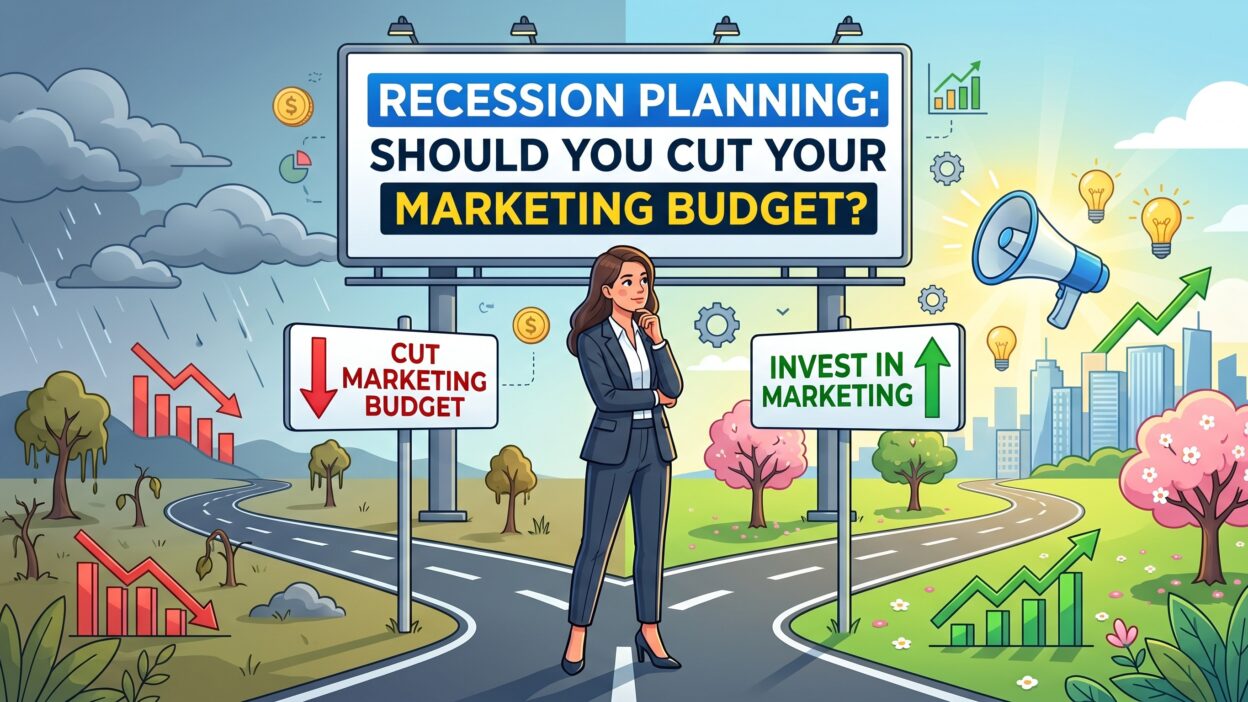
TL;DR Every CFO asks the same question when the economy slows down. Should we cut the Marketing Budget? The instinct to protect cash is understandable. Economic uncertainty makes every line item feel like a risk. Marketing often takes the first hit because it seems like a discretionary spend. That assumption is wrong and costly. Cutting your Marketing Budget during a recession is one of the most damaging decisions a company can make for long-term growth. This blog breaks down the real data behind recession marketing, explains where most companies go wrong, and gives revenue leaders a clear framework for protecting and optimizing their Marketing Budget when economic pressure mounts.
Table of Contents
The Historical Case Against Cutting Your Marketing Budget
History is clear on this point. Companies that protect their Marketing Budget during recessions outperform those that cut it. This pattern has repeated across multiple economic downturns including the recessions of 1990, 2001, 2008, and the pandemic contraction of 2020. The evidence spans industries, company sizes, and geographies. Ignoring this data is not a conservative financial decision. It is a strategically uninformed one.
McGraw-Hill Research studied 600 companies across the 1981 and 1982 recession. Companies that maintained or increased their Marketing Budget during those years achieved 256 percent higher sales than competitors who cut spending once the recession ended. The gap between active investors and budget cutters widened dramatically during the recovery period. Market share gained during a downturn is extremely difficult for competitors to reclaim.
The 2008 financial crisis produced similar patterns. Amazon increased its Marketing Budget during the recession and emerged with significantly higher market share. Apple maintained its advertising spend and used the economic contraction to build brand perception while rivals went quiet. Brands that stayed visible captured the attention of buyers whose existing vendor relationships became unstable as companies around them failed or cut service levels.
The mechanism behind this advantage is straightforward. When competitors cut their Marketing Budget, they go quiet. Share of voice drops. Buyers notice the silence even if they cannot articulate why. The companies that stay present build stronger brand recall. When buyers resume spending after a recession, they return to the brands they remember. Staying present during a downturn is a low-cost way to buy future market share.
Recessions also compress advertising costs. When competitors reduce their Marketing Budget, media inventory becomes cheaper. Cost-per-click drops on paid search. CPM rates fall on display networks. Podcast and content sponsorships become more affordable. Companies with the courage to maintain their Marketing Budget during a recession get more reach per dollar than they would during a growth cycle. The investment efficiency argument for staying active is as strong as the brand argument.
Why CFOs Instinctively Cut the Marketing Budget First
Understanding why Marketing Budget cuts happen helps revenue leaders argue against them more effectively. CFOs do not cut marketing out of malice. They cut it because of how marketing spending gets characterized in financial planning conversations. Marketing is often treated as a cost center rather than a revenue driver. When revenue leaders fail to connect Marketing Budget spend to pipeline and revenue outcomes, finance teams have no data to defend it.
Marketing attribution is a persistent challenge. Many marketing programs produce pipeline influence that does not show up cleanly in last-touch attribution models. A brand awareness campaign that ran six months ago may be contributing to deals closing today. Without multi-touch attribution data, finance teams cannot see that connection. The Marketing Budget appears to be producing outputs that do not link to revenue. It becomes an easy target.
Short-term financial pressure distorts decision-making during recessions. CFOs face pressure to protect cash and show discipline to boards and investors. Cutting the Marketing Budget produces an immediate, visible reduction in operating expenses. The revenue impact of that cut takes months or years to appear. This timing gap between the cost saving and the revenue loss makes budget cuts look attractive in the short term even when they are destructive in the medium term.
Sales teams reinforce the pattern unintentionally. When Marketing Budget gets cut, pipeline volume drops. Sales teams respond by increasing pressure on existing opportunities. This short-term focus on closing current deals makes the pipeline problem invisible until the following quarter when the top of the funnel runs dry. By then, the damage from the Marketing Budget cut is done and recovery takes significant time and investment.
Revenue leaders must change the conversation with CFOs before a recession forces a budget discussion. Building the business case for Marketing Budget investment requires connecting every major spend category to pipeline and revenue outcomes. When marketing can demonstrate that each dollar generates a measurable return, cutting it becomes a harder argument to make during economic stress.
What to Cut and What to Protect in Your Marketing Budget
Spending Categories Worth Protecting
Not every component of your Marketing Budget deserves equal protection during a recession. Some activities generate immediate, measurable pipeline. Others build long-term brand equity. Both categories matter. But the prioritization framework changes when budget comes under pressure. Demand generation programs tied directly to pipeline creation deserve top protection in any Marketing Budget review. These include paid search campaigns targeting high-intent keywords, account-based marketing programs aimed at active buyers, and content programs that generate qualified inbound traffic.
Retention marketing deserves strong protection in a recession-era Marketing Budget. Acquiring new customers is four to seven times more expensive than retaining existing ones. During economic downturns, buyer churn accelerates as companies look for cost savings. Customer marketing programs that demonstrate ongoing value, cross-sell relevant solutions, and reinforce the ROI of your product protect revenue without requiring new customer acquisition spend. A dollar spent on customer retention in a recession delivers higher returns than almost any new acquisition channel.
Brand-building spend deserves protection even when it is hard to attribute directly. Share of voice determines share of market over time. Companies that go dark during a recession lose brand recall, fall off short lists, and hand competitors a free opportunity to own their category positioning. Protecting a meaningful portion of your Marketing Budget for brand activity is a strategic investment in the recovery that follows every recession.
Spending Categories Eligible for Reduction
Experimentation budgets can absorb cuts during a recession without damaging core Marketing Budget performance. Pilot programs, new channel tests, and exploratory content formats represent spending that generates learning rather than immediate revenue. These are appropriate places to find short-term savings without compromising pipeline-generating programs. Preserve the learning budget for when the economic environment stabilizes and growth investment makes sense again.
Events and field marketing budgets often contain significant inefficiency. Large industry conferences can consume substantial Marketing Budget without generating proportional pipeline. A data-driven review of historical event ROI frequently reveals that two or three high-performing events generate the majority of event-sourced pipeline. Concentrating event spend on those high-performers and reducing presence at lower-ROI events is a rational recession-era Marketing Budget optimization.
Vanity metrics spending should face scrutiny in any environment, but especially during a recession. Marketing programs that generate social impressions, website traffic, or brand mentions without connecting to pipeline outcomes are difficult to defend in a tight Marketing Budget conversation. Re-evaluate any program that lacks clear attribution to pipeline or revenue before making cuts to programs that demonstrably generate buyer demand.
Shifting Your Marketing Budget Toward Efficiency
A recession forces marketing teams to operate with greater efficiency. This is not entirely a negative development. Many Marketing Budget programs carry inefficiency that accumulates during growth periods when results are good and scrutiny is low. A recession creates the organizational pressure to eliminate waste and focus on what genuinely works. Teams that emerge from this process build better Marketing Budget discipline that persists beyond the downturn.
Cost per acquisition is the most important metric for recession-era Marketing Budget management. Every channel, every campaign, and every program should face a CPA review. Some channels that seemed expensive during growth periods become highly efficient during recessions when competition decreases. Others that seemed affordable may show poor CPA once scrutinized carefully. Let CPA data guide reallocation decisions within your Marketing Budget rather than making cuts based on channel type or spending amount alone.
Performance marketing channels deserve increased Marketing Budget allocation during recessions because they offer measurable, attributable results. Paid search, LinkedIn paid ads targeted at in-market buyers, and content syndication programs with clear lead generation tracking all connect spend directly to pipeline outcomes. Shifting Marketing Budget toward performance channels during a recession improves overall program accountability and makes the business case for preserving marketing spend much easier to construct.
Content marketing is one of the highest-efficiency uses of Marketing Budget during a recession. Well-crafted content generates organic search traffic, nurtures existing pipeline, and builds brand authority at relatively low cost per impression. A research report, a thought leadership series, or an industry benchmark study can generate months of inbound pipeline at a fraction of the cost of paid advertising. Investing Marketing Budget in content during a recession builds assets that continue delivering value well into the recovery period.
Marketing automation efficiency gains are available to most teams that take the time to find them. Nurture programs that run on automation, email campaigns with strong segmentation, and lead scoring models that prioritize the highest-intent prospects all allow smaller Marketing Budget allocations to produce larger pipeline outcomes. Recession periods are good times to audit your automation infrastructure and fix the inefficiencies that accumulated during periods of rapid growth.
Building the Business Case to Protect Your Marketing Budget
Connecting Marketing Budget to Pipeline Metrics
The single most important step a marketing leader can take before a recession budget conversation is building a clear connection between Marketing Budget spend and pipeline outcomes. Pull historical data showing marketing-sourced pipeline by channel and campaign. Calculate the average marketing-attributed revenue per quarter. Show CFOs what happens to pipeline volume when specific Marketing Budget programs go dark. Data-driven advocacy for marketing investment is far more persuasive than abstract arguments about brand value or market positioning.
Modeling the Revenue Impact of Budget Cuts
Build a simple model that projects pipeline and revenue impact under different Marketing Budget scenarios. Show the finance team what happens to the top of the funnel at 100 percent of current budget, 75 percent, and 50 percent. Project how long each scenario takes to impact closed revenue based on your average sales cycle length. When CFOs see that a 30 percent Marketing Budget cut produces a 40 percent pipeline drop six months from now, the financial logic of protecting marketing spend becomes much clearer.
Presenting Competitor Activity During Recessions
Share of voice data strengthens the Marketing Budget preservation argument significantly. Monitor competitor advertising activity using tools like SpyFu, Semrush, or SimilarWeb. If competitors are maintaining or increasing their Marketing Budget while your organization considers cuts, present this data directly to leadership. Losing share of voice to competitors during a recession creates market positioning damage that costs significantly more to repair during the recovery than it would have cost to maintain during the downturn.
Recession Marketing Channels That Deliver the Strongest ROI
Not all Marketing Budget allocations deliver equal results during economic contractions. Some channels perform better during recessions because buyer behavior shifts in ways that favor certain formats. Understanding these channel dynamics helps marketing leaders make smarter allocation decisions when overall Marketing Budget faces pressure.
Search engine marketing delivers strong recession-era ROI because it captures buyers who are actively searching for solutions. Economic pressure creates urgency. Companies facing operational challenges search for tools, services, and partners who can help them solve specific problems. A well-optimized paid search presence captures this intent at exactly the right moment. Search advertising costs typically decline during recessions, making this channel more efficient per Marketing Budget dollar than during growth periods.
Email marketing is one of the most cost-efficient channels in any Marketing Budget. During a recession, a well-segmented and personalized email program can maintain relationships with existing customers, nurture prospects who are not yet ready to buy, and re-engage dormant leads at minimal cost. Email’s high ROI relative to spend makes it a priority channel for Marketing Budget protection during economic downturns.
LinkedIn advertising targets professional buyers with remarkable precision. Decision-makers who are evaluating solutions during a recession conduct research on LinkedIn regularly. Sponsored content that addresses recession-specific pain points, thought leadership posts from executives, and InMail campaigns targeting specific job titles all deliver measurable results. LinkedIn’s targeting capabilities allow Marketing Budget to reach exactly the right buyers without wasting impressions on irrelevant audiences.
Webinars and virtual events deliver strong Marketing Budget efficiency during recessions. In-person event costs decrease while digital engagement increases. Buyers who are cutting travel budgets but still need to evaluate solutions actively participate in virtual education formats. A well-produced webinar series can generate qualified leads, nurture existing pipeline, and reinforce brand credibility at a fraction of the cost of traditional field marketing events.
Frequently Asked Questions About Marketing Budget During a Recession
Should you always increase Marketing Budget during a recession?
Not necessarily. The right answer depends on your financial position, competitive landscape, and current Marketing Budget efficiency. Companies with strong cash reserves and clear attribution between marketing spend and pipeline outcomes should consider maintaining or modestly increasing their Marketing Budget. Companies with poor attribution data, low-efficiency programs, or genuine cash constraints should focus on reallocating their existing Marketing Budget toward higher-ROI activities rather than simply increasing total spend. The goal is protecting pipeline-generating programs, not defending every line item regardless of performance.
How much of your Marketing Budget should go toward brand versus demand generation during a recession?
Industry research from Binet and Field suggests that a 60/40 split between brand building and demand generation optimizes long-term growth for most companies. During a recession, many organizations shift this ratio toward 40/60 or even 30/70 in favor of demand generation to protect near-term pipeline. This adjustment is reasonable as long as brand-building investment does not drop to zero. Maintaining some portion of your Marketing Budget for brand activity preserves share of voice and prevents the long recovery curve that follows periods of brand silence.
What is the fastest way to demonstrate Marketing Budget ROI to a CFO?
The fastest approach is building a pipeline attribution report that shows Marketing Budget spend by channel alongside the pipeline and revenue that each channel influenced. Use multi-touch attribution to capture the full contribution of marketing programs to deals closed. Pair this with a Marketing Budget scenario model that projects pipeline outcomes at different spend levels. Showing a CFO that a specific Marketing Budget cut produces a projected pipeline decline of a specific dollar amount in a specific timeframe converts an abstract budget debate into a concrete financial decision with quantifiable risk.
Which Marketing Budget categories should never be cut during a recession?
Customer retention marketing should never face deep cuts during a recession. Losing existing customers during an economic downturn is far more damaging than failing to acquire new ones. SEO and organic content programs deserve protection because they build compounding value over time and generate inbound pipeline at low cost. Paid search targeting high-intent buyers should stay funded because it captures demand that exists regardless of economic conditions. These three areas form the core of a recession-resistant Marketing Budget.
How quickly does revenue decline after a Marketing Budget cut?
The timing depends heavily on your sales cycle length. For B2C companies with short cycles, Marketing Budget cuts show up in revenue within weeks. For B2B companies with three to six month sales cycles, the revenue impact of a Marketing Budget cut may not appear for one to two quarters. This delay creates dangerous optimism. Leaders who cut Marketing Budget in Q1 may not see the revenue impact until Q3 or Q4. By then, rebuilding the pipeline requires significant investment and additional time. The lag effect is one of the strongest arguments for protecting Marketing Budget during economic uncertainty.
A Practical Framework for Recession-Era Marketing Budget Decisions
Marketing leaders need a clear decision framework for navigating Marketing Budget conversations during a recession. Emotions and instincts are unreliable guides during economic stress. Data and structured decision-making produce better outcomes.
Start with a full audit of your current Marketing Budget. Categorize every line item by its direct connection to pipeline or revenue. Place each item in one of three groups. The first group includes programs with clear pipeline attribution and strong CPA performance. These receive protection. The second group includes programs with indirect value that is difficult to attribute but strategically important such as brand campaigns and thought leadership content. These receive partial protection with enhanced measurement. The third group includes programs with weak performance data, unclear attribution, or experimental status. These face cuts first.
Negotiate cuts from the third group before touching the first. Present your categorization analysis to finance leadership before any Marketing Budget reduction discussion begins. When you arrive at the conversation with data showing which programs generate pipeline and which do not, you control the narrative. CFOs cutting budgets want to find waste. Help them find it in the right places.
Set Marketing Budget scenarios in advance. Prepare a plan for 100 percent, 80 percent, and 60 percent of current spend. Show exactly which programs stay, which get reduced, and which go away under each scenario. Include projected pipeline impact for each level. Having these scenarios prepared demonstrates financial discipline and reduces the likelihood that cuts happen impulsively or in the wrong areas.
Review Marketing Budget performance monthly during a recession. Economic conditions change fast. A program that underperformed in Q1 may recover in Q2 as market conditions shift. A channel that seemed strong may weaken as competitors return to the market. Monthly reviews allow fast reallocation within your Marketing Budget without waiting for a quarterly planning cycle. Agility within a protected total budget is more valuable than a rigid annual plan during economic uncertainty.
Read More:-Sales and Marketing Alignment: 6 Steps to Get It Right
Conclusion

Recessions do not last forever. Every economic downturn ends. The companies that emerge strongest from recessions are the ones that made smart Marketing Budget decisions when others panicked. The data from decades of economic history is unambiguous. Protecting your Marketing Budget during a downturn, reallocating it intelligently, and staying visible while competitors go quiet creates competitive advantages that outlast the recession itself.
The right approach is not to spend recklessly. It is to spend smartly. Audit your Marketing Budget for genuine waste. Shift resources toward high-ROI channels. Protect pipeline-generating programs. Maintain enough brand investment to preserve share of voice. Build the attribution data that makes the case for marketing investment clear to every financial stakeholder in your organization.
Marketing Budget decisions made during a recession determine where your company stands when growth returns. Companies that cut deep go into recovery with empty pipelines, weakened brand recognition, and competitors who have filled the space they vacated. Companies that protect their Marketing Budget emerge with full pipelines, stronger brand positioning, and the market share that cautious competitors surrendered.
This is not a theoretical argument. It is a historical pattern backed by decades of data. Every major recession produced a cohort of companies that emerged significantly stronger because they held their Marketing Budget while others retreated. Your organization can be in that cohort. The decision starts with the next budget conversation. Come to it with data, a clear framework, and the conviction that smart Marketing Budget investment during economic pressure is not a cost. It is a competitive advantage.