Introduction
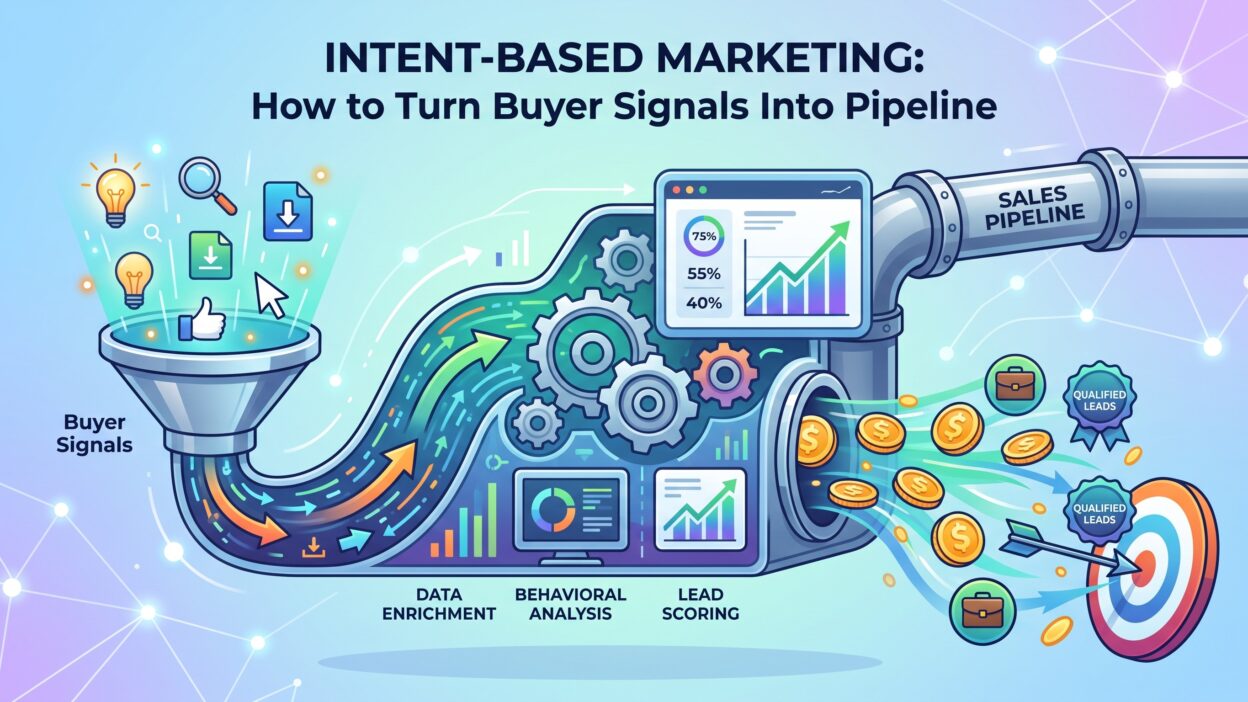
TL;DR Buyers leave clues before they ever fill out a form. Intent-based marketing reads those clues and turns them into real pipeline. It tracks search behavior, content downloads, and website visits. It shows which accounts are ready to buy right now. Sales teams waste less time chasing cold leads once intent-based marketing points them toward warm ones. This guide breaks down every part of the process. You will learn what intent-based marketing means. You will learn how to collect the right signals. You will learn how to turn those signals into closed deals.
Table of Contents
What Is Intent-Based Marketing?
Intent-based marketing uses buyer behavior data to identify prospects actively researching a solution. It tracks signals like search queries, content consumption, and competitor comparisons. These signals reveal where a prospect sits in their buying journey. Marketing teams use intent-based marketing to prioritize outreach toward accounts showing real interest.
Intent-based marketing differs from traditional demand generation. Traditional campaigns cast a wide net and wait for leads to respond. Intent-based marketing flips this approach. It watches for buying signals first, then targets the accounts already showing interest.
Why Intent-Based Marketing Matters for B2B Teams
B2B sales cycles run long and involve many stakeholders. Intent-based marketing shortens this cycle by focusing effort on accounts closer to a decision. Sales teams stop cold calling every lead on a generic list. They start prioritizing accounts with strong buying signals instead.
Intent-based marketing also improves marketing and sales alignment. Both teams work from the same signal data. This shared view reduces friction between departments. Everyone agrees on which accounts deserve immediate attention.
Budget efficiency improves through intent-based marketing too. Marketing spend gets directed toward accounts already showing purchase intent. This targeted approach produces a stronger return than broad campaigns aimed at an undefined audience.
Intent-Based Marketing vs Account-Based Marketing
Intent-based marketing and account-based marketing often work side by side, but they solve different problems. Account-based marketing selects target accounts based on firmographic fit like industry, size, and revenue. Intent-based marketing adds a behavioral layer on top of that selection.
Picture a company using account-based marketing to build a list of target accounts. Intent-based marketing then ranks that list by real buying activity. An account showing heavy research into your product category jumps to the top of the outreach queue. This combination sharpens targeting far beyond either strategy alone.
Benefits of Intent-Based Marketing
Intent-based marketing brings clear advantages to modern go-to-market teams. It shortens the sales cycle by connecting reps with prospects already in an active buying phase. Reps stop guessing which leads deserve a call first.
Intent-based marketing also improves conversion rates. Prospects showing strong intent signals convert at a much higher rate than random inbound leads. Marketing teams see stronger campaign performance once they build intent data into their targeting strategy.
Intent-based marketing reduces wasted ad spend too. Campaigns target accounts already searching for relevant solutions. This precision cuts down on impressions shown to uninterested audiences.
Customer experience improves through intent-based marketing as well. Prospects receive relevant content at the right moment in their research process. This relevance builds trust before a sales conversation even begins.
Types of Buyer Intent Signals
Intent-based marketing relies on several types of buyer signals. Understanding each type helps marketers build a complete picture of account readiness.
First-Party Intent Data
First-party intent data comes directly from your own website and marketing channels. It includes page visits, content downloads, and email engagement. This data offers high accuracy because it tracks real interaction with your brand.
Marketers collect first-party data through website analytics tools and marketing automation platforms. Intent-based marketing teams treat this data as the strongest signal available. It reflects direct interest in your specific product or service.
Third-Party Intent Data
Third-party intent data comes from external providers who track behavior across the broader internet. Companies like Bombora and G2 aggregate research activity across thousands of websites. This data reveals when a prospect researches your product category, even before they visit your site.
Intent-based marketing teams use third-party data to find net-new accounts. These accounts show research activity but have not yet engaged directly with your brand. This early signal gives sales teams a head start on outreach.
Search Intent Data
Search intent data tracks keyword searches related to your product category. Marketers analyze search volume and query patterns to spot rising interest. Intent-based marketing platforms often integrate search data alongside content consumption data for a fuller signal.
A spike in searches for a specific problem your product solves signals market readiness. Intent-based marketing teams watch these trends closely to time their campaigns.
Technographic Intent Signals
Technographic data reveals which tools and platforms a company currently uses. A prospect using a competitor’s outdated software might show intent through a technology change. Intent-based marketing teams combine this data with behavioral signals for sharper account prioritization.
How to Build an Intent-Based Marketing Strategy
Building a strong intent-based marketing strategy takes a clear process.
Define Your Ideal Customer Profile
Start with a clear definition of your best-fit customer. Include industry, company size, and technology stack. Intent-based marketing works best when signals get filtered through this defined profile first.
Choose Your Intent Data Sources
Select the data providers and tools that fit your budget and goals. Combine first-party and third-party sources for the strongest coverage. Intent-based marketing programs relying on a single data source often miss important signals.
Set Signal Thresholds
Define what counts as a strong intent signal within your intent-based marketing program. A single page visit might not justify sales outreach. Multiple visits combined with a content download often does. Set clear thresholds so your team knows when to act.
Align Sales and Marketing Workflows
Build a shared process between marketing and sales teams. Marketing identifies accounts showing intent. Sales receives alerts and follows up quickly. Intent-based marketing loses value when signals sit unused inside a dashboard nobody checks.
Personalize Outreach Based on Signals
Use the specific signal data to shape your outreach message. A prospect researching pricing pages needs different messaging than one reading a blog post about industry trends. Intent-based marketing succeeds when personalization matches the exact stage of buyer research.
Measure and Refine Your Program
Track conversion rates from intent-flagged accounts against your broader pipeline. Adjust your signal thresholds based on real results. Intent-based marketing improves over time as teams learn which signals predict closed deals most reliably.
Common Mistakes in Intent-Based Marketing
Many teams collect intent data without a clear action plan. This creates a dashboard full of signals nobody uses. Intent-based marketing only works when someone owns the follow-up process.
Some teams chase every signal equally. Not every website visit deserves an immediate sales call. Intent-based marketing programs need clear scoring models to separate strong signals from weak ones.
Other teams ignore sales feedback on signal quality. Reps often notice patterns that raw data misses. A strong intent-based marketing program includes regular feedback loops between sales and the marketing analytics team.
Poor data hygiene also weakens intent-based marketing results. Duplicate records and outdated firmographic data distort signal accuracy. Clean your CRM regularly to keep your intent-based marketing program reliable.
Finally, many teams rely too heavily on third-party data alone. First-party signals often predict purchase behavior more accurately. Balance both data types for the most trustworthy intent-based marketing strategy.
Tools for Intent-Based Marketing
Several platforms support a strong intent-based marketing program. Bombora offers company-level intent data pulled from a large publisher network. G2 tracks buyer research activity happening directly on its review platform. ZoomInfo combines intent signals with detailed firmographic and contact data.
Marketing automation platforms like HubSpot and Marketo track first-party engagement data closely. This data feeds directly into intent-based marketing scoring models. Sales engagement tools like Outreach and Salesloft help reps act quickly once a signal triggers an alert.
CRM platforms like Salesforce tie everything together. Intent-based marketing data flows into account records, giving sales reps full context before every outreach attempt.
Intent-Based Marketing Examples in Action
Picture a cybersecurity company using intent-based marketing to spot accounts researching data breach prevention. Third-party data shows a spike in searches from a mid-size healthcare company. The marketing team triggers a targeted email sequence about compliance risks. Sales follows up within a day and books a demo by the end of the week.
Picture a project management software company watching first-party signals closely. A prospect visits the pricing page three times in one week. Intent-based marketing flags this account for immediate outreach. A sales rep reaches out with a tailored message about team collaboration features. The prospect converts into a paid customer within two weeks.
Picture a manufacturing equipment supplier using technographic intent signals. Data reveals a target account still using outdated inventory software nearing its end of life. Intent-based marketing surfaces this account as a strong opportunity. The sales team positions their solution as a timely upgrade path. The account signs a contract within the quarter.
Each example shows how intent-based marketing connects real buyer behavior to closed revenue. Teams that read these signals accurately move faster than competitors relying on outbound guesswork alone.
Intent-Based Marketing for B2B vs B2C Companies
Intent-based marketing applies mostly within B2B environments today, but the logic extends to certain B2C categories too. B2B intent-based marketing tracks company-level research activity across long sales cycles. Multiple stakeholders research a purchase before a deal closes, so signals often come from several people within one account.
B2C companies apply intent-based marketing differently. High-consideration purchases like real estate, automotive, or insurance benefit most from this approach. A consumer researching mortgage rates across multiple sites shows clear buying intent, similar to a B2B account researching software vendors.
B2B intent-based marketing usually relies on account-level aggregation. Signals from different individuals at the same company roll up into one account score. B2C intent-based marketing tracks individual behavior more directly, since one person typically makes the buying decision alone.
Both approaches share a common foundation. Behavioral data predicts readiness better than demographic data alone. Matching your intent-based marketing setup to your sales model sharpens targeting accuracy significantly.
Industry-Specific Intent Signals
Different industries generate different intent-based marketing signals. Software companies see strong signals through free trial signups and documentation page visits. Financial services companies see signals through calculator tool usage and rate comparison page visits.
Manufacturing and industrial companies often see slower-moving signals tied to equipment lifecycle timing. Intent-based marketing teams in this space track longer research windows, sometimes spanning several months before a purchase decision.
Healthcare and highly regulated industries require careful signal interpretation too. Compliance concerns limit some data collection methods. Intent-based marketing teams in these industries lean more heavily on first-party data collected through owned channels rather than aggressive third-party tracking.
Combining Intent-Based Marketing With Content Strategy
Content plays a central role in every intent-based marketing program. Prospects generate signals by consuming content, which means content strategy directly shapes signal quality. Marketers should map content to specific buying stages for the clearest signal interpretation.
Top-of-funnel content like blog posts and industry guides attracts early researchers. Middle-of-funnel content like comparison guides and case studies attracts prospects narrowing their options. Bottom-of-funnel content like pricing pages and demo requests signals strong purchase readiness.
Intent-based marketing teams should audit their content library regularly. Gaps in bottom-of-funnel content weaken signal strength, since prospects have fewer high-intent actions available to take. Filling these gaps gives buyers more opportunities to reveal genuine purchase interest.
Personalized content based on intent signals performs better than generic messaging. A prospect showing interest in a specific product feature should receive follow-up content addressing that exact feature. Intent-based marketing succeeds when content and signal data work together instead of operating in separate silos.
Measuring ROI From Intent-Based Marketing
Proving return on investment matters for every intent-based marketing program. Marketing leaders need clear numbers to justify continued spending on data providers and platforms. Start by comparing win rates between intent-flagged accounts and standard pipeline accounts.
Track the average deal size for opportunities sourced through intent-based marketing versus other channels. Accounts showing strong buying signals often close larger deals, since their research reflects genuine budget and need. This comparison strengthens the case for expanding the program.
Calculate cost per opportunity within your intent-based marketing efforts. Divide total program spend by the number of qualified opportunities generated through signal-based targeting. A declining cost per opportunity over time signals a maturing, efficient program.
Sales cycle length offers another useful ROI measure. Compare the average time to close for intent-flagged deals against the broader pipeline. Shorter cycles free up sales capacity, allowing reps to handle more opportunities within the same period. Present these numbers together for a complete picture of intent-based marketing performance.
Marketing attribution models add another layer of proof for intent-based marketing spending. Multi-touch attribution shows every signal that contributed to a closed deal, not just the final touchpoint before purchase. This fuller view helps leadership understand how intent-based marketing works alongside other channels rather than in isolation. Present attribution data alongside win rate and cycle time numbers for the strongest possible ROI case.
Related Concepts
Intent-based marketing connects to several related demand generation terms. Account-based marketing focuses on targeting specific companies rather than broad audiences. Predictive lead scoring uses historical data to forecast which leads will convert. Buyer intent data describes the raw behavioral signals that fuel every intent-based marketing program.
Marketing and sales alignment plays a central role in any successful program. Revenue operations teams often own the technology stack that supports intent-based marketing across departments. Pipeline velocity, a metric tracking how fast deals move through each sales stage, improves significantly once intent-based marketing shortens the research phase for buyers.
How Intent-Based Marketing Shapes Long-Term Revenue Strategy
Intent-based marketing does more than support individual campaigns. It shapes how revenue teams plan their entire quarter. Marketing leaders use intent trends to decide which industries or segments deserve heavier investment. A surge in intent signals from a new vertical often signals a market expansion opportunity worth pursuing.
Sales leadership uses intent-based marketing data to set realistic quota expectations. Reps working accounts with strong intent signals close deals faster than reps working cold lists. This difference shapes territory planning and headcount decisions over time.
Product teams benefit from intent-based marketing insights too. Search and content consumption patterns reveal what problems prospects care about most. This feedback loop shapes product messaging and even future feature development.
Executive teams increasingly expect intent-based marketing data during board reporting. Pipeline generated through intent-flagged accounts often closes at a higher rate. This data proves marketing’s direct contribution to revenue growth, which strengthens the department’s credibility across the organization.
Presenting Intent-Based Marketing Results to Stakeholders
Strong intent-based marketing data needs clear presentation to prove its value. Show conversion rate differences between intent-flagged accounts and standard inbound leads. This comparison makes the value of the program obvious within seconds.
Build a simple dashboard highlighting top accounts by signal strength. Sales leaders want to see actionable lists, not raw data dumps. Keep the intent-based marketing report focused on accounts ready for immediate follow-up.
Different stakeholders care about different angles of intent-based marketing performance. Sales leaders want pipeline and close rate data. Marketing leaders want cost efficiency and campaign attribution data. Executive teams want a simple revenue impact summary tied directly to company goals.
Review your intent-based marketing program on a consistent schedule. Monthly check-ins keep signal thresholds accurate. Quarterly reviews help teams adjust strategy based on shifting market conditions.
FAQs About Intent-Based Marketing
What is the main goal of intent-based marketing? The main goal centers on identifying accounts actively researching a solution. Intent-based marketing helps sales and marketing teams prioritize outreach toward prospects closer to a purchase decision.
How is intent-based marketing different from lead scoring? Lead scoring ranks individual contacts based on engagement history within your own systems. Intent-based marketing adds external behavioral signals from across the internet, giving a broader view of account readiness.
Do small businesses benefit from intent-based marketing? Yes, small businesses gain value from intent-based marketing too. Even basic first-party signals like website visits and content downloads help small teams prioritize their limited sales resources effectively.
What is the most reliable intent signal to track? First-party signals like pricing page visits and demo requests tend to predict purchase behavior most reliably. Intent-based marketing programs should weigh these signals heavily alongside third-party data.
How long does it take to see results from intent-based marketing? Most teams see early signal patterns within the first month. Reliable conversion trends usually emerge after a full quarter of consistent intent-based marketing tracking and refinement.
Can intent-based marketing replace traditional outbound sales? Intent-based marketing improves outbound sales rather than replacing it completely. It helps reps prioritize which accounts to call first, making traditional outbound efforts far more efficient.
How much does an intent-based marketing program typically cost? Costs vary widely based on data providers and platform choices. Small teams can start with first-party tracking at low cost. Enterprise programs combining multiple third-party data sources often require a larger budget commitment.
Read More:-Why Resume Keywords Are Failing Your AI Hiring Strategy (And What to Do About It)
Conclusion

Intent-based marketing turns quiet buyer research into visible opportunity. Track first-party and third-party signals for the fullest picture of account readiness. Set clear thresholds so your team knows exactly when to act. Align sales and marketing around the same signal data for faster, more relevant outreach.
Measure your results consistently. Refine your signal scoring as new data comes in. Teams that commit to this process convert more pipeline with less wasted effort. Intent-based marketing does not just generate leads. It builds a faster, smarter path from buyer curiosity to closed revenue.
Treat your intent-based marketing program as an evolving system rather than a fixed setup. Revisit your data sources every few months. Adjust your scoring model as buyer behavior shifts across your industry. Teams that keep refining their intent-based marketing approach stay ahead of competitors still relying on outdated, broad-based outreach methods.