Introduction
TL;DR Marketing teams juggle too many tools that don’t talk to each other. HubSpot handles CRM and inbound marketing. Klaviyo handles email and SMS for ecommerce brands. The HubSpot Klaviyo Integration connects both, so customer data flows freely between them.
This guide covers everything you need to know before you connect these platforms. You will see the core features. You will walk through setup step by step. You will also find answers to the questions teams ask most about the HubSpot Klaviyo Integration.
Table of Contents
What Is the HubSpot Klaviyo Integration?
HubSpot manages contacts, deals, and marketing campaigns for B2B and B2C teams. Klaviyo focuses on ecommerce email and SMS marketing. The HubSpot Klaviyo Integration links contact records, purchase data, and engagement history between both platforms.
Marketing teams no longer manage two separate contact lists. Sales teams see purchase history inside HubSpot. Email marketers see lead scoring data inside Klaviyo. Both teams work from the same customer picture.
This connection matters most for ecommerce brands that also run inbound marketing or sales outreach through HubSpot.
Why Businesses Need the HubSpot Klaviyo Integration
Disconnected tools create messy data. A customer might exist as three different contact records across two platforms. Marketing sends duplicate emails. Sales calls a customer who already unsubscribed weeks ago.
The HubSpot Klaviyo Integration fixes this by syncing contact data in real time. Teams trust the data because it stays consistent across both systems.
Revenue reporting also improves. Marketing teams tie Klaviyo email campaigns directly to deals closed inside HubSpot, showing real return on marketing spend instead of vague open-rate metrics.
Core Features of the HubSpot Klaviyo Integration
The HubSpot Klaviyo Integration includes several features built for marketing and sales alignment. Each one solves a specific data or workflow gap.
Two-Way Contact Sync
Contacts created in HubSpot appear in Klaviyo automatically. Contacts created in Klaviyo sync back to HubSpot the same way. Neither team manually exports and imports spreadsheets anymore.
This sync runs on a schedule, so updates reflect quickly without overwhelming either platform’s API limits during high-traffic periods like product launches.
Purchase and Order Data Sync
Klaviyo tracks ecommerce orders in detail. The HubSpot Klaviyo Integration pushes this order data into HubSpot contact records. Sales reps see purchase history before a call, without asking finance for a report.
This helps upsell conversations. Reps reference recent purchases directly, making outreach feel personal instead of generic.
Email Engagement Data Sharing
Klaviyo tracks opens, clicks, and email engagement scores. This data syncs into HubSpot, giving sales teams insight into which leads stay engaged with marketing content.
Marketing teams also benefit. HubSpot form fills and page visits sync into Klaviyo, helping segment email flows based on website behavior instead of email activity alone.
Suggested word count: 150–170 words
List and Segment Syncing
Marketers build segments in Klaviyo based on purchase behavior. These segments sync into HubSpot lists automatically. Sales teams target these same segments with outreach sequences.
This keeps marketing and sales aligned on which customers matter most at any given time.
Workflow and Automation Triggers
Actions in one platform trigger automation in the other. A deal closing in HubSpot can trigger a Klaviyo flow, like a post-purchase email series. A Klaviyo purchase event can trigger a HubSpot workflow, like assigning a sales rep for a high-value order.
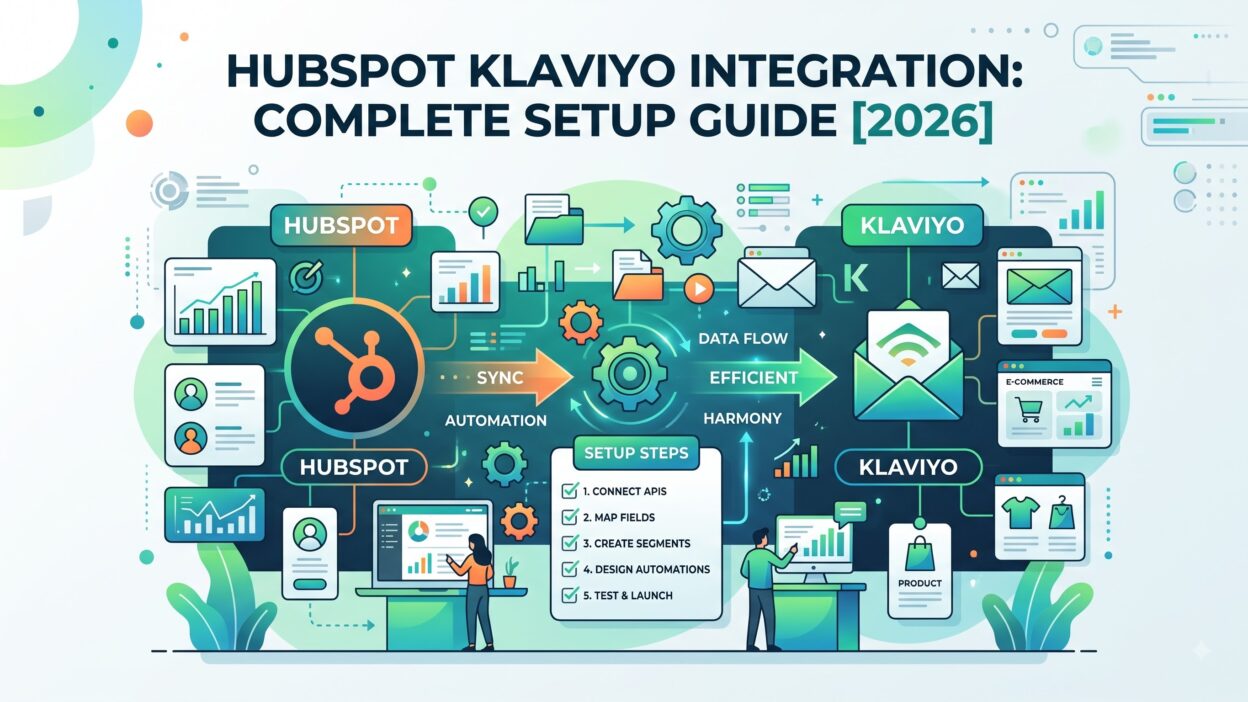
How to Set Up the HubSpot Klaviyo Integration
Setup doesn’t require a developer for most teams. HubSpot offers a native connection through its App Marketplace.
Install the Integration from HubSpot Marketplace
Admins search for Klaviyo inside the HubSpot App Marketplace. They click install and authorize the connection using Klaviyo account credentials. This step takes just a few minutes for most accounts.
Configure Sync Settings
Admins choose which direction data flows. Some teams sync contacts both ways. Others only push HubSpot contacts into Klaviyo for email campaigns, keeping Klaviyo data out of HubSpot entirely.
This decision depends on which platform serves as your source of truth for contact data.
Map Custom Properties
Custom fields need mapping between platforms. A property like “loyalty tier” in Klaviyo might map to a custom HubSpot property with a different name. Careful mapping avoids missing or mismatched data later.
Set Up Automation Triggers
Once sync settings work correctly, admins build automation triggers. They connect HubSpot workflows to Klaviyo flows based on business needs, like abandoned cart recovery or post-purchase follow-ups.
Test the Full Connection
Before rolling this out to the whole team, admins run test contacts through both systems. They confirm data syncs correctly and automation triggers fire as expected.
Testing catches mapping errors before they affect real customer communication.
Benefits of the HubSpot Klaviyo Integration for Marketing Teams
Marketing teams gain a clearer picture of the customer journey once both platforms connect.
Unified Customer Profiles
Every customer interaction lives in one profile instead of scattered across two platforms. Marketers build smarter segments using purchase data, email engagement, and website behavior together.
Better Campaign Attribution
Marketing teams connect Klaviyo campaigns to actual revenue tracked inside HubSpot deals. This shows which email flows drive real sales instead of just measuring opens and clicks alone.
The HubSpot Klaviyo Integration makes this attribution possible without manual spreadsheet work pulling data from two separate exports.
Reduced Duplicate Work
Marketers stop building the same segment logic twice. They build it once in Klaviyo or HubSpot and reference the synced data across both tools instead of recreating lists manually.
Benefits of the HubSpot Klaviyo Integration for Sales Teams
Sales reps gain context they never had before this integration existed.
Purchase History at a Glance
Reps see past orders directly inside HubSpot before reaching out. This context shapes better conversations and stronger upsell opportunities during sales calls.
0Smarter Lead Prioritization
Sales teams prioritize leads showing strong email engagement in Klaviyo. A lead opening every email and clicking product links signals stronger buying intent than a cold contact sitting untouched for months.
Reporting and Analytics Benefits
Reporting becomes far more useful once data flows between both systems.
Revenue-Based Email Reporting
Marketing leaders stop reporting on opens and clicks alone. They report on actual revenue generated from Klaviyo flows, tracked through closed deals inside HubSpot.
This shift changes how marketing budgets get approved, since leadership sees real numbers instead of vanity metrics.
Full-Funnel Visibility
Teams track a customer from first website visit through email engagement to final purchase. This full picture helps identify where prospects drop off during the buying journey.
Common Challenges and How to Solve Them
Most integration issues trace back to setup mistakes rather than platform limitations.
Duplicate Contact Records
Poor field mapping sometimes creates duplicate contacts instead of merging existing ones. Admins fix this by reviewing matching criteria, usually email address, during the initial sync configuration.
Sync Delays During High Traffic
Large sales events or product launches can slow sync speed due to API rate limits. Teams plan around this by checking sync status manually during peak traffic windows.
Confusing Source of Truth
When both platforms update the same field, conflicts happen. Teams solve this by clearly deciding which platform owns which data field before launch, not after problems appear.
HubSpot Klaviyo Integration Pricing
The integration itself comes free through the HubSpot App Marketplace. Costs come from each platform’s separate subscription instead of the connection itself.
HubSpot pricing depends on your chosen hub and contact tier. Klaviyo pricing depends on your email and SMS contact list size. Companies should check both pricing pages directly, since tiers change periodically.
Who Should Use the HubSpot Klaviyo Integration?
Ecommerce brands running both inbound marketing and transactional email benefit the most. Companies with a sales team working HubSpot deals alongside an ecommerce store on Klaviyo see the strongest return.
Small stores using only basic email campaigns might not need the full integration yet. Growing ecommerce brands planning to scale sales outreach should set this up early, before contact data grows messy across separate systems.
Frequently Asked Questions
Does the HubSpot Klaviyo Integration sync in real time? Sync happens on a regular schedule rather than instantly, though most updates reflect within minutes under normal traffic conditions.
Can I sync only one direction instead of both ways? Yes. Admins choose one-way or two-way sync depending on which platform serves as the main source of contact data for their team.
Does this integration require a developer to set up? No. Most teams complete setup through the HubSpot App Marketplace without any custom development work required.
Will duplicate contacts cause problems? Duplicate contacts can appear if field mapping isn’t configured correctly. Reviewing matching criteria during setup prevents most duplicate issues from the start.
Can Klaviyo purchase data trigger HubSpot workflows? Yes. Purchase events in Klaviyo can trigger HubSpot automation, like assigning a rep or updating a deal stage automatically.
Is the HubSpot Klaviyo Integration free to install? The integration itself is free. Costs come from your existing HubSpot and Klaviyo subscriptions, based on contact volume and feature tier.
Read More:-Proxycurl API Review (2026): Discontinued, What Remains, and the Best Alternative
Conclusion

The HubSpot Klaviyo Integration brings sales and marketing data together under one connected system. Marketers build smarter segments. Sales reps see purchase history before every call. Leadership finally sees real revenue tied to email campaigns instead of guessing based on open rates.
Setup takes less effort than most teams expect, especially through the native HubSpot Marketplace connection. Careful field mapping and clear ownership of data sources make the difference between a smooth rollout and a messy one.
For ecommerce brands running both platforms, the HubSpot Klaviyo Integration turns two separate tools into one connected growth engine.