

Introduction
TL;DR The CIO is hard to reach. Their inbox overflows. Their calendar stays full. Vendors chase them every week. Most pitches fail in the first ten seconds.
How to sell to the CIO without wasting their time. You will learn what a CIO cares about. You will see five do’s and five don’ts. You will learn how to plan outreach, run the first meeting, handle objections, and close with the full buying group. Each section gives you ideas you can use this month.
Selling to a CIO feels different from selling to a manager. The stakes run higher. The risk feels bigger. The buyer has seen every slide deck. Respect earns attention. Clarity earns meetings. Honest value earns deals.
Table of Contents
Why Learning How to Sell to the CIO Matters
CIOs shape technology spend. They sign off on large deals. They set strategy for security, data, cloud, and AI. A CIO who backs your product can move a deal from months to weeks. A CIO who doubts you can stop it with a single email.
Sellers who master how to sell to the CIO win bigger contracts. They shorten sales cycles. They earn trust across the company. Other leaders follow the CIO’s lead. The CFO asks the CIO for advice. The CEO asks the CIO for a recommendation. One strong relationship opens many doors.
The job asks more of you. A CIO expects you to understand the business. You cannot rely on feature lists. You must connect your product to revenue, risk, and speed. You must show proof. You must respect the time of a busy executive.
The reward is real. Enterprise sales teams that earn CIO trust see fewer stalled deals. They hear about projects early. They shape requirements before a rival does. This guide shows you how to build that trust one step at a time.
What a CIO Really Cares About
You cannot sell to a person you do not understand. Start with the CIO’s world.
Business Outcomes Over Features
CIOs think in outcomes. Can this tool cut cost? Can it reduce risk? Can it speed up delivery? Features matter only when they prove the outcome. Lead with the result. Show the proof. Leave the specs for the technical team. A clear value proposition fits in two sentences. Practice yours until it sounds natural.
Pressure From Every Side
The board wants growth. The CFO wants savings. The security team wants control. Employees want better tools. The CIO sits in the middle. Every new vendor adds risk and work. Your pitch must lower that burden. Knowing these pressures is the first step in how to sell to the CIO.
The Modern CIO Buying Process
CIOs rarely buy alone. They lean on architects, security leads, and finance partners. They read analyst reports. They ask peers. They run pilots. A deal moves forward when many people feel safe. Map the buying committee early. Learn each role’s worries. Prepare a message for each one.
The CIO buying process also shifts with company size. Large firms run formal reviews. Smaller firms move faster. Ask early how decisions get made. Most buyers will tell you.
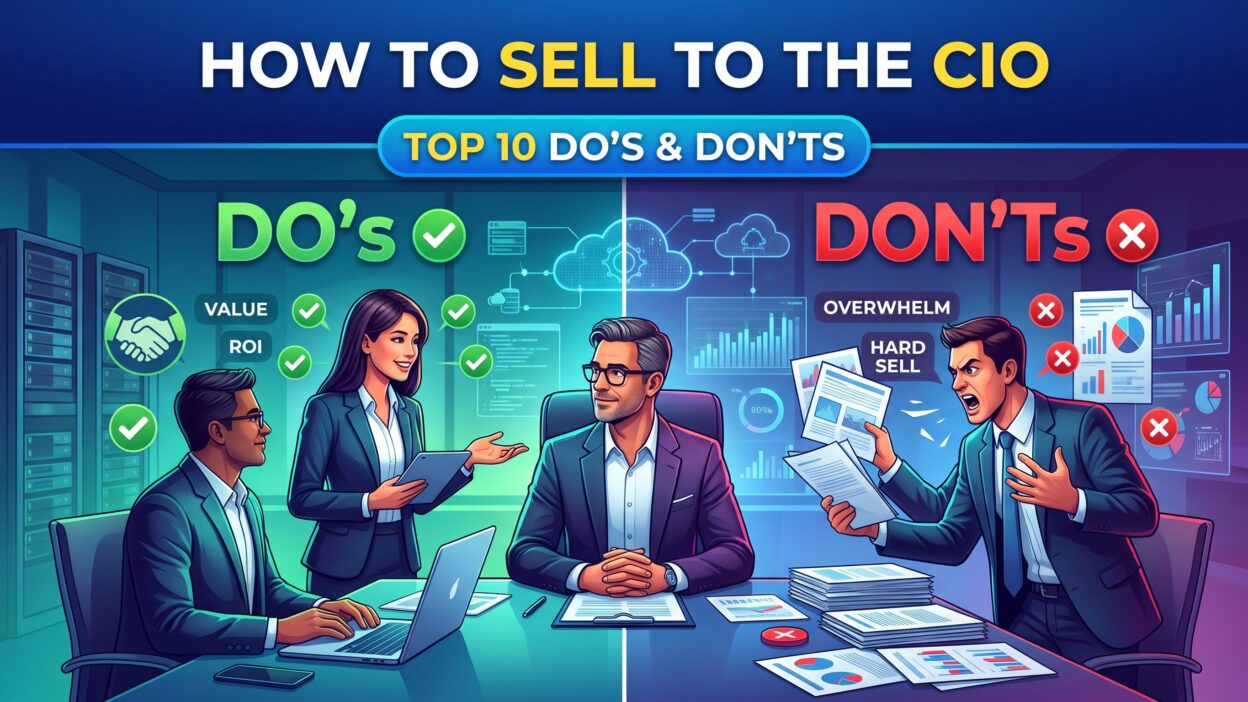
How to Sell to the CIO: The Top 10 Do’s and Don’ts
Five do’s and five don’ts shape most CIO sales. Follow the do’s. Avoid the don’ts. Each one comes from real buyer behavior.
Do #1: Research the Business Before You Reach Out
Spend 30 minutes on every account. Read the annual report. Scan earnings calls. Check news and job posts. Look at the CIO’s recent talks and posts. Find a real initiative. Maybe the company is moving to the cloud. Maybe a merger is underway. Tie your message to that fact. Research sets the base for how to sell to the CIO. It shows respect. Respect opens replies.
Do #2: Speak in Business Terms
Talk about revenue, cost, and risk. Use numbers when you have them. Say that your tool cut onboarding time by 30 percent. Skip vague claims about better workflow. Keep jargon low. A CIO knows technology. A CIO wants to hear impact. Business language shows you understand the job. This habit sits at the heart of how to sell to the CIO. Tie every claim to ROI that a CFO would accept.
Do #3: Bring a Point of View
CIOs hear product pitches all day. Few sellers bring fresh ideas. Share a view on a trend. Explain a risk the CIO may miss. Offer a benchmark from similar companies. Teach something useful. A seller who teaches earns a second meeting. A seller who only sells earns a delete. Executive engagement starts with insight, not slides.
Do #4: Prove Value With Real Evidence
Claims mean little. Evidence means a lot. Share case studies from companies in the same industry. Show measured results. Offer a reference call. Propose a small pilot with clear goals. Name the metrics before the pilot starts. Evidence lowers perceived risk. Lower risk speeds decisions. Technology buyers trust numbers from peers more than numbers from vendors.
Do #5: Respect Time and Be Brief
CIOs guard their calendars. Ask for 20 minutes, not an hour. Send an agenda. Start on time. Finish early. Send a short summary after the call. Brevity is a core rule of how to sell to the CIO. Small habits build trust. Trust matters more than any slide.
Don’t #1: Don’t Lead With a Product Demo
A demo too early feels like a pitch. The CIO has not agreed on the problem yet. Early demos break a basic rule of how to sell to the CIO. Start with questions. Learn what keeps them up at night. Show the product after you understand the need. Keep the demo short. Tie each screen to a stated goal. Cut every feature that does not help.
Don’t #2: Don’t Go Around Their Team
Skipping the CIO’s staff burns bridges. Architects and security leads shape the choice. Treat them as partners. Share the material they need. Answer technical questions fast. A CIO listens to the team. A smart plan for how to sell to the CIO includes the whole team. Win the team and you win a stronger path to the CIO.
Don’t #3: Don’t Use Fear and Hype
Scare tactics backfire. Words like revolutionary and game-changing sound empty. CIOs have heard them for years. Stay factual. Name real risks with real sources. Describe what your product does. Let the results speak. Calm confidence beats loud claims every time.
Don’t #4: Don’t Ignore Security and Integration
Every CIO worries about security, compliance, and fit with existing systems. Skipping those topics signals risk. Bring your security documents early. Explain your integrations. Share uptime history. Name your certifications. Answer hard questions with plain facts. Honesty beats polish. Any guide on how to sell to the CIO must cover this point.
Don’t #5: Don’t Follow Up Without Value
Messages that say just checking in waste time. Each follow-up needs a reason. Share an article. Send a benchmark. Offer an insight tied to their goals. Space your touches. Respect silence. Persistence works when it helps. It fails when it nags. A CIO remembers the seller who added value and the seller who added noise.
Build an Outreach Plan That Reaches the CIO
Good sales outreach starts before the first message. Plan your path.
Find the Right Entry Point
Knowing how to sell to the CIO starts with the right entry point. Cold emails to a CIO rarely work alone. Warm paths work better. Ask a customer for an intro. Use a shared investor or advisor. Meet at industry events. Join webinars the CIO attends. Engage with their posts. Many CIOs respond to peers first. Ask your champions to speak up for you.
Write Messages the CIO Will Read
Keep the email under 100 words. Use a clear subject line. Mention one initiative. Offer one idea. Ask one question. Skip attachments. Skip buzzwords. Write like a person. Read it aloud before you send it. If it sounds like an ad, rewrite it.
Use Multiple Channels
Mix email, LinkedIn, events, and calls. Space touches over several weeks. Reference earlier messages. A CIO may ignore the first four. The fifth may land at the right moment. Track every touch in your CRM. This steady rhythm sits at the center of how to sell to the CIO. Patience and relevance work together.
Run a First Meeting That Earns a Second
A strong first meeting shows how to sell to the CIO in action. Treat it as a conversation. Avoid a presentation.
Prepare an Agenda and a Hypothesis
Send three questions ahead of time. Share a short hypothesis about their challenge. Invite them to correct you. This move shows effort. It sets a two-way tone. Bring one colleague who knows the product deeply. Keep the group small. Three people on your side is plenty.
Ask Better Questions
Ask what success looks like this year. Ask which projects feel stuck. Ask who else weighs in. Ask what past vendors got wrong. Listen more than you talk. Take notes. Repeat key points back. CIOs value sellers who listen. Silence is fine. Let them think.
End With a Clear Next Step
Never leave without a plan. Suggest a pilot, a workshop, or a technical review. Set a date before you hang up. Send notes within the hour. Name owners for each task. Momentum protects deals. A vague goodbye kills them.
Handle Objections With Confidence
Objections show interest. A CIO who stays silent has already left. Treat every concern as a chance to learn.
Budget and Timing Concerns
CIOs say not now often. Hear the real reason. Ask what must change for the project to move. Offer phased plans. Show quick wins. Link the project to funded goals. A smaller start can unlock a larger deal.
Risk and Vendor Lock-In Fears
CIOs fear lock-in. Explain your exit options. Share open standards. Offer clear data export terms. Describe how you support migrations. Honest answers calm worry. Defensive answers raise it.
Competing Priorities
CIOs juggle dozens of projects. Show why yours matters now. Use the cost of delay. Tie it to a board goal. Share what peers do. Help your champion build an internal case. How to sell to the CIO includes helping others sell for you. A prepared champion is your best advocate in rooms you cannot enter.
Close With the Full Buying Group
Closing is the final test of how to sell to the CIO. The CIO may love your idea. The deal still needs many hands.
Map Every Stakeholder
List the CIO, CISO, CFO, procurement, legal, and end users. Learn each role’s goals. Prepare short content for each group. Hold separate calls. Keep one shared timeline. Surprises kill deals late.
Guide Procurement and Legal
Share contract templates early. Flag likely redlines. Offer clear pricing. Keep terms plain. Assign one owner on your side. Check progress weekly. Smooth paperwork protects the win.
Plan Onboarding Before You Sign
A CIO wants proof that the rollout works. Share a project plan. Name the implementation team. Set success metrics. Schedule check-ins. Strong onboarding creates a reference for your next deal. Satisfied CIOs talk to peers. Their word carries more weight than any ad.
Measure and Improve Your Approach
Track meetings booked, replies, deal size, and cycle time. Review lost deals every quarter. Ask buyers for honest feedback. Role-play CIO calls with your team. Record real calls and review them. Update your talk tracks. Share wins in team meetings. Teams that review their results get better at how to sell to the CIO each quarter.
Set small goals. Aim for one new CIO conversation each week. Test one new opener each month. Keep what works. Drop what fails. Progress comes from steady practice.
Frequently Asked Questions
What is the first rule of how to sell to the CIO?
Lead with business value. CIOs care about revenue, risk, and speed. Show how your product helps on all three. Do your research before you reach out. Keep every message short.
How long is a typical CIO sales cycle?
Most enterprise deals take three to nine months. Large firms take longer. Pilots, security reviews, and legal checks add time. Map the steps early. Share a timeline so nobody feels surprised.
What do CIOs want to hear on a first call?
CIOs want to hear that you understand their goals. Share a relevant insight. Ask smart questions. Mention a similar customer result. Keep the call under 30 minutes.
Should I contact the CIO or their team first?
Both paths can work. A warm intro to the CIO is ideal. Direct reports often hold real influence. Engage them with respect. Keep the CIO informed through your champion.
Do CIOs read cold emails?
Some do. Short, specific emails earn replies. Mention a real initiative. Offer one idea. Skip long pitches. Pair email with LinkedIn and warm intros.
How do I build trust with a CIO over time?
Do what you say. Share useful insight on a regular basis. Admit what your product cannot do. Support the team after the sale. Trust grows from small, honest acts.
Read More:-8 Best Discovery Call Tools for Sales Teams
Conclusion

CIOs are busy, careful, and sharp. They reward sellers who respect their time and understand their business. Research each account. Speak in outcomes. Bring a point of view. Prove your claims. Skip hype. Respect the team around the CIO. Follow up with value.
How to sell to the CIO comes down to trust. Trust grows from preparation, clear language, and honest answers. Plan your outreach. Run focused meetings. Answer objections with facts. Guide the whole buying group to a yes.