

Introduction
TL;DR Every sales team owns a pipeline full of names. Some names want to buy this month. Some names need more time. Reps who treat both groups the same lose deals.
Knowing warm and hot leads apart changes your week. You call the right buyer at the right moment. You send the right message to everyone else. Your conversion rate climbs. Your reps feel less stress.
Most teams struggle with this skill. They chase every form fill. They push demos on people who are not ready. They ignore buyers who are ready now. Each mistake costs revenue.
Table of Contents
What Warm and Hot Leads Mean
Lead temperature describes how ready a person is to buy. Sales teams use it to decide who gets attention today. The idea is simple. The details take practice.
Defining Warm Leads
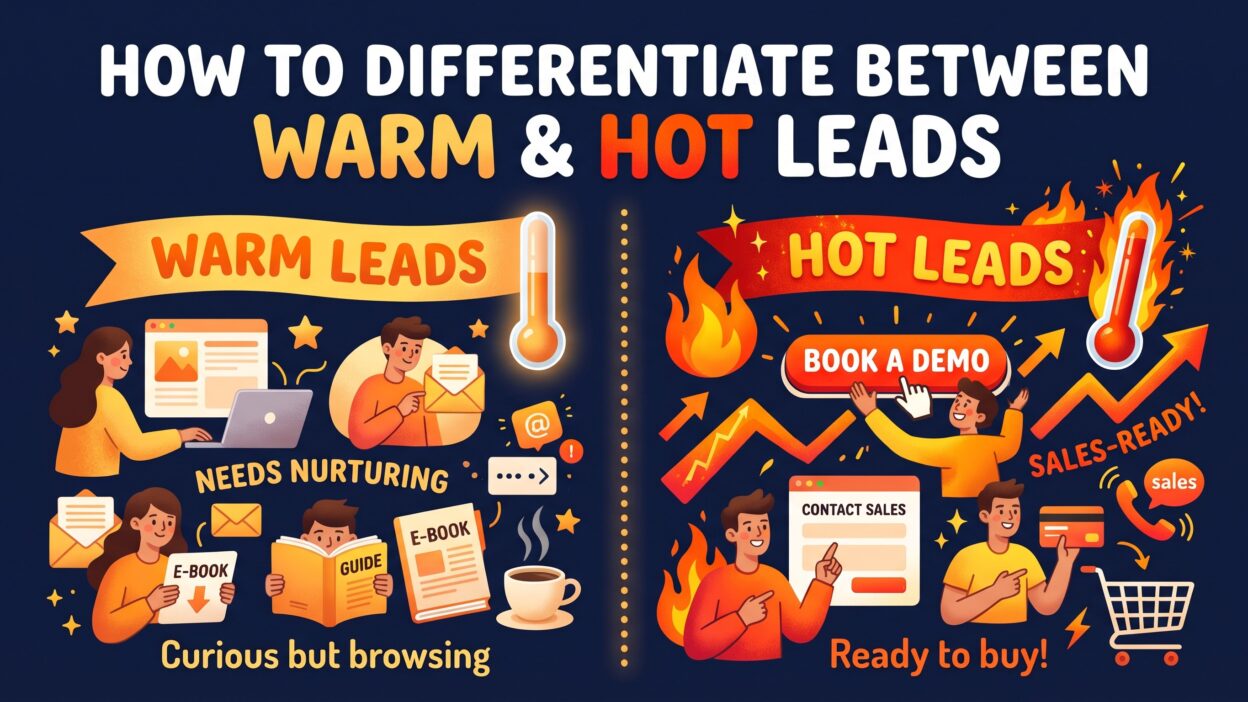
A warm lead knows your brand. The person has shown some interest. They may download a guide. They may attend a webinar. They may follow your company page. They have a problem. They have not chosen to fix it yet.
Timing stays open. Budget stays unclear. Authority may sit with someone else. A warm lead sees you as one option among many.
Defining Hot Leads
A hot lead wants to buy now. The person has a clear need. They have budget. They hold authority or bring the decision maker into the call. They have a deadline.
Hot leads ask direct questions. They want pricing. They ask for a demo. They request a contract. They move fast. A slow reply costs you the deal.
Where Cold Leads Fit
A cold lead has no contact with your brand. They match your ideal customer profile. They do not know you exist. Cold leads need outreach. Warm leads need education. Hot leads need action.
Hold this rule in your mind. Teams that sort warm and hot leads with a clear scale waste less time and win more deals.
Why the Difference Matters in B2B Sales
B2B deals involve many people. Cycles run long. Each rep has limited hours. Smart use of time decides who hits quota.
Protect Your Rep’s Time
A rep who calls a warm lead like a hot lead wastes thirty minutes. The buyer feels pressure. The buyer leaves. A rep who ignores a hot lead for three days loses the sale to a faster rival. Studies of lead response show that speed matters most with ready buyers. Treating warm and hot leads the same removes the benefit of that speed.
Protect Your Buyer’s Trust
Buyers notice bad timing. A pushy call after a blog download feels rude. A vague email after a pricing request feels careless. Good timing shows respect. Respect builds trust.
Protect Your Forecast
Managers build forecasts from the sales pipeline. Mislabeled leads inflate the numbers. Reps promise deals that never close. Clear lead stages create honest forecasts. Leaders plan hiring and spend with better data.
Align Sales and Marketing
Marketing owns the early touches. Sales owns the close. A shared definition ends the argument over lead quality. Marketing knows what to send. Sales knows what to expect. Both teams track the same conversion rate.
Key Differences Between Warm and Hot Leads
Five areas separate the two groups. Check each one for every lead.
Intent
A warm lead explores. A hot lead decides. Warm leads read blog posts and compare ideas. Hot leads read pricing pages and case studies in their own industry.
Timeline
Warm leads talk about next quarter or next year. Hot leads name a date. They say, “We need this live by March.” A real date is the strongest sign of heat.
Budget
Warm leads have not set aside money. They ask what it costs in general terms. Hot leads have funds approved or ready to request. They ask what the contract looks like.
Authority
Warm leads often hold research roles. They gather facts for someone else. Hot leads include the decision maker or bring that person into the room. Authority speeds every step.
Behavior
Warm leads act in small steps. They open emails. They click links. Hot leads act in big steps. They book demos. They invite colleagues. They send questions about security, setup, and support.
Compare each lead against these five areas. A lead that matches four or five areas on the hot side deserves a call today.
Buying Signals of Warm Leads
Warm leads show curiosity. Learn to read it.
Content Engagement
A warm lead reads several blog posts. They download an ebook. They watch a recorded webinar. Each action shows a growing interest in the topic. The topic matters more than the volume. One download on a core problem beats five random clicks.
Email and Social Activity
They open your newsletter each week. They like your posts. They follow your company page. They reply to a survey. These signs show attention. They do not show urgency.
Website Behavior
A warm lead visits your site two or three times a month. They read the blog and the resources page. They skim the product page. They leave without a form fill. Your analytics tool can track this pattern.
Event Contact
They attend your webinar. They stop by your booth at a trade show. They ask a general question. They take a brochure. The conversation stays high level.
What to Do With These Signals
Warm leads need value. Send useful content. Share a short video. Invite them to an event. Ask a light question about their goals. Do not push a demo. Build the relationship. Your warm and hot leads strategy should give each group the right pace.
Buying Signals of Hot Leads
Hot leads show urgency. Their actions stand out from the crowd.
High-Intent Page Visits
A hot lead views your pricing page. They open the demo page. They read your security and compliance pages. They return three times in one week. These pages sit close to the buying decision.
Direct Requests
They fill out a contact form that says “talk to sales.” They request a quote. They book a demo on your calendar. They email a rep with a specific question. They reach out first.
Strong Language
Listen to the words they use. Hot leads say “we need,” “we plan to buy,” and “our contract ends in April.” Warm leads say “we are exploring,” “we might,” and “someday.”
Team Involvement
A hot lead brings a colleague to the second call. They add a finance contact. They add an IT lead. A growing group shows a real project. Buying committees form around real purchases.
Competitor Comparison
They ask how you compare to a named rival. They request a migration plan. They ask for references. They run a trial. These steps show a person near a final choice.
What to Do With These Signals
Respond within minutes. Call first. Send a follow-up email right after. Offer a clear next step. Share a time slot for a demo. Bring in your best rep. Hot leads reward speed.
How to Score Warm and Hot Leads
Lead scoring turns signals into numbers. It removes guesswork. Reps see who to call first.
Build Two Scores
Use a fit score and an engagement score. Fit measures how closely the lead matches your ideal customer. Look at industry, company size, role, and region. Engagement measures how the lead acts. Look at page views, downloads, email clicks, and demo requests.
A lead with high fit and low engagement stays warm. A lead with high fit and high engagement turns hot. A lead with low fit stays out of the sales queue.
Assign Points
Give small points to light actions. A blog visit earns two points. An email click earns three. Give large points to strong actions. A pricing page visit earns fifteen. A demo request earns thirty. Subtract points for inactivity. A lead who goes silent for sixty days loses ten points.
Set Clear Thresholds
Pick a score that defines a marketing-qualified lead. Pick a higher score that defines a sales-qualified lead. Write the numbers down. Share them with both teams. Review them every quarter.
Test and Adjust
Compare your scores to closed deals. Find which actions predict wins. Raise the points for those actions. Lower the points for actions that never lead to revenue. Your model improves each cycle.
Keep It Simple
A scoring model with forty rules confuses everyone. Start with ten rules. Add more when the data supports them. Teams that separate warm and hot leads with a simple model keep it alive for years.
Qualification Questions That Reveal Lead Temperature
Scores tell you who to call. Questions tell you what is true. Ask them early in the first conversation.
Ask About the Problem
Ask, “What made you look at this now?” A hot lead gives a specific event. A warm lead gives a general answer. The trigger reveals the urgency.
Ask About Timing
Ask, “When do you want a solution in place?” A date within ninety days signals heat. A vague answer signals warmth. No answer signals a cold or distracted buyer.
Ask About Budget
Ask, “Has your team set aside funds for this?” Many reps fear this question. Buyers respect it. A clear yes places the lead in the hot group. A “not yet” places the lead in the warm group.
Ask About the Process
Ask, “Who else joins this decision?” The answer maps the buying committee. Ask, “What steps come before you sign?” The answer shows the real timeline.
Ask About Alternatives
Ask, “What other options are you reviewing?” A named rival shows active shopping. A blank answer shows early research.
Frameworks like BANT and MEDDIC give structure to these questions. Pick one. Train your reps on it. Lead qualification gets easier with practice.
How to Route and Follow Up With Each Lead
A label means nothing without action. Build a clear plan for each group.
Routing Hot Leads
Send hot leads to a sales rep at once. Use alerts in your CRM. Push a notification to the rep’s phone. Set a response goal of five minutes. Track it. Miss the goal and a manager gets a message.
The first call should feel helpful. Reference the action the buyer took. Say, “I saw you looked at our pricing page. Can I answer questions?” Move toward a demo. Send a summary email within the hour.
Routing Warm Leads
Send warm leads to a nurture program. A sales development rep can add a light touch. Share a relevant article. Invite them to a webinar. Connect on LinkedIn. Check in every two weeks.
Keep the tone friendly. Offer help without pressure. Watch their activity. Any jump in engagement should trigger a review.
Set Follow-Up Rules
Hot leads get a call, an email, and a text within one day. Plan seven touches across two weeks. Warm leads get one touch every ten to fourteen days. Plan a longer sequence with value in each message.
Move Leads Between Groups
Leads change temperature. A warm lead who requests a demo becomes hot. A hot lead who goes quiet for a month becomes warm again. Update labels each week. Write clear rules for moving leads in both directions. Teams that manage warm and hot leads with fluid rules never lose track of anyone.
How to Turn Warm Leads Into Hot Leads
Most buyers start warm. Your job is to guide them toward a decision. Good lead nurturing makes that path smooth.
Share Proof
Buyers want to know that others succeeded. Send case studies from similar companies. Share short customer quotes. Offer a reference call. Proof reduces risk. Lower risk raises urgency.
Teach Something New
Create content that solves a part of the problem. A checklist, a template, or a short video works well. Give it away. The buyer sees your skill. They trust you more.
Match Content to Stage
Early content explains the problem. Middle content compares solutions. Late content shows pricing, setup, and results. Send the right piece at the right time. Use buyer actions to guide the choice.
Create a Reason to Act
Urgency needs a cause. Share a market shift. Highlight a seasonal deadline. Show the cost of waiting with real numbers. Never invent pressure. Buyers see through fake deadlines.
Invite a Small Step
Ask for a low-effort action. Offer a free audit. Offer a fifteen-minute strategy call. Offer a short trial. Small steps lower the fear of commitment. Each step moves the buyer closer to a purchase.
Stay Consistent
Nurturing takes time. B2B buyers often need months. Stay in touch. Share useful ideas. Respect their pace. When the moment arrives, they call you first.
Common Mistakes When Sorting Leads
Teams repeat the same errors. Avoid these and you gain an edge.
Judging by One Action
One download does not make a hot lead. One email open does not make a warm lead. Look at patterns across several actions. Patterns tell the truth.
Ignoring Fit
A strong engagement score from the wrong company wastes time. A student who reads your pricing page is not a buyer. Check fit before you call.
Moving Too Slowly
Hot leads cool in hours. A reply the next morning often arrives too late. Fix your routing. Set alerts. Staff the queue.
Moving Too Fast
Pushing a demo on a warm lead hurts the relationship. The buyer feels hunted. Respect their stage. Offer value first.
Forgetting to Update Labels
Old labels mislead reps. A lead marked hot three months ago may be cold today. Review lists each week. Clean the data.
Keeping Sales and Marketing Apart
Two teams with two definitions create chaos. Meet each month. Share results. Agree on terms. Treat warm and hot leads as a shared responsibility.
Tools That Help You Track Lead Temperature
Good tools save hours. Choose a few and learn them well.
A CRM stores every contact, call, and email. It gives reps a single view of each buyer. Pick one that fits your size and budget. Marketing automation platforms track clicks, form fills, and page visits. They run scoring and nurture flows.
Website analytics reveal which pages draw repeat visits. Intent data providers show which companies research your topic across the web. These signals help you find warm accounts before they reach out.
Conversation intelligence tools record calls. They flag buying language and competitor mentions. Managers coach from real examples.
Keep your tech stack lean. Connect each tool to your CRM. Clean data matters more than fancy features. A simple setup used daily beats a complex setup used rarely.
Frequently Asked Questions
What is the main difference between warm and hot leads?
A warm lead shows interest and needs more time. A hot lead shows urgency and wants to buy soon. Hot leads have a clear need, a budget, and a timeline. Warm leads lack at least one of these.
How fast should I contact a hot lead?
Contact them within five minutes if you can. Speed has a strong link to conversion. Call first. Send an email right after. Offer a clear next step.
How often should I follow up with warm leads?
Reach out every ten to fourteen days. Share useful content each time. Avoid sales pressure. Watch their activity for signs of rising interest.
Can a warm lead go cold?
Yes. Leads lose interest when they hear nothing or hear too much. Keep your messages relevant. Move quiet leads to a long-term nurture track. Reconnect when you have news.
What is the difference between an MQL and an SQL?
A marketing-qualified lead meets the score set by marketing. It shows interest and fit. A sales-qualified lead meets the higher bar set by sales. It shows intent and readiness for a conversation. Most hot leads are sales-qualified. Most warm leads are marketing-qualified.
How many touches does it take to convert a lead?
B2B deals often need eight or more touches. Spread them over weeks or months. Mix calls, emails, social messages, and events. Each touch should add value.
Do I need software to score leads?
You can start with a spreadsheet. Software saves time as volume grows. A CRM with scoring tools gives the best results for most teams.
Read More:-B2B Direct Dials: How to Improve Connect Rates in 2026
Conclusion

Lead temperature shapes every sales decision. Reps who read buying signals call the right people at the right time. Marketers who nurture with care build a steady flow of ready buyers.
You now know how to spot interest, urgency, and fit. You know how to score leads, ask sharp questions, and route each buyer to the right path. You also know the mistakes that drain your pipeline.
Start small. Write your definitions this week. Set your score thresholds. Agree on response times. Train your team. Review results every month.
Warm and hot leads deserve different care. Warm leads need patience and value. Hot leads need speed and focus. Give each group what it needs. Your pipeline will grow. Your team will close more deals. n you can edit and share, or a version with the keyword at 20 uses.