Introduction
TL;DR A signup form collects a thousand emails a week. A good chunk of those addresses bounce, belong to no one, or exist only to grab a free trial. An email verification API catches these problems before they reach your database. This article explains how the technology checks an address, why businesses depend on it, and what to compare before picking a provider.
Table of Contents
What an Email Verification API Actually Does
Every email address looks valid at first glance. Many are not. An email verification API checks each one against several layers of scrutiny before it enters your system.
Checking an Email Before It Enters Your System
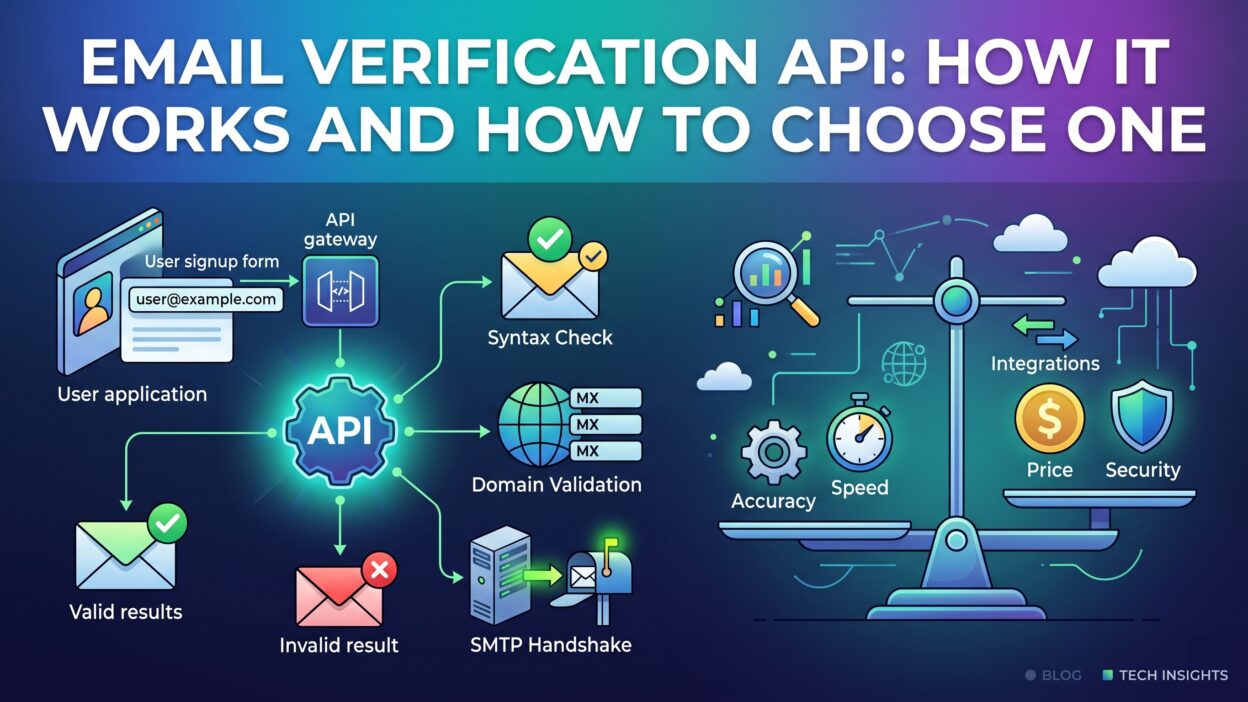
A user types an email into a signup form. Before that form submits, an email verification API runs a series of checks in the background. It confirms the format looks correct, the domain exists, and the mailbox actually accepts mail. This happens in under a second in most setups, so the user never notices the delay.
Who Relies on an Email Verification API
Marketing teams use this technology to protect campaign performance. Product teams use it to stop fake accounts during signup. SaaS companies rely on it heavily, since a bad email at signup often means a lost trial user later. Any business collecting emails at scale benefits from adding an email verification API to their intake process.
How an Email Verification API Works Step by Step
The verification process runs through several distinct stages. Each stage catches a different type of bad address.
Syntax and Format Checks
The first check confirms basic formatting. Missing the “@” symbol or an invalid character fails immediately. This step catches typos fast, like a missing dot before “com” or an extra space at the end of an address.
Domain and MX Record Lookups
Next, the system checks whether the domain after the “@” symbol actually exists. It looks for an MX record, which confirms that domain can receive mail at all. An email verification API stops here if the domain shows no mail server configured, since no message could ever reach it.
SMTP Verification
This step goes further by contacting the receiving mail server directly. The system asks the server whether a specific mailbox exists, without actually sending an email. A strong email verification API handles this step carefully, since some mail servers block or throttle repeated verification attempts.
Disposable and Role-Based Email Detection
Some users sign up with temporary addresses meant to disappear after a few hours. An email verification API flags these disposable domains automatically. It also flags role-based addresses like “support@” or “info@,” which often belong to a team inbox rather than an individual, useful context depending on your use case.
Why Businesses Need an Email Verification API
Bad email data creates problems that spread across marketing, sales, and product teams.
Protecting Sender Reputation
Email providers track how often a sender’s messages bounce. A high bounce rate signals spam behavior to providers like Gmail and Outlook. This lowers deliverability for every email sent afterward, even to legitimate subscribers. An email verification API keeps bounce rates low, which protects your sender reputation over time.
Reducing Bounce Rates
Every bounced email wastes sending capacity and skews campaign analytics. A marketing team analyzing open rates gets inaccurate numbers when a chunk of their list never had valid addresses to begin with. Running an email verification API before sending removes this noise from performance data.
Stopping Fake Signups at the Source
Free trials attract fake signups from users chasing extended access through multiple accounts. An email verification API catches many of these attempts by flagging disposable addresses before an account activates. This protects trial conversion metrics from getting skewed by users who never intended to become real customers.
Key Features to Evaluate in an Email Verification API
Providers vary significantly in speed, accuracy, and pricing. A few features matter more than the rest.
Real-Time Validation Speed
For signup forms, speed matters as much as accuracy. A slow email verification API creates friction during checkout or registration, and friction costs conversions. Look for providers advertising response times under a few hundred milliseconds for real-time checks.
Accuracy and False Positive Rates
A false positive flags a valid email as invalid, which blocks a real customer from signing up. Ask any vendor about their false positive rate directly. A trustworthy email verification API publishes accuracy benchmarks instead of vague marketing claims.
Integration Options and Documentation
Clear documentation reduces setup time significantly. Check whether the provider offers SDKs for your programming language and whether their API supports both single lookups and bulk file uploads. Good documentation often predicts a smoother long-term relationship with a vendor.
Common Use Cases for an Email Verification API
Different teams apply this technology at different points in the customer journey.
Signup Form Validation
Running an email verification API at the point of signup catches bad addresses before they ever enter your database. This keeps your list clean from day one, rather than requiring cleanup later.
Marketing List Cleaning
Teams with existing lists, sometimes built over years, run bulk verification before a major campaign. This process flags addresses that have gone stale or turned into spam traps since the original signup, protecting deliverability for that specific send.
E-commerce Checkout Protection
Online stores use email verification to confirm order confirmations and shipping updates actually reach customers. A failed delivery notification because of a bad email creates support tickets and frustrated buyers, both of which an email verification API helps prevent.
How to Choose the Right Email Verification API for Your Business
A structured evaluation process avoids picking a vendor based on marketing copy alone.
Test With a Sample of Your Own List
Request a trial and run it against a real sample of your existing email list. Results using your own messy, real-world data tell you far more than a polished demo dataset ever could.
Compare Pricing Models Carefully
Some providers charge per verification. Others offer monthly tiers based on volume. A high-volume sender might pay more per check under a pay-as-you-go model than a subscription plan built for scale. Map your expected volume against pricing before committing.
Check Support for Bulk and Real-Time Use
Some businesses only need bulk list cleaning a few times a year. Others need real-time checks running constantly on live signup forms. Confirm the provider supports whichever mode fits your actual workflow, since not every email verification API handles both equally well.
Common Mistakes Teams Make With an Email Verification API
A handful of mistakes show up repeatedly during implementation.
Some teams verify emails only once, right after collecting them, and never again. Email addresses decay over time as people change jobs or abandon accounts. Running periodic re-verification keeps a list accurate well past the original signup date.
Other teams ignore confidence levels returned by the API. Many providers return a risk score alongside a pass or fail result. Treating every borderline result as automatically invalid blocks legitimate customers who happen to use a less common email provider.
A third mistake involves skipping real-time checks entirely and relying only on bulk cleaning. This lets bad addresses accumulate for weeks or months between cleaning cycles, which hurts deliverability in the meantime.
Frequently Asked Questions
What is the difference between syntax checking and SMTP verification in an email verification API? Syntax checking confirms an address is formatted correctly. SMTP verification goes further and contacts the receiving mail server to confirm the mailbox actually exists.
Can an email verification API guarantee zero bounces? No single tool guarantees a perfect result. A quality email verification API significantly reduces bounces, but some mail servers block verification attempts, which limits certainty for a small percentage of addresses.
Does using an email verification API slow down my signup form? A well-built provider returns results in under a second, which most users never notice. Speed varies by provider, so testing response times before launch matters.
Is real-time verification better than bulk verification? Both serve different purposes. Real-time verification stops bad addresses at the point of entry. Bulk verification cleans existing lists. Many businesses use both together for the strongest results.
How often should I re-verify my email list? Most teams re-verify every three to six months. Lists that grow quickly or rely heavily on cold outreach often benefit from more frequent checks.
Read More:-6 Ways to Humanize Your Marketing Efforts
Conclusion

Bad email data quietly damages deliverability, campaign accuracy, and trial conversion rates until someone finally notices the pattern. An email verification API catches these problems early, checking syntax, domain validity, and mailbox existence before a bad address ever causes harm. Choosing the right provider takes real testing against your own data, not just a comparison of feature lists. Businesses that verify emails consistently, both at signup and on a regular schedule, protect their sender reputation and keep their data clean for the long run.