Introduction
TL;DR Customer data lives everywhere. It sits in a CRM, an email platform, a mobile app, and a point-of-sale system. None of these systems talk to each other on their own. An identity resolution API connects these scattered records into one clear picture of a single customer. This article explains how the technology works, why businesses rely on it, and what to check before choosing a vendor.
Table of Contents
What an Identity Resolution API Actually Does
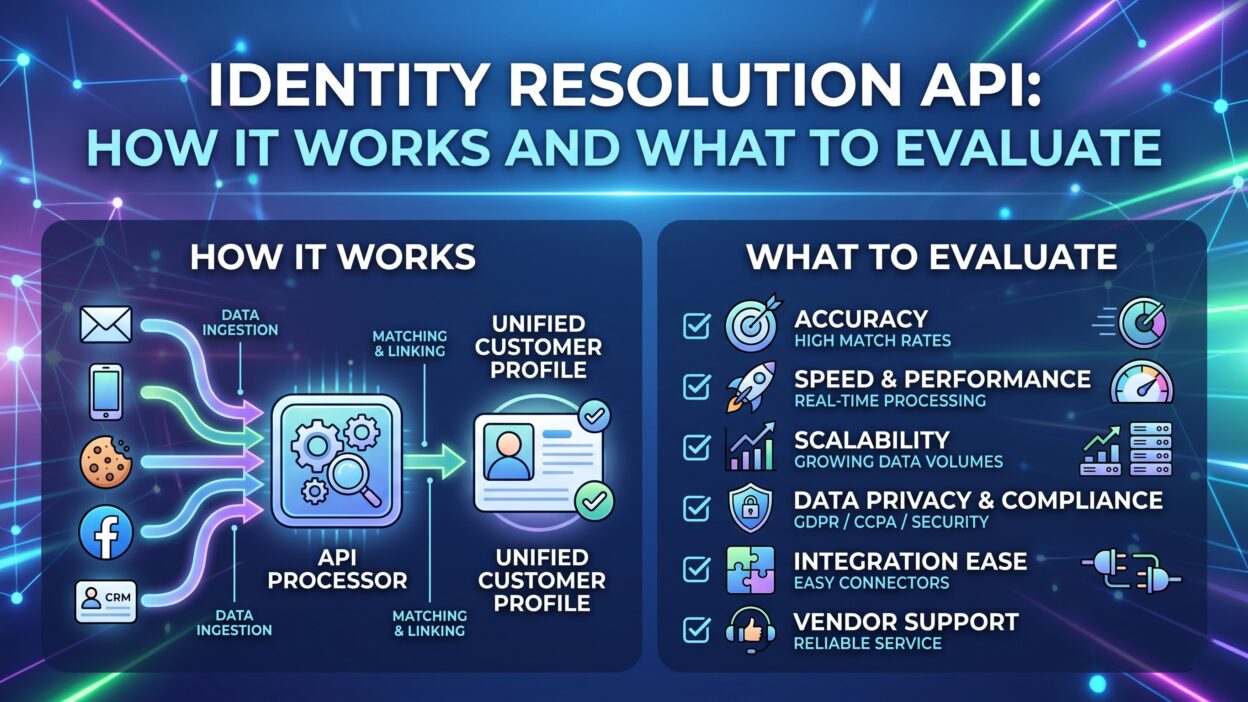
Most companies collect customer data through several channels at once. Each channel stores that data differently. An identity resolution API takes these mismatched records and links them together.
Matching Records Across Data Sources
A customer might sign up with one email on a website and use a different email inside a mobile app. An identity resolution API compares details like name, phone number, device ID, and email across both records. It looks for overlapping signals strong enough to confirm a match. Once confirmed, both records point back to the same person.
Building a Single Customer View
After matching, the system creates one unified profile. This profile combines purchase history, support tickets, and browsing behavior into a single record. Marketing teams use this view to send relevant messages. Support teams use it to see full context during a customer call. Without an identity resolution API, teams work from fragmented pieces instead of the full picture.
How an Identity Resolution API Works Under the Hood
The matching process relies on a few core techniques. Each technique serves a different purpose depending on the data available.
Deterministic Matching
Deterministic matching links records using exact matches. A shared email address or phone number qualifies as a strong match. This method produces high confidence results. It also misses connections when exact identifiers are not available across systems.
Probabilistic Matching
Probabilistic matching fills that gap. It looks at multiple weaker signals together, such as device type, location, and browsing patterns. No single signal proves a match on its own. Combined, they create a confidence score. An identity resolution API uses this score to decide whether two records likely belong to the same person.
Identity Graphs and Linking Logic
An identity graph stores every known connection between identifiers. Think of it as a map linking emails, devices, cookies, and phone numbers to a single person. Every new data point either joins an existing node on the graph or starts a new one. A strong identity resolution API keeps this graph updated in real time as new data arrives.
Why Businesses Need an Identity Resolution API
Fragmented data creates real business problems. Solving this issue drives measurable results across teams.
Fragmented Customer Data
Sales teams see one version of a customer. Marketing teams see another. Support teams see a third. This fragmentation leads to duplicate outreach, missed context, and frustrated customers. An identity resolution API removes these silos by merging records into one consistent source of truth.
Personalization Demands
Customers expect brands to remember their preferences. A shopper who browsed winter jackets last week expects relevant recommendations this week, regardless of which device they use. An identity resolution API makes this kind of cross-device personalization possible by recognizing the same person across different sessions.
Marketing and Ad Targeting Accuracy
Ad platforms rely on accurate identity data to avoid wasted spend. Sending the same ad to one person five times across five different identifiers burns budget fast. An identity resolution API consolidates those identifiers, so ad platforms target the actual person once, not five separate fragments of them.
Key Features to Evaluate in an Identity Resolution API
Not every vendor offers the same level of accuracy or flexibility. A few features separate strong platforms from weak ones.
Match Accuracy and Confidence Scoring
Ask any vendor how they measure match accuracy. A strong identity resolution API shows a confidence score for every match, not just a yes-or-no answer. This transparency helps teams decide how much to trust a given match before acting on it.
Data Privacy and Compliance
Identity resolution touches personal data directly, so compliance cannot be an afterthought. Check whether the vendor supports regulations like GDPR and CCPA. A trustworthy identity resolution API includes built-in consent management and clear data retention policies.
Integration and Latency
Speed matters for real-time use cases like personalized website content. A slow identity resolution API creates delays that hurt user experience. Check average response times and confirm the API integrates smoothly with your existing tech stack before committing.
Common Use Cases for an Identity Resolution API
Different industries apply this technology in different ways.
Retail and E-commerce
Retailers use identity resolution to connect browsing behavior with purchase history. This connection powers product recommendations and abandoned cart emails that actually reflect what a shopper looked at, regardless of the device they used.
Financial Services
Banks and fintech companies use identity resolution to detect fraud. Linking accounts, devices, and transaction patterns helps flag suspicious activity faster. An identity resolution API here needs strong accuracy, since a false match can block a legitimate customer.
Healthcare
Hospitals and clinics use identity resolution to merge patient records across different systems. This reduces duplicate charts and improves care coordination. Given the sensitivity of health data, compliance features matter even more in this setting.
How to Choose the Right Identity Resolution API for Your Business
Selecting a vendor takes more than reading a features page. A structured evaluation avoids costly mistakes.
Define Your Data Sources First
List every system holding customer data before evaluating vendors. This includes your CRM, email platform, website analytics, and any offline data sources. Knowing this list helps you ask vendors specific questions about their integration support.
Test Match Rates With Real Data
Request a trial using a sample of your actual data, not a demo dataset. Real data reveals real match rates. A vendor’s marketing claims mean little until tested against your own messy, imperfect records.
Check Vendor Support and Documentation
Strong documentation saves engineering time during implementation. Ask about support response times and whether a dedicated technical contact exists during onboarding. A confusing setup process signals future headaches down the line.
Common Mistakes When Implementing an Identity Resolution API
A few recurring mistakes slow down implementation and reduce accuracy.
Some teams skip data cleanup before integration. Feeding messy, duplicate records into any system produces messy results, no matter how strong the matching engine is. Cleaning source data first improves match accuracy significantly.
Other teams underestimate compliance requirements. They connect an identity resolution API without reviewing consent settings first. This creates legal risk that surfaces later, often during an audit.
A third mistake involves ignoring confidence scores. Teams sometimes treat every match as certain, even low-confidence ones. Acting on weak matches leads to incorrect personalization and, in worse cases, sending sensitive information to the wrong person.
Frequently Asked Questions
What is the difference between deterministic and probabilistic matching in an identity resolution API? Deterministic matching relies on exact identifiers like email or phone number. Probabilistic matching combines multiple weaker signals to estimate a likely match when exact identifiers are missing.
Is an identity resolution API only useful for large enterprises? No. Smaller companies with data spread across a few platforms benefit too. The scale of implementation changes, but the core problem of fragmented data affects businesses of every size.
How does an identity resolution API handle data privacy regulations? Strong vendors build consent tracking and data retention controls directly into the platform. Businesses should confirm this before signing any contract, since compliance responsibility often stays with the business, not just the vendor.
Can an identity resolution API work with offline data, like in-store purchases? Yes, many platforms support offline data ingestion. This lets retailers connect in-store purchase history with online browsing behavior for a complete customer view.
How long does it take to implement an identity resolution API? Timelines vary based on data complexity. Simple integrations take a few weeks. Larger organizations with many data sources often need a few months for full deployment and testing.
Read More:-The Beginner’s Guide to Corporate Social Responsibility
Conclusion

Scattered customer data holds businesses back from real personalization and accurate targeting. An identity resolution API solves this by linking records into one trustworthy profile. The technology behind it, from deterministic matching to identity graphs, does the heavy lifting behind the scenes. Choosing the right vendor still requires real testing, not just a features comparison. Businesses that evaluate match accuracy, compliance support, and integration speed before committing set themselves up for a smoother rollout and a more accurate view of every customer they serve.