Introduction
TL;DR Most CRM systems sit half empty. Reps skip fields. Data goes stale within months. A CRM without clean data becomes a filing cabinet, not a growth engine.
A data-driven CRM strategy fixes this problem. It turns raw customer data into decisions your team can act on. This guide walks through six steps to build that strategy from the ground up.
Table of Contents
What Is a Data-Driven CRM Strategy?
A data-driven CRM strategy uses customer data to guide sales, marketing, and service decisions. It moves teams away from guesswork. Every action ties back to real numbers instead of a hunch.
This strategy covers more than software. It includes the habits, goals, and processes around the data itself. A CRM tool alone does not create a data-driven CRM strategy. The people using it do.
Companies with a strong data-driven CRM strategy spot patterns early. They know which leads convert fastest. They know which accounts show churn risk before the customer says a word. This foresight comes from disciplined data, not luck.
Why Your Business Needs a Data-Driven CRM Strategy
Sales teams waste hours chasing the wrong leads. A data-driven CRM strategy fixes this by scoring leads based on real behavior. Reps spend time where it actually pays off.
Customer churn often hides in plain sight. Support tickets pile up. Usage drops. A data-driven CRM strategy surfaces these warning signs before a customer walks away. Teams act instead of react.
Marketing also benefits from this approach. Campaigns built on real customer data perform better than campaigns built on assumptions. A data-driven CRM strategy connects marketing spend directly to pipeline results.
Leadership gains the most from this shift. Forecasts become reliable. Reports reflect reality instead of optimistic guessing. A data-driven CRM strategy gives leaders the confidence to plan with real numbers.
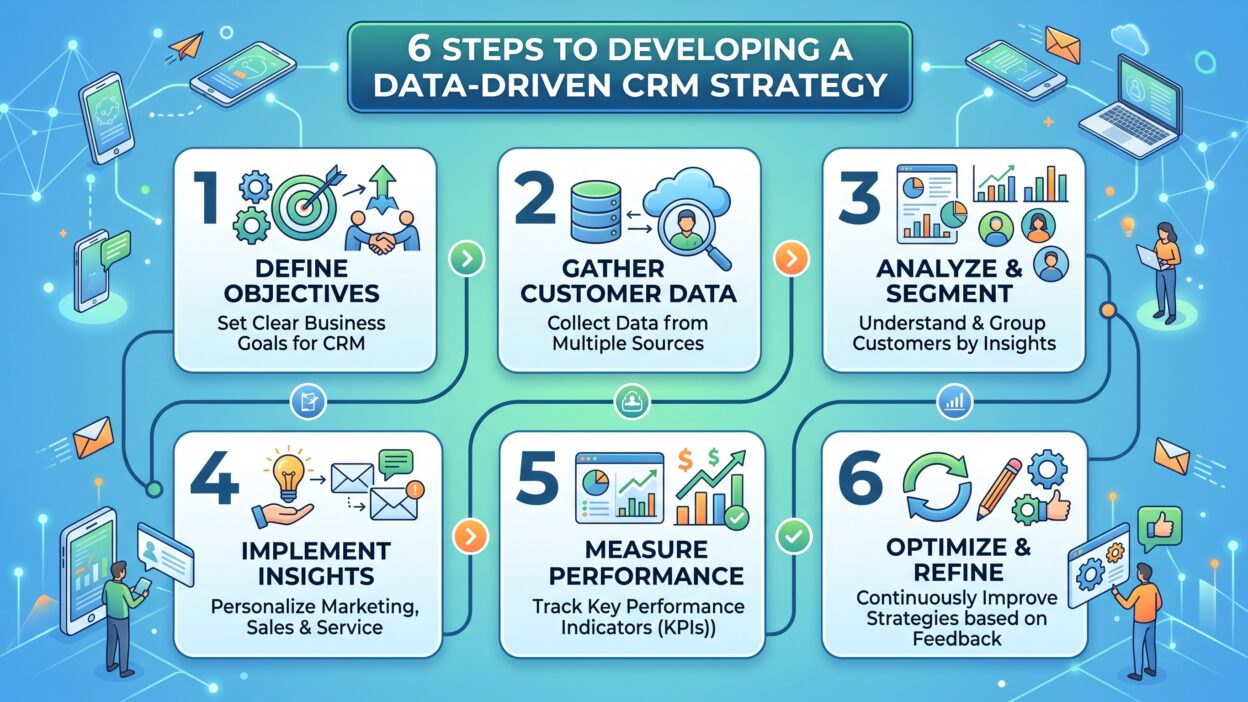
6 Steps to Build a Data-Driven CRM Strategy
Building this strategy takes structure. Here are six steps that turn a messy CRM into a real data asset.
Step 1: Audit Your Current CRM Data
Start by checking what already lives in your CRM. Look for duplicate records, missing fields, and outdated contact information. Most teams find more gaps than they expect.
This audit sets a baseline for your data-driven CRM strategy. You cannot fix what you have not measured. Pull a sample of records and score their completeness by hand if needed.
Document the gaps you find. Missing phone numbers matter less than missing deal stages. Rank issues by impact, not by how easy they are to fix.
Step 2: Set Clear Goals for Your CRM Data
Data without a goal becomes clutter fast. Decide what your data-driven CRM strategy needs to achieve. Faster lead response times. Better forecast accuracy. Lower churn rates. Pick a short list.
Each goal should tie to a number you can track. Vague goals like “better data” lead nowhere. Specific goals like “reduce lead response time to under one hour” give your team something to chase.
Share these goals across sales, marketing, and support. A data-driven CRM strategy only works when every team pulls toward the same outcome. Siloed goals create siloed data.
Step 3: Clean and Organize Your Customer Data
Clean data makes every later step easier. Remove duplicate contacts. Standardize how your team enters names, company sizes, and deal stages. Small inconsistencies cause big reporting errors later.
Build simple rules for data entry going forward. A required field for deal source stops guesswork during reporting season. A dropdown menu beats a free-text field every time.
This cleanup step feels tedious, but it protects the rest of your data-driven CRM strategy. Bad data compounds. A messy CRM today becomes a broken report six months from now.
Step 4: Connect Your CRM to Other Business Tools
Your CRM should not sit alone. Connect it to your email platform, support desk, and billing system. This integration gives your data-driven CRM strategy a full view of each customer.
A support ticket volume spike should show up next to the account record. A missed invoice should flag inside the same deal your sales rep manages. Disconnected tools hide these signals from the people who need them.
Most modern CRM platforms support native integrations or simple API connections. Start with the tools your team touches daily. Add more connections once the core integration proves stable.
Step 5: Build Dashboards and Reports
Raw data means nothing without a way to see it. Build dashboards that answer real questions your team asks weekly. Pipeline health, lead source performance, and churn risk make strong starting points.
Keep each dashboard focused on one audience. A sales rep needs deal-level detail. An executive needs summary trends. A single dashboard trying to serve both usually serves neither well.
Review these dashboards on a set schedule. A data-driven CRM strategy stays sharp only when someone actually looks at the numbers and acts on them.
Step 6: Train Your Team on Data-Driven Habits
Tools and dashboards fail without habit change. Train reps to log activity consistently. Show managers how to read the dashboards you built in the last step.
Make data entry part of the daily workflow, not an afterthought. A rep who updates the CRM after each call builds better habits than one who updates it once a week.
Celebrate wins that come from good data. A deal saved because a rep caught a churn signal early reinforces the whole data-driven CRM strategy. People repeat behavior that gets recognized.
Tools That Support a Data-Driven CRM Strategy
The right tools remove friction from every step above. A few categories matter most.
CRM Platforms
The CRM itself remains the foundation. Look for one with strong custom fields, automation rules, and reporting options. A flexible CRM adapts to your data-driven CRM strategy instead of forcing your process to fit the tool.
Data Enrichment Tools
Enrichment tools fill gaps in your records automatically. They add company size, industry, and contact details without manual entry. This saves reps hours of research time each week.
Analytics and BI Tools
Some teams outgrow native CRM reporting. Business intelligence tools pull CRM data into deeper analysis. They reveal trends a standard dashboard might miss entirely.
Common Mistakes That Break a Data-Driven CRM Strategy
Many teams launch this strategy with excitement, then let it fade. A few mistakes explain most failures.
Teams often collect data without a clear owner. Nobody checks data quality regularly. Records rot within a few months, and the whole data-driven CRM strategy loses trust across the team.
Overcomplicating dashboards causes another common failure. Too many charts overwhelm a busy sales manager. Simple, focused reports get used. Complex ones get ignored.
Some teams also skip training after rollout. Reps revert to old habits within weeks without reinforcement. A data-driven CRM strategy needs ongoing coaching, not a single kickoff meeting.
Finally, many teams treat this as a one-time project. Customer needs shift. Markets change. A data-driven CRM strategy needs regular review to stay useful over time.
Metrics to Track Your Data-Driven CRM Strategy
A few metrics show whether your strategy actually works. Data completeness rate tracks how many required fields get filled correctly. This number should climb steadily after your cleanup step.
Lead response time shows whether reps act on fresh data quickly. Forecast accuracy shows whether your reports match real outcomes each quarter. A gap here points to a data quality problem upstream.
Churn prediction accuracy matters for service teams. If your data-driven CRM strategy flags churn risk correctly most of the time, your support team can intervene before losing the account.
FAQs
What is a data-driven CRM strategy? A data-driven CRM strategy uses customer data inside your CRM to guide sales, marketing, and service decisions instead of relying on guesswork.
How long does it take to build a data-driven CRM strategy? Most teams see early results within three months. A full strategy, including clean data and trained habits, usually takes six months to mature.
What is the first step in a data-driven CRM strategy? The first step is auditing your current CRM data. You need to know what data exists and where the gaps sit before setting goals.
Do small businesses need a data-driven CRM strategy? Yes. Small teams benefit even more, since bad data costs a small sales team a higher percentage of its total pipeline.
What tools help support a data-driven CRM strategy? CRM platforms, data enrichment tools, and analytics or BI tools all support this strategy. Most teams start with their core CRM before adding the rest.
How do you keep a data-driven CRM strategy from breaking down? Assign a clear data owner and review dashboards on a set schedule. Ongoing training keeps the whole team aligned on data entry habits.
Can a data-driven CRM strategy reduce customer churn? Yes. Teams that track usage and support signals inside the CRM catch churn risk early, which gives them time to act before losing the customer.
Read More:-Deal Intelligence Scoops: How Account Teams Win Competitive Deals
Conclusion

A data-driven CRM strategy turns a cluttered system into a real growth tool. The six steps in this guide move you from messy records to clear, actionable dashboards your team trusts.
Start with an honest audit. Set goals your whole team understands. Clean the data, connect your tools, and build reports people actually check. Train your team to keep the habit alive. A data-driven CRM strategy only works when data becomes part of daily work, not a side project.