
Introduction
TL;DR Privacy rules in America move fast. A new law passes in one state. A deadline hits in another. A bill appears in Congress. Business owners and shoppers struggle to keep pace.
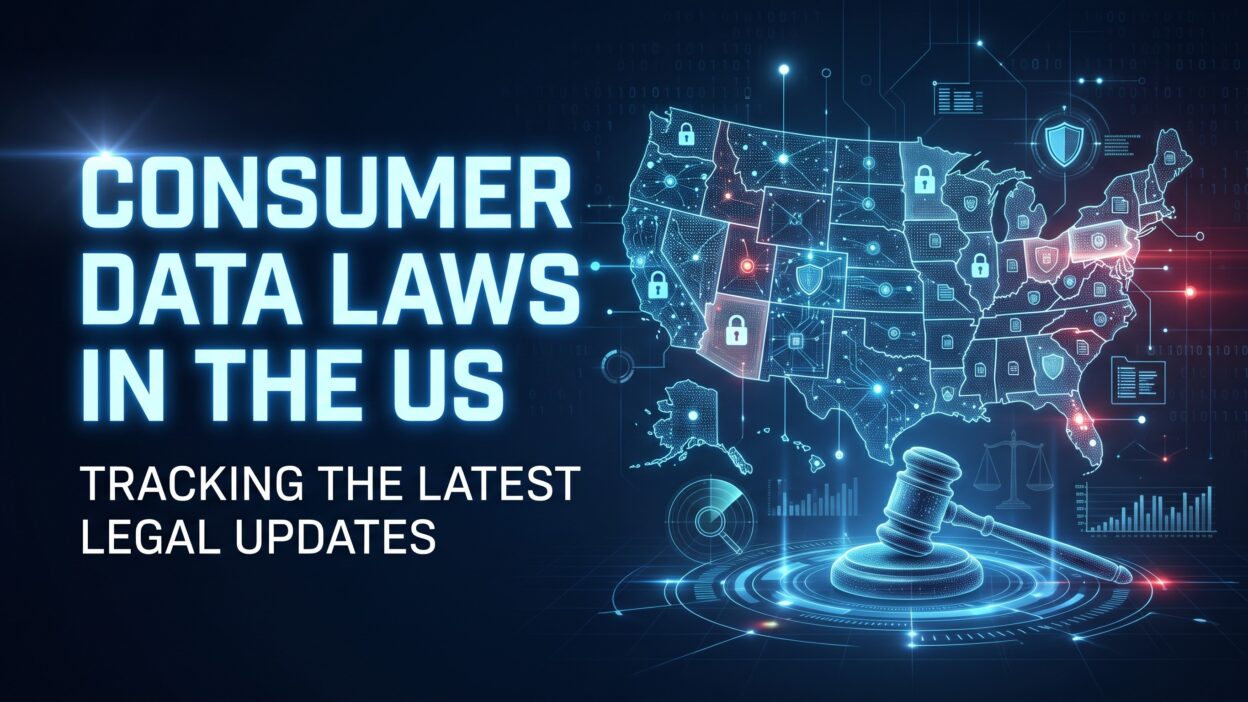
Consumer Data Laws in the US look very different from the rules in Europe. Congress has not passed one national privacy law. States write the rules instead. A late October 2026 count from MultiState shows 24 states with broad consumer privacy laws. Four of those laws arrived this year.
Table of Contents
What Are Consumer Data Laws in the US?
These laws set rules for how companies collect, use, share, and sell personal information. They give people control over their own data. They give regulators power to punish companies that break the rules.
Most laws share a core idea. Companies must tell people what they collect. People can say no to certain uses. Companies must protect the data they hold.
How the laws define personal data
Personal data means any information that links to a person. Names, email addresses, and phone numbers count. Online identifiers count. Purchase history counts. Location data counts.
Most laws create a special tier called sensitive data. This tier covers health details, precise location, biometric data, and information about children. Companies face stricter rules for this tier. Many laws demand opt-in consent before a company touches it.
Who the laws protect
These laws protect residents of the state that passed them. A shopper in Colorado gets Colorado rights. A shopper in Texas gets Texas rights. Your business must follow the law of every state where your customers live. Your office location does not matter.
Most laws apply to larger businesses. They use thresholds based on revenue or the number of consumers whose data a company handles. Some newer laws set lower thresholds. Small companies should check each state with care.
Why the US Has a Patchwork of Privacy Rules
Europe has the GDPR. The United States has no matching federal rule. The country uses a mix of sector laws and state laws instead.
The federal gap
Federal laws cover narrow areas. One law covers health records. One covers children’s online data. One covers financial institutions. Nothing covers all consumer data in all industries.
Congress has tried before. The American Data Privacy and Protection Act came close in 2022. The American Privacy Rights Act stalled in 2024. Each effort died over the same fights. Lawmakers argued about preemption of state laws and about whether consumers should have the right to sue.
States step in
State lawmakers did not wait. California led the way. Virginia, Colorado, Connecticut, and Utah followed. Dozens of states now copy the same basic model with small twists.
This pattern creates a headache for national companies. Each state uses slightly different definitions, thresholds, and deadlines. Legal teams must track every change. The benefit is that many laws share a common core. Companies can build one strong program and adjust for local details.
The State Privacy Law Count in 2026
The pace of change surprised many experts. Twenty states had comprehensive privacy laws when 2026 began. Four more joined during the first half of the year. Consumer Data Laws in the US now reach consumers in 24 states.
Laws that took effect on January 1, 2026
Three laws went live on the first day of the year. Indiana passed the Consumer Data Protection Act. Kentucky passed a law with the same name. Rhode Island passed the Data Transparency and Privacy Protection Act.
Most companies that already follow other state laws found these three familiar. Rhode Island added a twist. It asks companies to disclose the third parties that receive consumer data. That rule goes further than many peers.
Laws that passed in 2026
Four states enacted new laws this year. Louisiana and Oklahoma set effective dates of January 1, 2027. Alabama set May 1, 2027. Vermont set January 1, 2028.
Lawyers describe these laws as largely consistent with the common state model. Differences still matter. Each law uses its own thresholds, exemptions, and enforcement tools. Businesses should read each one before the effective date arrives.
Why the count keeps growing
Legislators like a proven template. They copy language from earlier laws and tweak it. This habit speeds up passage. Observers expect more states to join the list in the 2027 session.
Core Consumer Privacy Rights Across the States
Despite the patchwork, consumers receive a similar set of rights almost everywhere. Learning these rights helps shoppers and business owners alike.
Access, correction, and deletion
Consumers can ask a company what data it holds. They can ask for a copy. They can ask the company to fix errors. They can ask the company to delete their data. Companies must respond within a set time, often 45 days.
Opting out of sales and targeted ads
Most laws let consumers opt out of the sale of personal data. Most also let them opt out of targeted advertising and certain profiling. Several states now require companies to honor browser signals that communicate this choice automatically. The Global Privacy Control is the best-known example.
Consent for sensitive data
Most states require opt-in consent before a company processes sensitive data. A fitness app that tracks health details needs clear permission. A retailer that uses precise location needs clear permission. Silence does not count as consent.
California Still Sets the Pace
California passed the first broad privacy law in 2018. Voters strengthened it in 2020 through the California Privacy Rights Act. The state created a dedicated agency, the California Privacy Protection Agency, to enforce the rules.
What the CCPA covers
The CCPA gives residents the right to know, delete, correct, and opt out. It also adds a right to limit the use of sensitive data. It applies to for-profit businesses that meet certain size or data thresholds. It includes employee and business contact data in some contexts, which sets it apart from most other states.
New rules phasing in
California has finalized updated regulations on risk assessments, cybersecurity audits, and automated decision-making technology. The rules phase in over several years, with some duties starting in 2026. Businesses that use automated tools to make decisions about consumers should review these requirements now.
California also keeps investing in data broker oversight. Its Delete Act gives residents a path to ask many brokers to erase their data in one step. Regulators have shown a clear appetite for enforcement. Fines and settlements have grown each year.
Cure Periods End and Existing Laws Get Tougher
New laws grab headlines. Amendments to old laws matter just as much. Consumer Data Laws in the US keep shifting even in states that passed their statutes years ago.
Cure periods sunset
Many early laws gave companies a right to cure. A company that received a violation notice could fix the problem and avoid a penalty. Regulators in several states have watched those grace periods expire. Law firms report that cure periods end during 2026 in Connecticut, Delaware, Kentucky, Minnesota, and Montana.
This change raises the stakes. A mistake no longer earns a free second chance. Companies should fix gaps before a regulator asks about them.
Amendments add new duties
Lawmakers keep tightening the rules. Connecticut amendments took effect on July 1, 2026. Oregon amendments took effect on January 1, 2026. Virginia added changes on children’s data, social media, and location data across several years, with the latest set scheduled for October 2026.
Newer laws in Maryland, Minnesota, and New Jersey set a higher bar in some areas. Older states now update their statutes to match. Expect this trend to continue.
Data Brokers Draw New Attention
Data brokers collect and sell personal information about people they never meet. Lawmakers see this industry as a major privacy risk. Pressure on brokers grew in 2026.
During the second quarter, Connecticut and New Jersey enacted new data broker laws. Vermont changed its existing law. These moves mark the first new state broker laws since 2024.
The new rules focus on registration, transparency, and consumer control. Brokers must tell people what they collect. Brokers must give people a way to opt out or delete. Companies that buy data from brokers should check that their vendors follow these rules.
Experts expect more states to follow in the 2027 session. Any company that sells or buys lists of consumer data should watch this space closely.
Children, Teens, and AI Enter the Privacy Picture
Privacy law no longer stands alone. Rules on children, teens, and artificial intelligence now overlap with it.
Protecting young users
Lawmakers worry about how apps treat minors. Several states passed rules on social media, age-appropriate design, and data from teens. Virginia’s social media rules for minors took effect on January 1, 2026. Platforms that serve young people face extra duties on consent, defaults, and data use.
Every company with a young audience should audit its sign-up flows and ad practices. Rules on minors grow stricter each year.
AI and automated decisions
State AI laws now intersect with privacy compliance. Many privacy statutes already give consumers the right to opt out of profiling. Some require risk assessments before a company uses data for high-stakes decisions. Companies that train AI models on customer data should review notices and consent flows.
Privacy teams and AI teams now need a seat at the same table. Their work overlaps more every quarter.
What Is Happening in Congress?
The United States still has no comprehensive federal privacy law. Congress has not run out of ideas, though. The IAPP tracked 49 federal privacy proposals through September 2026.
Three competing bills
Three comprehensive bills lead the discussion. Representative John Joyce introduced the SECURE Data Act, H.R. 8413, in April 2026. It offers broad preemption of state laws and no private right of action. A House committee held a hearing in June.
Representative Zoe Lofgren introduced the Online Privacy Act, H.R. 8014. It creates a new Digital Privacy Agency and allows individuals to sue. Senator Jerry Moran introduced the Consumer Data Privacy and Security Act, S. 4211. It sets a federal enforcement framework and no private right of action.
The two big fights
Lawmakers argue over preemption. Industry wants one national rule that replaces state laws. California and many advocates want a federal floor that leaves states free to do more. Lawmakers also argue over private lawsuits. Consumer groups want them. Business groups oppose them.
What experts expect
Most observers see passage in 2026 as unlikely. Midterm elections narrowed the calendar. The SECURE Data Act lacks bipartisan backing so far. State laws will keep setting the rules in the near term.
Businesses should not wait for Washington. Consumer Data Laws in the US will stay state-driven for the foreseeable future, and companies must comply with the laws on the books today.
Enforcement Is Getting Real
Regulators no longer treat privacy laws as paper rules. State attorneys general and the California agency now open investigations and announce settlements. They look at website banners, opt-out links, and consent flows. They test whether a company honors browser opt-out signals.
Private lawsuits add pressure. Plaintiffs’ firms file claims over tracking tools, session replay software, and website pixels. Some of these suits rely on older wiretap or privacy statutes, not the new comprehensive laws.
Companies can lower their risk. Scan your website to see which trackers fire. Test your opt-out tools from a real browser. Confirm that your cookie banner works as promised. Regulators test the same things.
A Practical Compliance Plan
Following Consumer Data Laws in the US feels overwhelming at first. A step-by-step plan makes the job manageable. Start with the steps below and adjust for your size and industry.
Map your data
List every type of personal data you collect. Note where it lives. Note who can access it. Note which vendors receive it. You cannot protect or delete data you cannot find.
Identify which laws apply
Check each state where you have customers. Compare your revenue and data volume against each threshold. Mark the effective dates for new laws. Pay special attention to Louisiana, Oklahoma, Alabama, and Vermont, which arrive between 2027 and 2028.
Update your notices and choices
Rewrite your privacy notice in plain language. Describe what you collect, why you collect it, and who gets it. Add clear opt-out links. Add a way to submit access and deletion requests. Honor browser opt-out signals.
Tighten vendor contracts
Most laws require written contracts with service providers and processors. Those contracts must limit how vendors use your data. Review each agreement. Ask vendors how they handle deletion requests.
Train your team
Laws fail when staff do not know them. Teach customer support how to route privacy requests. Teach marketing how consent works. Teach engineers to build privacy into new products from day one.
Review every quarter
Set a calendar reminder for each quarter. Check for new laws, new amendments, and new guidance from regulators. A short, regular review beats a panicked scramble.
Common Mistakes in Following Consumer Data Laws in the US
Even careful companies slip. Avoid these traps.
Assuming a small footprint means no duty
Some laws use low thresholds. A small company with data on a modest number of consumers can still fall inside the rules. Check the numbers instead of guessing.
Copying a policy from a competitor
A copied privacy notice often describes practices you do not follow. Regulators treat that gap as a deceptive practice. Write notices that match your real behavior.
Ignoring sensitive data
Teams often miss sensitive data hiding in plain sight. A location feature, a health quiz, or a biometric login can trigger opt-in rules. Review every product feature for sensitive categories.
Treating compliance as a one-time project
Laws change every few months. A policy that works today can fail next year. Build ongoing review into your routine.
Frequently Asked Questions
What are the main Consumer Data Laws in the US?
The country has no single federal law. State laws do most of the work. California, Virginia, Colorado, Connecticut, and Utah led the way. More than 20 states now have broad laws. Federal sector laws cover areas such as health data, financial data, and children’s online privacy.
How many states have a comprehensive privacy law in 2026?
A late October 2026 count from MultiState shows 24 states. Indiana, Kentucky, and Rhode Island laws took effect on January 1, 2026. Louisiana, Oklahoma, Alabama, and Vermont passed laws this year with effective dates from 2027 to 2028.
Do Consumer Data Laws in the US apply to small businesses?
It depends on the state. Most laws use thresholds based on revenue or the number of consumers whose data a company handles. Some thresholds are low. Check each law that touches your customers.
Is there a federal privacy law coming?
Congress has several bills in play, including the SECURE Data Act. Most experts see passage in 2026 as unlikely. The fight over preemption and private lawsuits remains unresolved.
What is sensitive data?
Sensitive data includes health information, precise location, biometric data, and data about children. Many states require opt-in consent before a company uses it.
What rights do consumers have?
Consumers can usually access, correct, and delete their data. They can opt out of sales and targeted ads. They can limit the use of sensitive data in some states.
What happens if a company breaks the law?
State attorneys general enforce most laws. California’s agency also enforces its law. Penalties include fines and orders to change practices. Some states have ended their cure periods, so companies get fewer second chances.
How can a business stay current?
Follow trackers from groups such as the IAPP and the Future of Privacy Forum. Read law firm updates. Review your program every quarter. Ask a privacy attorney about edge cases.
Read More:-Product-led vs. Sales-led Growth: Do You Have to Choose?
Conclusion

Privacy law in America keeps growing. Twenty-four states now have broad statutes. Four more laws arrive between 2027 and 2028. Cure periods end. Data broker rules tighten. Children’s data and AI draw new rules. Congress debates three major bills but offers no finish line.
Consumer Data Laws in the US will remain a state-led system for the near future. Companies cannot wait for Washington to simplify the picture. They must act now.
Start with a data map. Check which laws apply. Update your notices. Honor opt-out signals. Tighten vendor contracts. Train your team. Review every quarter. These habits turn a scary patchwork into a manageable routine.
Consumers benefit too. They gain more control with each new law. Smart companies treat that shift as a chance to earn trust. Strong privacy practices build loyalty. Loyalty builds revenue.