

Introduction
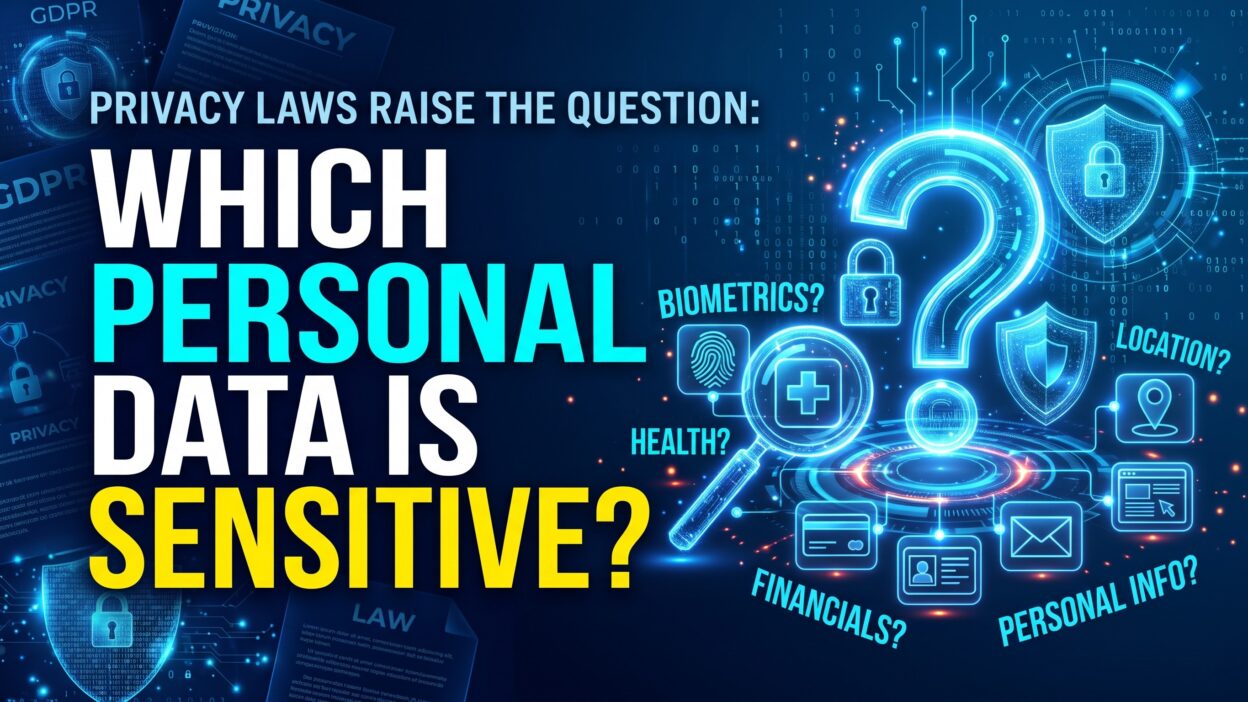
TL;DR Every privacy law makes one big promise. Some data deserves extra care. The hard part is deciding which data earns that label.
Sensitive Personal Data sits at the center of nearly every new privacy rule in the United States. Lawmakers add new categories each year. Regulators watch how companies handle them. Consumers ask tougher questions about what apps and brands know about them.
The stakes are high. A leaked grocery list causes little harm. A leaked health record can cost someone a job. A leaked location trail can put a person in danger. Laws treat these cases differently for good reason.
Table of Contents
What Counts as Sensitive Personal Data?
Privacy laws split personal information into two groups. Regular personal data covers names, email addresses, and purchase history. Sensitive Personal Data covers information that could cause serious harm if someone misuses it.
The label triggers stricter rules. Companies face extra duties before they collect, use, or share this data. Consumers gain stronger control.
A plain definition
Sensitive Personal Data means information that reveals deeply personal facts about a person. Think of health conditions, religious beliefs, sexual orientation, or exact location. These facts can lead to discrimination, harassment, or physical harm. Laws single them out for tighter protection.
No single national list exists. Each state writes its own definition. Most lists overlap heavily. Small differences still matter for companies that sell across state lines.
Why laws treat this data differently
History explains the extra care. People have faced firing, eviction, and violence after others exposed private facts about them. Lawmakers want to reduce that risk.
Harm from sensitive information also lasts. A person can change a password. A person cannot change a fingerprint or a medical history. Permanent data deserves permanent care.
The Most Common Categories of Sensitive Data
Across the states, a core group of categories appears again and again. Legal guides list racial or ethnic origin, religious beliefs, sexual orientation, health conditions, immigration status, genetic and biometric data, precise location, and data from children. Learn these first.
Health and genetic data
Health data covers diagnoses, treatments, prescriptions, and mental health details. Genetic data covers DNA test results. Both reveal intimate facts about a person and even about relatives.
A fitness app that tracks heart conditions handles health data. A DNA testing kit handles genetic data. A pharmacy loyalty program may handle both. Many people forget that everyday apps collect this information.
Race, religion, sexual orientation, and immigration status
These categories protect people from bias. Data that reveals a person’s race, ethnicity, or religion falls inside the group. So does data about sex life, sexual orientation, and citizenship or immigration status.
The word “reveals” matters. A company does not need to ask a direct question. A prayer app that logs a user’s faith reveals religious beliefs. A dating app reveals sexual orientation. Courts and regulators look at what the data shows, not only how the company collected it.
Biometric data
Biometric data comes from the body. Fingerprints, face scans, voiceprints, and iris scans all qualify. Companies use them to unlock phones, verify identity, and secure buildings.
Biometric data carries special risk because it never changes. Illinois set the pace with a biometric law that lets individuals sue. Other states now regulate it too. Colorado has signaled that biometric rules will draw enforcement attention.
Precise geolocation
Most laws define precise geolocation as data that pinpoints a person within a radius of 1,750 feet. GPS coordinates qualify. Some Wi-Fi and cell tower data may qualify as well.
Location data reveals a lot. It shows where someone worships, where they see a doctor, and where they spend the night. Lawmakers treat it as one of the riskiest data types.
Children’s data
Most states treat data from a known child as sensitive. Thresholds differ. Many laws use age 13. Some newer laws reach older teens. Companies that serve young users must watch age rules closely.
New Categories Entering the Law
Definitions keep growing. Technology creates new data types faster than lawmakers can write rules. States respond by adding categories.
Neural data
Neural data comes from measuring the brain or nervous system. Wearable headbands and medical devices collect it. Colorado added neural data to its law in 2024. Connecticut defined it as information generated by measuring the activity of a person’s central nervous system.
This category shows how fast the field moves. Few consumers owned brain-sensing gadgets a decade ago. Lawmakers now act before the market grows.
Financial account and government ID data
Some states added bank account details and government identifiers to their sensitive lists. Connecticut and Delaware moved in this direction. Social Security numbers and driver’s license numbers now fall under tighter rules in these places.
Gender identity and inferences
Maryland names status as transgender or nonbinary as sensitive. Several states now treat inferences as sensitive too. Delaware covers inferences that reveal sensitive traits. Maryland went further in 2026 and covers data a company infers from other personal data when that data indicates a sensitive attribute.
This point matters for marketers. A shopping history can suggest pregnancy or illness. A company that builds that guess may now handle sensitive data even if the customer never shared it.
How the States Differ
A national business faces a maze. Each state lists its own categories. Each state sets its own rules on consent.
Maryland takes the strictest path
Maryland rewrote the playbook. Its law took effect in October 2025 and restricts Sensitive Personal Data far more than the common model. A company may collect or process this data only when strictly necessary to provide the service the consumer asked for. The law also bans the sale of sensitive data.
Maryland changed its definitions again in 2026. The new language focuses on sensitive attributes and covers inferred data. The update took effect on July 1, 2026. It also expanded precise geolocation to cover a consumer, a mobile device, or a vehicle within 1,750 feet.
Connecticut and Delaware expand lists
Connecticut and Delaware keep adding categories. Their updates now reach neural data, government identifiers, and certain financial information. Connecticut also addresses facial recognition in amendments that take effect on October 1, 2026.
Consent models vary
Most states demand opt-in consent for sensitive data. A few use a lighter model that relies on notice and a chance to opt out. Companies should confirm the model in each state before they launch a feature.
Consent, Assessments, and Other Core Duties
Laws attach several duties to sensitive data. Most follow a similar pattern.
Opt-in consent
A company must ask before it uses the data. The consent must be clear, specific, and freely given. Pre-checked boxes do not count. Silence does not count. Some laws say that dark patterns, such as tricky button designs, invalidate consent.
Data protection assessments
Many laws require a written assessment before a company processes sensitive data. The assessment weighs the benefits of the activity against the risks to consumers. Regulators can ask to see it.
Data minimization and security
Companies must collect only what they need. They must protect what they hold. Strong encryption, access controls, and clear retention limits all help. A company that keeps data forever creates risk for itself.
Sale Bans and Hard Limits
Consent no longer solves every problem. Lawmakers now ban certain uses outright. This trend rose sharply in 2026.
New Jersey and Maryland banned the sale of all Sensitive Personal Data. Virginia banned the sale of precise geolocation data starting July 1, 2026. Before that date, Virginia allowed the sale with opt-in consent. The new rule removes the consent path. Connecticut will prohibit the sale of precise geolocation data through amendments effective October 1, 2026.
Oregon and New Hampshire restrict the sale of data about children. Observers expect more states to copy these bans in the 2027 session.
The message for business is clear. Consent works in some states and fails in others. A feature that sells location data may be legal in one place and illegal in the next. Product teams need guidance from legal teams early.
Beyond State Privacy Laws
State consumer privacy laws form only one layer. Federal and sector laws still apply. Companies in regulated industries must follow several rule sets at once.
Federal sector laws
HIPAA protects health information held by covered healthcare entities and their partners. The Genetic Information Nondiscrimination Act limits how employers and insurers use genetic data. The Children’s Online Privacy Protection Act governs data from children under 13. Many consumer privacy laws exempt data already covered by these statutes.
Health data outside HIPAA
HIPAA does not reach every health app. Washington passed the My Health My Data Act to fill that gap. It covers consumer health data collected by many businesses outside the healthcare system and lets individuals sue. Nevada passed a similar law.
Biometric laws
Illinois leads here. Its Biometric Information Privacy Act has produced large settlements. Texas and Washington also regulate biometrics. Companies that scan faces or fingerprints should review these laws with care.
FTC enforcement
The Federal Trade Commission polices unfair and deceptive practices. It has brought actions against companies that shared health and location data without clear permission. A broken promise in a privacy notice can trigger a case even when no privacy statute applies.
How the US Compares With the GDPR
European law uses a term called special category data. It covers racial or ethnic origin, political opinions, religious beliefs, trade union membership, genetic data, biometric data used for identification, health data, and sex life or sexual orientation.
The lists look similar to the American ones. Several differences stand out. The GDPR covers political opinions and union membership. Most US state laws do not. US laws add precise geolocation and children’s data. Some US laws add immigration status and financial account details.
The approach to consent differs too. The GDPR bans processing of special categories unless an exception applies. US laws usually allow processing with consent. Maryland now moves the US closer to the European model.
Global companies should build one program that meets the strictest standard in each area.
The Gray Areas
Real life does not sort neatly into categories. Several gray areas cause debate.
Inferences and profiles
A company may never collect a diagnosis. It may still infer one from clicks and purchases. Regulators care about the output of the model, not only the input. Companies that build profiles should test whether the profile reveals a sensitive trait.
Public information
Most laws exclude publicly available information. A person who posts their religion on a public profile may lose protection for that post. Definitions of public information differ. Connecticut revised its rules on this topic in recent amendments.
Context matters
A photo of a face may count as ordinary data in one setting. The same photo run through facial recognition software becomes biometric data. A location ping at a mall may look harmless. The same ping at a clinic tells a story. Teams must think about purpose and context, not only data type.
De-identified data
Laws usually exclude de-identified data. The data must truly lose its link to a person. Companies must commit publicly to avoid re-identification. Weak de-identification invites trouble.
A Practical Plan for Businesses
Handling Sensitive Personal Data well takes planning. A clear process keeps teams safe and customers happy. Use the steps below as a starting point.
Build a data inventory
List every field you collect. Tag the ones that fall into sensitive categories. Include data you infer. Include data that vendors collect for you. Many companies discover sensitive fields hiding in forms, logs, and analytics tools.
Review each state’s definition
Compare your tags with each state’s list. Pay attention to neural data, government IDs, financial account data, and inferences. Update the inventory each time a state amends its law.
Collect less
Ask whether you truly need each sensitive field. Remove fields you do not use. Maryland’s necessity standard rewards this habit. Less data means less risk.
Fix consent flows
Write clear consent screens. Explain what you collect and why. Avoid tricks that push users toward a choice. Record each consent so you can prove it later.
Check vendors and contracts
Track where sensitive data flows. Review contracts with processors and ad partners. Ban vendors from selling or reusing the data. Ask vendors how they delete it on request.
Prepare for requests and incidents
Build a workflow for access and deletion requests. Write an incident response plan. Practice it once a year. Fast, honest action limits damage after a breach.
Mistakes That Put Sensitive Personal Data at Risk
Careful companies still slip. Watch for these common errors.
Relying on a single national list
A company that follows one state’s list may miss another’s. Build to the broadest definition and adjust downward only after legal review.
Forgetting tracking tools
Website pixels and software kits can send health or location details to third parties without anyone noticing. Regulators and plaintiffs’ firms look for these leaks. Scan your sites and apps regularly.
Treating consent as a cure-all
Sale bans in Maryland, New Jersey, and Virginia show the limits of consent. Check whether a use is legal at all before you design the consent screen.
Ignoring inferred data
A model that predicts health status or sexual orientation may trigger sensitive data rules. Include model outputs in your inventory.
Tips for Consumers
Shoppers can protect themselves with a few habits. Read the permission prompts on your phone. Turn off precise location for apps that do not need it. Check which apps can use your camera and microphone.
Use the privacy rights your state gives you. Ask companies what they hold about you. Request deletion when you stop using a service. Opt out of the sale of your data where the law allows it.
Turn on a browser setting that sends an opt-out signal. Many states require companies to respect it. Think before you take a consumer DNA test or share health details in a wellness app. The data may live for a very long time.
Frequently Asked Questions
What is Sensitive Personal Data?
It is information that reveals deeply personal facts, such as health, race, religion, sexual orientation, immigration status, biometrics, precise location, and children’s data. Laws give it extra protection because misuse can cause serious harm.
Is a name or email address sensitive?
No. Names and email addresses count as ordinary personal data in most laws. They become sensitive only when combined with details that reveal a protected trait.
Does Sensitive Personal Data need consent in every state?
Most states require opt-in consent. A few use notice and opt-out. Some states ban certain uses, such as the sale of precise geolocation, even with consent. Always check the state law.
Is location data always sensitive?
Precise geolocation counts as sensitive in the state comprehensive laws. Most laws define it as data that pinpoints a person within 1,750 feet. General location, such as a city or zip code, usually does not qualify.
Are inferences sensitive?
In some states, yes. Delaware and Maryland cover inferences that reveal sensitive traits. Companies should treat model-based guesses with care.
What is neural data?
Neural data comes from measuring the activity of the brain or nervous system. Colorado and Connecticut now include it in their laws.
Can a company sell sensitive data?
It depends on the state. New Jersey and Maryland ban the sale of sensitive data. Virginia bans the sale of precise geolocation. Other states allow sales with opt-in consent.
What happens if a company mishandles sensitive data?
State attorneys general can bring enforcement actions and seek fines. Some laws, such as Illinois’s biometric law and Washington’s health data law, let individuals sue. Reputation damage often hurts more than the fine.
Conclusion
The question in the title has no single answer. Each state draws its own line. The core stays steady. Health, race, religion, sexual orientation, immigration status, biometrics, precise location, and children’s data sit inside almost every definition. New categories such as neural data and inferences keep arriving.
Sensitive Personal Data now faces tougher rules than ever. Opt-in consent leads the list. Assessments, minimization, and security follow. Sale bans in several states show that consent alone no longer settles every case.
Businesses should act now. Build an inventory. Collect less. Fix consent flows. Review vendors. Train staff. Update the plan every time a state changes its law.
Consumers hold more power too. Use your rights. Ask questions. Share sensitive details only with companies you trust.
Trust sits at the heart of this topic. Companies that respect personal limits earn loyal customers. Companies that ignore them earn headlines nobody wants.