

Introduction
TL;DR Your best customer did not complain. She did not call support. She did not leave a bad review. She simply stopped buying.
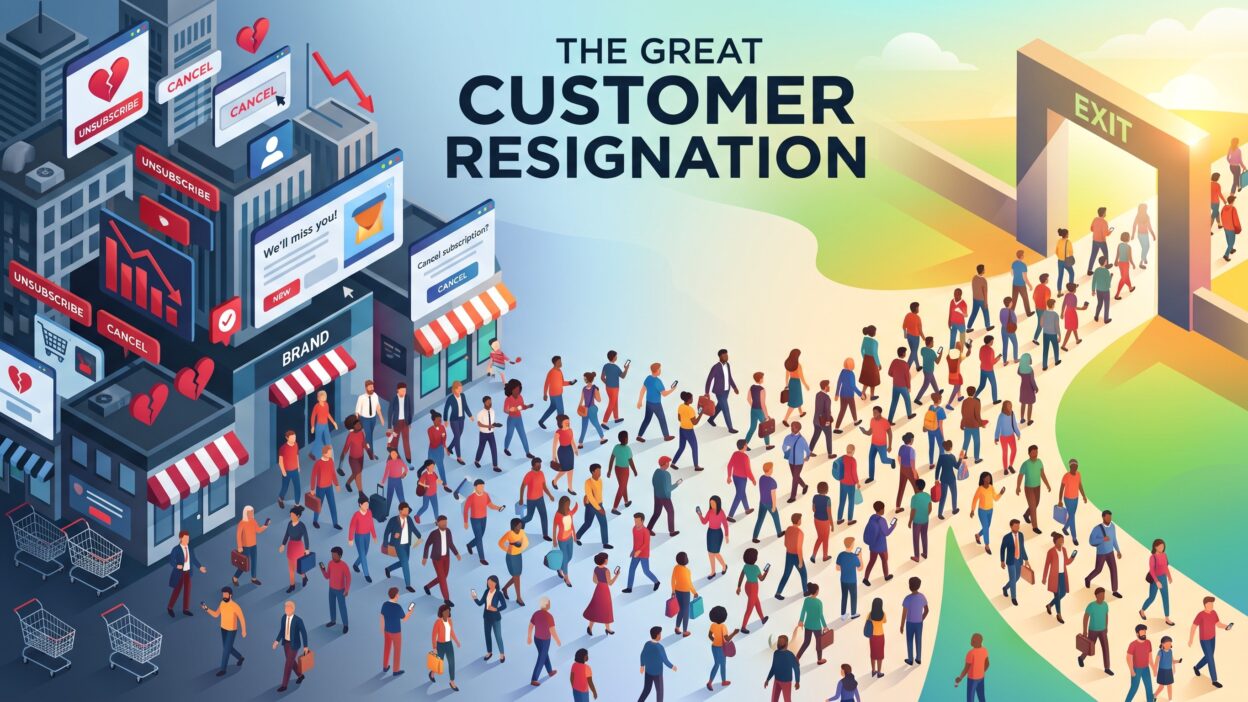
That quiet exit sits at the heart of the Customer Resignation. Shoppers walk away without a fight. Brands often notice months later, after revenue dips and the cause feels impossible to trace.
The label borrows from the workforce. Employees quit in record numbers during the Great Resignation. Customers now do something similar. They cut ties with brands that fail them. They try new options with a few taps. They feel little guilt.
Table of Contents
What Is the Customer Resignation?
The Customer Resignation describes a growing wave of buyers who end relationships with brands they once supported. The trend covers retail, subscriptions, banking, telecom, software, and food. Loyalty no longer feels automatic.
The idea matters because loyal customers drive profit. They buy more often. They spend more per order. They refer friends. A brand that loses them loses far more than one sale.
A lesson from the workforce
The Great Resignation taught leaders a hard truth. People leave when they feel unseen, underpaid, or unhappy. Customers act on the same instincts. They want respect, value, and ease. They go elsewhere when a brand fails on any of them.
The parallel also shows a warning. Many employers ignored early signals during the workforce wave. Many brands now repeat that mistake with customers.
The quiet exit
Most customers do not announce their departure. They stop opening emails. They skip the renewal. They order from a rival once, then twice, then always. No angry message arrives.
A quiet exit hides in the data. Leaders who watch only complaints miss it. Leaders who watch behavior catch it early.
Why Customers Are Walking Away
No single cause explains the trend. Several pressures hit at once. Understanding each one helps you decide where to act.
Money feels tight
Rising costs make shoppers sharper. Qualtrics research across 20,000 consumers in 14 countries found that good value for money ranks as the top factor in purchase choices in 2026. Qualtrics also reports that half of consumers globally feel financial stress, and that stress shapes how they judge brands.
A recent study from SAP Emarsys found that 61 percent of consumers can still be tempted away by a better price. Shoppers who say they love a brand still check the competition.
Bad service pushes people out
Service remains the leading trigger. PwC’s 2025 Customer Experience Survey found that 52 percent of consumers stopped buying from a brand after a bad experience with its products or services. Nearly a third cited poor customer service.
A 2026 consumer service survey of more than 2,000 Americans found that 42 percent had more bad service experiences than in prior years. About 66 percent said they would switch companies over poor service. The trend has worsened for three years in a row in that study.
Broken delivery and returns
Everyday friction drives people away. A late package annoys a shopper. A hard return process angers one. A 2026 report from Seel found that 60 percent of Gen Z shoppers stopped buying from a brand after a negative returns experience.
These moments seem small to a brand. They loom large to a customer.
Endless choice and loud reviews
Customers compare options in seconds. Peer reviews and social posts carry more weight than ads. A single viral complaint can undo years of branding. Retail analysts report that shoppers pay close attention to what fellow shoppers say.
Cold automation
AI chat tools can help. They can also frustrate. PwC found that 58 percent of consumers feel only somewhat comfortable or not comfortable using AI tools to engage with brands. A customer stuck in a loop with a bot may leave for good.
Warning Signs of a Customer Resignation
Brands can spot trouble early. The signs hide in everyday data. Watch for them each week.
Behavior shifts
Look at order frequency. A customer who bought every month and now buys every quarter is drifting. Look at basket size. Smaller carts signal doubt. Look at login frequency for apps and software. Fewer visits mean fading interest.
Engagement drops
Email open rates fall. Loyalty points sit unused. Push notifications go unread. Customers stop opening surveys. Silence can mean disengagement as much as satisfaction.
Service signals
A spike in support tickets about the same issue shows a leak in the experience. A customer who contacted support twice in a week about one problem has a high risk of leaving. A quiet customer after a bad ticket carries risk too.
Price and competitor signals
Watch for cancellation page visits. Watch for pricing page views. Watch for downgrade requests. Customers who research cheaper plans have often started to shop around.
The Loyalty Illusion
Leaders often feel safe because customers say they love the brand. The data tells a more complicated story.
SAP Emarsys research reported by CX Network in January 2026 found that 67 percent of consumers love and trust their favorite brands. The same research found that 61 percent could still leave for a better price, and 48 percent would leave after a poor experience. Affection and loyalty are not the same thing.
EY’s 2026 Loyalty Market Study adds more weight. EY found that churn begins to rise as emotional engagement with loyalty programs softens. Programs look strong on paper while consumers feel less value.
PwC found that 70 percent of executives expect their current loyalty program to become irrelevant within three years. Leaders know the model needs a refresh.
Stated intent versus real behavior
One September 2026 industry briefing noted that fewer consumers now say a single bad experience will make them switch. The writers warned against reading that as good news. Switching fatigue, fewer alternatives, and the effort of changing providers may hold customers in place. Goodwill can still erode quietly until the customer leaves.
The lesson is clear. Survey answers and real behavior often differ. Read both.
The True Cost of Losing Customers
Each lost customer carries a price tag. The cost appears in several places.
Lost revenue over time
A customer worth a small amount per order may be worth thousands over several years. Losing that person erases future purchases. A brand must replace that revenue with new customers who cost money to win.
Rising acquisition costs
Many industry studies suggest that winning a new customer costs several times more than keeping an existing one. The exact ratio varies by sector. The direction holds in nearly every market. Retention pays.
Power customers matter most
A 2026 delivery survey from Bringg found that power shoppers, those who place 11 or more orders per month, make up 15 percent of the consumer base. They account for an estimated 38 percent of orders. Their loyalty has outsized value. Their exit hurts outsized too.
Every Customer Resignation among top accounts deserves a rapid response from leadership.
Word of mouth turns negative
A happy customer refers friends. A frustrated customer warns them. Reviews, posts, and group chats spread the story. One lost customer can cost several more.
Who Leaves First
Some groups show higher risk. Knowing them helps you plan.
Price-sensitive shoppers
These customers watch every dollar. They respond to promotions and switch to rivals with lower prices. Telecom research from Analysys Mason found that price stands as the strongest predictor of churn intention in its survey data.
Younger buyers
Gen Z shoppers show high expectations. Many switch after one bad return or one slow reply. They also like to try resale and new brands. Interest does not equal loyalty for this group.
Customers with unresolved problems
A customer with an open complaint has a much higher chance of leaving. Verint’s 2026 customer experience research reported that 51 percent of consumers say businesses fail to deliver when they need help. The same research found that 80 percent would repurchase and recommend after a great experience. Good service has strong upside.
How to Stop a Customer Resignation
Brands can fight back. The work takes consistent effort across teams. Start with the steps below.
Fix the basics
Most customers want simple things. They want products that work. They want deliveries on time. They want fair returns. They want quick answers. A brand that nails these basics removes the biggest reasons to leave.
Move from reactive to proactive service
Do not wait for complaints. Watch behavior and reach out first. A customer whose package is late should hear from you before they ask. A subscriber who stops using a feature should get a helpful tip. Proactive care builds trust.
Show clear value
Value means more than low price. It means quality, convenience, and respect. Explain what customers get. Share how you save them time or money. Avoid hidden fees and shrinking portions without notice. Several large food chains drew public anger in 2025 after they reduced portion sizes while keeping prices the same.
Personalize with care
Customers want relevant offers. They also worry about privacy. Ask permission. Use data to help and not to creep. Explain what you collect and why.
Refresh loyalty programs
Old points programs bore people. Offer rewards that feel real. Offer early access, free shipping, or members-only service. Let customers redeem points easily. Test the program from the customer side.
Keep humans in the loop
Use AI to speed up routine tasks. Give customers an easy path to a person. Make that path visible. Agents who can see the whole history solve problems faster.
Build a win-back plan
Some customers will leave anyway. Reach out with a sincere message. Ask what went wrong. Fix the issue if you can. Offer a fair incentive. Many former customers return when a brand shows it listened.
Using Data to Predict and Prevent Churn
Good intentions need good information. Data helps you act before a customer leaves.
Build a churn score
Combine signals into a simple score. Include order frequency, support contacts, product usage, and engagement. Review the score weekly. Flag high-risk accounts for outreach.
Listen across channels
Customers speak in reviews, social posts, call transcripts, and surveys. Collect all of it. Look for patterns. A rise in complaints about one product points to a fix.
Beware survey fatigue
Qualtrics notes that survey fatigue leaves businesses guessing about churn. Customers ignore long surveys. Keep questions short. Ask at the right moment. Pair survey data with real behavior.
Measure the right numbers
Track churn rate, repeat purchase rate, net revenue retention, and customer lifetime value. Track the Customer Resignation rate among your top spenders as its own metric. Review the numbers monthly with leaders from sales, service, and product.
Industry Snapshots
The trend looks different in each sector. Each has its own triggers.
Retail and e-commerce
Shipping speed and returns drive loyalty. Shoppers expect clear tracking and easy refunds. Brands that make returns painless win repeat orders.
Subscriptions and software
Customers cancel when they stop seeing value. Onboarding matters. Teams should help new users reach a first win fast and keep showing results after that.
Telecom and utilities
Price and reliability dominate. Customers compare plans often. Rewarding long-term members with perks lowers churn.
Food and hospitality
Portion size, price, and service consistency matter. One bad visit can end a habit. Staff training and consistent quality protect loyalty.
Mistakes That Speed Up Customer Loss
Well-meaning brands still slip. Avoid these errors.
Trusting satisfaction scores alone
Happy scores do not prove loyalty. Check what customers do. Compare scores with repeat purchases.
Hiding the cancel button
A hard cancellation process breeds resentment. Customers who feel trapped leave angry and tell others. Make cancellation simple and offer a pause or a downgrade.
Ignoring small complaints
Small complaints expose larger leaks. A pattern of minor issues signals a real problem. Fix them quickly.
Discounting without a plan
Constant deals teach customers to wait for sales. Discounts should reward loyalty and not replace value.
Frequently Asked Questions
What is the Customer Resignation?
It describes a growing trend of customers who quietly end relationships with brands. They stop buying, cancel subscriptions, or switch to competitors after poor experiences, price pressure, or lost trust.
Why is the Customer Resignation happening now?
Rising costs, endless options, weak service, and easy switching combine to loosen loyalty. Consumers also trust peer reviews more than ads. One bad experience can end a long relationship.
How common is brand switching?
Surveys differ. PwC’s 2025 study found that 52 percent of consumers stopped buying from a brand after a bad experience. SAP Emarsys found 48 percent would leave after a poor experience. Rates vary by industry.
Do loyalty programs still work?
They can. Programs must offer real value. EY’s 2026 study suggests that emotional engagement with loyalty programs has softened. Brands should refresh rewards and make them simple to use.
How do I know a customer may leave?
Watch behavior. Fewer orders, lower logins, unopened emails, repeated support tickets, and visits to cancellation pages all signal risk.
How can small businesses respond?
Talk to customers directly. Fix service problems fast. Keep prices fair. Follow up after each purchase. Small teams often build stronger personal bonds than large brands.
Can lost customers return?
Yes. Many return after a sincere apology, a fix, and a fair offer. Ask what went wrong and listen.
What metrics should I track?
Track churn rate, repeat purchase rate, customer lifetime value, net revenue retention, and support ticket trends. Review them monthly.
Read More:-How AI Can Aid Your Prospecting?
Conclusion

Customers hold more power than ever. They compare, review, and switch with ease. Love for a brand does not guarantee loyalty. The numbers show a gap between how people feel and how they act.
The Customer Resignation will not fade by itself. Costs stay high. Choice stays wide. Patience stays thin. Brands that ignore the signals will lose their best buyers without warning.
The path forward is clear. Fix the basics. Serve proactively. Show real value. Respect privacy. Keep humans available. Build a win-back plan. Track behavior and not only survey scores.