Introduction
TL;DR ActiveCampaign features cover email marketing, automation, CRM, and reporting under one platform. Small businesses and growing teams use it to run entire customer journeys without juggling five separate tools. This guide breaks down every major ActiveCampaign feature so you know exactly what you get before you sign up.
You will learn how the email builder works, how the automation engine handles complex logic, and how the built-in CRM helps sales teams close deals. You will also learn about lead scoring, ecommerce tools, and reporting. By the end, you will know which ActiveCampaign features actually matter for your business.
Table of Contents
What Is ActiveCampaign
ActiveCampaign is a marketing automation and CRM platform built for businesses that want email, sales, and customer data in one place. The company started in 2003 and has grown into one of the most feature-dense platforms in the automation space. ActiveCampaign features span far beyond basic email sending, which sets it apart from simpler tools like Mailchimp.
The platform sits in a specific spot in the market. It offers more depth than a basic email service provider. It costs less than enterprise platforms like HubSpot or Salesforce. This middle position makes ActiveCampaign features attractive to businesses that outgrew simple newsletter tools but don’t need a massive enterprise system yet.
Core ActiveCampaign Features Overview
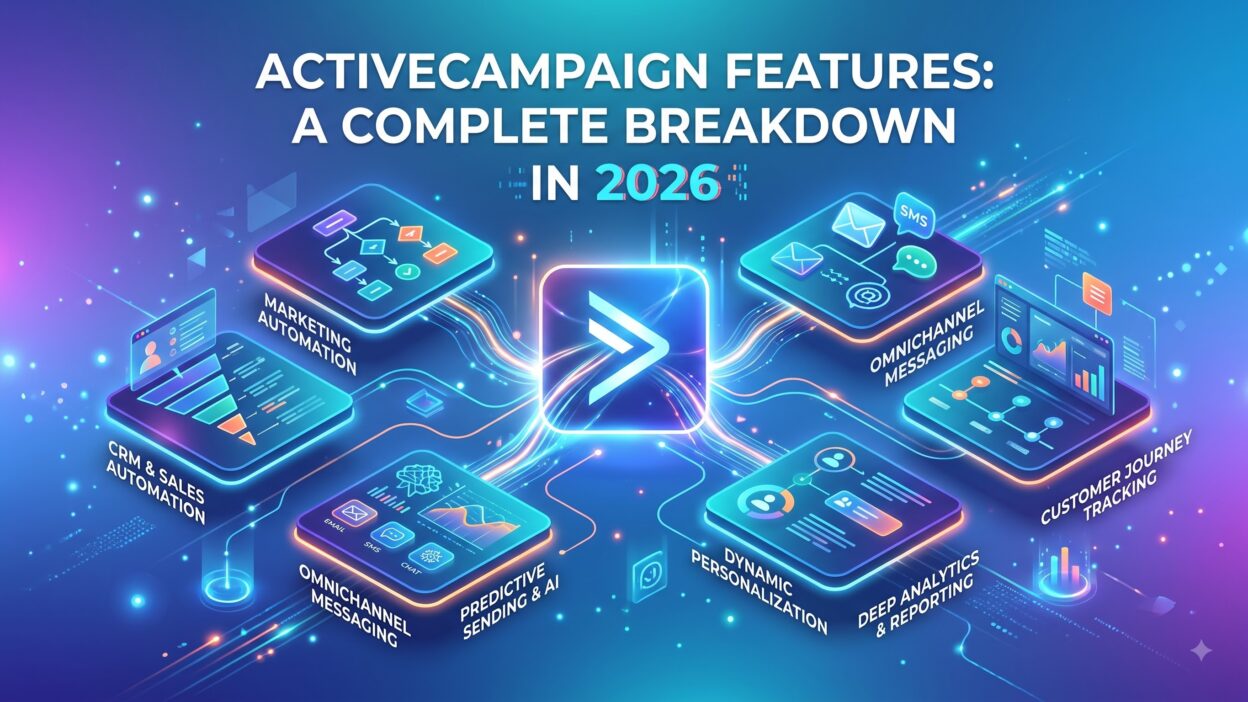
ActiveCampaign features break down into four main categories. Email marketing handles campaign creation and design. Automation manages the logic behind customer journeys. CRM tracks deals and sales pipeline activity. Reporting shows what’s actually working across every channel.
Each category connects to the others directly. A contact who clicks a link in an email can trigger an automation. That automation can update a CRM deal stage automatically. This connected structure is what makes ActiveCampaign features feel less like separate tools bolted together and more like one coordinated system.
Email Marketing Features in ActiveCampaign
Email sits at the center of most ActiveCampaign features, even when the end goal involves sales or automation.
Drag-and-Drop Email Builder
ActiveCampaign gives you a visual editor with over two hundred professional templates to start from. You drag blocks into place, adjust layouts, and preview how each email looks across devices. The editor handles conditional content too, which means a single email can show different blocks to different subscribers based on their data.
Personalization and Dynamic Content
Personalization is where ActiveCampaign features genuinely stand out compared to simpler platforms. You can insert dynamic fields, show or hide sections based on subscriber behavior, and tailor messaging without building five separate email versions. This level of personalization used to require enterprise-level tools, but ActiveCampaign brings it to smaller teams.
A/B Testing and Send Time Optimization
Testing subject lines and content variations happens directly inside the platform. ActiveCampaign features also include predictive send time optimization, which learns when each subscriber tends to open emails and schedules delivery around that pattern. This small detail often improves open rates without any extra manual work.
Marketing Automation Features in ActiveCampaign
Automation is the feature ActiveCampaign built its entire reputation around. Everything else in the platform connects back to this engine.
Visual Automation Builder
The automation builder uses a drag-and-drop canvas where you set triggers, conditions, and actions. A trigger might be a form submission or a tag added to a contact. A condition checks something specific, like whether a contact opened a previous email. An action then sends a message, updates a field, or moves a deal forward. ActiveCampaign features over nine hundred pre-built automation templates, which gives new users a fast starting point instead of building everything from scratch.
Branching Logic for Complex Journeys
Simple automation tools only handle straight-line sequences. ActiveCampaign features branching logic that splits contacts into different paths based on their behavior. A contact who clicks a pricing link goes down one path. A contact who ignores three emails in a row goes down another. This flexibility handles customer journeys that would break simpler platforms completely.
AI-Assisted Automation Building
Newer ActiveCampaign features include AI assistance inside the automation builder itself. The system suggests next steps based on common patterns, which speeds up setup for teams that don’t want to design every workflow manually from a blank canvas.
CRM and Sales Features in ActiveCampaign
Beyond marketing, ActiveCampaign features extend into full sales pipeline management, which many competitors handle through a separate paid product entirely.
Deal and Pipeline Tracking
The built-in CRM tracks deals through customizable pipeline stages. Sales reps see exactly where each prospect sits in the process without leaving the platform. Deal records connect directly to the contact’s full marketing history, so reps see every email and automation touchpoint before a call.
Lead Scoring
Lead scoring ranks contacts based on engagement, like email opens, link clicks, and website visits. ActiveCampaign features let you set custom scoring rules that match your specific sales process. Reps focus on high-scoring leads first instead of spreading effort evenly across a full contact list.
Task Automation for Sales Reps
Manual follow-up tasks eat up a rep’s day. ActiveCampaign features automate reminder creation, so a rep gets a task the moment a lead hits a certain engagement threshold. This keeps hot leads from slipping through the cracks during busy weeks.
Site and Event Tracking Features
ActiveCampaign features include tracking scripts that monitor what contacts do on your website after they receive an email. This data feeds directly into automation triggers and lead scoring rules.
A contact who visits your pricing page three times in one week signals real buying intent. ActiveCampaign features let you build an automation around exactly this kind of behavior, sending a targeted follow-up or alerting a sales rep automatically. This behavioral data turns generic email marketing into something far closer to real-time sales intelligence.
Ecommerce Features in ActiveCampaign
Online stores get their own set of ActiveCampaign features built specifically around purchase behavior. The platform connects to major ecommerce tools like Shopify and pulls order data directly into contact records.
Abandoned cart automation sends a reminder when a shopper leaves items unpurchased. Post-purchase sequences follow up after an order ships, encouraging reviews or repeat purchases. Product recommendation blocks inside emails pull from actual purchase history, making upsell emails feel relevant instead of generic. These ActiveCampaign features help ecommerce brands recover lost revenue without hiring extra staff to manage follow-up manually.
SMS and Multi-Channel Features
Email isn’t the only channel ActiveCampaign features cover anymore. SMS and WhatsApp messaging come available through add-ons, letting you reach contacts on channels they check more often than their inbox.
Multi-channel sequences combine email, SMS, and task-based outreach steps like calls or social touchpoints inside one automation. A contact who doesn’t open an email might still respond to a text message a day later. ActiveCampaign features this kind of cross-channel flexibility to help messages reach people wherever they actually pay attention.
Reporting and Analytics Features
Every campaign and automation needs a way to measure results, and ActiveCampaign features cover this with built-in reporting dashboards. You see open rates, click rates, and automation performance without exporting data into a separate tool.
Revenue attribution reporting connects specific campaigns to actual sales outcomes, which matters most for teams that need to justify marketing spend. Reporting here handles most day-to-day needs well, though teams running deep statistical analysis sometimes pair ActiveCampaign features with a dedicated analytics platform for extra depth.
Integration Features in ActiveCampaign
ActiveCampaign features connect to over a thousand external tools, covering everything from payment processors to advertising platforms. Native integrations exist for tools like Shopify, Salesforce, and Google Ads. Zapier support fills in the gaps for tools without a direct native connection.
This wide integration library means ActiveCampaign features rarely operate in isolation. Your existing tech stack likely connects without much custom development work, which shortens onboarding time significantly for most new accounts.
ActiveCampaign Features by Pricing Tier
ActiveCampaign offers four pricing tiers: Starter, Plus, Pro, and Enterprise. Each tier unlocks a different depth of ActiveCampaign features, and picking the wrong tier often means missing tools your team actually needs.
The Starter tier covers basic email marketing but restricts access to advanced automation, landing pages, and CRM pipelines. Most serious users end up on the Plus tier or higher to unlock the full feature set. Higher tiers add deeper personalization, more automation complexity, and expanded CRM functionality. Enterprise adds the highest send limits and priority support for larger teams running complex operations.
There’s no permanent free plan, though a fourteen-day free trial lets you test ActiveCampaign features before committing to a paid tier.
Who Benefits Most From ActiveCampaign Features
Growing businesses that outgrew basic email tools get the most value from ActiveCampaign features. Teams that need marketing and sales data in one connected system benefit especially, since separate tools rarely sync this cleanly on their own.
Ecommerce brands benefit from the purchase-based automation tools built directly into the platform. Agencies managing multiple client accounts benefit from the depth of segmentation and automation logic available at higher tiers. Businesses that only need simple newsletter sending might find the full feature set more than they actually require.
FAQs About ActiveCampaign Features
What are the most important ActiveCampaign features for small businesses?
Email automation, lead scoring, and the built-in CRM matter most for small businesses. These ActiveCampaign features replace several separate tools with one connected system.
Does ActiveCampaign include a CRM for free?
CRM functionality comes bundled starting at the Plus tier and above. The Starter tier restricts access to full CRM pipeline features.
Can I use ActiveCampaign features without any coding experience?
Yes, the automation builder and email editor both use drag-and-drop interfaces. No coding knowledge is required for most standard ActiveCampaign features.
How many automation templates does ActiveCampaign offer?
ActiveCampaign features over nine hundred pre-built automation templates, covering common use cases like welcome sequences, abandoned cart recovery, and lead nurturing.
Does ActiveCampaign support SMS marketing?
Yes, SMS and WhatsApp messaging come available through add-ons. These channels combine with email inside the same automation workflows.
What ecommerce platforms connect with ActiveCampaign?
ActiveCampaign features native integration with Shopify and connects to many other ecommerce platforms through its broader integration library and Zapier support.
Is ActiveCampaign good for lead scoring?
Yes, lead scoring is one of the stronger ActiveCampaign features for sales-focused teams. You can build custom scoring rules based on the exact behaviors that matter most to your business.
Read More:-Your CRM Data: Not Ready for AI Primetime
Conclusion

ActiveCampaign features cover far more ground than a typical email marketing tool. Automation sits at the core, connecting email, CRM, ecommerce, and SMS into one system that runs without constant manual effort. This guide walked through every major feature area, from the email builder to lead scoring to multi-channel messaging.
Pick a pricing tier that matches the depth of automation and CRM functionality your team actually needs. Test the platform during the free trial before committing to a paid plan. The right combination of ActiveCampaign features can replace several separate tools and give your team one connected view of every customer relationship.