Introduction
TL;DR CRM DataEvery sales leader wants AI to work like magic. They plug in a tool and expect instant insight. Reality looks different. Your CRM data usually holds the real problem. Messy records, missing fields, and old contacts quietly break every AI project before it starts. This guide walks through why your CRM data fails AI systems and how to fix it properly.
Table of Contents
Why CRM Data Quality Matters More Than Ever
AI tools promise faster deals and sharper forecasts. Those promises depend on one thing. Clean CRM data. Without it, even the smartest model produces weak results.
Companies rushed to add AI features this year. Few companies checked their CRM data first. This gap explains why so many AI rollouts disappoint teams within months.
The AI Boom and Its Data Demands
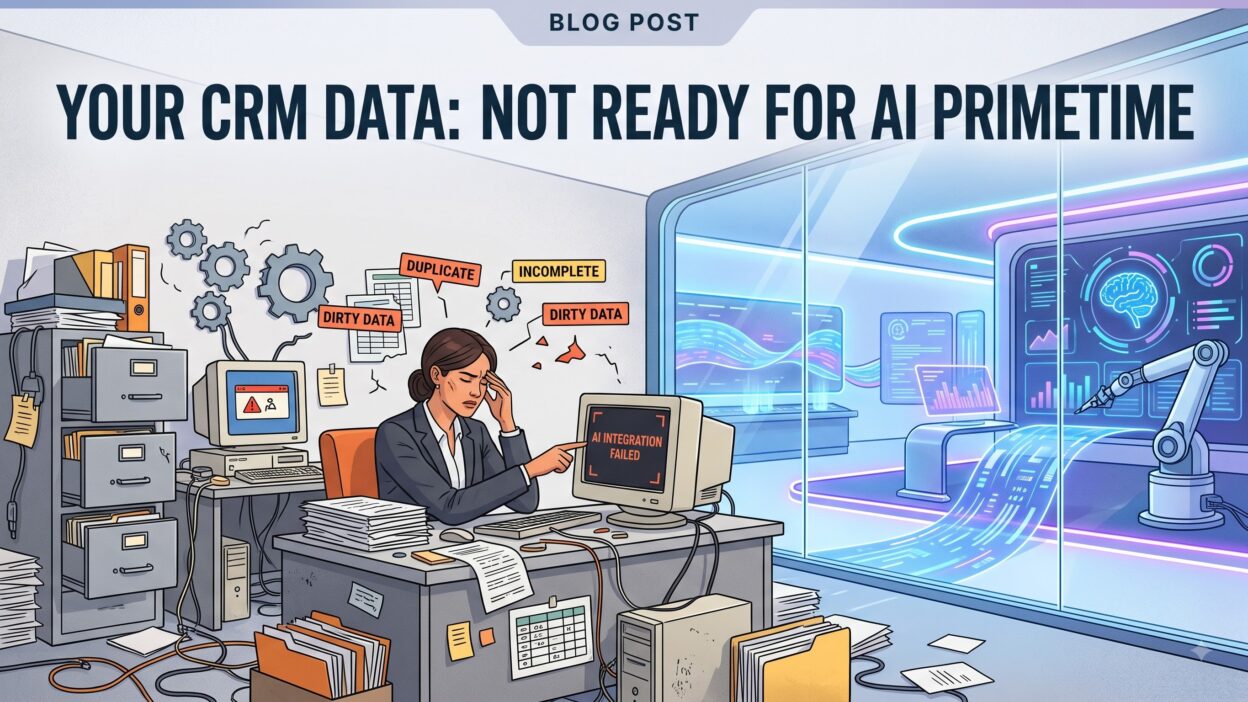
AI models need volume and structure to work well. A model trained on scattered CRM data learns the wrong patterns. It flags bad leads as strong ones. It misses real opportunities buried in messy fields.
Sales teams often blame the AI tool for poor results. The real issue sits one layer deeper. Raw CRM data was never ready for this level of analysis.
What “AI-Ready” Really Means
AI-ready data follows consistent formats across every record. Fields stay complete instead of blank. Duplicate entries get merged instead of ignored. This standard sounds simple, but few companies meet it.
Reaching this standard takes real effort. It also protects every future AI investment your team makes. Clean CRM data becomes the foundation everything else builds on.
Common Problems Hiding in Your CRM Data
Most sales teams underestimate how messy their records really are. A quick audit usually reveals serious gaps within minutes.
Duplicate Records and Dead Contacts
Reps create duplicate entries during busy weeks. Old contacts sit untouched for years. Former employees still appear as active leads. This clutter confuses any AI model trying to score real opportunities.
Duplicate CRM data also skews reporting numbers. Pipeline totals look inflated. Win rates look distorted. Leadership makes decisions based on numbers that were never accurate.
Missing or Inconsistent Fields
Some reps fill in every field carefully. Others skip fields to save time. This inconsistency creates massive gaps across the database. One deal might list a budget range. Another deal leaves that field blank entirely.
AI models struggle with these gaps. They either ignore incomplete records or make poor assumptions about them. Either outcome weakens the accuracy of every prediction the tool makes.
How Bad CRM Data Breaks AI Models
This is the section every sales leader needs to understand. Bad inputs create bad outputs, no matter how advanced the AI tool claims to be.
Garbage In, Garbage Out
This old data phrase still applies perfectly today. An AI model trained on messy CRM data repeats those same mistakes at scale. It might recommend the wrong follow-up timing. It might rank a dead lead above a real buyer.
Teams often trust these predictions without question. That trust becomes dangerous once the underlying CRM data is flawed. Bad recommendations start driving real sales decisions across the team.
Bias From Incomplete Records
Incomplete records create hidden bias inside AI predictions. A model trained mostly on enterprise deals might undervalue small business leads. A model missing regional data might ignore strong markets completely.
This bias grows quietly over time. Nobody notices until quarterly numbers come in lower than expected. Fixing the root CRM data issue matters more than adjusting the AI model itself.
Step-by-Step: Auditing Your CRM Data
A proper audit reveals exactly where problems live. This process takes time, but it saves far more time later.
Running a Data Quality Check
Start by pulling a full export of your CRM data. Review field completion rates across every record type. Check for obvious duplicates using name and email matches.
This first pass usually surprises teams. Completion rates often sit far below expectations. Seeing the real numbers creates urgency for the cleanup work ahead.
Identifying Gaps and Errors
Look closely at required fields like deal stage, budget, and contact role. Flag records missing critical information. Separate active leads from contacts that went cold years ago.
This step turns a vague sense of “our data is messy” into a clear action list. Teams know exactly which records need attention first.
Cleaning and Structuring CRM Data for AI
Cleanup work feels tedious, but it pays off quickly once AI tools start using accurate CRM data.
Standardizing Fields and Formats
Every field needs a consistent format across the entire database. Phone numbers should follow one pattern. Company names should avoid random abbreviations. Date fields should use the same structure everywhere.
This standardization sounds small, but it changes everything for AI processing. A model reads standardized CRM data far more accurately than mixed formats scattered across years of entries.
Enriching Records With Missing Details
Some gaps need outside data to fill properly. Third-party enrichment tools add missing company size, industry, and location details. This extra context helps AI models understand each lead more completely.
Enriched CRM data gives every prediction more depth. A model finally sees the full picture instead of guessing from partial information.
Building a Long-Term CRM Data Governance Plan
Cleaning your CRM data once is not enough. Without a governance plan, the same mess returns within months.
Assigning Data Ownership
Someone needs to own CRM data quality full time. This role reviews new entries, catches errors early, and enforces formatting rules. Without clear ownership, responsibility falls through the cracks.
Many companies assign this role to sales operations. Others build a small data team around it. Either approach works as long as ownership stays clear.
Setting Update Rules for Sales Teams
Reps need simple rules for entering new records. Required fields should stay mandatory before a deal moves forward. Duplicate checks should run automatically during entry.
These rules keep CRM data clean going forward. They prevent the same problems from rebuilding after a big cleanup project.
Signs Your CRM Data Is Finally AI-Ready
Field completion rates should sit above ninety percent across core fields. Duplicate records should drop close to zero. Every active contact should show a clear, current status.
Reports should match reality instead of inflated guesses. Sales reps should trust the numbers without double-checking manually. These signs show your CRM data can finally support serious AI work.
Frequently Asked Questions
Why does CRM data quality affect AI performance so much? AI models learn directly from the data they receive. Poor CRM data creates poor predictions, no matter how advanced the tool claims to be.
How often should teams audit their CRM data? Most teams benefit from a quarterly review. High-growth teams often need monthly checks instead.
Can AI tools fix messy CRM data automatically? Some tools help flag duplicates and missing fields. Full cleanup still needs human review and clear governance rules.
What is the fastest way to improve CRM data quality? Start with duplicate removal and required field enforcement. These two steps create the biggest improvement in the shortest time.
Does CRM data cleanup really impact revenue? Yes. Clean data leads to accurate forecasting and better lead scoring. Both outcomes directly support stronger sales performance.
Who should own CRM data quality inside a company? Sales operations teams often take this role. Some companies build a dedicated data quality function instead.
Read More:-7 Best Breadcrumbs Alternatives for Smarter Lead Scoring and Routing
Conclusion

AI tools only perform as well as the data behind them. Your CRM data holds every clue about real buyers, real timelines, and real opportunities. Messy records hide these clues instead of revealing them.
A proper audit uncovers the true state of your CRM data quickly. Cleanup work fixes duplicates, gaps, and inconsistent formats. Governance rules keep the database clean long after the initial project ends.
Teams that invest in this work see real payoff. AI predictions become sharper. Forecasts become trustworthy. Sales reps finally work from accurate information instead of guesswork. Getting your CRM data ready is not optional anymore. It is the real starting point before any AI tool can deliver on its promise.