
Introduction
TL;DR Revenue teams move fast. Reps change tools every quarter. Managers change playbooks every month. New hires need answers on day one. A good enablement tool gives those answers inside the apps reps already use.
Spekit built its name on that idea. It puts short lessons and tips right inside Salesforce and other apps. Many teams love it. Some teams outgrow it. Others want deeper training, stronger analytics, or a different price.
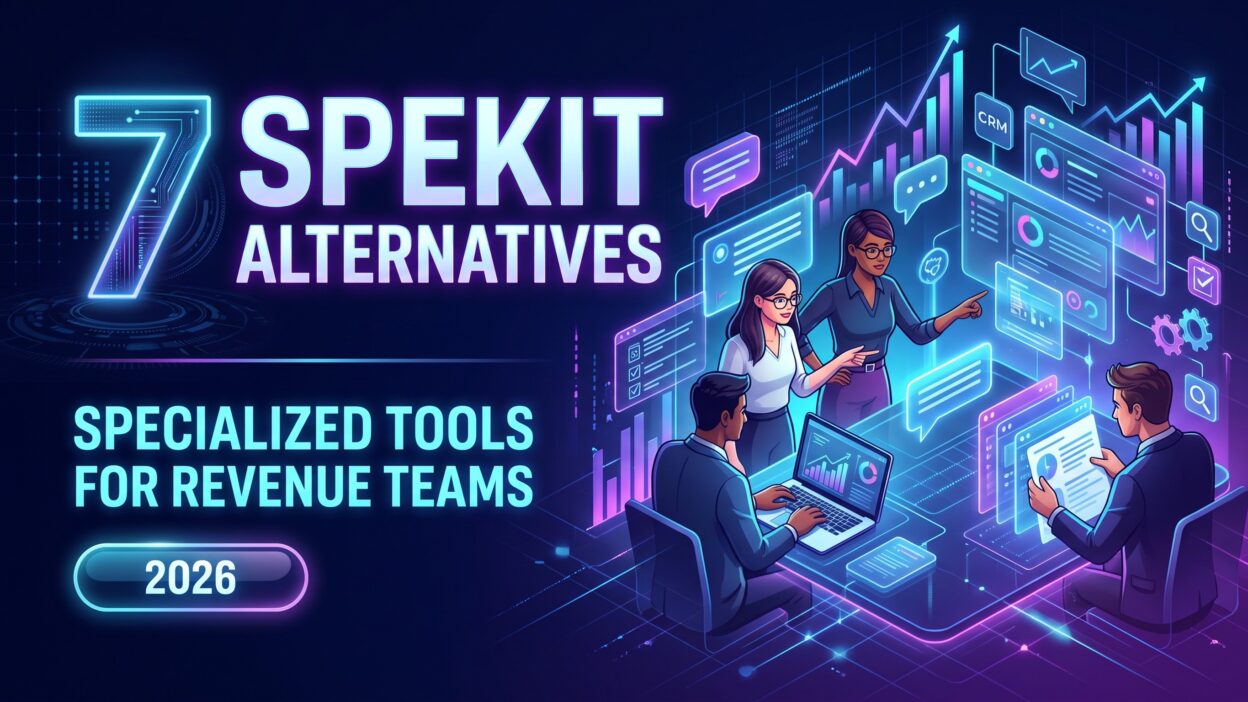
This guide covers seven Spekit alternatives built for revenue teams. You will learn what each tool does well. You will see where each one fits. You will also get a clear way to compare them.
Think of this as a map. Sales leaders can use it to shortlist tools. Enablement managers can use it to build a business case. RevOps teams can use it to plan a smooth rollout.
Table of Contents
What Is Spekit and Who Uses It?
Spekit is a sales enablement and digital adoption tool. It delivers training and help content inside the apps your team uses every day. A rep stays in Salesforce, HubSpot, or another system. A small panel or hover tip shows the answer. No one needs to open a wiki or hunt through a shared drive.
How Spekit Works
Admins create short lessons called Speks. Each Spek can hold text, images, video, or links. Admins attach a Spek to a field, a button, or a page. A rep who hovers over a field sees the Spek instantly.
Spekit also offers learning paths and quizzes. New hires follow a guided path. Managers track who finished each lesson. A browser extension and native app integrations carry the content across many tools.
Who Gets the Most Value
Mid-sized sales and customer success teams use Spekit most. These teams run heavy CRM workflows. They need reps to enter clean data. They need fast onboarding for new hires.
Revenue operations leaders like the tool too. A clear tip next to a confusing field cuts data errors. Fewer errors mean better forecasts.
Where Spekit Can Feel Limited
Every tool has gaps. Some teams want advanced content management for decks and one-pagers. Some want full coaching and call review. Some want step-by-step walkthroughs across hundreds of apps. Some want enterprise-level controls. Those needs push teams to look at other tools.
Why Teams Search for Spekit Alternatives
Most teams do not leave a tool by accident. A clear gap pushes them out. Understanding that gap helps you choose better.
Feature Depth
Spekit focuses on in-app learning. That focus is a strength. Teams that need more breadth sometimes feel stuck. They want sales content management, coaching, and readiness scoring in one place. They want guided tours with branching logic. They want advanced analytics on every click.
Scale and Complexity
Growing companies add tools fast. A team that starts with Salesforce soon adds a billing system, a support desk, and a conversation tool. Each system needs its own guidance. Larger companies need roles, regions, and approval workflows. Some teams find that need easier to meet with a larger platform.
Budget and Value
Price drives many searches. Leaders compare cost per seat against measurable results. A tool that costs less but misses a key feature costs more in the long run. A tool that bundles three jobs can replace two other contracts. Teams run this math before every renewal.
Strategy Shifts
Priorities change. A company that wanted onboarding help last year may want coaching help this year. A company that focused on CRM hygiene may now focus on deal execution. The old tool still works. The new goal needs a different tool.
What Buyers Really Want
Buyers who search for Spekit alternatives usually want one of three things. Some want a broader platform. Some want a lighter, cheaper tool. Some want a specialist in one area such as coaching or content. Name your need before you shop. It keeps demos short and decisions clean.
How to Evaluate Spekit Alternatives
A good scorecard saves weeks. Set your criteria before you book a single demo.
Match the Tool to the Job
Start with the problem. Do reps struggle with the CRM? Pick a tool built for in-app guidance. Do reps struggle to find the right deck? Pick a content platform. Do reps struggle on live calls? Pick a coaching tool. Many teams buy a big platform and use one feature. Avoid that trap.
Check Integrations
Your stack decides your shortlist. Confirm native links to Salesforce, HubSpot, Outreach, Salesloft, Gong, Slack, and Microsoft Teams. Ask how deep each link goes. A shallow link only shares a login. A deep link syncs data and triggers actions.
Review Authoring Speed
Content only helps if someone writes it. Test how fast an admin can build a lesson. Count the clicks. Watch for tools that need a developer or a consultant for every change. Enablement teams are small. Fast authoring keeps content fresh.
Look at Analytics
Good tools show what reps do, not just what they read. Look for completion rates, search trends, and usage by role. The best tools tie training to revenue results such as win rate and ramp time.
Think About Support and Rollout
Ask about onboarding help. Ask about a customer success manager. Ask how long a typical launch takes. A great tool with a slow rollout loses momentum.
Weigh Total Cost
Add license fees, setup costs, admin time, and training time. Ask about price increases at renewal. Spekit alternatives vary widely on this point. Get quotes in writing before you decide.
Alternative 1: Whatfix
Whatfix is a well-known digital adoption platform. It guides users inside web apps, desktop apps, and mobile apps. Large companies use it across many systems at once.
What Whatfix Does Well
Whatfix builds interactive walkthroughs. A rep clicks a button and the tool shows each step on the screen. Pop-ups, beacons, and task lists add more help. A self-help widget lets reps search for answers without leaving the page.
Analytics stand out. Admins see where users stall. They see which steps cause errors. They can fix a workflow based on real behavior.
Where Whatfix Fits
Whatfix suits companies with many apps. A team that runs Salesforce, SAP, Workday, and a support tool can use one platform for all of them. IT and RevOps teams like that reach.
Watch Outs
The platform is broad. Broad tools take longer to set up. Smaller teams may find the interface heavy. Pricing often reflects the enterprise focus. Ask for a pilot before you sign a long contract.
Best For
Whatfix works best for mid-market and enterprise teams. These teams want guidance across many systems. They have a dedicated owner who can build and maintain flows. Teams that want a light tool for one CRM may find it too much.
Alternative 2: WalkMe
WalkMe is one of the original digital adoption platforms. SAP bought the company in 2024. Large enterprises use it to guide employees across complex software.
What WalkMe Does Well
WalkMe shows users how to finish a task step by step. It can automate parts of a process. It can validate data as a user types. It can show a message that blocks a bad entry. These controls help teams that need clean data.
The platform offers deep analytics and strong governance. Large companies value roles, permissions, and audit controls. Security teams like those details.
Where WalkMe Fits
WalkMe fits large organizations with big software rollouts. A company moving to a new CRM can use it to guide thousands of users. An enterprise running several systems can keep one consistent layer on top.
Watch Outs
Power brings complexity. Teams often need trained admins or partners. Setup takes time. Smaller revenue teams may not need that much control. Ask how SAP’s ownership affects the roadmap and support for non-SAP tools.
Best For
WalkMe works best for enterprises. Companies with thousands of users and strict governance get the most from it. A lean sales team with a simple stack will likely prefer a lighter option.
Alternative 3: Highspot
Highspot is a sales enablement platform. Its core strength is content. Reps find the right asset at the right time. Managers see what content helps win deals.
What Highspot Does Well
Highspot organizes decks, case studies, and battlecards in one searchable home. Reps find content inside the CRM, email, and Slack. Plays bundle content, talk tracks, and steps for a specific sales moment. A rep opening a new deal sees the play built for that stage.
Training and coaching tools sit alongside content. AI features suggest content and summarize material. Analytics show which assets prospects open and which ones help close.
Where Highspot Fits
Highspot fits teams drowning in content. A company with many products, regions, or personas needs a strong content system. Marketing teams like the control. Reps like the speed.
Watch Outs
Highspot is not a pure in-app guidance tool. It does not walk reps through CRM fields in the same way Spekit does. Some teams pair it with a lighter guidance tool. Cost reflects the full platform.
Best For
Highspot works best for mid-market and enterprise sales teams. These teams care about content performance and seller productivity. They have marketing and enablement staff to manage the library.
Alternative 4: Seismic
Seismic is another major sales enablement platform. It focuses on content, personalization, and enablement at scale. Large brands in finance, tech, and life sciences use it often.
What Seismic Does Well
Seismic automates content creation. A rep can generate a branded presentation or proposal with a few clicks. The tool pulls data from the CRM. It applies brand and compliance rules automatically. Marketing keeps control without slowing sellers down.
The platform also includes training, coaching, and analytics. Teams can connect content use to pipeline and revenue. Strong governance features help regulated industries.
Where Seismic Fits
Seismic fits large, global teams. Compliance matters in those teams. Brand consistency matters too. A bank or insurer needs every slide approved. Seismic handles that need well.
Watch Outs
The platform is large. Implementation can take months. Admin skills matter. Smaller teams may not use most of the features. Compare the cost against the value you will really use.
Best For
Seismic works best for enterprises with heavy content and compliance needs. A team of twenty reps with a simple library will likely find it more than enough. Pick it when scale and governance drive your decision.
Alternative 5: Mindtickle
Mindtickle focuses on sales readiness. It helps teams train, practice, and prove skills. Managers see who is ready to sell and who needs help.
What Mindtickle Does Well
Mindtickle offers courses, quizzes, and role-play practice. Reps record a pitch and get feedback. Managers score the pitch against a rubric. Readiness scores show gaps by person, team, and skill.
Coaching tools help managers give clear feedback. Conversation intelligence features review real calls. Leaders can link readiness scores to quota results. That link shows whether training works.
Where Mindtickle Fits
Mindtickle fits teams with heavy onboarding needs. A company that hires dozens of reps each quarter needs a strong ramp program. A company that launches new products often needs fast, measurable training.
Watch Outs
Mindtickle centers on learning, not in-app guidance. Reps do not get the same hover tips inside the CRM. Teams that want both often pair it with a guidance tool. Content setup takes planning.
Best For
Mindtickle works best for teams that treat readiness as a core metric. Enablement leaders who report on ramp time and skill growth will like it. Teams that only want quick CRM tips will not need it.
Alternative 6: Guidde
Guidde is a simpler tool. It uses AI to turn clicks into video guides. Teams build how-to content in minutes.
What Guidde Does Well
A user installs a browser extension. They click through a task. Guidde records the steps. The tool adds voiceover, captions, and a written summary. The result is a clean video with step-by-step text.
Teams share guides through links, wikis, or embedded widgets. Updates take minutes. A change in the CRM does not mean a full re-recording. Authors fix one step and republish.
Where Guidde Fits
Guidde fits small and mid-sized teams with limited time. A one-person enablement team can build a full library in a week. Customer success and support teams use it too. It fits budgets that cannot support a large platform.
Watch Outs
Guidde is not a full sales enablement suite. It has lighter coaching, content management, and readiness tools. Analytics are simpler. Teams with complex training programs will want more.
Best For
Guidde works best for lean teams that want fast video documentation. Pick it if speed and simplicity matter most. A growing team can start here and add a larger platform later.
Alternative 7: Pendo
Pendo started as a product analytics tool. It now offers in-app guides, surveys, and feedback tools. Product teams use it to understand users and guide them.
What Pendo Does Well
Pendo tracks how people use software. Teams see which features get used and which ones get ignored. In-app guides then nudge users toward the right actions. Tooltips, banners, and walkthroughs show up on the page.
Analytics are a real strength. Teams can segment users, build funnels, and measure adoption over time. Pendo also supports feedback collection and roadmaps.
Where Pendo Fits
Pendo fits software companies that want to guide customers inside their own product. Some internal teams use it to guide employees in web apps. Revenue teams that also own product adoption can use it for both jobs.
Watch Outs
Pendo leans toward product teams more than sales enablement teams. It lacks sales content management and coaching. A sales leader who wants rep training may find the fit loose. Compare it with tools built for revenue roles.
Best For
Pendo works best for companies that sell software and care about customer adoption. Product-led growth teams get strong value. Pure sales enablement teams will likely choose a different tool from this list.
Spekit Alternatives Compared at a Glance
Seven tools can feel like a blur. A simple grouping helps. This section sorts the Spekit alternatives by the job they do best.
In-App Guidance Leaders
Whatfix and WalkMe lead this group. They guide users step by step across many apps. They suit larger companies with complex stacks. Pendo also guides users in-app. It leans toward product adoption.
Sales Content and Enablement Platforms
Highspot and Seismic lead the content group. They organize assets, build plays, and track content results. They also include training and coaching. They suit teams with large libraries and larger budgets.
Readiness and Coaching Specialists
Mindtickle owns this lane. It builds skills, scores readiness, and supports coaching. It suits teams with heavy hiring and clear skill targets.
Lightweight Documentation
Guidde sits alone in this lane. It builds quick video guides at low effort. It suits small teams that need speed.
Quick Rule of Thumb
Pick Whatfix or WalkMe for many apps. Pick Highspot or Seismic for content. Pick Mindtickle for readiness. Pick Guidde for speed. Pick Pendo for product adoption. Keep Spekit if in-app CRM tips are your main need and the tool fits your budget.
Pricing and Total Cost of Ownership
Most vendors in this space hide prices. They quote by seat, by app, or by feature bundle. You will need demos and written quotes.
What Drives the Price
Seat count drives most quotes. Larger teams pay more. The number of apps you guide can raise the bill. Add-ons such as AI features, coaching, or advanced analytics also raise it. Multi-year deals often lower the yearly rate.
Costs Beyond the License
Setup takes time. Authoring takes time. Someone must own the content after launch. Enterprise platforms often need a dedicated admin. Lighter tools need less. Count those hours in your math.
Ask Smart Questions
Ask what happens at renewal. Ask about price caps. Ask what a second admin costs. Ask how much a new integration costs. Compare these answers across Spekit alternatives before you shortlist.
Value Over Price
Cheap tools save money only when they solve your problem. An expensive platform pays off when it replaces two other tools. Tie each quote to a result. Faster ramp time, cleaner CRM data, and higher win rates all carry real dollar value. Run a simple model. Estimate the gain. Compare it with the full cost.
How to Run a Smooth Trial and Migration
You can switch tools without chaos. A clear plan helps.
Run a Focused Pilot
Pick one team and one use case. Test two or three tools against the same goal. A good goal might be faster onboarding for new reps. Give each tool the same content and the same timeline. Track the same metrics.
Gather Rep Feedback
Reps decide if a tool succeeds. Ask them what they used. Ask what they ignored. Short surveys after two weeks reveal a lot. Managers add their own view.
Plan the Content Move
Audit your current lessons before you move them. Cut anything outdated. Rewrite anything unclear. A move is a great time to clean house. Many teams cut their library by a third and see better results.
Protect the Rollout
Announce the change early. Explain the benefit to reps. Train managers first. Keep the old tool live for a short overlap. Teams that move from Spekit to one of the Spekit alternatives should export content early. Check your contract for export options.
Measure Results
Set a baseline before launch. Track ramp time, CRM data quality, and content use. Review results after thirty, sixty, and ninety days. Adjust your plan based on what you learn.
Frequently Asked Questions
What are the best Spekit alternatives for revenue teams?
Whatfix, WalkMe, Highspot, Seismic, Mindtickle, Guidde, and Pendo lead the list. Each one fits a different need. Pick based on whether you want in-app guidance, content management, readiness training, or quick documentation.
Is Whatfix better than Spekit?
Neither tool wins every time. Whatfix covers more apps and offers deeper walkthroughs. Spekit focuses on simple in-app tips and learning for sales teams. Large, multi-app companies often prefer Whatfix. Smaller CRM-focused teams often prefer Spekit.
Which tool is best for Salesforce onboarding?
Spekit, Whatfix, and WalkMe all guide users inside Salesforce. Highspot and Seismic integrate with Salesforce for content. Mindtickle supports training for new reps. Match the tool to your onboarding goal.
Which tool is cheapest?
Guidde usually costs less than the large platforms. Prices vary by team size and plan. Always request a current quote. Vendors change prices often.
Do I need a digital adoption platform and a sales enablement platform?
Some teams do. A digital adoption tool guides users inside apps. A sales enablement tool manages content and coaching. A larger platform may cover both jobs. Many teams start with one and add the second later.
How long does a switch take?
A light tool can launch in days. An enterprise platform can take months. Content cleanup and integration work set the pace. A focused pilot shortens the path.
Can small teams use enterprise platforms?
They can. Value drops when a team uses a small share of features. A lighter tool often serves a small team better. Count your real needs before you buy.
What should I look for in Spekit alternatives?
Look for strong integrations, fast authoring, clear analytics, and good support. Check total cost, not just the license. Test the tool with your own reps.
Do these tools support AI features?
Most vendors now offer AI for content creation, search, or coaching. Features change quickly. Ask for a live demo of each AI feature. Check what data the tool uses.
Read More:-Sales Reporting: A Guide to Creating Useful Sales Reports
Conclusion

Revenue teams need help where they work. The right tool puts answers inside the workflow. The wrong tool adds clutter. You now know the main options.
Spekit remains a strong choice for in-app CRM guidance. Spekit alternatives give you more range. Whatfix and WalkMe guide users across many apps. Highspot and Seismic manage content at scale. Mindtickle builds readiness and coaching. Guidde builds fast video guides. Pendo supports product adoption.