TL;DR Every B2B team wants more leads. Few teams know where their best leads come from. The CRM shows a long list of names. The source field says “other” or sits empty. Nobody can say which channel deserves more budget.
That blind spot is expensive. Teams double down on channels that look busy. They cut channels that quietly drive revenue. Pipeline stalls and nobody knows why.
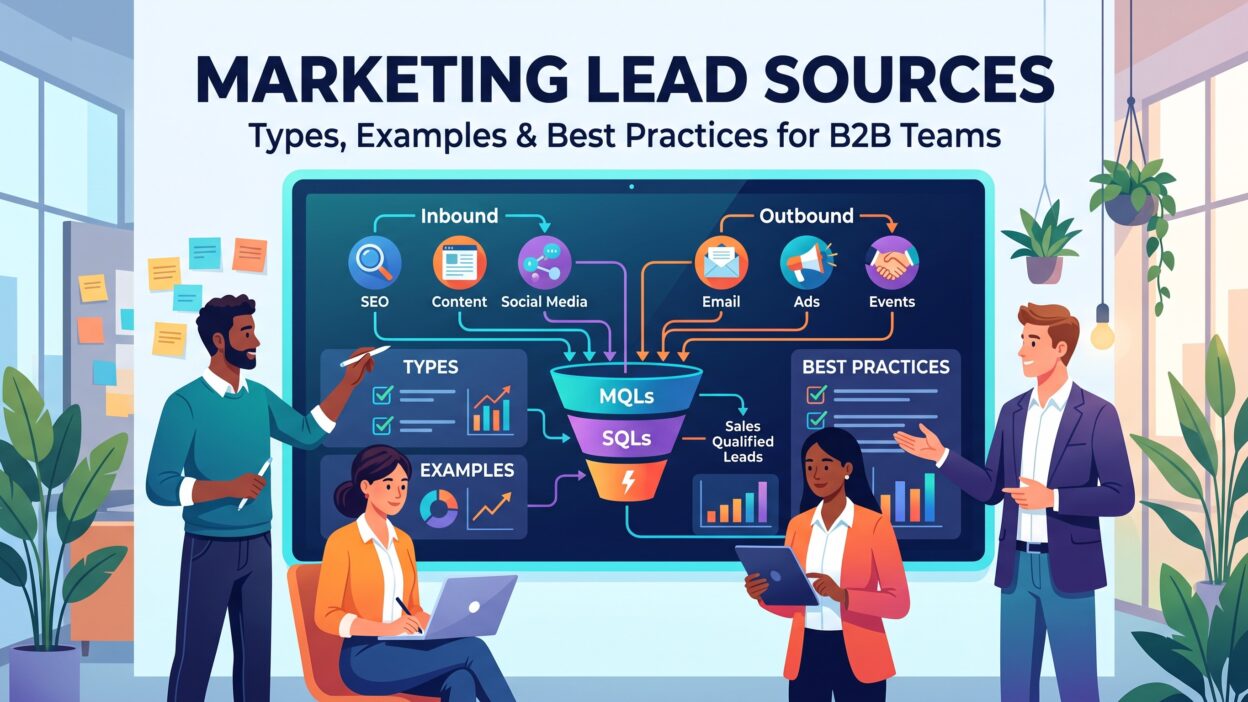
Marketing Lead Sources are the channels and activities that bring prospects to your business. They include search, email, events, referrals, ads, partners and outbound outreach. Each source brings a different type of buyer. Each one has a different cost and speed.
Table of Contents
What Are Marketing Lead Sources?
A lead source is the origin of a lead. It answers one question. How did this person first reach us? A prospect might download a guide after a search. Another might meet your rep at a trade show. A third might arrive through a customer referral. Each path is a different source.
Marketing Lead Sources sit at the top of your lead generation process. They feed your funnel. Everything downstream depends on them, including nurture programs, sales follow-up and revenue forecasts.
Sources matter because they predict behavior. Leads from referrals often convert faster than leads from cold lists. Leads from high-intent search often show clearer needs than leads from broad social ads. Knowing the source helps your team choose the right message and the right speed.
Sources also guide spending. Every channel has a cost per lead. Every channel has a lead-to-customer rate. When you combine both numbers, you see the real cost of a customer. That number drives smart budget decisions.
Lead Source vs. Lead Channel vs. Lead Medium
Teams mix up these terms. A source names the origin, such as Google, LinkedIn or a partner. A medium names the type of traffic, such as organic, paid or email. A channel groups sources and mediums into a larger bucket, such as paid search or social media.
Pick one naming system and stick with it. Write it down. A consistent structure makes reports clean. Messy labels create messy data. You will fix that problem later at a much higher cost.
Lead Source vs. Lead Status
Source tells you where a lead came from. Status tells you where the lead sits in your process. A lead can come from a webinar and sit in the nurture stage. The two fields serve different purposes. Keep both clean and separate.
The Main Types of Marketing Lead Sources
B2B teams draw leads from several families of sources. The best programs blend them. Each family plays a different role. The sections below cover the most common ones, with examples for each.
Inbound Sources
Inbound leads come to you. They find your content or your brand and raise a hand. They usually show a clear interest in your topic. Inbound sources tend to cost less over time. They also take longer to build.
The main inbound sources include organic search, content marketing, social media, email subscriptions, webinars and free tools. Each one rewards patience and quality.
Outbound Sources
Outbound leads come from your outreach. Your team contacts prospects who fit your target profile. Outbound gives you speed and control. You choose the accounts. You choose the message. Results can arrive within weeks.
Outbound needs strong data and strong messaging. Poor targeting burns your sender reputation and your brand. Outbound sources include cold email, cold calling, social selling and direct mail.
Inbound Marketing Lead Sources With Examples
Organic Search and SEO
Organic search is often the largest inbound source for B2B teams. Buyers search for answers. They find your blog post, guide or comparison page. They read it and fill out a form.
A software company that sells payroll tools might rank for “how to run payroll in multiple states.” A reader with that problem is a strong prospect. Search leads often arrive with clear intent.
SEO takes months to build. The payoff compounds. Strong pages keep delivering leads long after you publish them. Focus on topics your buyers search before they buy.
Content Marketing and Gated Assets
Content creates demand and captures it. Ebooks, reports, templates and guides give buyers a reason to share their details. Original research performs especially well. Buyers cite it, share it and return to it.
A cybersecurity vendor might publish an annual threat report. Readers submit their business email to download it. The vendor then nurtures those leads with related content.
Gate only your most valuable assets. Leave educational posts open. Open content builds trust and traffic. Gated content converts that trust into contacts.
Webinars and Virtual Events
Webinars attract engaged buyers. People give an hour of their time. That commitment says a lot. Registrants who attend live often show stronger intent than people who download a PDF.
A marketing platform might host a session on improving email deliverability. Attendees ask questions in chat. Sales reads those questions and follows up with context. That context makes outreach feel useful.
Record every session. Replays keep generating leads for months.
Social Media and Communities
LinkedIn leads the way for most B2B teams. Organic posts build awareness. Lead generation forms capture contacts. Employee advocacy extends your reach beyond the company page.
Communities add another path. Slack groups, forums and industry networks gather buyers who trade advice. Helpful participation builds trust. A founder who answers questions daily may earn dozens of warm leads over a year.
Social rarely closes deals alone. It opens conversations. Pair it with strong follow-up.
Free Tools, Trials and Demos
Free tools attract people with real problems. A calculator, a grader or a template can bring in thousands of visitors. A simple website grader might ask for an email to send the full report.
Free trials and demo requests produce high-intent leads. These buyers want to see the product. Respond within minutes. Speed matters at this stage more than anywhere else.
Product-led teams often treat trial signups as their main lead source. They score usage and pass the best accounts to sales.
Outbound and Paid Marketing Lead Sources With Examples
Paid Search and Paid Social
Paid channels buy speed. You launch a campaign today and see leads tomorrow. Search ads capture people who already look for a solution. Social ads reach targeted job titles and industries.
A logistics software company might bid on “freight management software” and run LinkedIn ads to supply chain managers. Both tactics aim at the same buyer from two angles.
Watch your cost per lead and lead quality together. A cheap lead that never buys is expensive. Track pipeline and revenue by campaign, not just form fills.
Cold Email and Cold Calling
Outbound outreach still works when done well. Research each account. Write short, relevant messages. Offer value before you ask for time. Send small batches to protect your domain.
Generic blasts fail. Buyers delete them in seconds. A message that mentions a real trigger, such as a new funding round or a new executive hire, earns replies.
Pair outbound with inbound signals. A prospect who visited your pricing page and received a thoughtful email is far more likely to answer.
Account-Based Marketing
Account-based marketing flips the funnel. You pick the companies you want. Then you build campaigns around them. Marketing and sales work from a shared target list.
Tactics include personalized ads, custom landing pages, direct mail and executive events. A vendor might send a research brief to the five key stakeholders at a dream account.
ABM generates fewer leads but larger deals. Judge it by engagement and pipeline from target accounts, not by raw lead volume.
Content Syndication and Sponsored Placements
Content syndication places your assets on third-party sites. Readers there opt in to receive your content. The vendor delivers the contact data to you.
Volume comes quickly. Quality varies. Many syndicated leads barely know your brand. Screen them with qualification questions and nurture them before sales contact.
Test small. Compare syndicated leads with your other sources on conversion rates. Keep the partners that deliver pipeline. Drop the rest.
Events, Trade Shows and Sponsorships
Face-to-face events build trust fast. A good conversation at a booth can replace three months of emails. Events also give your team market intelligence.
Costs run high. Booth fees, travel and staff time add up. Plan follow-up before the event starts. Leads collected at a show decay quickly. Contact them within days, not weeks.
Smaller roundtables and dinners often outperform large booths. They attract fewer people with stronger interest.
Relationship-Driven Marketing Lead Sources
Some of your best leads come from people, not campaigns. Relationship sources deserve a place in your plan.
Customer Referrals
Referrals often deliver high lead quality. The buyer arrives with trust already in place. Sales cycles shorten. Win rates climb.
Make referrals easy and rewarding. Ask happy customers at moments of success, such as after a strong quarter or a smooth onboarding. Offer a simple process. Thank every referrer personally. Consider rewards that fit your market, such as credits or donations.
Track referrals as their own source. Many teams bury them under “other” and lose sight of their value.
Partner and Channel Programs
Partners bring leads from their own networks. Agencies, consultants, resellers and technology partners all qualify. They know the buyer and the problem.
A project management tool might partner with consulting firms that recommend it to clients. Each side wins. The consultant adds value. The vendor gains a warm introduction.
Give partners clear materials, fair terms and quick responses. Register each partner lead in the CRM with a clear label.
Customer Marketing and Expansion
Existing customers are a lead source too. Cross-sell and upsell opportunities sit inside your base. Customer advisory groups, user conferences and product updates all spark new demand.
Treat expansion leads with the same care as new leads. Score them. Route them to the right rep. Track revenue by source for the full customer lifetime.
How to Track and Attribute Marketing Lead Sources
Tracking turns guesses into facts. Without it, you fund the loudest channel instead of the best one.
Set Up Clean Source Tracking
Start with UTM parameters. Add them to every campaign link. Use consistent names for source, medium and campaign. Write a naming guide. Share it with every marketer and agency.
Capture the source in every form. Pass it into your CRM through hidden fields. Lock the original source field so nobody overwrites it. Keep a second field for the most recent source. You will want both views.
Add a “how did you hear about us” field to forms and demo requests. Self-reported answers reveal sources software cannot see, such as podcasts, word of mouth and dark social.
Choose an Attribution Approach
Lead attribution decides which source gets credit. First-touch credits the first interaction. Last-touch credits the final one before conversion. Multi-touch splits credit across the whole journey.
No model is perfect. B2B buyers interact many times with many people. Use at least two views. Compare first-touch and multi-touch reports. Look for sources that appear in both lists.
Pair the data with sales feedback. Ask reps which sources produce good conversations. Ask new customers what influenced them. Numbers and stories together paint the full picture.
Review Your Data Often
Check source data each month. Look for blanks, typos and strange labels. Fix them fast. Clean data feeds clear decisions. Marketing Lead Sources only help when the data behind them is reliable.
How to Measure Lead Source Quality
Volume alone misleads. A source that sends a thousand leads and zero customers wastes money. Judge sources by outcomes.
Core Metrics by Source
Track cost per lead for each source. Track the conversion rate from lead to marketing qualified lead, then to opportunity, then to customer. Track the average deal size and the sales cycle length. Track customer retention by source as well.
Combine those numbers into cost per customer and return on spend. A source with a high cost per lead may still win if it closes large deals fast.
Lead Quality Signals
Look beyond the funnel. Check fit with your ideal customer profile. Check job level and company size. Check engagement after the first touch. Check how many leads sales accepts. Rejection reasons reveal weak sources quickly.
Share these reports with sales and marketing together. Shared numbers reduce arguments and speed up decisions.
Shift Budget With Evidence
Review results each quarter. Move money from weak sources to strong ones. Keep a small test budget for new channels. Give each test enough time and volume to prove itself. Avoid judging a channel after one week.
Best Practices for B2B Teams
Strong teams follow a few steady habits. These habits apply to every source in your mix.
Start with your ideal customer profile. Know the industries, sizes and roles you want. Aim every source at that profile. Wide nets bring in wrong-fit leads.
Diversify your mix. Relying on one channel creates risk. An algorithm change or a price hike can wipe out your pipeline overnight. Build a balanced portfolio of inbound, outbound and relationship sources.
Match the source to the buyer’s stage. Some sources reach new audiences. Others capture buyers who already search. Plan for both. Early-stage sources feed future pipeline. Late-stage sources close current deals.
Respond fast. Speed to lead often decides who wins. Route hot leads to reps within minutes. Set alerts. Use clear routing rules so no lead sits in a queue.
Build lead nurturing for every source. Not every lead is ready to buy. Send helpful content over time. Tailor the message to the source. A webinar attendee needs a different follow-up than a trade show contact.
Align sales and marketing on definitions. Agree on what counts as a marketing qualified lead. Agree on how sources get labeled. Meet monthly to review quality and feedback.
Protect data quality and privacy. Collect only what you need. Respect consent rules such as GDPR and local email laws. Clean records on a schedule.
Test and document. Run small experiments on new messages, offers and channels. Record the results. Share what you learn. A team that learns faster than its rivals wins over time.
Common Mistakes to Avoid
Many teams chase volume. They celebrate big lead counts and ignore revenue. Judge every source by pipeline and customers.
Some teams track poorly. They skip UTMs, allow free-text source fields and let reps overwrite values. Reports then lie. Fix the foundation first.
Others abandon channels too early. SEO and content take months. Judging them after thirty days leads to bad calls. Set a fair test period for each source.
Several teams ignore dark social and word of mouth. Buyers share links in private chats and recommend vendors in conversations. Add a self-reported source field to capture some of this activity.
A few teams treat all leads the same. A referral and a cold list contact need different handling. Adjust the speed, the message and the owner by source.
Some teams forget the loop with sales. Marketing sends leads and never hears back. Collect feedback. Use it to refine targeting and offers.
Frequently Asked Questions
What are Marketing Lead Sources?
They are the channels and activities that bring prospects to your business. Examples include organic search, paid ads, webinars, referrals, events, partners and cold outreach.
What are the best lead sources for B2B companies?
It depends on your market, price and sales cycle. Referrals, organic search, webinars and account-based programs often perform well. Test several and compare results by revenue, not volume.
How many lead sources should I use?
Use enough to avoid dependence on one channel. Many teams run three to six active sources and test one or two new ones each quarter. Match the number to your team’s capacity.
What is the difference between inbound and outbound leads?
Inbound leads find you through content, search or referrals. Outbound leads come from your team’s outreach to selected prospects. Most strong programs use both.
How do I track where my leads come from?
Use UTM parameters, hidden form fields and a locked original source field in your CRM. Add a self-reported question to capture sources that software misses.
Which attribution model should I use?
Start with first-touch and multi-touch views side by side. B2B journeys involve many interactions, so one model rarely tells the full story. Add feedback from sales and customers.
How do I know if a lead source is good?
Look at conversion rates, cost per customer, deal size, sales cycle and retention. Check fit with your ideal customer profile. Ask sales for their view.
How often should I review my lead sources?
Review data monthly for quality and tracking issues. Make budget decisions each quarter. Run a deeper strategy review once a year.
Read More:-AI for Marketing Operations: Where to Start for Real ROI
Conclusion

Leads do not all carry the same value. Where they come from tells you a lot about how they will behave. Smart teams study that story and act on it.
Marketing Lead Sources give you the map. Inbound sources build steady demand. Outbound sources bring speed and control. Relationship sources deliver trust. A balanced mix protects you from sudden swings.
Good tracking makes the map readable. Clean UTMs, locked source fields and honest attribution show what works. Quality metrics show which sources create customers. Regular reviews help you move money with confidence.
Start with a simple audit. List every source you use today. Check how each one performs from lead to revenue. Fix your tracking gaps. Pick one strong source to scale and one new source to test.