Introduction
TL;DR Your sales team has too many leads. Most of them will never buy. Reps waste hours on contacts who never answer. Great prospects sit in the queue. That gap costs revenue every week.
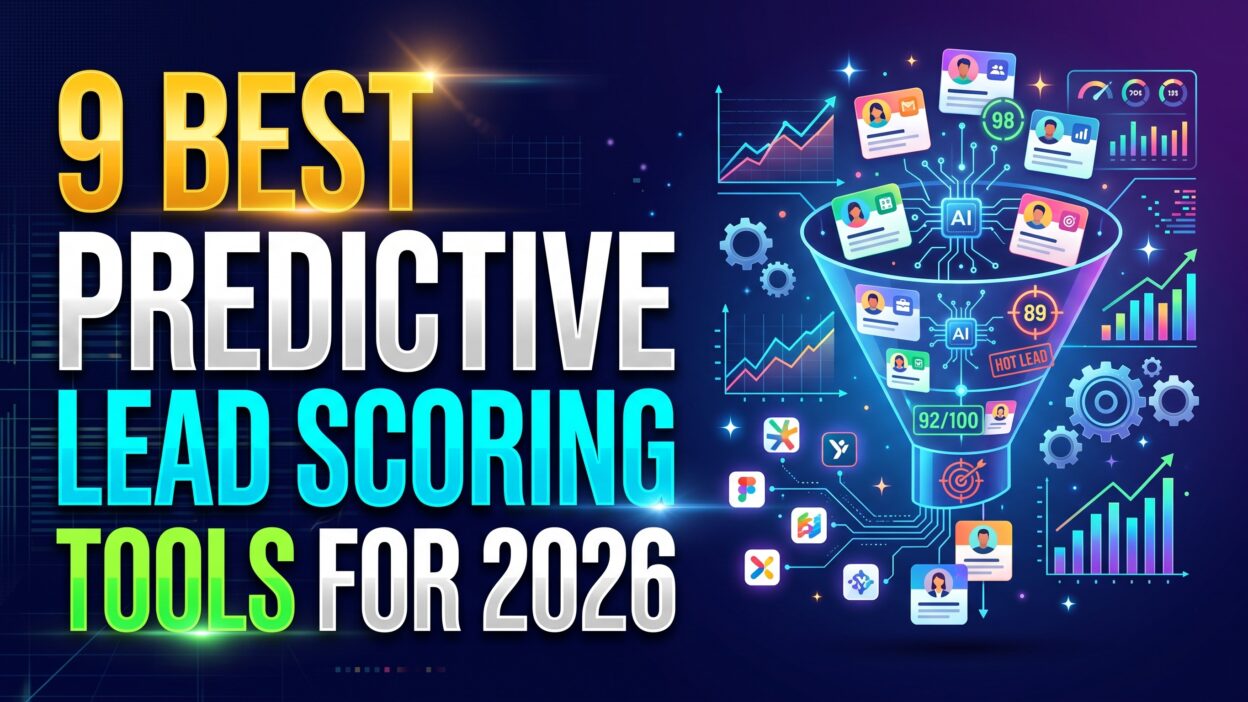
Predictive Lead Scoring Tools fix this problem. They study your past deals. They learn what winning buyers look like. They rank every new lead by its chance to close. Your reps call the best leads first.
Table of Contents
What Are Predictive Lead Scoring Tools?
Predictive Lead Scoring Tools are software products that rate leads with data models. The model reads your historical records. It looks at closed deals and lost deals. It finds the traits that separate the two groups. Then it scores every new lead against those traits.
The score usually runs from 0 to 100. Some vendors use letter grades. Others use labels like hot, warm and cold. Your team sees the score inside the CRM. Reps sort their lists by score each morning.
The tools pull from many data sources. They read firmographic data such as company size and industry. They read behavior data such as page visits and email clicks. Many also read intent data, which shows who researches your category online. The best lead scoring software blends all three.
How the Models Work
Most platforms use machine learning. The algorithm trains on your closed-won and closed-lost records. It tests thousands of patterns. It keeps the patterns that predict revenue.
Good models retrain on a schedule. Your market shifts. Your product shifts. A model from two years ago misses new buyer types. Fresh training keeps the scores honest.
The model also explains itself in the better products. It shows which factors raised or lowered a score. A rep sees that a lead works at a mid-size software firm and visited the pricing page twice. That detail helps the rep write a sharper email.
Predictive vs. Rule-Based Scoring
Rule-based scoring is the older method. Your team assigns points by hand. A demo request earns 20 points. An email open earns 2 points. A job title of intern loses 10 points.
Manual rules carry human bias. Marketers guess which actions matter. Those guesses age badly. Nobody has time to audit them every month.
Predictive scoring removes the guesswork. The data decides which actions matter. You can still keep a few manual rules for special cases. Many teams run both. The model does the heavy work. The rules handle edge cases.
Why Your Team Needs Predictive Lead Scoring Tools in 2026
Buyers do their own research now. They read reviews. They compare vendors. They talk to peers. Your reps often meet them late in the journey. A single slow reply can lose the deal.
Predictive Lead Scoring Tools help you move faster. They flag the buyers who show strong signals today. Your reps reach out within minutes. Speed matters more than polish in those moments.
Faster Sales Cycles and Higher Win Rates
Reps who chase the right leads close more deals. They also close them sooner. They skip the long nurture calls with weak prospects. Their calendars fill with real conversations.
Teams often report shorter cycles after they adopt AI lead scoring. Results vary by company. Your data quality drives the outcome. Clean records give you better scores.
Better Alignment Between Sales and Marketing
Marketing and sales often argue about lead quality. Marketing says the leads are great. Sales says they are junk. Both sides lack proof.
A shared score ends that argument. Both teams trust the same number. Marketing learns which campaigns produce high scorers. Sales learns which leads deserve a call. Lead qualification becomes a shared process instead of a fight.
How We Picked the Best Tools
We judged each platform on six points. We checked model accuracy claims and how clearly the vendor explains its method. We checked CRM integration depth. We checked data sources, including intent data. We checked ease of setup. We checked pricing transparency. We checked fit for different company sizes.
Predictive Lead Scoring Tools differ a lot in scope. Some sit inside a CRM. Some run as standalone engines. Some focus on accounts instead of single leads. We note those differences in each review.
We built this list from vendor documentation and public product information. Features and plans change fast. Confirm current details with each vendor before you commit.
The 9 Best Predictive Lead Scoring Tools for 2026
1. HubSpot
HubSpot suits teams that already live in its CRM. The platform offers predictive scoring on its higher-tier plans. The model learns from your contact and deal history. It scores contacts by their likelihood to close.
Setup stays simple. You do not need a data science team. HubSpot builds the model inside the same system where reps work. Scores appear on contact records and in list views.
The platform also handles marketing automation. You can trigger emails when a score crosses a threshold. You can route hot leads to a rep instantly. That tight loop saves time.
The main limit is cost. The scoring features sit in pricier tiers. Small teams may find the jump steep. Teams with thin historical data may also see weaker models.
HubSpot fits small and mid-size companies that want one platform. It works well for marketers who value ease over deep customization.
2. Salesforce Einstein Lead Scoring
Salesforce Einstein brings AI lead scoring into the Salesforce ecosystem. It analyzes your lead and opportunity data. It ranks leads and shows the factors behind each score.
Large organizations favor this option. Salesforce handles complex sales processes well. You can customize fields, objects and workflows. Einstein respects that structure.
The model needs a healthy volume of converted leads to train well. Young companies may lack that history. Check Salesforce’s current requirements before you plan a rollout.
Admins can manage the feature without code. Reps see top positive and negative factors on each record. That transparency builds trust.
The price depends on your edition and add-ons. Salesforce packaging changes often, so ask your account executive for a current quote.
Einstein fits enterprises and fast-growing firms that already run Salesforce. Teams outside that ecosystem should look elsewhere.
3. MadKudu
MadKudu targets B2B software companies with product-led growth motions. It scores leads using fit and behavior. Fit measures how closely a lead matches your ideal customer profile. Behavior measures what the lead does in your product and on your site.
That two-part view helps teams with free trials or freemium plans. A sign-up from a perfect-fit company with heavy product use rises to the top. A sign-up from a poor-fit student account falls away.
MadKudu connects with major CRMs and marketing platforms. It also works with customer data tools. Your team can send scores into the systems reps already use.
The vendor offers hands-on onboarding. That service helps teams without analytics staff. The tradeoff is price and focus. MadKudu serves a narrower audience than all-in-one suites.
MadKudu fits SaaS companies with self-serve funnels. It suits teams that need to separate high-value signups from noise.
4. 6sense
6sense centers on account-based marketing and intent data. The platform watches signals across the web. It spots accounts that research topics tied to your product. It predicts which accounts sit in a buying stage.
This approach differs from classic lead scoring. 6sense scores accounts first. It then maps people inside those accounts. Reps see which companies show real interest before any form fill.
The data reach is a major strength. Anonymous activity becomes useful. Your team can act on accounts that have not raised a hand yet.
Complexity is the cost. The platform asks for setup time and process change. Smaller teams may find it heavy. Budgets run higher than for CRM-native options.
6sense fits mid-market and enterprise B2B teams with account-based strategies. It works best when sales and marketing commit to shared account plays.
5. Demandbase
Demandbase also serves account-based teams. It combines account data, intent data and advertising tools. The platform scores accounts by fit and engagement. It highlights those ready for outreach.
Teams use Demandbase to align marketing campaigns with sales targets. Marketing runs ads to high-scoring accounts. Sales gets alerts when those accounts visit key pages. Everyone works from the same list.
The software integrates with major CRMs and marketing automation tools. Your reps can see account scores inside familiar screens.
Like 6sense, Demandbase works best with a clear account strategy. Teams that sell to a small set of large buyers get the most value. Teams with high-volume, low-price sales may find simpler tools cheaper.
Demandbase fits enterprise and upper mid-market B2B companies. It rewards organizations that already practice account-based marketing.
6. ZoomInfo
ZoomInfo is a sales intelligence platform with a massive contact database. It layers scoring and intent signals on top of that data. Reps find prospects, verify contacts and prioritize outreach in one place.
Data coverage is the headline feature. You can enrich leads with company details, contact info and technology usage. Richer records make any scoring model smarter.
The platform helps teams that struggle with incomplete CRM data. It fills gaps automatically. Scores then rest on fuller profiles.
Cost can climb quickly. ZoomInfo contracts often run on annual terms. Compare plans carefully. Review data accuracy for your target regions as well.
ZoomInfo fits outbound-heavy teams that need both data and scoring. It suits sales organizations that prospect cold as often as they follow up on inbound leads.
7. Adobe Marketo Engage
Adobe Marketo Engage serves established marketing teams. It offers lead scoring and advanced automation. Adobe’s wider ecosystem adds analytics and personalization tools.
Marketo gives you flexible scoring controls. You can build rules around behaviors and demographics. Adobe also provides AI-driven features that support audience targeting. Review the current feature set with Adobe, since packaging shifts.
The platform handles large databases and complex campaigns. Teams with many products, regions or segments benefit from that depth.
The learning curve is real. Marketo asks for skilled administrators. Many companies hire specialists or agencies. Small teams may feel overwhelmed.
Marketo Engage fits mid-size and large organizations with dedicated marketing operations staff. It works well for companies already invested in Adobe products.
8. Zoho CRM with Zia
Zoho CRM offers an affordable path into AI lead scoring. Zia is Zoho’s AI assistant. It supports scoring and predictions inside the CRM. Teams can set scoring rules and use Zia insights to guide priorities.
Price is the draw. Zoho costs far less than many enterprise suites. Small businesses can start without a large budget. The platform also bundles many business apps.
Zoho integrates well within its own family of products. Third-party connections exist too. Check that your key tools connect before you commit.
The depth of prediction may trail specialist vendors. Small data sets limit any model. Expect useful guidance, not magic.
Zoho CRM fits small and growing businesses that want budget-friendly lead scoring software. It works well for teams new to scoring.
9. Freshsales with Freddy AI
Freshsales is a CRM from Freshworks. Freddy AI powers its scoring features. The system rates contacts based on profile data and engagement. Reps see scores next to each contact.
The interface stays clean and quick to learn. Teams adopt it without long training. Built-in phone, email and chat tools keep reps in one workspace.
Freshsales works well for small and mid-size sales teams. Pricing sits in the friendly range. Higher plans unlock the advanced AI features, so confirm which tier includes scoring.
Customization has limits compared to Salesforce. Large organizations with complex rules may outgrow it. Teams with simple pipelines will likely stay happy.
Freshsales fits startups and small sales teams that want a modern CRM with built-in scoring. It suits buyers who value speed of setup.
How to Choose the Right Predictive Lead Scoring Tools
Start with your data. Predictive Lead Scoring Tools learn from history. You need enough closed deals to teach the model. Thin data yields weak scores. Count your conversions before you shop.
Check your CRM next. Native tools work best when they match your system. A HubSpot shop should look at HubSpot first. A Salesforce shop should look at Einstein first. Standalone vendors need clean integrations.
Think about your sales motion. Inbound teams need lead-level scoring. Account-based teams need account-level scoring. Product-led teams need usage-based scoring. Match the tool to the motion.
Ask about transparency. You want a platform that explains its scores. Reps ignore numbers they cannot understand. Look for visible factor breakdowns.
Weigh the price against the payoff. Estimate how many extra deals a better queue could create. Compare that figure to the annual cost. Include setup and training time in your math.
Request a trial or proof of concept. Many vendors will run your historical data through their model. You can compare predicted winners to your real winners. That test shows real accuracy.
Involve sales early. Reps use the scores every day. Their buy-in decides success. Ask them what signals they trust. Build those into your evaluation.
Best Practices for Implementing Lead Scoring
Clean your data before launch. Remove duplicates. Fix missing fields. Standardize job titles and industries. Models trained on messy data repeat the mess.
Define a clear threshold. Decide what score counts as sales-ready. Write it down. Share it with both teams. Adjust it after a month of results.
Set a response-time goal. A hot lead should get a reply fast. Many teams aim for minutes, not hours. Build alerts so reps see hot leads at once.
Train your reps. Show them how to read the score. Show them the factors behind it. Teach them to use those factors in outreach. A good score plus a good message wins deals.
Review results monthly. Compare score bands to actual conversion rates. High scorers should convert at higher rates. If they do not, investigate the data or retrain the model.
Keep a feedback loop. Ask reps to flag bad scores. Use that input to improve the model. Predictive Lead Scoring Tools get better when humans guide them.
Start small. Pilot with one team or one region. Learn what works. Expand after you see proof. Slow rollouts beat chaotic ones.
Common Mistakes to Avoid
Many teams treat the score as a final verdict. It is a guide. Reps should still use judgment. A low score with a warm referral deserves a call.
Some teams skip the data audit. They buy a tool and expect miracles. Poor inputs produce poor outputs.
Others set the tool up and walk away. Markets change. Your model needs retraining and review.
Some companies buy far more power than they need. A small team does not need an enterprise platform. Start with what fits today. Upgrade when your volume grows.
A few teams forget to involve sales. Marketing picks the tool alone. Reps ignore it. The investment sits unused.
Frequently Asked Questions
What are Predictive Lead Scoring Tools?
They are software products that use data and machine learning to rate leads. They predict which leads will likely become customers. Your team then focuses on the highest-rated leads.
How accurate is AI lead scoring?
Accuracy depends on your data. Larger, cleaner histories produce better models. Test any vendor with your own records before you sign.
How much data do I need?
Vendors set different minimums. Most want a solid number of closed-won deals. Ask each vendor for its current requirement.
Is predictive scoring better than manual scoring?
It usually adapts faster. The model finds patterns humans miss. Many teams combine both methods for best results.
Can small businesses use these tools?
Yes. CRM-native options like Zoho and Freshsales fit smaller budgets. Small teams with little data may see limited gains early on.
How long does setup take?
Native CRM features can go live in days or weeks. Standalone platforms often take longer. Account-based platforms may take a few months.
What is the difference between lead scoring and account scoring?
Lead scoring rates individual people. Account scoring rates whole companies. Account-based teams often use both.
Do these tools replace sales reps?
No. They help reps choose where to spend time. People still build relationships and close deals.
Read More:-n8n API Review: Complete Breakdown [2026]
Conclusion

Great sales teams chase the right leads. Guesswork wastes time and money. Data points your reps toward buyers who are ready to talk.
Predictive Lead Scoring Tools give you that edge. HubSpot and Freshsales suit teams that want simplicity. Salesforce Einstein suits large Salesforce shops. MadKudu serves product-led software firms. 6sense and Demandbase serve account-based teams. ZoomInfo adds data depth. Marketo Engage serves large marketing operations. Zoho CRM serves budget-minded teams.
Pick the tool that matches your data, your CRM and your sales motion. Test it with your own records. Train your reps. Review the results each month.
Start with a small pilot this quarter. Measure the lift. Then grow from there. The right Predictive Lead Scoring Tools can turn a crowded pipeline into a focused one.