Introduction
TL;DR A Bulk Data Enrichment API fills gaps in large contact or company lists in one single process. A sales team uploads a spreadsheet with names and emails. The API returns job titles, company size, phone numbers and social links within minutes. This guide breaks down how a Bulk Data Enrichment API works. It also lists the best tools for 2026 and shows how teams use them daily. You will find real use cases, key features and simple tips to pick the right platform for your business.
Table of Contents
What Is a Bulk Data Enrichment API?
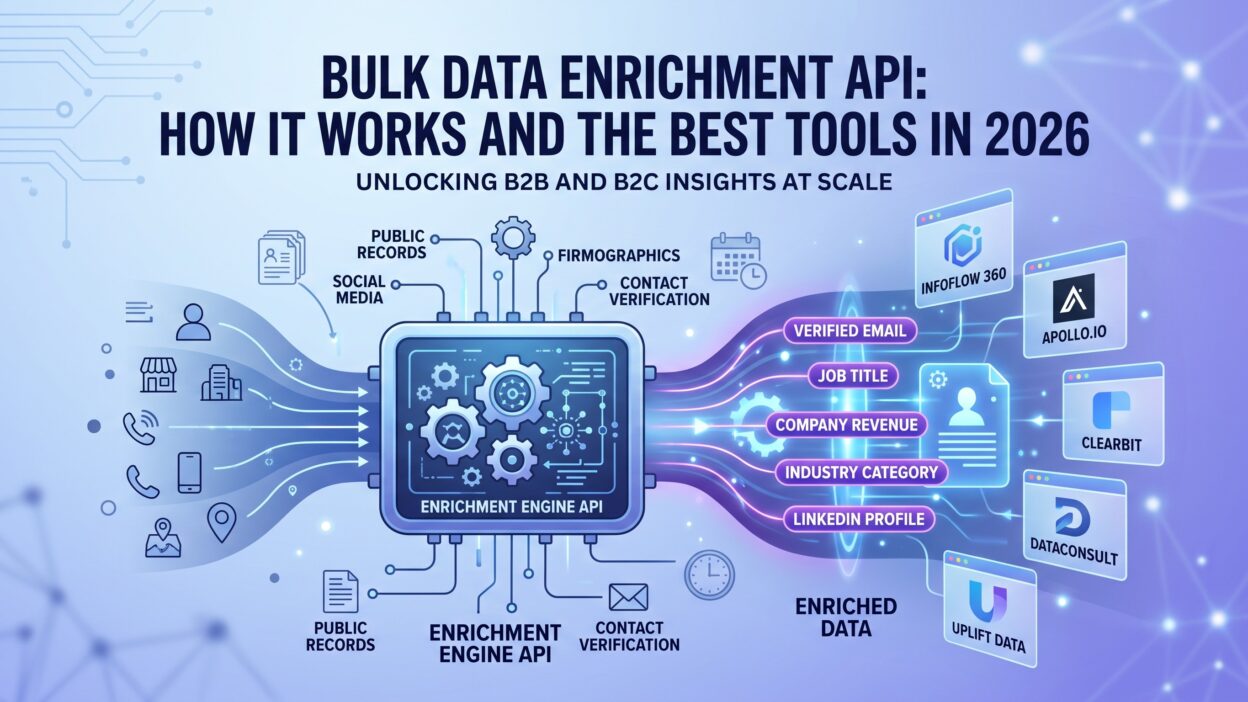
A Bulk Data Enrichment API takes a large batch of records and adds missing fields to each one. A record might start with just a name and email. The API adds a job title, company name, location and phone number. Teams send thousands of rows in one request instead of checking each contact by hand. This saves hours of manual research every week.
A Bulk Data Enrichment API pulls data from public records, business directories and partner databases. It matches each row against these sources and fills the blanks. The result is a clean, complete dataset ready for outreach or analysis.
How It Differs From Single Record Enrichment
Single record enrichment checks one contact at a time. A user types in an email and gets back a profile. This works fine for small checks but fails at scale. A Bulk Data Enrichment API handles thousands or millions of records in one job. It processes data in batches and returns results as a file or through a webhook. Sales operations teams prefer bulk enrichment because it fits real workloads.
Why Businesses Need Bulk Enrichment in 2026
Buyer data goes stale fast. People switch jobs. Companies merge or close. A contact list from last year often has thirty percent bad data by now. A Bulk Data Enrichment API keeps records fresh without constant manual work. Marketing teams use it to segment audiences correctly. Sales teams use it to reach the right decision maker. Recruiting teams use it to verify candidate details before an outreach campaign.
How a Bulk Data Enrichment API Works
The process behind a Bulk Data Enrichment API follows a few clear steps. Understanding these steps helps a team pick the right tool and avoid common mistakes.
Data Input and Matching
A user uploads a file or connects a database through the API. The file usually contains an email, a name or a company domain. The Bulk Data Enrichment API reads each row and searches its data sources for a match. Matching relies on unique identifiers like email addresses or LinkedIn URLs. A strong match engine reduces false results and keeps accuracy high.
Enrichment Sources and Data Providers
Every Bulk Data Enrichment API pulls from a mix of sources. These include public business registries, social profiles, company websites and licensed third-party databases. Some providers also crawl job boards and press releases to catch fresh job changes. The quality of a Bulk Data Enrichment API depends heavily on these underlying sources. A tool with weak sources returns outdated or incomplete profiles.
Output Formats and Delivery
Once the matching finishes, the API returns enriched data in a chosen format. Most tools support CSV, JSON or a direct database write. Large batch jobs often run asynchronously. The system sends a notification once the job completes. Teams can then download the file or pull results through a webhook straight into their CRM.
Common Enrichment Fields
A typical Bulk Data Enrichment API adds several standard fields to each record. These include job title, seniority level, department, company size, industry, revenue range, phone number, location and social profile links. Some advanced tools also add technographic data. This shows which software tools a company already uses. This detail helps sales teams pitch relevant products.
Key Features to Look For in a Bulk Data Enrichment API
Not every tool performs the same way. A few features separate a strong Bulk Data Enrichment API from a weak one.
Accuracy and Data Freshness
Accuracy matters more than volume. A Bulk Data Enrichment API with stale records wastes time and hurts sender reputation. Look for a provider that refreshes its database often. Ask about verification rates before signing a contract. A good benchmark sits above ninety percent for email accuracy.
Speed and Scalability
A strong Bulk Data Enrichment API processes millions of rows without slowing down. Speed matters for teams running large campaigns on tight deadlines. Check the provider’s rate limits and batch size caps before committing. Some tools throttle heavily and stretch a simple job into several days.
Integration Options
A Bulk Data Enrichment API should connect easily with existing tools. Native integrations with Salesforce, HubSpot and Snowflake save engineering time. A flexible REST API also lets a technical team build custom workflows. Webhook support allows real-time updates without constant polling.
Best Bulk Data Enrichment API Tools in 2026
Several platforms stand out this year for bulk enrichment work. Each tool brings its own strengths and pricing model.
Clearbit
Clearbit offers a well-known Bulk Data Enrichment API built for marketing and sales teams. It pulls firmographic and person-level data from a wide range of sources. Its Reveal feature also identifies anonymous website visitors. Pricing scales with usage volume, which suits growing teams.
ZoomInfo
ZoomInfo runs one of the largest B2B databases available today. Its Bulk Data Enrichment API supports massive batch jobs for enterprise sales teams. The platform adds intent signals alongside standard contact fields. This helps sales reps prioritize leads showing active buying behavior.
Apollo.io
Apollo.io combines a contact database with a full outreach platform. Its Bulk Data Enrichment API works well for smaller teams on a budget. Users can enrich a list and launch an email sequence from the same dashboard. This reduces the need for separate tools.
Clay
Clay takes a different approach by combining several data providers into one workflow builder. Its Bulk Data Enrichment API pulls from dozens of sources at once and picks the best match for each field. Teams building custom lead scoring models often choose Clay for this flexibility.
People Data Labs
People Data Labs focuses purely on raw data delivery through a developer-friendly Bulk Data Enrichment API. It suits engineering teams building internal tools rather than sales reps working inside a CRM. Pricing runs on a pay-as-you-go model, which keeps costs predictable for smaller batches.
Hunter.io
Hunter.io started as an email finder tool and expanded into a full Bulk Data Enrichment API. It excels at verifying email deliverability alongside standard enrichment fields. Small businesses and freelancers often pick Hunter for its simple pricing and clean interface.
Use Cases for Bulk Data Enrichment API
Different teams use a Bulk Data Enrichment API for different goals. The core value stays the same across every use case: clean data drives better decisions.
Sales Teams
Sales reps rely on a Bulk Data Enrichment API to prep account lists before a campaign. A rep uploads a list of target companies and receives full contact details for key decision makers. This cuts research time and lets reps spend more hours actually selling.
Marketing Teams
Marketing teams use a Bulk Data Enrichment API to build accurate audience segments. Enriched firmographic data allows a team to target campaigns by industry, company size or revenue range. Better segmentation leads to higher email open rates and stronger ad performance.
Recruiting Teams
Recruiting teams enrich candidate lists before outreach. A Bulk Data Enrichment API adds current job titles and company details to a resume database. This helps recruiters confirm a candidate still works at the listed company before sending a message.
Best Practices for Using a Bulk Data Enrichment API
A few habits improve results from any Bulk Data Enrichment API. Start with clean input data. Duplicate rows or malformed emails reduce match rates significantly. Run smaller test batches before a full upload. This catches formatting issues early and saves credits.
Refresh enriched data every few months. Job titles and company details change constantly. A record enriched a year ago may no longer reflect reality. Set a recurring enrichment schedule instead of a one-time job.
Respect data privacy laws throughout the process. Regulations like GDPR and CCPA apply to enriched contact data just like any other personal information. Choose a provider that documents its data sourcing and compliance practices clearly.
Challenges and Limitations
A Bulk Data Enrichment API is not perfect. Match rates vary by industry and region. Contacts in niche markets often return incomplete profiles because fewer public sources exist for them. Pricing can also climb quickly for large enterprise lists, so budgeting matters before a big rollout.
Data accuracy still requires spot checks. No provider guarantees a perfect match every time. A quick manual review of a sample batch catches errors before a full campaign launch. Teams that skip this step sometimes send outreach based on outdated titles or wrong company names.
How to Choose the Right Bulk Data Enrichment API
Start by listing your must-have fields. A recruiting team needs different data than a marketing team. Match your provider choice to your actual use case instead of picking the most popular name on the market.
Compare pricing models carefully. Some providers charge per record while others charge per successful match. A pay-per-match model often saves money on lists with many unreachable contacts. Test a free trial or small paid batch before committing to a long-term contract.
Check integration support last. A Bulk Data Enrichment API that fits your CRM and workflow tools saves setup time and reduces errors down the line.
FAQs About Bulk Data Enrichment API
What is a Bulk Data Enrichment API used for? A Bulk Data Enrichment API fills missing details in large contact or company lists. Teams use it for sales prospecting, marketing segmentation and recruiting outreach.
How accurate is a Bulk Data Enrichment API? Accuracy varies by provider and data source. Strong platforms report match rates above ninety percent for common fields like job title and company name.
How much does a Bulk Data Enrichment API cost? Pricing depends on volume and provider. Small teams often pay a monthly subscription while enterprise teams negotiate custom contracts based on record count.
Is a Bulk Data Enrichment API legal to use? Yes, when the provider follows data privacy laws like GDPR and CCPA. Always check a provider’s compliance documentation before signing up.
Can a Bulk Data Enrichment API integrate with a CRM? Most modern tools offer native integrations with platforms like Salesforce and HubSpot. Many also support custom integrations through a REST API.
How long does a bulk enrichment job take? Processing time depends on list size and provider infrastructure. Small batches finish within minutes while lists in the millions may take several hours.
Read More:-7 Best Zoho CRM Integrations in 2026
Conclusion

A Bulk Data Enrichment API turns messy, incomplete lists into usable business assets. Sales teams close deals faster with accurate contact details. Marketing teams build sharper audience segments. Recruiters confirm candidate information before reaching out. Picking the right provider comes down to matching your use case, checking accuracy rates and testing integration support before a full rollout. The tools covered here each bring a different strength to the table, so the right pick depends on your team’s size, budget and goals for 2026.