
Introduction
TL;DR Not every lead deserves your time. Some leads buy. Some never will. Reps who cannot tell the difference burn hours on dead deals. Their pipeline looks full. Their forecast falls apart.
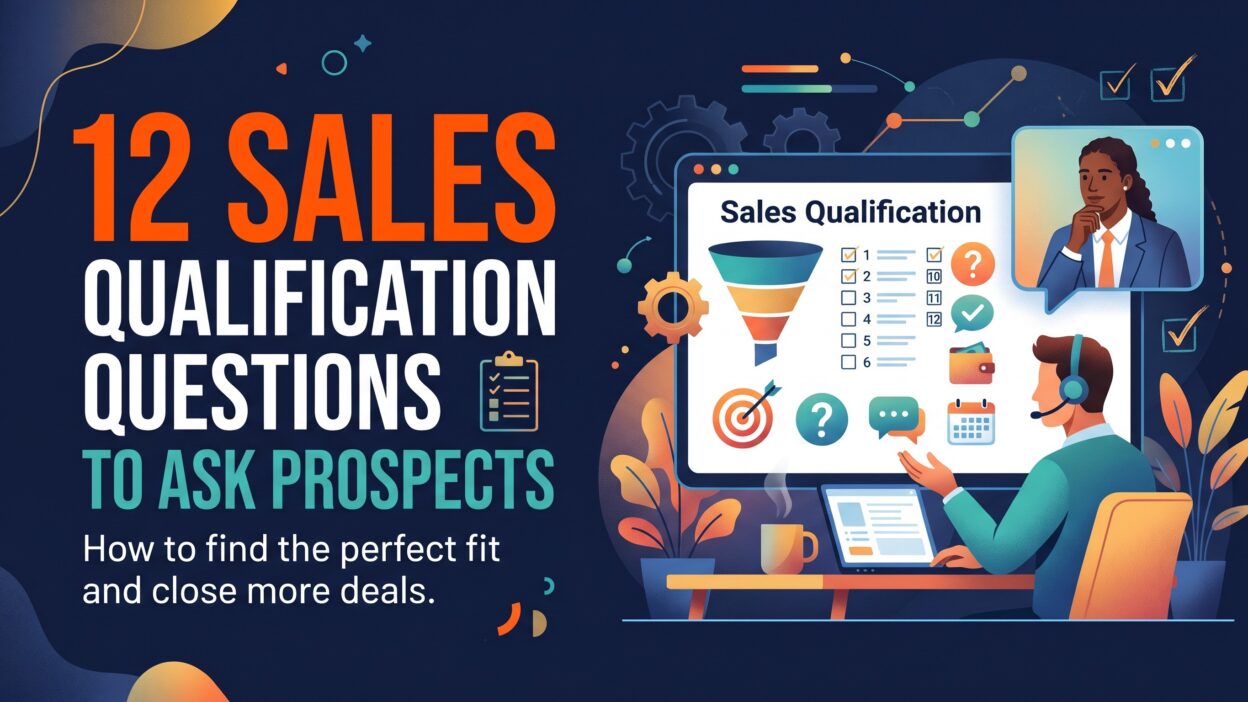
This guide gives you twelve sales qualification questions to ask prospects. You will learn what each question reveals. You will see why it matters. You will get tips on phrasing and follow-ups. You will learn how to log answers, avoid common mistakes, and adapt your approach to deal size.
Table of Contents
What Are Sales Qualification Questions?
Sales qualification questions help you decide whether a lead fits your offer. They test need, budget, authority, and timing. They show how serious a buyer is. They turn a vague lead into a qualified lead or a clear no.
Reps ask these questions on discovery calls, in emails, and during demos. Marketing teams add a few to forms. Sales development reps use them to decide which leads go to account executives. Each answer adds a piece to the picture.
A good question is open. It invites a story, not a yes or no. It is short. It is easy to answer. It sounds natural. It leads to a follow-up. A weak question feels like a form. Buyers give short, guarded answers to weak questions.
Qualification is not a single moment. It starts before the call and continues through the sales cycle. Early answers can change. Budgets shift. New decision makers appear. Keep asking as the deal moves.
Why Sales Qualification Questions Matter
Time is your scarcest asset. Every hour on a poor fit is an hour lost on a great fit. Sales qualification questions protect your calendar. They help you focus on buyers who can move.
They also protect your forecast. Leaders rely on pipeline data. Reps who skip qualification inflate stages with weak deals. Forecasts miss. Trust drops. Clear answers keep the numbers honest.
Buyers benefit too. A good question helps a buyer think through their own problem. Many buyers say a discovery call helped them see the issue more clearly. That value builds trust before any pitch.
Strong sales qualification questions raise win rates. Reps who understand pain points, budget, and process tailor their message. They answer real concerns. They bring the right people to the table. They spot risks early and fix them.
The cost of skipping this step is high. Reps chase ghosts. Demos go to people with no power. Proposals sit unread. Weeks pass. A few focused questions would have shown the problem on day one.
Frameworks That Shape Your Questions
Frameworks give structure. They remind reps what to learn. Most teams use one as a base and add their own twists.
BANT stands for budget, authority, need, and timing. It is simple and fast. It works well for smaller deals. Some buyers dislike direct budget talk, so use it with care.
MEDDIC stands for metrics, economic buyer, decision criteria, decision process, identify pain, and champion. It fits complex enterprise sales. It digs into how the buying committee works.
CHAMP puts the challenge first. It asks about the challenge, authority, money, and prioritization. It suits modern buyers who want to talk about problems before price.
GPCTBA/C&I covers goals, plans, challenges, timeline, budget, authority, consequences, and implications. It runs deep. It helps reps connect pain to real business impact.
Pick one framework. Train every rep on it. Then turn each element into sales qualification questions that sound like your team. A framework is a map. Your questions are the steps along the road.
The 12 Sales Qualification Questions to Ask Prospects
These twelve questions cover pain, value, authority, process, timing, and fit. Use them as a menu. You will not ask all twelve on one call. Pick what fits the moment.
Need and Pain Questions
1. What prompted you to look at this now?
This question reveals urgency. Buyers rarely search without a trigger. A new boss, a missed target, a failed audit, or a bad quarter can start a search. The trigger tells you how hot the lead is. A buyer with a clear trigger moves faster. A buyer who says just exploring may need nurture.
Listen for stories. Ask a follow-up like: what happened last quarter? Let the buyer talk. Take notes. The trigger often becomes the hook for your whole pitch.
2. What happens if you do nothing?
This question tests the cost of inaction. A strong pain means a strong cost. A buyer may say costs will rise, customers will leave, or the team will burn out. A weak pain gets a shrug. The answer shows whether the project will survive a budget review.
Ask it gently. Keep the tone curious. Follow up with a request for numbers. How many hours? How many dollars? How many customers? Numbers make the pain real.
3. How do you handle this today?
This question maps the current process. It shows tools, people, and workarounds. It reveals what you must replace and what you must connect. It shows how much change the buyer faces.
Many of the best sales qualification questions are about the present state. Listen for gaps. Listen for frustration. Ask what they like about the current way. Ask what they would change. You learn what the buyer values.
Budget and Value Questions
4. Have you set aside budget for this?
Budget talk makes some reps nervous. It should not. Buyers expect it. A direct question saves time. A buyer may say yes, no, or not sure. Each answer guides your next step.
Soften the phrasing when needed. Try: how are you planning to fund a project like this? If no budget exists, ask how the company usually creates one. Learn the path. A missing budget is not always a dead end. A strong pain can unlock funds.
5. What does this problem cost you today?
This question builds the business case. The buyer puts a number on the pain. That number becomes your anchor. You can compare it with your price. Strong ROI makes approval easier.
Help the buyer do the math. Ask about time, errors, lost sales, and turnover. Write the figures down. Repeat them back. Ask if you captured them correctly. Buyers trust numbers they said out loud.
6. How will you measure success?
This question reveals criteria. Every buyer has a scoreboard. It may be revenue, cost, speed, quality, or risk. Knowing the scoreboard helps you shape your pitch. You can prove value in the buyer’s own terms.
A buyer who cannot define success may not be ready. Help them think it through. Strong sales qualification questions like this one also build credibility. They show you care about results, not just a signature.
Authority and Process Questions
7. Who else is involved in this decision?
This question maps the buying committee. Most B2B deals involve several people. A single contact rarely holds all the power. Ask who signs, who influences, and who can block. Ask about security, legal, finance, and end users.
Avoid asking are you the decision maker. It can offend. Ask about the group instead. Offer to include others in the next call. People respond well to inclusion.
8. How have you bought similar tools before?
This question reveals history. Past purchases show process, speed, and pitfalls. A buyer might say legal took six weeks last time. A buyer might say a pilot is always required. You learn the real path before you sign anything.
Follow up with: what went well, and what went wrong? Buyers share honest lessons. You can avoid the same traps.
9. What steps come before a signature?
This question builds the mutual plan. List the steps with the buyer. Include demos, reviews, pilots, approvals, and paperwork. Ask who owns each step. Ask how long each takes. Write dates.
Clear answers to sales qualification questions about process lower surprise risk. A buyer who cannot describe the steps may not control the deal. Dig gently. Offer a sample plan.
Timing and Fit Questions
10. When do you need this live?
This question reveals real timing. A date tied to an event is strong. A launch, a renewal, or a regulatory deadline creates pressure. A vague date like someday is weak. Ask what drives the date. Ask what happens if it slips.
Work backward from the date. Check whether your onboarding time fits. If it does not, say so early. Honesty protects your reputation.
11. What else are you considering?
This question reveals competition. Buyers often compare two or three options. Some plan to build in-house. Some plan to keep the status quo. Ask what they like about each path. Ask what matters most in the final choice.
Stay neutral. Do not trash rivals. Learn the criteria. Then show how you meet them. Buyers respect calm confidence.
12. What could stop this project?
This last question surfaces risk. Buyers know the hidden threats. They may name a budget freeze, a reorg, a security review, or an internal rival. Bring risks into the open. You can then plan around them.
This question builds trust fast. Few sellers ask it. It shows you want a real outcome, not a quick win. Use it near the end of a call. Close the loop with a clear next step. These sales qualification questions work best when you finish with action.
How to Ask Without Sounding Like an Interrogation
Tone matters as much as wording. A great list read in a flat voice feels like a survey. Buyers shut down.
Start with context. Say why you ask. A line like: I ask because it helps me share only what is useful. Buyers relax when they know the purpose.
Mix questions with insight. Share a short story from a similar customer. Offer a data point. Give before you take. The call becomes a two-way talk.
Listen more than you speak. Aim for the buyer to talk about 60 percent of the time. Pause after answers. Silence invites more detail. Take notes by hand or with a recording tool. Eye contact and warmth matter.
Use follow-ups. Say tell me more. Say what do you mean by that. Say can you give an example. Follow-ups turn short answers into rich ones.
Pace your sales qualification questions across the call. Do not fire all twelve in the first five minutes. Weave them into the flow. Return to a topic later if the buyer is not ready. Trust grows over time.
Scoring and Logging the Answers
Answers to sales qualification questions are useless if they vanish after the call. Log them in your CRM within an hour. Use fields that match your framework. Capture pain, budget, authority, timing, and next step.
Create a simple scoring model. Give each area a score from zero to three. Add them up. A high total means a strong lead. A low total means nurture or disqualify. Keep the model easy. Complex scores confuse reps.
Use stage rules. Define what must be true before a deal moves forward. A deal might need a named decision maker and a dated pain before it reaches the proposal stage. Rules keep the sales pipeline clean.
Review deals each week. Check for missing answers. Coach reps on gaps. Ask what they still need to learn. Celebrate great discovery notes. Share them as examples.
Disqualify without guilt. A fast no saves time. Send a kind note. Leave the door open. Many leads return when budget or timing changes.
Common Mistakes With Sales Qualification Questions
Some reps ask too many questions in a row. Buyers feel grilled. Spread them out.
Some reps ask closed questions. Yes and no answers give little detail. Use open wording like how, what, and tell me.
Some reps skip the hard ones. They avoid budget and authority. The deal then dies late. Ask early. Ask kindly.
Some reps talk during the answers. They interrupt. They jump to a pitch. Buyers stop sharing. Stay quiet. Let the buyer finish.
Some reps accept the first answer. A buyer who says there is budget may mean a vague hope. Probe. Ask how much. Ask who approves it. Ask when it becomes available.
Some reps never update their notes. Facts change. A champion leaves. A freeze hits. Recheck key answers at each stage.
Some teams use one script for every buyer. A startup founder needs different questions than a global CIO. Adjust the depth and tone.
Adapt Your Questions to the Deal Size
Small deals need speed. Use a few sales qualification questions. Focus on need, budget, and timing. Keep the call short. Decide fast.
Mid-market deals need balance. Ask about pain, process, and key stakeholders. Add a clear success measure. Use a mutual plan.
Enterprise deals need depth. Map the full buying committee. Ask about risk, security, legal, and procurement. Plan for a long sales cycle. Run several calls. Qualify at each stage.
Adjust by channel. Inbound leads often have a trigger already. Ask about it first. Outbound leads may need more discovery. Build interest before you test budget.
Adjust by industry. Regulated fields add compliance questions. Fast-moving fields add speed questions. Learn the language of your market.
Frequently Asked Questions
How many sales qualification questions should I ask on one call?
Ask five to eight good ones on a typical discovery call. Pick based on what the buyer shares. Quality beats quantity. Return to other topics on later calls.
What is the difference between qualifying and discovery?
Qualification tests fit. Discovery digs into the problem. The two blend on one call. Good reps do both. They learn the pain and test whether the deal can move.
When should I ask about budget?
Ask once you understand the pain. Ask before you invest in a demo or proposal. Frame it as planning. Most buyers respond well to a calm, direct tone.
What if the buyer will not share budget?
Offer ranges. Share what similar clients spend. Ask how the company funds projects. Some buyers need time. Revisit the topic after you show value.
Can marketing help with qualification?
Yes. Forms can ask about role, company size, and need. Chat tools can ask a few starter questions. Share answers with sales. Keep forms short.
How do I know when to disqualify a lead?
Disqualify when there is no real pain, no access to power, no budget path, and no timeline. One missing piece may be fixable. Four missing pieces rarely are. Trust the pattern.
Read More:-B2B Sales Appointment Setting: Best Practices
Conclusion

Qualification saves time, protects forecasts, and wins deals. Great reps ask clear questions and listen closely. They learn why the buyer acts now. They learn the cost of waiting. They map the people, the steps, and the risks.
The twelve sales qualification questions in this guide give you a strong base. Start with pain. Move to value. Map authority and process. Test timing and fit. Finish with risk. Log every answer. Score each lead. Review deals each week.