
Introduction
TL;DR Your data stack grows fast. New sources appear each quarter. Your marketing team wants audiences. Your product team wants clean events. Your analysts want everything in the warehouse. One tool sits in the middle and tries to serve all of them.
For many teams, that tool is RudderStack. It works well for some. It frustrates others. Maybe your bill climbed. Maybe your engineers spend too many hours on setup. Maybe your use case changed. Whatever the reason, you want options.
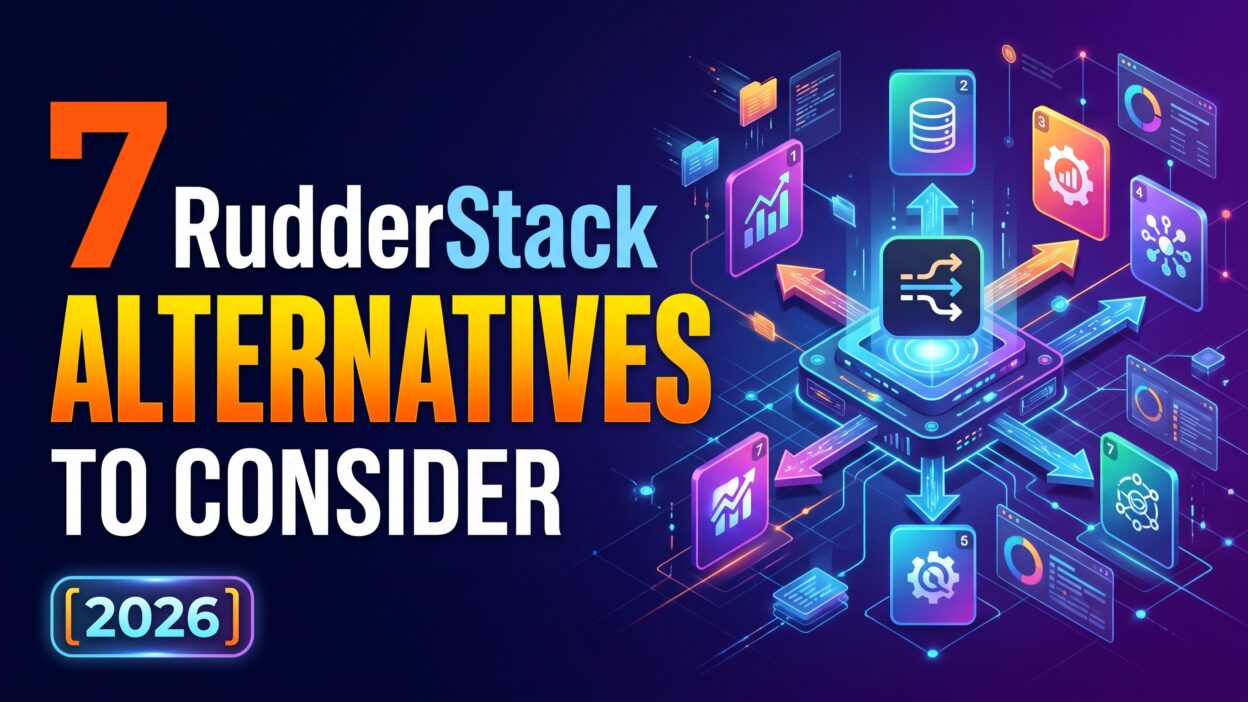
This guide covers seven RudderStack Alternatives for 2026. I explain what each tool does, where it shines and where it falls short. I also show you how to judge them against your own needs. Each section stands on its own, so jump to the part you need.
Table of Contents
What RudderStack Does
RudderStack is a customer data platform built for technical teams. It is an open-source platform that collects, routes and activates customer data. You install an SDK on your site or app. Events flow into the platform. The platform sends them to your warehouse and to other tools.
The product fits teams that keep the warehouse at the center. Engineers like the control. They can host parts of the stack, write custom transformations and shape the data before it lands. One 2026 comparison says RudderStack suits engineering-heavy teams that want open-source flexibility.
That strength brings a trade-off. Control means work. Someone must own the setup. Someone must maintain the pipelines. Smaller teams without a data engineer can feel stuck. Larger teams may hit plan limits. The next section explains why people look elsewhere.
Why Teams Look for RudderStack Alternatives
Buyers leave for a handful of reasons. Understanding yours helps you pick the right replacement. Each reason points to a different kind of tool.
Cost leads the list. Event-based pricing grows with your traffic. A busy product can produce millions of events each month. Finance teams notice the climb. They ask whether a different model would cost less.
Limits come next. One 2026 guide notes that RudderStack caps transformations by plan, and that Python transformations sit above the Free tier. Teams that rely on custom logic count those caps carefully. Hitting a limit forces an upgrade or a workaround.
Complexity drives many switches. Engineers enjoy flexibility until the backlog grows. Marketers wait days for a new audience. Product managers wait for a new event. Simpler tools can free everyone.
Fit changes over time. A startup that needed event streaming may now need reverse ETL. A team that needed a CDP may now want product analytics. Your needs shift. Your tools should shift with them.
Support and ecosystem matter too. Some teams want a larger partner network. Others want stronger identity resolution, deeper privacy controls or better mobile support. Write down your top three pains before you read the next section.
How to Evaluate a Replacement
Choosing among RudderStack Alternatives takes a clear scorecard. Without one, demos blur together. Start with the data you collect. List every source. Include web, mobile, server, ads, billing and support tools. Check that each candidate connects to all of them.
Look at the destinations next. Where does the data need to go? Name your warehouse, your ad platforms, your email tool and your CRM. Ask each vendor to show a live sync for your top five destinations. Slides prove nothing.
Examine the architecture. Some tools sit in the middle and route events. Others sit on top of the warehouse and read from it. A few do both. Warehouse-native designs keep one source of truth. Event routers deliver speed. Pick the pattern that matches how your team works.
Weigh privacy and governance. Ask how the tool handles consent, deletion requests and data residency. Ask whether you can host parts of it yourself. Regulated industries should push hard here.
Consider who will use the tool daily. Engineers want APIs and code. Marketers want a clean interface. Analysts want SQL access. A tool that serves only one group leaves the others frustrated.
Run a proof of concept. Pick one real use case. Build it end to end. Measure setup time, data accuracy and ease of change. Ask your team to rate the experience. Their feedback beats any review site.
The 7 Tools
1. Twilio Segment
Segment is the best-known name in this space. One 2026 guide calls it the most established customer data platform. Thousands of teams use it. Another comparison credits it with more than 700 integrations and a focus on event streaming.
The strengths are clear. Setup feels smooth. The catalog of connections is huge. Marketers can build audiences without code. Governance tools help teams keep tracking plans clean. Support and documentation run deep.
Price is the usual complaint. Amplitude describes Segment as powerful but pricey. Costs often rise with tracked users. Budgets stretch as traffic grows. Negotiate early and model your volume.
Choose Segment if you want a proven, polished platform and can afford it. It suits mid-size and large teams with many destinations.
2. Snowplow
Snowplow focuses on behavioral data. One 2026 guide recommends it for granular behavioural data. The platform collects detailed events, validates them against schemas and delivers them to your warehouse. The core technology has open-source roots.
The strengths show up in data quality. Schemas catch bad events at the door. Analysts get consistent, rich records. Teams that build machine learning models or deep product analysis value that rigor. You own the data in your own cloud.
The cost sits in effort. Snowplow asks for more engineering skill than a plug-and-play tool. Marketers will not manage it alone. Plan for a data engineer or a vendor partner.
Choose Snowplow if data quality and depth matter more than speed of setup. It fits data-mature teams.
3. PostHog
PostHog bundles product analytics with event collection. One comparison recommends it for teams that want event collection bundled with product analytics. The platform also offers session replay, feature flags and experiments. Teams get several tools under one roof.
The appeal is simplicity. You install one SDK. You see funnels, retention and recordings within minutes. Developers love the open-source option and the active community. Costs often start low.
The limit shows up when you need a full customer data platform. PostHog can send data to other tools. It does not match the depth of dedicated CDPs for audience building and marketing activation. Marketing-heavy teams may want more.
Choose PostHog if product teams drive your data needs. It suits startups and product-led companies.
4. Hightouch
Hightouch takes a different path. It reads from your warehouse and pushes data to business tools. That pattern is called reverse ETL. One 2026 roundup lists Hightouch among the top competitors for reverse ETL. The company also pitches a composable CDP built on your warehouse.
The strengths fit warehouse-first teams. Your warehouse stays the single source of truth. Analysts define audiences in SQL or a visual builder. Marketers send those audiences to ad platforms, email tools and CRMs. No data copy lives in a vendor system.
The limit is event collection. Hightouch does not replace an SDK that captures clicks on your site. Many teams pair it with a separate collection tool. Count that cost.
Choose Hightouch if your warehouse already holds clean customer data and activation is your goal.
5. Airbyte
Airbyte moves data from sources into your warehouse. The same roundup credits it with more than 700 open-source connectors. It handles databases, SaaS tools and files. You can self-host it for free or use the cloud version.
The strengths are breadth and cost. The connector library covers an enormous range of systems. Open-source users pay for infrastructure and time, not licenses. Teams with engineering skill gain big savings.
The gap is real-time event streaming. Airbyte works in batches. It does not replace a web or mobile SDK. Teams that need live personalization must add another tool.
Choose Airbyte if your main need is to centralize data from many systems at low cost. It suits data teams that tolerate some maintenance.
6. Fivetran
Fivetran offers fully managed data pipelines. You connect a source. Fivetran syncs it to your warehouse and handles schema changes. Reliability sits at the heart of the pitch. The roundup lists it among the leading competitors, with more than 700 connectors. improvado
The strengths come from hands-off operation. Pipelines run without constant care. Support is responsive. Large enterprises trust it for core reporting data. Your engineers focus on analysis instead of repair.
The trade-offs are price and scope. Usage-based pricing can climb with volume. Like Airbyte, Fivetran targets batch movement, not website event capture. Teams still need a collection layer.
Choose Fivetran if you want dependable, low-maintenance pipelines and have the budget for them.
7. mParticle
mParticle targets large brands with complex customer journeys. It collects data from web, mobile and server sources. It resolves identities across devices and sends audiences to many destinations. Mobile teams have long favored it.
The strengths include identity resolution, governance and enterprise controls. Large retailers, media firms and financial companies use it to unify data across channels. Privacy features help teams manage consent at scale.
The costs run high. Setup takes planning. Smaller teams may not need the depth. Check the vendor’s current ownership, roadmap and pricing before you commit, since the company has changed hands in recent years.
Choose mParticle if you run a large, mobile-heavy business and need enterprise identity and governance.
Side-by-Side Comparison
Group the seven tools by what they do best. Segment and mParticle act as full customer data platforms. They collect, route and activate. Snowplow and PostHog lead on event collection and analysis. Hightouch leads on activation from the warehouse. Airbyte and Fivetran lead on moving data into the warehouse.
That grouping reveals something important. Not every tool replaces RudderStack alone. Some replace one function. You may need two tools to cover the full job. A team might pair Snowplow for collection with Hightouch for activation. Another team might pair PostHog for events with Fivetran for backend data.
Compare RudderStack Alternatives on the jobs you must cover, not on brand names. Draw a simple chart. List your needs in rows. List the tools in columns. Mark where each tool fits. The gaps will guide your shortlist.
Pricing Models
Vendors charge in different ways. Learn the models before you request quotes. Surprises hurt most at renewal.
Event-based pricing charges for each event you send. It rewards lean tracking. It punishes noisy apps. Tracked-user pricing charges by monthly active users. It suits products with many events per user. Row-based pricing charges for each synced row. Warehouse tools often use it. Seat pricing charges per user of the platform. Open-source options charge for hosting and support, not licenses.
Model your volume before you talk to sales. Count events, users and rows for the last twelve months. Add expected growth. Ask each vendor to price that exact scenario in writing. Ask what happens when you exceed limits.
Add hidden costs to your math. Engineering time costs money. Training costs money. Extra collection tools cost money. Compare the total cost across three years, not only the sticker price. When you compare RudderStack Alternatives, total cost often reorders the list.
Migration Plan
Switching tools feels scary. A clear plan reduces risk. Start with an audit. List every source, destination, transformation and audience in your current setup. Include the ones nobody remembers. Surprises hide in old pipelines.
Pick a pilot. Choose one source and two destinations. Build them in the new tool. Compare the output with your current system. Look for missing events, changed names and timing gaps.
Run both systems in parallel. Send data to each for two to four weeks. Check counts daily. Fix differences before you cut over. Parallel runs protect your reporting.
Move in phases. Migrate low-risk sources first. Save the most critical flows for last. Tell every team the schedule. Marketing, product and finance all depend on this data.
Document the new setup. Write down tracking plans, naming rules and owners. Train your users. Retire the old system only after a clean month. Keep a backup of old configurations in case you need to roll back.
Frequently Asked Questions
What is the best alternative to RudderStack?
No single winner exists. Segment suits teams that want a polished, full-featured platform. Snowplow suits teams that prize data quality. PostHog suits product-led teams. Hightouch suits warehouse-first teams. Match the tool to your top need.
Are there free or open-source options?
Yes. Airbyte and PostHog both offer open-source paths. Snowplow has open-source roots. Free options still cost time. You pay in setup, hosting and maintenance. Count those costs before you decide.
How many RudderStack Alternatives should I test?
Test two or three. Fewer than two leaves you without comparison. More than three drains your team. Pick tools from different categories if your needs span several jobs.
Can I replace RudderStack with a reverse ETL tool alone?
Only if your events already land in the warehouse through another path. Reverse ETL tools push data out. They do not collect it. Pair them with a collection tool or an existing pipeline.
How long does a migration take?
Small setups move in a few weeks. Larger setups take a few months. Complexity, data quality and team capacity set the pace. Plan a parallel run and expect surprises.
Which of these RudderStack Alternatives costs the least?
Open-source tools often cost the least in licenses. They cost more in engineering time. Managed tools cost more in fees and less in labor. Compare total cost across three years with your real volume.
Read More:-Meeting No-Show Go-Back: How to Run a Meeting No-Show Follow-Up That Wins Them Back
Conclusion

RudderStack serves many teams well. It does not fit every team forever. Cost, limits, complexity and shifting needs push buyers to look around.
This guide gave you seven RudderStack Alternatives. Segment brings polish and scale. Snowplow brings data quality. PostHog brings simple product analytics. Hightouch activates warehouse data. Airbyte and Fivetran move data into the warehouse. mParticle serves large brands with deep identity needs.
Start with your own needs. Write your top three pains. Build a scorecard. Test two or three tools on one real use case. Model the cost across three years. Plan the migration in phases.