
Introduction
TL;DR Revenue teams talk to customers all day. Most of that knowledge never reaches the CRM. Reps forget details. Managers miss signals. Deals slip without warning. Conversation intelligence tools fix this gap. They record calls, pull out key details, and push them into your systems.
Momentum built its name in this space. The tool listens to calls and updates the CRM on its own. It also sends deal alerts to Slack. Many teams like it. Some teams want something different. They want deeper coaching, stronger forecasting, or a lower price.
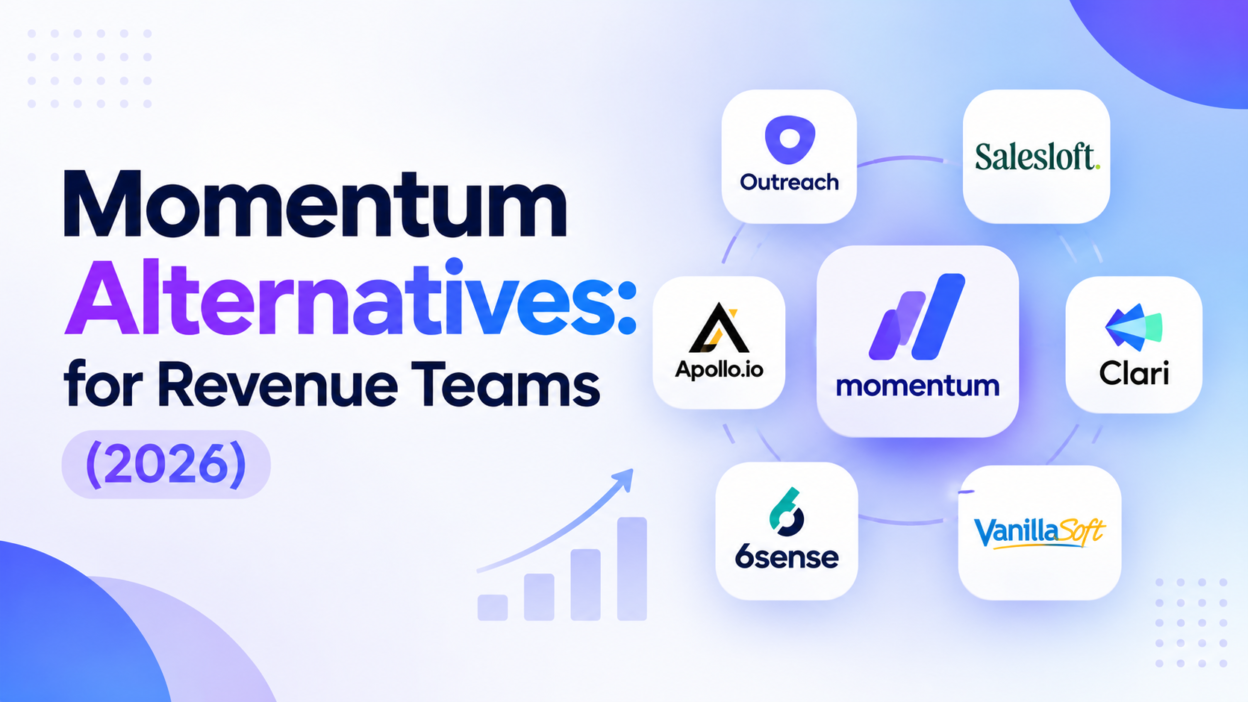
This guide covers the best Momentum alternatives for 2026. You will see what each tool does well. You will see where each one falls short. You will learn how to match a tool to your team.
Table of Contents
What Is Momentum and What Does It Do?
Momentum is a revenue orchestration platform. It captures data from calls, emails, and meetings. It then writes that data into the CRM. Reps stop typing notes after every call. Fields update on their own.
The platform also tracks deal risk. It watches signals like silence, missing stakeholders, and slipping timelines. It sends alerts to Slack. Managers see trouble early. Reps get a nudge to act.
Momentum serves sales and customer success teams. Sales teams use it to keep the pipeline clean. Customer success teams use it to spot churn signals and track account health.
The tool works well for teams that live in Slack and Salesforce or HubSpot. It fits companies that want automation more than heavy reporting.
No product suits every team. Some buyers want deep call coaching tools. Others want advanced forecasting. A few need strong support for large enterprise rollouts. Price also plays a role.
These gaps explain why buyers explore Momentum alternatives. The next section covers the most common reasons.
Why Teams Search for Momentum Alternatives
Teams switch tools for clear reasons. Knowing your own reason helps you choose well.
Coaching needs come up often. Managers want to review calls, tag moments, and share clips. Some platforms build their whole product around coaching. Reps improve faster with that kind of feedback.
Forecasting drives other searches. Leaders want accurate numbers. They want to see which deals will close and which will slip. Some competitors offer stronger forecasting models and pipeline inspection.
Price matters. Per-seat costs grow fast. A team of one hundred reps pays a large bill. Smaller teams want lighter plans.
Integration depth shapes daily use. Teams run Salesforce, HubSpot, Slack, Zoom, and many other tools. A weak connection forces manual work. Reps ignore tools that create chores.
Scale changes requirements. A fast-growing company adds regions, segments, and managers. It needs permissions, analytics, and admin controls. Lighter tools can feel thin at that stage.
Data privacy and security also count. Call recordings hold sensitive information. Buyers ask about storage, consent, and compliance. Larger firms need strong answers.
Each reason points to a different tool. The list below groups the best Momentum alternatives by strength.
How I Chose These Tools
I used five filters to build this list.
I checked core purpose first. Every tool must capture customer conversations and help revenue teams act on them. A plain note-taking app did not qualify. I wanted insight, automation, or coaching.
I weighed accuracy next. Transcripts must read well. Summaries must match the call. I read user reviews on major software sites. I noted common complaints.
I reviewed integrations. A CRM connection ranks high. Slack, calendar, and video tool links count too.
I compared usability. Reps will not open a clumsy tool. Setup should take hours or days, not months.
I considered value. A cheap tool that misses key features wastes time. A higher-priced tool that replaces two others can save money.
I built this list of Momentum alternatives from these filters. I matched each tool to a clear use case. Popularity did not decide the order.
1. Gong
What Gong Offers
Gong is the best-known name in conversation intelligence. The platform records and analyzes calls, emails, and meetings. It scores deal health and surfaces risk. Large companies rely on it to understand what drives wins.
The analytics run deep. Managers see talk ratios, topic trends, and competitor mentions. They compare top performers with the rest of the team. Those insights shape coaching plans.
Forecasting tools add value. Leaders inspect pipeline by deal, by team, and by region. The system flags deals that lack activity or key contacts.
The ecosystem is wide. Gong connects with major CRMs, calendars, and engagement tools. Training resources are plentiful.
Where Gong Falls Short
Gong costs more than most rivals. Contracts often include platform fees plus seat fees. Small teams may find the price heavy. Setup and change management take effort.
The feature set can overwhelm new users. Teams must plan how they will use the data. Gong suits mid-size and enterprise teams with the budget and the process to use it well.
2. Clari Copilot
What Clari Copilot Offers
Clari built its reputation on revenue forecasting. Clari Copilot adds conversation intelligence to that base. The result links calls to pipeline and forecast data.
Reps get call recordings, transcripts, and summaries. Managers see deal insights next to forecast numbers. Everyone works from one view of the truth. That link between talk and numbers sets Clari apart.
Coaching tools help managers review calls and give feedback. Scorecards track skills over time. Playlists share top calls with new hires.
CRM sync keeps records up to date. Alerts warn teams about risky deals.
Where Clari Copilot Falls Short
The full value appears when teams adopt the wider Clari platform. Teams that want only conversation intelligence may pay for more than they use. Pricing usually follows custom quotes. Ask for a clear breakdown.
Setup takes planning. Admins must map fields and processes. Smaller teams may prefer a lighter tool.
Clari Copilot suits revenue teams that care most about forecast accuracy. It fits companies that want one system for calls and pipeline.
3. Chorus by ZoomInfo
What Chorus Offers
Chorus is a conversation intelligence tool now part of ZoomInfo. It records calls, creates transcripts, and flags key moments. Teams use it to learn what buyers say and how reps respond.
The ZoomInfo link adds value. Reps see contact data, company details, and intent signals alongside call insights. Teams that already use ZoomInfo can bring everything into one workflow.
Coaching features let managers add comments and share clips. Trackers monitor mentions of competitors, pricing, and objections. Reports show patterns across the team.
Integration with major CRMs keeps data in sync. Admins can control access and retention.
Where Chorus Falls Short
Packaging has changed since the acquisition. Buyers should confirm what the current offer includes. Teams that do not use ZoomInfo may see less benefit. Pricing often follows a custom quote.
Some users find newer rivals more modern. Chorus suits teams that already rely on ZoomInfo data. It rewards buyers who want call insights and contact data under one vendor.
4. Avoma
What Avoma Offers
Avoma is an AI meeting assistant. It records calls, writes transcripts, and builds notes. It also creates summaries and action items. Teams use it for sales, customer success, and internal meetings.
The tool balances price and features. Plans cost less than many enterprise rivals. A free tier lets small teams test it. Paid plans add more recording, analysis, and CRM features.
Meeting templates structure notes. A sales call template captures pain points and next steps. A kickoff template tracks project details. Reps pick the template that fits each call.
CRM integrations update records after calls. Coaching tools and conversation analytics add depth. Scheduling features help teams book meetings.
Where Avoma Falls Short
Forecasting and deal inspection run lighter than in larger platforms. Large enterprises may want deeper controls. Some users report that accuracy varies with audio quality and accents.
Avoma suits small and mid-size teams that want value. It fits companies that need meeting notes across many roles.
5. Fireflies.ai
What Fireflies.ai Offers
Fireflies.ai is a popular AI notetaker. It joins calls on Zoom, Google Meet, and Microsoft Teams. It records, transcribes, and summarizes each meeting.
Search is a strong point. Users can search across every call for a phrase or topic. A rep can find what a buyer said three months ago in seconds. Teams build a shared library of knowledge.
The pricing attracts small teams. A free plan exists with limits. Paid plans add storage, features, and integrations. Many startups begin here.
Integrations connect Fireflies with CRMs, Slack, and project tools. Automated notes can flow into records after each call.
Where Fireflies.ai Falls Short
The tool serves a wide audience. It does not focus on revenue teams as deeply as Momentum or Gong. Deal risk scoring and forecasting remain limited. CRM field mapping takes setup.
Fireflies suits teams that want simple notes and searchable transcripts at a low price. Revenue leaders who need deal intelligence may pair it with other tools.
6. Salesloft
What Salesloft Offers
Salesloft is a sales engagement platform with conversation intelligence built in. Reps run email sequences, calls, and tasks from one workspace. The platform records calls and analyzes them as well.
Cadences guide reps through each step of outreach. Managers see which messages earn replies. Conversation data feeds coaching and forecasting tools. Teams connect activity to results.
The platform serves revenue teams across the funnel. Prospecting, deal management, and forecasting all live in one system. Large teams like the control and reporting.
CRM integrations keep records clean. Analytics show performance by rep, team, and campaign.
Where Salesloft Falls Short
The platform costs more than lightweight tools. Teams that need only call notes will pay for features they skip. Setup and training take time.
Conversation features may feel secondary next to the engagement tools. Salesloft suits mid-size and enterprise teams that want engagement, coaching, and forecasting in one platform. It rewards companies that commit to a full rollout.
7. Outreach
What Outreach Offers
Outreach is another major sales execution platform. It combines sequences, calling, deal management, and conversation insights. The tool targets large revenue organizations.
AI features analyze calls and emails. They surface risks and suggest next steps. Deal views show activity, contacts, and engagement in one screen. Managers inspect pipeline without extra spreadsheets.
Forecasting tools support leaders who report to executives. Roll-ups by team and region give a clear view. Rules and permissions suit complex organizations.
The integration list is long. Outreach works with Salesforce, Microsoft Dynamics, and many other tools.
Where Outreach Falls Short
Outreach sits at the higher end of pricing. Implementation takes planning and often needs admin support. Small teams will find it too heavy.
Some users report a learning curve. Reps need training to use all features. Outreach suits large and mid-size revenue teams that want one platform for execution and insight. Check current plans and packaging on the vendor site.
Quick Comparison of the Top Momentum Alternatives
Each tool serves a different need. This summary groups them by strength.
Gong suits large teams that want deep analytics and coaching. Clari Copilot suits teams that care most about forecast accuracy. Chorus suits companies that already use ZoomInfo.
Avoma suits small and mid-size teams that want solid features at a fair price. Fireflies.ai suits teams that want searchable notes at a low cost.
Salesloft and Outreach suit larger teams that want engagement and conversation intelligence on one platform. Both ask for more setup and a bigger budget.
Ask three questions as you compare. Do you need notes, coaching, or forecasting? How many reps will use the tool? How much admin time can you spare? Your answers will narrow the field to two or three finalists.
Teams that love Momentum for CRM automation should test how each Momentum alternative handles field updates. Accuracy there decides whether reps trust the tool.
How to Choose Among Momentum Alternatives
Start with your goal. Decide what problem you want to fix. Some teams want cleaner CRM data. Others want better coaching or forecasts. The goal shapes the tool.
Check your tech stack. Confirm that the platform connects with your CRM, calendar, video tool, and Slack. Ask how deep the sync goes. Shallow connections create manual work.
Test accuracy. Run a trial with real calls. Compare transcripts and summaries. Check whether CRM updates match what happened on the call. Real results beat any sales pitch.
Involve your reps. They use the tool every day. Invite two or three to the trial. Ask what feels helpful and what feels like a burden. Adoption decides success.
Involve managers. They need coaching and inspection features. Ask them to review calls and try the dashboards.
Review security and privacy. Ask where the vendor stores recordings. Ask how long it keeps them. Check consent features for call participants. Loop in your legal team early.
Count total cost. Add seat fees, platform fees, and onboarding charges. Check contract length. A flexible plan lets you leave if results disappoint.
Use this process whenever you review Momentum alternatives. It keeps your decision tied to results rather than hype.
Privacy and Compliance Considerations
Recording calls raises real legal questions. Laws differ by country and by state. Some regions require consent from every participant. Others require consent from one party.
Talk with your legal team before you roll out any tool. Ask how the vendor collects, stores, and deletes data. Ask about encryption and access controls. Ask whether the vendor holds recognized security certifications.
Set clear rules inside your company. Decide which calls to record. Decide who can view recordings. Decide how long to keep them. Write the rules down and share them.
Tell buyers when you record. Most tools include a consent notice or banner. Use it. Honest practice builds trust.
Customer data also needs care. Some calls include health, financial, or personal details. Choose tools that let you mask or redact sensitive content.
Rules keep evolving. Review your setup each year. When you compare Momentum alternatives, put compliance on the scorecard next to price and features.
Pricing and Value Considerations
Pricing varies widely in this category. Fireflies.ai and Avoma publish plans and offer free tiers. Gong, Clari, Salesloft, Outreach, and Chorus often use custom quotes. Plans change often, so visit each official page.
Most vendors charge per seat. Some add platform fees. Annual contracts bring discounts. Higher tiers unlock coaching, forecasting, and advanced analytics.
Value depends on outcomes. Measure what the tool changes. Track CRM data quality, ramp time for new reps, win rate, and forecast accuracy. A tool that saves each rep thirty minutes a day pays for itself. A tool that reps ignore adds cost and no return.
Watch for hidden costs. Some vendors charge for onboarding, extra storage, or premium support. Others lock you into long terms. Ask for a written quote with every line item.
Negotiate with confidence. Tell vendors you compare several Momentum alternatives. Ask for a pilot before a long commitment. Strong vendors agree.
Frequently Asked Questions About Momentum Alternatives
What are the best Momentum alternatives for small teams?
Avoma and Fireflies.ai suit small teams on a budget. Both offer free or low-cost plans. Test them on real calls before you commit.
Which tool is closest to Momentum?
Gong and Clari Copilot come closest in purpose. Both capture calls and push insights into the CRM. Avoma offers a lighter option with CRM updates and notes.
Do these tools update my CRM automatically?
Most do in some form. Depth varies. Some write notes and fields after each call. Others only log activity. Test field mapping during your trial.
Which tool offers the best coaching features?
Gong leads in coaching depth. Clari Copilot, Chorus, Salesloft, and Outreach also offer strong tools. Avoma covers the basics for smaller teams.
Is call recording legal?
It depends on your location and your audience. Many places require consent from all participants. Ask your legal team and use consent notices.
How long does setup take?
Lightweight tools go live in a day. Mid-range platforms take one to three weeks. Enterprise platforms can take months. Plan time for CRM mapping and rep training.
Can I use more than one tool?
Yes. Some teams pair a notetaker with a forecasting tool. Overlap adds cost and confusion. Define the job of each tool before you buy.
How do I measure success after switching?
Track CRM data quality, rep ramp time, forecast accuracy, and win rate. Review the numbers monthly. Compare them with your results before the switch.
Read More:-The 7 Best MCP Servers for RevOps in 2026
Conclusion

Conversations hold the truth about your pipeline. The right tool turns them into action. Momentum serves many teams well. It does not fit everyone. The Momentum alternatives on this list cover a wide range of needs.
Gong brings deep analytics and coaching. Clari Copilot ties calls to forecasts. Chorus fits ZoomInfo users. Avoma delivers solid features at a fair price. Fireflies.ai offers simple, searchable notes. Salesloft and Outreach join engagement and insight for larger teams.