

Introduction
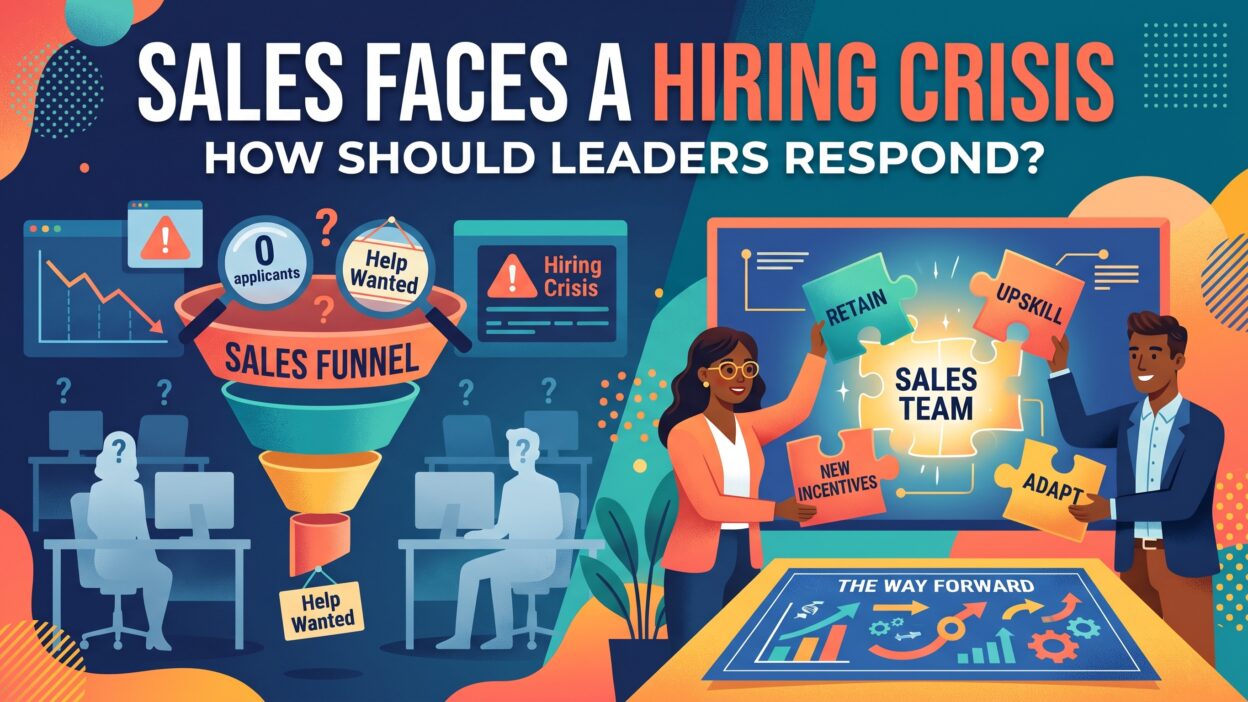
TL;DR A sales leader posts an opening on Monday. Two weeks pass. Few good candidates apply. The best finalist takes another offer. The team still carries the quota for an empty seat.
This story repeats across the industry. Leaders call it the Sales Hiring Crisis. Roles stay open longer. New hires leave sooner. Entry-level paths narrow. Experienced sellers sit tight and ignore recruiter messages.
The crisis has several sides. Talent is scarce. Buyers act differently. AI changes the job. Quotas rise while attainment falls. Each force makes hiring harder. Together they strain even strong teams.
Table of Contents
What Is the Sales Hiring Crisis?
The Sales Hiring Crisis describes the growing struggle to find, hire, ramp, and keep sales talent. It touches every level, from sales development reps to senior account executives and managers. The pain shows up in open roles, long searches, early exits, and missed targets.
The crisis does not mean nobody wants sales jobs. Many people apply. The gap sits between what employers need and what the market supplies. Companies want ready-made sellers who can use data, handle AI tools, and run complex deals. Few candidates match that profile.
Common symptoms
Leaders see the same signs. Searches drag on for months. Offers get declined. New hires wash out during ramp. Top reps leave for better setups. Managers spend more time recruiting than coaching.
Some teams cut entry-level seats. They then struggle to build their own future account executives. The pipeline of talent dries up from the bottom.
Not new, but sharper
Sales has always had turnover. Reps change jobs often. The current moment adds new strain. Buyer behavior shifts. AI automates tasks that trained juniors. Economic caution tightens budgets. Each factor raises the bar for hiring and the cost of mistakes.
Why the Hiring Crisis Is Happening
No single cause explains it. Several trends collide. Understanding them helps leaders pick the right fix.
A tight talent market
The shortage reaches far beyond sales. ManpowerGroup’s 2026 Global Talent Shortage survey of 39,063 employers across 41 countries found that 72 percent report difficulty filling roles. Sales leaders compete with every other function for skilled people.
Good sellers rarely look for work. Recruiting experts note that most strong candidates are passive. They hit quota, earn well, and ignore job boards. Finding them takes outreach and a strong pitch.
The shrinking entry-level ladder
Sales development roles once served as the front door to a sales career. That door is narrowing. An Emergence Capital survey of more than 560 B2B software companies, reported by SaaStr, found that 36 percent cut sales development teams in 2025. Many teams shrink through attrition and not layoffs.
An Express Employment Professionals and Harris Poll survey in 2026 found that more than four in five hiring managers say entry-level jobs require more skills than before. Seventy-nine percent say entry-level roles matter for building future talent. Yet many firms hire fewer juniors.
The result is a funnel problem. Fewer juniors enter. Fewer grow into experienced reps. Companies then fight over a smaller pool of seasoned sellers.
Lower attainment and heavy turnover
The Bridge Group’s 2026 account executive study found that only 48 percent of AEs hit quota. Falling attainment hurts pay and morale. Reps who miss targets feel pressure and look elsewhere.
Turnover feeds itself. A data sample from Pin showed that completed SDR stints lasted a median of just nine months. About 83 percent ended within eighteen months. Short tenures mean constant rehiring.
Buyers want less contact with reps
A 2025 Gartner survey found that 61 percent of B2B buyers prefer a rep-free buying experience. That shift changes the job. Sellers must add value beyond information. Companies need fewer order-takers and more advisors. Many candidates have not built those skills.
Candidate frustration
The hiring process itself drives people away. Criteria’s 2024 to 2025 benchmark report found that 38 percent of candidates were ghosted during a hiring process in the past year. Only 20 percent of hiring professionals admitted to ghosting. Slow, silent processes lose good candidates.
The Cost of the Sales Hiring Crisis
Every open seat and every failed hire costs money. Leaders often underestimate the total.
The price of a bad hire
A CareerBuilder and Harris Poll survey reported an average loss of 14,900 dollars per bad hire. Sales adds extra layers. A new rep needs time to ramp. The Bridge Group puts average AE ramp at 6.2 months and average SDR ramp at three months. A rep who leaves before ramp ends wastes most of that investment.
One 2026 industry analysis in the media sales sector found that replacing a rep takes about three months of searching and another five and a half months of onboarding. Estimates vary by industry. The pattern holds nearly everywhere.
The empty chair
An open territory produces no pipeline. Accounts go untouched. Competitors move in. Remaining reps absorb extra work and feel stretched.
Morale and culture damage
Each departure shakes the team. Colleagues start to wonder if they should leave too. Managers lose time to interviews and onboarding. Coaching suffers. Performance slips further.
The Sales Hiring Crisis therefore becomes a revenue crisis. Hiring problems show up in quarterly results within months.
AI and the Changing Sales Role
AI changes what leaders should hire for. It also changes how candidates search for jobs.
Fewer routine tasks
Salesforce’s State of Sales research, based on a survey of 4,050 sales professionals, named AI the top growth tactic for 2026. Sellers expect AI agents to cut prospect research time by 34 percent and email drafting time by 36 percent. Tasks that once trained juniors now run on automation.
Higher expectations for new hires
Companies now expect reps to use AI tools well. They want critical thinking, strong discovery skills, and clear communication. Recruiters suggest testing how candidates use AI in a role-play. A candidate who cannot show responsible AI use may struggle in the job.
Perception versus reality
Workers worry about AI. An Indeed Flex survey in July 2026 found that 62 percent believe companies reduce entry-level hiring because of AI. Only 31 percent said AI had actually reduced entry-level opportunities in their own field. Fear shapes behavior even when the facts differ.
Leaders should speak openly. Explain how AI supports reps and what skills still matter most. Candidates trust honest messages.
How Leaders Should Respond to the Sales Hiring Crisis
Leaders cannot control the market. They control their own process, culture, and plans. The moves below address the biggest gaps.
Define roles by segment
A vague job description attracts the wrong people. Profile each role by segment. An SDR, a small business AE, a mid-market AE, and an enterprise AE need different skills, ramps, and pay. Write the role around real outcomes and the actual buyer.
Rebuild the entry-level pipeline
Do not abandon junior hiring. A lean, well-run program feeds your future AE bench. Offer structured training. Pair juniors with mentors. Set clear paths to promotion with published criteria. Hire for curiosity and coachability and train the rest.
About half of SDRs who become AEs make the jump at a different company, according to Pin’s profile data. A clear internal path keeps your best juniors from leaving.
Speed up the process
Speed wins candidates. Set service levels. Screen applicants within 48 hours. Schedule panel interviews within five business days. Make offers within three business days after the panel. Tell candidates where they stand at each step. Silence loses talent.
Source beyond the usual places
Skills-based hiring grows. The NACE 2026 Job Outlook found that 70 percent of employers use skills-based practices, up from 65 percent the year before. Look at teachers, customer success staff, engineers, and military veterans. Technical buyers often trust technical sellers. Engineers who rotate into AE roles can excel in complex deals.
Build referral programs. Your best reps know other strong reps. Reward referrals quickly.
Reinvent onboarding
A strong first ninety days protects your investment. Give new hires a clear plan, a buddy, and weekly check-ins. Tie ramp milestones to real work such as first calls, first demos, and first deals. Spot struggles early and coach them.
Try flexible talent models
Some teams use hybrid structures. A core team of full-time AEs handles enterprise accounts. Fractional or contract SDRs support campaign-driven outbound. Full-cycle reps cover mid-market. These models add flexibility when hiring is hard.
Invest in retention
Hiring and retention work together. The best way to fill seats is to keep the people you already have. Coach often. Offer growth. Treat reps with respect. Fair territories and fair quotas matter. Skilled reps leave when plans feel rigged.
Compensation and Quota Design That Attract Talent
Candidates read pay plans closely. A plan that looks confusing or unfair scares them away.
Be transparent
Share on-target earnings, quota, and average attainment in the interview. Pin reports median OTE near 80,000 dollars for SDRs and 200,000 dollars for AEs, based on Bridge Group data. Your numbers may differ. Honest figures build trust and reduce early exits.
Set realistic quotas
With only 48 percent of AEs hitting quota, aggressive targets often backfire. Use real data on territory potential, win rates, and ramp time. Reps leave when targets seem impossible.
Reward the right behavior
Pay for outcomes you want. Consider credit for team selling, expansion, and retention. Avoid constant mid-year plan changes. Stability signals fairness.
Keep pay competitive
Watch market rates. Companies that hire at the same time push pay up fast. Review bands each quarter. Do not wait until you lose a top rep to adjust.
Build a Scorecard for Hiring Decisions
Gut feeling alone fails. A scorecard brings structure and fairness.
List the traits that predict success in the role. Common traits include curiosity, resilience, coachability, communication, business acumen, and comfort with technology. Define what strong looks like for each.
Add practical exercises. Ask candidates to run a mock discovery call. Ask them to analyze an account and propose a plan. Ask them to explain how they would use AI for research. Score each exercise on the same scale.
Train interviewers. Share bias risks. Compare notes right after each interview. Reach a decision as a group and document the reasons.
Review the scorecard every six months. Compare scores with real performance. Adjust traits that do not predict results.
Metrics That Show Progress
Leaders need numbers to know if changes work. Track a small set of measures each month.
Track time to fill by role. Track offer acceptance rate. Track candidate experience scores from short surveys. Track ramp time and the share of hires who reach quota targets. Track retention at six, twelve, and eighteen months.
Watch regretted attrition separately. Losing a top performer costs far more than losing a low performer. Track internal promotion rates from SDR to AE.
Share the data with executives and finance. Data wins budget for better programs. Review trends and not single data points.
Mistakes Leaders Make
Even smart teams stumble. Avoid these errors.
Waiting too long to open requisitions
Searches take time. A leader who waits until the last minute loses months. Plan headcount early and build a bench of candidates in advance.
Copying old job descriptions
Old postings reflect old roles. Update them to match the current job, the real tools, and the actual buyer.
Hiring for pedigree alone
A famous logo on a resume does not guarantee success. Test for skills and fit.
Ignoring the candidate experience
Slow replies, vague feedback, and ghosting damage your brand. Candidates talk to each other. Treat every applicant with respect.
Letting onboarding slide
A great hire can fail in a messy first quarter. Invest in the ramp.
Frequently Asked Questions
What is the Sales Hiring Crisis?
It describes the growing difficulty of finding, hiring, ramping, and retaining sales talent. Long searches, early exits, falling attainment, and a shrinking entry-level pipeline all contribute.
Why is the Sales Hiring Crisis getting worse?
Several trends combine. Talent shortages hit many industries. Entry-level roles shrink as AI automates tasks. Quota attainment falls. Buyers prefer less contact with reps. Candidates grow frustrated with slow processes.
How long does it take a new sales rep to ramp?
The Bridge Group reports averages of about three months for SDRs and 6.2 months for AEs. Times vary by product, deal size, and sales cycle.
Is AI replacing sales reps?
AI automates tasks such as research and email drafting. Human skills still matter in complex deals. Companies increasingly want reps who combine judgment with strong AI use.
How can small companies compete for talent?
Offer clear growth paths, honest pay information, fast decisions, and close coaching. Small firms can move faster than large ones. Highlight your mission and impact.
Should we still hire SDRs?
Many firms do. Some use leaner teams or fractional models. A well-run SDR program builds future AEs. Decide based on your sales motion and growth plans.
What is skills-based hiring?
It means evaluating candidates on proven skills and not just degrees or past titles. Work samples, role-plays, and structured interviews support it.
How do I keep new hires from leaving early?
Set clear expectations during hiring. Build a strong onboarding plan. Assign a mentor. Coach weekly. Keep quotas fair. Check in on morale during the first six months.
Read More:-B2B Sales Trends 2026: What Signal-Led Teams Do Differently
Conclusion

Hiring in sales has never been simple. The current moment adds new weight. Talent is tight. Entry-level paths narrow. Quotas stretch. Buyers change habits. AI reshapes the job.
The Sales Hiring Crisis calls for action and not panic. Leaders can respond with clear steps. Define roles with care. Rebuild the junior pipeline. Speed up interviews. Look in new places for talent. Fix onboarding. Design fair pay. Invest in retention.