

Introduction
TL;DR Most B2B deals do not die in the demo. They die in a meeting you never attended. A person you never met says no. Your champion goes quiet. Procurement raises a flag in week ten. You lose the deal and never learn why.
Buying Committee Mapping fixes that problem. It gives you a clear picture of every person who touches the decision. You see who holds the budget. You see who blocks progress. You see who needs more proof before they say yes.
Table of Contents
What Is Buying Committee Mapping?
A Simple Definition
Buying Committee Mapping is the process of identifying every person who shapes a purchase decision. You record each person’s role, goals, influence, and attitude toward your offer. You place all of it on one page. That page becomes your guide for the entire sales cycle.
Think of it as a floor plan of the deal. A floor plan shows every room and every door. A map of the buying committee shows every voice and every path to a signature.
Why a Buying Committee Exists
Modern B2B purchases carry risk. A wrong choice costs money, time, and reputation. Companies spread that risk across many people. Industry research often puts the group at six to ten people for complex deals. Large enterprise deals can reach fifteen or more.
Each person brings a different worry. Finance worries about cost. IT worries about security. Operations worries about disruption. Legal worries about liability. Your product must answer each worry. You cannot answer a worry you do not know about.
Why Sellers Need a Map
Buying Committee Mapping shortens your sales cycle. It shows you where deals stall before they stall. It helps you spend time on the right people. It also helps your manager forecast with real facts instead of hope.
Many reps work with one contact. That contact may love your product. That contact may also hold no power. A map exposes this gap early.
Who Sits on a B2B Buying Committee?
Every committee looks different. Roles stay familiar. Learn these roles before you start Buying Committee Mapping on a live account. You will spot them faster.
The Economic Buyer
The economic buyer controls the budget. This person signs the contract or approves the spend. Titles vary. You may meet a CFO, a VP, or a department head. This person cares about return on investment and risk. Economic buyers rarely attend demos. You must earn access through your champion or through a sharp business case.
The Champion
The champion wants you to win. This person believes your solution solves a real problem. A champion sells for you when you are not in the room. Champions need tools. Give them a one-page summary, a cost case, and answers to likely objections. A weak champion has enthusiasm and no influence. A strong champion has both.
The Technical Evaluator
The technical evaluator tests your product against requirements. This person reads security documents. This person asks hard questions about integrations. Treat technical evaluators with respect. They can kill a deal with one bad report.
The End Users
End users work with your product every day. They care about ease and speed. Their opinion carries weight with managers. A rollout fails when users refuse to adopt. Smart committees ask users for input. Smart sellers do too.
The Blocker
A blocker opposes your solution. The reason may be loyalty to a rival, fear of change, or a past bad experience. Some blockers hide. Others speak loudly. Find them early. A known blocker is a problem you can solve. A hidden blocker is a surprise you cannot afford.
Legal, Procurement, and Compliance
These roles show up late. They review terms, pricing, and risk. They can add weeks to your timeline. Include them in your map from day one. Ask your champion when they enter the process.
Gather Account Intelligence
Start With What You Know
Open your CRM. List every contact on the account. Note their titles, their last touch, and their level of engagement. Most accounts show two or three names. That count is your starting point.
Research Beyond the CRM
Visit LinkedIn. Search the company name. Review titles in the departments your product touches. Read the company’s press releases and earnings calls. Look for new hires and recent promotions. A new executive often brings new priorities and new vendors.
Check job postings. Open roles reveal pain. A posting for a data security lead tells you security matters now. A posting for a revenue operations manager tells you the team wants better process.
Ask Your Champion
Your champion knows the inside story. Ask direct questions. Who else cares about this problem? Who approves spending at this level? Who has bought software here before? What happened in that purchase?
Keep your tone casual. Frame the questions as a way to help your champion succeed. People share more when they feel you want to support them.
Review Past Deals
Look at similar deals you won and lost. Note which roles joined the conversation. Patterns appear quickly. Buying Committee Mapping gets easier when you know how similar companies buy. Your team’s history is a free source of insight.
Identify Every Stakeholder
Think in Departments, Not Titles
Titles mislead. A “Director of Operations” at one firm holds real power. The same title at another firm holds little. Start with departments. Ask which teams use, fund, secure, or support your product. Each team likely has someone with a voice.
Walk the Purchase Path
Imagine the deal from signature to launch. Who writes the requirements? Who runs the pilot? Who reviews the contract? Who pays the invoice? Who trains the staff? Every answer names a stakeholder.
This exercise makes B2B buying group members visible. You will find people you never considered. Finance analysts, security reviewers, and project managers often hide in the shadows.
Use Multi-Threading
Multi-threading means building relationships with several people at once. Never rely on one contact. Reach out to a second and third person early. Share useful content. Offer a short call. Each new thread gives you a new view of the account.
Buying Committee Mapping works best when you collect many perspectives. One contact sees one slice. Four contacts show the whole pie.
Ask for Introductions
Ask your champion for warm introductions. Make the request easy. Offer to send a short note they can forward. Most champions agree when you show clear value to their peers.
Keep a Running List
Add every new name to your map the moment you learn it. Include unknowns. A line that reads “Security reviewer, name unknown” reminds you to find that person. Gaps on the map guide your next move.
Assign Roles to Each Person
Match Each Name to a Role
Review your list. Label each person with one primary role. Use the roles from earlier: economic buyer, champion, technical evaluator, user, blocker, and gatekeeper. Add “influencer” for people who shape opinions without owning a decision.
Some people hold two roles. A CTO may act as both economic buyer and technical evaluator. Note both. Label the stronger one first.
Define Decision Power
Roles tell you what a person does. Decision power tells you how much their word counts. Ask these questions. Can this person approve? Can this person veto? Can this person only advise? Mark each person as approver, vetoer, or advisor.
Vetoers deserve extra attention. A vetoer with low visibility ranks as a high risk. Legal and security teams often fit this profile.
Capture Goals and Fears
Write one line about what each person wants. Write one line about what each person fears. A VP of Sales may want faster ramp time and fear a messy rollout. A CFO may want lower cost and fear hidden fees.
These notes turn Buying Committee Mapping into a messaging guide. You know what to say to each person. You know what to avoid.
Stay Humble About Gaps
You will guess on some roles. Mark guesses as guesses. Confirm them in later conversations. A wrong label does more harm than a blank one.
Score Influence and Sentiment
Rate Influence
Give each stakeholder an influence score from one to five. Five means the person can make or break the deal. One means the person has little sway. Use evidence for your scores. Look at reporting lines, past decisions, and how peers react in meetings.
Watch the room. People often defer to one voice. That voice carries influence no matter the title.
Rate Sentiment
Give each stakeholder a sentiment label. Use champion, supporter, neutral, skeptic, or opponent. Base your label on actions. A person who joins calls, asks smart questions, and shares data leans positive. A person who skips meetings and answers in single words leans negative.
Avoid wishful thinking. Sellers love to label silent people as supporters. Silence rarely means support.
Plot the Gaps
Compare influence and sentiment. High influence with low support signals danger. High support with low influence signals untapped potential. Your plan should focus on high-influence skeptics and high-influence neutrals. Convert them and you win the deal.
Check Coverage
Count how many roles you have reached. Do you have contact with the economic buyer? Do you have a technical ally? Have you met the security reviewer? Coverage gaps often explain stalled deals. Account-based selling teams track coverage as a core metric. You can do the same with a simple score out of ten.
Revisit Often
Sentiment shifts. A bad pilot week can turn a supporter into a skeptic. Update your scores after each major interaction. A fresh score beats a stale one.
Build a Visual Buying Committee Mapping Template
Choose a Format
Pick a format your team will use. A slide, a spreadsheet, a whiteboard, or a CRM field all work. Simple wins. A map that takes ten minutes to update will get updated. A map that takes an hour will collect dust.
Draw the Org Structure
Place the economic buyer at the top. Add reporting lines beneath. Show the champion, the evaluators, and the users in their places. Draw dotted lines for informal influence. Draw solid lines for formal reporting.
Add color. Use green for supporters, yellow for neutrals, and red for skeptics and opponents. A glance at the page tells the story. Managers love this view in deal reviews.
Add Key Details to Each Box
Each box should hold the name, title, role, influence score, and sentiment. Add one line on goals and one on fears. Add the date of your last contact. Keep text short. Crowded boxes hide the point.
Mark the Open Spots
Draw empty boxes for roles you have not filled. Label them “Needed: security reviewer” or “Needed: finance approver.” These boxes work like a to-do list. They push you to fill gaps.
Share the Map
Share the page with your account team, your manager, and your sales engineer. Everyone should see the same picture. Buying Committee Mapping gains power when the whole team adds to it. A shared map exposes blind spots fast.
Engage, Update, and Act on the Map
Build a Plan for Each Person
Pick the three most important people on the map. Write one action for each. Offer your champion a business case. Send the technical evaluator a security brief. Invite the economic buyer to an executive call.
Match each action to the person’s goal. A map without actions is a poster. A map with actions is a strategy.
Tailor Your Message
Speak in the language of each role. Talk cost and return with finance. Talk integration and uptime with IT. Talk ease and training with users. Buying Committee Mapping makes this tailoring simple, since your notes list each person’s goals and fears.
Equip Your Champion
Your champion must sell to people you cannot reach. Hand over short, clear material. Offer a slide your champion can paste into an internal deck. Offer talking points for tough questions. Practice the pitch on a call. A prepared champion wins arguments in rooms you never enter.
Win Over Skeptics
Meet skeptics with curiosity. Ask what worries them. Listen without defending. Share proof that speaks to the exact worry. A case study from a similar company works well. A reference call works even better.
Update After Every Touch
Open the map after each meeting. Change scores. Add new names. Remove outdated notes. Record any new risks. Set a weekly reminder for your top deals. Ten minutes of upkeep protects weeks of work.
Review in Deal Meetings
Bring the map to pipeline reviews. Ask your manager to challenge it. A fresh set of eyes spots weak links. Teams that review maps together coach better and forecast better.
Common Mistakes in Buying Committee Mapping
Mapping Once and Walking Away
Many sellers build a map in week one and never open it again. Committees change. People leave. New voices join late. A static map lies. Treat your map as a living document.
Trusting One Source
One contact gives one view. That view may hold bias. Your champion may overrate their own influence. Confirm the facts with a second or third source. Multi-threading protects you here.
Ignoring the Quiet Roles
Legal, procurement, and security work in the background. Sellers often meet them last. Their review can derail a deal at the final hour. Engage them early. Ask your champion how they run their process.
Confusing Titles With Power
A senior title does not guarantee a strong voice. A junior analyst may shape the final shortlist. Watch behavior. Ask who the team listens to. Trust what you see over what the org chart says.
Skipping the Negative Signals
Sellers want good news. Many avoid writing “skeptic” or “opponent” on a map. Honest labels help you win. A red box on the page gives you a chance to act. A hidden red box gives you a lost deal.
Overbuilding the Map
Some teams build maps with twenty fields per person. Nobody fills them in. Keep your Buying Committee Mapping template lean. Capture only what drives action.
Tools That Support Buying Committee Mapping
CRM Platforms
Most CRMs allow contact roles on an opportunity. Turn this feature on. Require reps to fill it in. Add custom fields for influence and sentiment. Reports then show coverage across your pipeline.
Sales Intelligence Tools
Tools such as LinkedIn Sales Navigator help you find stakeholders and track job changes. Alerts tell you when a contact moves or a new leader joins. These signals matter for stakeholder mapping.
Conversation Intelligence
Call recording tools show who speaks, who stays silent, and who raises objections. Review the transcripts. They reveal sentiment you may miss in the moment.
Simple Templates
You do not need fancy software. A slide template or a shared spreadsheet works well for Buying Committee Mapping. Start with a basic tool. Upgrade when your team grows or your deals grow more complex.
Frequently Asked Questions
What is a buying committee in B2B sales?
A buying committee is the group of people inside a company who help decide a purchase. It includes budget owners, technical reviewers, users, and risk teams. Some analysts call it a buying center or a B2B buying group. The size depends on deal value and complexity.
How many people are on a typical buying committee?
Complex B2B deals often involve six to ten people. Large enterprise deals can involve more. Smaller companies may involve three or four. Your map should reflect the real count at your account.
How do I find the economic buyer?
Ask your champion who signs off on spending at your price level. Review the org chart. Look for leaders who own the budget tied to your use case. Confirm the answer with a second contact.
What is the difference between a champion and an economic buyer?
A champion advocates for your solution. An economic buyer owns the budget and approves the spend. One person can hold both roles. Most deals split them. A champion without budget power needs your help to reach the economic buyer.
How often should I update my map?
Update after every meaningful interaction. Review top deals weekly. A quick update keeps your view accurate and your plan sharp.
Why is Buying Committee Mapping important for account-based selling?
Account-based selling targets whole accounts instead of single leads. Buying Committee Mapping shows you every person to reach inside the account. It guides your outreach, your content, and your timing. Without it, account-based plans stay vague.
What if I cannot reach key stakeholders?
Ask your champion for introductions. Share content that helps the stakeholder do their job. Invite them to events or short briefings. Try your executive sponsor for peer-to-peer outreach. Persistence with value earns replies.
Read More:-Hyperbound Alternatives for Revenue Teams [2026]
Conclusion

Deals move when you understand the people behind them. A strong product does not close itself. A strong map of the buying group gives you the edge.
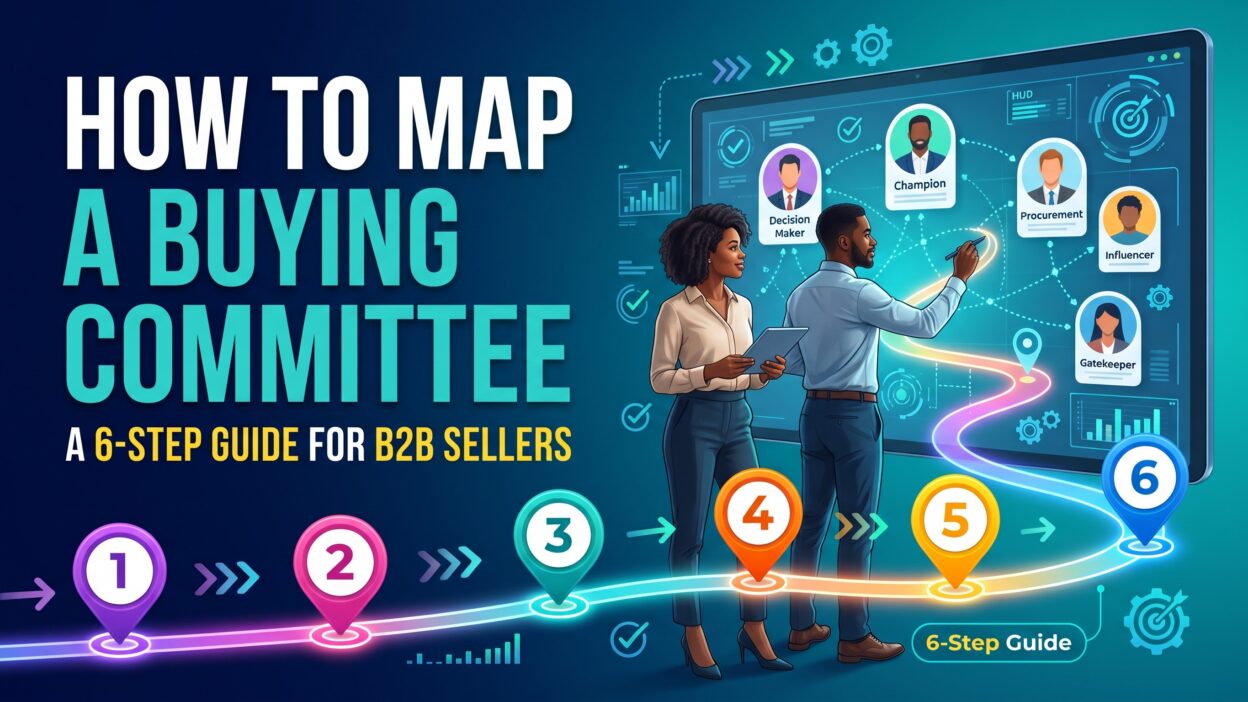
You now have six steps. Gather intelligence. Identify every stakeholder. Assign roles. Score influence and sentiment. Build a visual map. Engage, update, and act. Each step builds on the one before it.
Start small. Pick one live opportunity this week. Open a blank page and list every person you know. Mark the gaps. Plan three actions. Share the page with your team.
Buying Committee Mapping rewards steady habits. Sellers who update their maps win more complex deals. They forecast with confidence. They reach the economic buyer sooner. They spot blockers before blockers spot them.