
Introduction
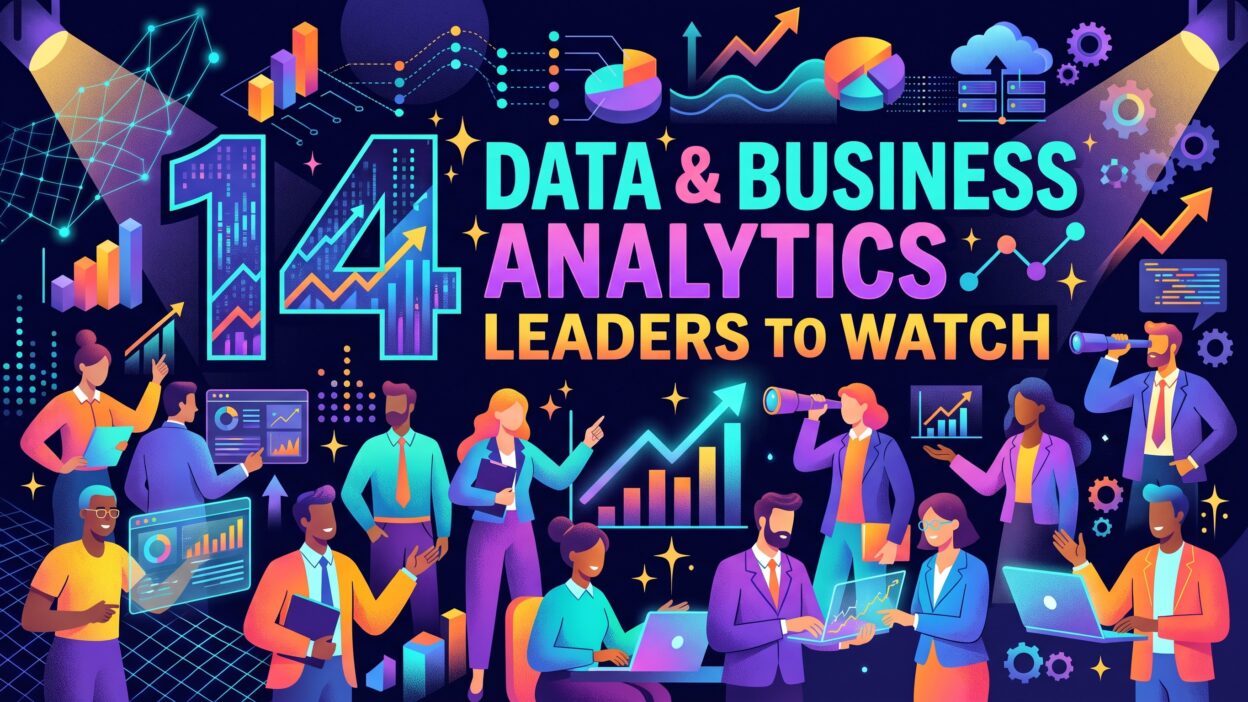
TL;DR Every company wants to be data-driven. Few companies know how. The gap between data and good decisions stays wide. A small group of people work to close it. They build platforms, write books, teach skills, and push teams to ask better questions.
These Business Analytics Leaders shape how the world uses information. Some run large software companies. Some wrote the books that changed how managers think. Some teach millions of learners for free. Each one offers lessons that you can use at work.
Table of Contents
How We Chose These Business Analytics Leaders
A good list needs clear rules. This one rests on four ideas. Each person must shape how businesses use data today. Each person must share ideas in public through books, talks, products, or courses. Each person must show real impact in the field. The group must also cover different parts of analytics, from platforms to people.
What Business Analytics Leaders Do
Business Analytics Leaders turn raw numbers into action. They set data strategy. They build tools that help teams find answers. They teach managers how to read charts. They push companies to measure what matters.
The best ones do more than build dashboards. They link data to money, customers, and risk. They explain results in plain language. They admit when data has limits. These habits separate real leaders from loud voices.
How the List Is Organized
The profiles sit in four groups. The first group covers people who build the data platforms that power modern analytics. The second group covers pioneers who made data a core business skill. The third group covers voices who help teams make better decisions. The last group covers educators who build data literacy across the world.
The order inside each group does not rank anyone. Every person on this list earns a place.
Platform Builders Shaping the Data Stack
Modern analytics runs on big data platforms. These platforms store information, process it, and add AI on top. The leaders in this group run or shaped the companies that do this work. They decide how fast teams can move from raw data to insight. Business Analytics Leaders in this space set the pace for the entire industry.
1. Ali Ghodsi
Ali Ghodsi co-founded Databricks and has served as its CEO since 2016. He also teaches as an adjunct professor at UC Berkeley. His team grew out of the research behind Apache Spark. That project changed how companies process large data sets.
Ghodsi helped popularize the data lakehouse idea. It combines the low cost of a data lake with the control of a warehouse. Teams can run analytics and AI on the same data. Databricks reported a large funding round in August 2026. Interest in the company shows how much businesses want unified data and AI.
Ghodsi talks often about context. He argues that AI needs the right business data to help real companies. Watch him if you care about data platforms, governance, and enterprise AI. His message is simple. Good AI starts with good data.
2. Sridhar Ramaswamy
Sridhar Ramaswamy became CEO of Snowflake in February 2024. Frank Slootman retired from the role and stayed on as chairman for a time. Ramaswamy joined Snowflake in 2023 after Snowflake bought his search startup, Neeva. Before that he led advertising products at Google.
Ramaswamy has a rare mix of skills. He knows large-scale data. He knows advertising. He knows search. That mix shapes his view of analytics. He pushes Snowflake toward AI features that let business users ask questions in plain language. He has said that people should not need to write code just to look at sales data.
He also speaks about practical AI. He urges leaders to measure return on investment with care. He asks teams to focus on governed data and strong observability. Follow him for clear thinking about how AI changes analytics work.
3. Andrew Ng
Andrew Ng co-founded Coursera and leads DeepLearning.AI. He founded Landing AI. He also led the Google Brain project and held a senior role at Baidu. He teaches at Stanford.
Ng has trained millions of learners in machine learning. His courses opened the field to people with no research background. He also champions a data-centric view of AI. He says better data often beats a fancier model. That idea matters for every analytics team.
He pushes business leaders to start small. Pick a clear problem. Build a pilot. Learn fast. Ng belongs on any list of Business Analytics Leaders because he makes advanced skills reachable.
Pioneers Who Made Data a Business Skill
Twenty years ago, few companies hired data scientists. These pioneers changed that. They gave the field its name, its books, and its first big success stories. Their ideas still guide the work of Business Analytics Leaders today.
4. DJ Patil
DJ Patil served as the first Chief Data Scientist of the United States. He held that role in the Obama administration. He also worked at LinkedIn and other technology firms. Patil and Jeff Hammerbacher helped popularize the job title data scientist.
Patil shows how data can serve the public. He led efforts to open government data and improve health programs. He now advises companies and investors. He speaks about data ethics and responsible AI.
Take one lesson from him. Technical skill needs a purpose. Ask who your analysis helps and who it might harm. Patil keeps that question alive.
5. Hilary Mason
Hilary Mason built a career at the crossroads of data and products. She served as chief scientist at Bitly. She founded Fast Forward Labs, a research firm that helped companies understand machine learning. Cloudera later bought it. She co-founded Hidden Door, a company that uses AI for storytelling.
Mason has a talent for explaining hard ideas. Her talks make machine learning feel practical. She urges leaders to ask what a model can do for a customer. She does not chase hype.
Watch her for a grounded view of emerging tools. She turns research into plans that teams can act on.
6. Thomas Davenport
Thomas Davenport teaches at Babson College. He wrote Competing on Analytics, a book that changed boardroom talk. It argued that firms can win with better use of data. Many executives read it before they hired their first analytics team.
Davenport has written many books and articles since. He covers AI in business, data strategy, and the role of the chief data officer. He studies real companies and reports what works.
His work gives managers a map. He shows how to build analytics capability step by step. Read him when you need to convince leaders to invest.
7. Eric Siegel
Eric Siegel founded Predictive Analytics World. That conference series brings practitioners together every year. He wrote Predictive Analytics and The AI Playbook. Both books explain how prediction creates value in business.
Siegel focuses on deployment. Many models never reach production. He argues that teams must plan the business use before they build the model. He calls for clear goals, strong change management, and honest measurement.
This message hits home for many analytics teams. A smart model that nobody uses has no value. Siegel pushes leaders to close that gap.
Voices Who Turn Data Into Decisions
Data alone does not drive results. Decisions do. The leaders in this group help teams think clearly, choose well, and act with confidence. Business Analytics Leaders with these skills turn reports into results.
8. Cassie Kozyrkov
Cassie Kozyrkov served as Chief Decision Scientist at Google. She helped create the field of decision intelligence in a business setting. She trained many thousands of employees in data-driven thinking. She now writes, teaches, and advises leaders.
Kozyrkov explains statistics with humor and simple stories. She tells teams to define the decision before they gather the data. She warns against fake certainty. Her posts and talks reach a wide audience.
Follow her to sharpen your thinking. She helps you ask better questions and avoid common traps.
9. Cindi Howson
Cindi Howson is an analytics strategist and author. She has held the role of Chief Data Strategy Officer at ThoughtSpot. She hosts The Data Chief, a podcast where data leaders share their stories. She also wrote books on business intelligence tools.
Howson spent years rating and reviewing analytics products. She knows what works for end users. She speaks often about data culture. She says tools matter less than habits, trust, and training.
Listen to her podcast to hear how real chief data officers solve real problems. You will pick up practical ideas in every episode.
10. Avinash Kaushik
Avinash Kaushik wrote Web Analytics 2.0 and Web Analytics: An Hour a Day. He ran a popular blog called Occam’s Razor. He worked for years as a digital marketing evangelist at Google. He teaches marketers how to measure what counts.
Kaushik built simple frameworks. His See-Think-Do-Care model links audience intent to marketing goals. He pushes teams to track outcomes, not vanity numbers. He urges leaders to test ideas and learn fast.
His work suits marketers and product teams. Read him to tie your analytics to revenue and customer value.
Educators Who Build Data Literacy
A tool helps only when people can use it. Data literacy gives teams that power. The leaders in this group teach, write, and share free tools. They lift the skill level for entire industries. The best Business Analytics Leaders invest in teaching others.
11. Kirk Borne
Kirk Borne trained as an astrophysicist. He moved into data science and became a leading voice in the field. He founded the Data Leadership Group, which advises organizations on data strategy. He speaks at many events around the world.
Borne has a gift for sharing news and ideas. His posts reach hundreds of thousands of followers. He covers AI, analytics, and the future of work. He explains complex topics with a scientist’s care.
Follow him for a steady stream of useful updates. He keeps you aware of trends across the data world.
12. Hadley Wickham
Hadley Wickham created ggplot2 and the tidyverse. These tools changed how analysts work in R. Millions of people use them to clean, explore, and visualize data. He serves as chief scientist at Posit.
Wickham focuses on clear design. His tools make code easier to read and write. He teaches that tidy data leads to faster analysis. His books are free to read online.
Analysts gain a lot from his ideas. Learn his methods and your daily work will move faster. His impact reaches far beyond the R community.
13. Bernard Marr
Bernard Marr is a futurist, author, and strategic advisor. He wrote many books on data, AI, and performance. Titles such as Data Strategy and Key Performance Indicators reached business readers worldwide. He writes widely for business media.
Marr makes technology easy to grasp. He gives leaders short, clear guides to new trends. He covers generative AI, metrics, and digital change. He advises large firms and government groups.
Read his work when you need a quick briefing. He helps executives who do not code feel confident about data topics.
14. Ben Jones
Ben Jones founded Data Literacy, a company that trains teams to read and use data. He previously worked at Tableau. He wrote Avoiding Data Pitfalls and Communicating Data with Tableau. He also teaches at the University of Washington.
Jones cares about the human side of data. He shows how bias, bad charts, and weak context mislead people. His books give readers simple checks to avoid mistakes. He speaks often about building a data culture.
Watch him if you lead a team that struggles to trust data. His guidance helps people ask smart questions and read charts with care.
Trends Shaping Analytics Next
These fourteen people share several themes. Business Analytics Leaders agree on a few big shifts. Understanding them helps you plan your next move.
AI Meets Business Data
Generative AI now sits inside analytics tools. Users ask questions in plain language and get answers in seconds. Platform leaders race to add these features. Quality depends on clean, well-governed data. Teams that fix their data foundation will get the most from AI.
Decision Intelligence
Companies want faster and better choices. Decision intelligence blends data, models, and human judgment. It treats the decision as the unit of work. Expect more training on this skill.
Data Literacy for Everyone
Analytics no longer belongs only to specialists. Marketers, sales reps, and operations managers all need basic skills. Leaders invest in courses, communities, and simple tools. A literate workforce makes better calls.
Trust and Ethics
Privacy laws grow stricter. Customers demand care with their data. Leaders stress governance, fairness, and transparency. Trust becomes a competitive edge.
How to Learn From These Leaders
A list helps only when you act on it. Pick a plan that fits your role and time.
Follow and Read
Subscribe to a few newsletters and podcasts. Read one book each quarter. Start with Competing on Analytics for strategy. Try Web Analytics 2.0 for marketing. Pick Avoiding Data Pitfalls for better charts. Use these Business Analytics Leaders as a reading guide.
Learn by Doing
Take a course from DeepLearning.AI or Coursera. Practice with the tidyverse. Build a small dashboard for your team. Test one new idea each month. Share the results with colleagues.
Join the Community
Attend conferences and local meetups. Join online groups. Ask questions. Share your own lessons. Growth speeds up when you learn with others.
Frequently Asked Questions
Who are the top Business Analytics Leaders to follow in 2026?
This list names fourteen strong choices. They include platform CEOs such as Ali Ghodsi and Sridhar Ramaswamy. They include pioneers such as DJ Patil and Thomas Davenport. They include educators such as Hadley Wickham and Ben Jones. Pick the voices that match your goals.
What is the difference between data analytics and business analytics?
Data analytics covers the full process of studying data. Business analytics applies that process to business goals. It focuses on revenue, cost, customers, and risk. The two fields overlap heavily.
Which skills do business analytics professionals need most?
They need statistics, SQL, and data visualization. They need business sense and clear communication. They need curiosity. Many also learn Python or R. Strong storytelling skills help them win support for their ideas.
How can I become a data leader?
Build solid technical skills. Learn how your business makes money. Lead small projects. Share your results in simple language. Mentor others. Seek roles that let you shape data strategy.
Are these leaders active on social media?
Most of them share ideas on professional networks, blogs, podcasts, or conference stages. Search each name to find their current channels. Follow the ones that give you steady value.
What books should a beginner read first?
Start with Competing on Analytics by Thomas Davenport for the big picture. Add Avoiding Data Pitfalls by Ben Jones for practical habits. Try Predictive Analytics by Eric Siegel when you want to understand models.
How is generative AI changing analytics careers?
It automates routine tasks such as writing queries and drafting reports. Analysts spend more time on framing problems, checking results, and advising leaders. Skills in judgment and communication grow in value.
Read More:-Why AI Recruiting Must Connect Discovery and Engagement
Conclusion

Data has become a core part of how companies compete. The people on this list help shape that future. They build the platforms, write the books, teach the skills, and set the standards. Their work gives every team a better path to smart decisions.
You do not need to follow all fourteen. Pick two or three. Read their work. Try their methods. Share what you learn with your team. Small steps add up fast.
Business Analytics Leaders keep proving one idea. Good decisions start with good questions, clean data, and honest thinking. Use that idea in your next project. Your results will improve, and your colleagues will notice.