
Introduction
TL;DR Your team needs training. Your managers lack the time to run every session. Your new hires need to feel ready in weeks, not months.
Lessonly helped many teams solve this problem. The tool made it easy to build short lessons and practice scenarios. Reps and support agents could learn on their own schedule. Many companies liked that simplicity.
Needs change. Teams grow. Budgets shift. Lessonly now sits inside Seismic, and some buyers want a fresh look at the market before they renew.
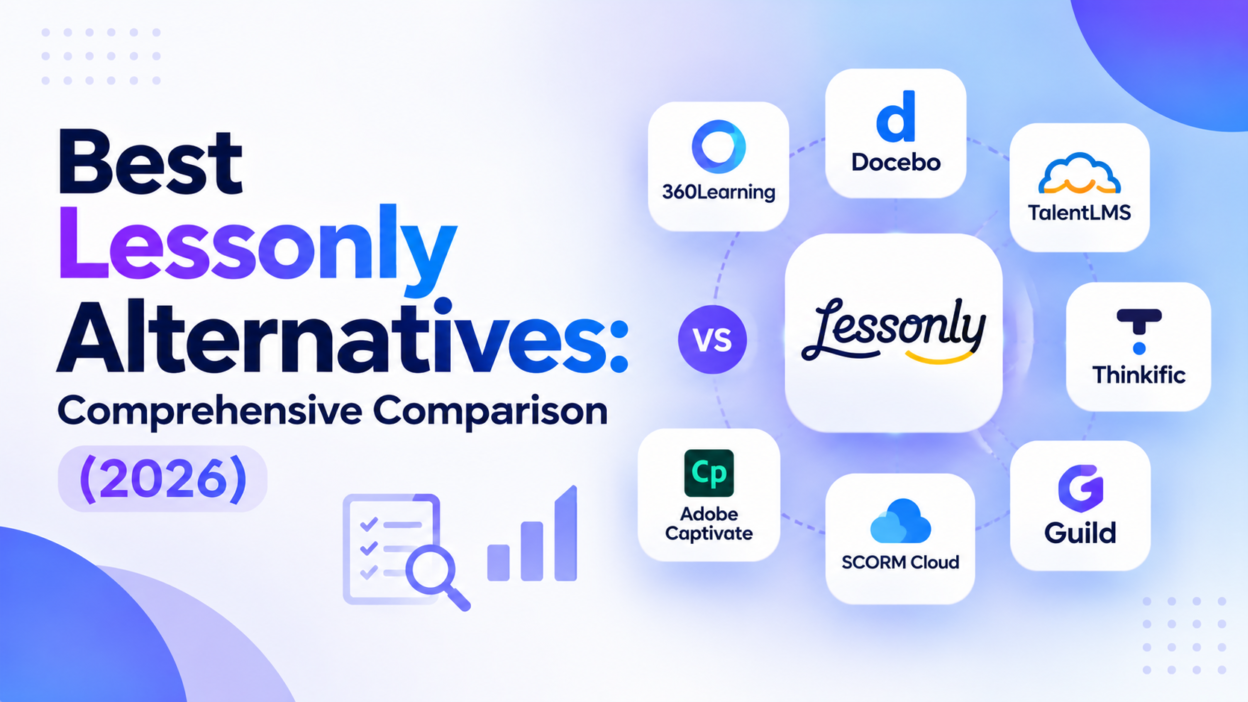
This guide covers the Best Lessonly Alternatives for 2026. You will see what each platform does well. You will see where each one falls short. You will learn how to match a tool to your team size, your goals, and your budget.
Table of Contents
What Lessonly Does and Who Uses It
Lessonly is a training and enablement platform. Admins build short lessons with text, images, video, and quizzes. Learners finish them in minutes. Managers see who completed each lesson and who skipped it.
The product became known for practice. A rep can record a pitch and send it to a manager. The manager watches it and leaves feedback. Teams use this method to sharpen sales calls, support replies, and customer conversations.
Lessonly also supports learning paths. An admin groups lessons into a sequence. A new hire follows the path from day one. Leaders can see progress across the whole class.
The platform serves customer-facing teams. Sales, support, and customer success groups use it the most. Retail and healthcare teams use it to roll out policy changes and product updates.
The interface feels clean. Authors do not need design skills. A manager can build a lesson in an afternoon. That speed won over many small and mid-size teams.
Seismic bought Lessonly in 2021. The product now sits within Seismic Learning. Some customers enjoy the link to a larger enablement suite. Others want a different path. The next section explains why buyers shop around.
Why Teams Look for Lessonly Alternatives
Ownership changes unsettle some buyers. A product that joins a bigger suite can shift in price and focus. Customers want clear answers about roadmaps and support.
Scope drives many searches. Some teams want a full learning management system with certifications and compliance tracking. Others want deeper sales enablement with content and coaching. Lessonly covers a middle ground. Teams at either end look elsewhere.
Budget matters. Per-seat pricing grows with headcount. A company that adds fifty hires in a quarter sees the cost rise fast. Finance leaders ask for proof that training moves results.
Reporting depth varies. Some leaders want to link training to revenue, quota attainment, or customer scores. They need strong training analytics and clean exports. Basic completion reports leave them short.
Integration needs differ. A team that lives in Salesforce, Slack, or Microsoft Teams wants tight links. A team with an HR system needs sync for users and groups. Missing connectors slow adoption.
Global teams face extra hurdles. They need many languages and local rules. Not every vendor supports every region.
Content creation styles differ too. Some admins want to build with templates. Others want to use AI to draft lessons from a document. A few teams want to let any employee share expertise. Each style points to a different tool.
These reasons explain why buyers search for the Best Lessonly Alternatives. None of them mean Lessonly performs badly. They mean buyers have different needs. Your needs should guide your choice.
How to Choose the Best Lessonly Alternatives for Your Team
Start with your goal. Write it in one sentence. You may want faster onboarding. You may want better sales coaching. You may want compliance tracking. Each goal points to a different tool.
Know your audience. Sales reps need short, practical lessons. Frontline staff need mobile access. Executives need clear dashboards. Pick a platform that fits the people who will use it every day.
Look at content. Count the lessons you have today. Note the formats. Decide who will build new material. A tool with easy authoring helps a small team. A tool with strong governance helps a large one.
Test the learner experience. Ask for a demo. Take a lesson yourself. Notice how many clicks it takes. Ask a few employees to try it too. Their feedback matters because they will use it daily.
Check reporting. Ask to see sample dashboards. Good reports show who learned, who practiced, and who improved. Vague charts waste time. Ask how the tool connects training data to business results.
Review integrations. List your CRM, HR system, chat tools, and single sign-on provider. Confirm each vendor connects to them. Ask how long setup takes.
Compare pricing models. Some vendors charge per user. Some charge per active user. Some bundle features into tiers. Ask for a quote based on your real headcount. Ask about renewal caps.
Run a pilot. Pick one team and give it thirty days. Track completion, practice rates, and early performance. A pilot tells you more than a slide deck.
Plan for adoption. A great tool fails when people ignore it. Ask each vendor how it drives usage. Reminders, leaderboards, and manager dashboards help.
Use these checks as a filter. They shrink your list fast. The Best Lessonly Alternatives in the next section each fit a different result.
The 7 Best Lessonly Alternatives in 2026
The seven tools below cover sales enablement, learning management, and team knowledge. Some compete head to head with Lessonly. Others solve a wider problem. I ordered them by breadth of use, not quality. The Best Lessonly Alternatives for a sales team differ from those for a retail chain.
1. Mindtickle
Mindtickle is a sales readiness platform. It combines training, content, coaching, and analytics. Reps learn, practice, and prove skills inside one system.
Enablement teams like the structure. A manager builds a learning path for each role. Reps finish lessons, pass quizzes, and record pitches. AI scoring gives quick feedback on those pitches. Leaders see readiness by rep, team, and region.
The platform links learning to revenue data. A leader can see which programs connect to higher win rates. That link helps enablement teams defend their budgets.
Mindtickle fits mature sales organizations. A company with many products and many roles gains the most. The system handles complex programs with ease.
Tradeoffs exist. Setup takes more time than a light tool. Admins need to build and maintain content. A small team may not use every feature. Pricing leans toward mid-size and enterprise budgets.
Choose Mindtickle when you want training and sales readiness in one place. Skip it when you only need simple lessons for a small group.
2. Highspot
Highspot is a sales enablement platform. It started as a content tool. Reps find the right deck, case study, or one-pager inside the tools they use daily. The platform now includes training and coaching features.
Highspot works well for content-heavy teams. A rep can search, share, and track assets in one place. Marketing can see which materials help close deals. Training sits beside that content, so reps learn and sell from the same system.
Managers can assign lessons and practice pitches. They can review videos and give feedback. Reps build skills without leaving the platform.
Highspot connects with Salesforce, Microsoft, and Google tools. Adoption often runs high because reps already visit the platform to find content.
Tradeoffs apply. Training forms one part of a larger product. A team that wants deep course building or compliance tracking may need a stronger learning tool. Pricing reflects the full suite.
Choose Highspot when content and coaching must live together. Choose a learning specialist when course depth comes first.
3. Docebo
Docebo is a full learning management system. It serves large companies that train employees, partners, and customers. The platform handles courses, certifications, and compliance.
AI powers much of the experience. The system suggests content, tags material, and helps authors build courses faster. Learners get recommendations that match their roles and goals.
Docebo supports extended enterprise training. A company can train its channel partners and customers in separate portals. Each audience sees its own branding and content.
The reporting runs deep. Admins can build custom reports and track compliance across regions. Auditors get the records they need.
Docebo integrates with many HR and business systems. Single sign-on, Salesforce, and Microsoft tools work smoothly. Large IT teams appreciate the controls.
Tradeoffs exist. The platform takes more setup than Lessonly. Smaller teams may find it heavy. Pricing follows enterprise models.
Choose Docebo when you need a full LMS with compliance and external training. Skip it when you want a quick, light tool for a small sales team.
4. 360Learning
360Learning is a collaborative learning platform. The company believes experts inside your company teach best. Any employee can build a course and share it with peers.
The approach speeds up content creation. A top rep can record a short lesson on handling a pricing objection. Teammates comment, ask questions, and suggest changes. Knowledge spreads without a long production cycle.
The platform includes authoring tools, learning paths, and analytics. Admins can assign courses by role. Leaders can track skill growth across teams.
360Learning fits companies that value peer learning. Fast-growing teams and companies with many subject matter experts gain the most. Training stays current because the people who do the work shape the content.
Tradeoffs apply. Open authoring needs light governance. Without review rules, quality can vary. Teams that want strict, centrally built programs may prefer a different model.
The platform also costs more than basic tools. Check pricing against your headcount.
Choose 360Learning when you want employees to teach each other. Skip it when your content must pass through strict central control.
5. TalentLMS
TalentLMS is a simple, affordable learning management system. It targets small and mid-size companies. Admins can set up courses, add users, and launch training in a short time.
The platform supports video, documents, quizzes, and live sessions. Gamification features such as badges and points keep learners engaged. Mobile access helps frontline staff who work away from a desk.
TalentLMS offers many integrations. It connects with tools such as Zoom, Salesforce, and Slack through built-in options and automation platforms. Teams can extend it without custom code.
The price stands out. Plans start low and scale by user count. Small teams can start with a modest budget. Larger teams can step up as needs grow.
Tradeoffs exist. The platform lacks the deep sales coaching that Lessonly built its name on. Video practice and pitch review features stay limited. Advanced analytics may feel basic to large enterprises.
Choose TalentLMS when you want an affordable, general-purpose LMS. Skip it when sales practice and coaching sit at the center of your plan.
6. Continu
Continu is a learning platform that brings training into daily work. It focuses on companies that want modern, flexible learning. Content can live in courses, wikis, and live sessions.
The tool offers a clean interface. Learners find lessons through search and recommendations. Admins can build courses with templates and rich media.
Continu supports blended learning. A team can mix self-paced lessons with instructor-led sessions. Managers can track attendance and completion in one view.
The platform integrates with tools such as Slack, Salesforce, and HR systems. Training can reach people where they work. That access boosts completion.
Continu serves mid-size companies in tech, services, and healthcare. Customer education teams also use it to train clients.
Tradeoffs apply. The platform has fewer sales-specific practice tools than Mindtickle or Lessonly. Teams that need heavy video coaching may add another product. Check the roadmap for coaching features.
Choose Continu when you want a modern LMS with flexible content types. Skip it when AI roleplay or pitch review drives your decision.
7. Trainual
Trainual is a tool for documenting processes and training new hires. It turns company knowledge into clear, searchable guides. Small and growing businesses use it to build their playbooks.
The platform suits teams that lack a training department. A founder can document how the company sells, supports, and operates. New hires follow assigned guides and complete quizzes.
Trainual keeps things simple. Authors write in an editor that feels familiar. Templates speed up the work. Managers can assign content by role and track progress.
The tool helps with onboarding and standard operating procedures. Franchises and multi-location businesses use it to keep every site on the same process.
Pricing stays friendly for small companies. Plans scale by team size.
Tradeoffs exist. Trainual lacks deep sales coaching and video practice. Large enterprises may need stronger analytics and compliance tools. The platform fits process training better than skill practice.
Choose Trainual when you need to document and teach company processes. Skip it when you want advanced pitch practice and coaching.
Quick Comparison of the Seven Platforms
Each tool solves a different problem. Mindtickle fits sales organizations that want readiness and analytics. Highspot fits teams that want content and coaching together. Docebo fits large companies with compliance and partner training.
360Learning fits companies that rely on peer experts. TalentLMS fits small teams that want a low-cost LMS. Continu fits mid-size teams that want flexible learning. Trainual fits growing businesses that need to document processes.
No single winner exists. Treat the Best Lessonly Alternatives as a menu. Pick based on your audience, your content, and your budget. Many companies combine two tools. A learning platform plus a coaching tool is a common pair.
Budget plays a role. Docebo, Mindtickle, and Highspot tend toward higher pricing. TalentLMS and Trainual offer lighter entry points. Continu and 360Learning vary by scope.
Ask each vendor for a trial. Real feedback from your own people tells you more than any chart.
Trends Shaping Training Platforms in 2026
AI now helps build content. Authors upload a document and get a draft lesson in minutes. Reviewers still need to check accuracy. The time savings are real.
Practice gets more realistic. AI buyers and customers talk back in real time. Reps rehearse hard conversations before they face a live one.
Training moves into the flow of work. Teams want lessons inside Slack, Teams, and the CRM. Extra logins slow adoption.
Skills data gains importance. Leaders want to know who can do what. Platforms now map skills to roles and show gaps. Hiring and promotion decisions draw on that data.
Microlearning keeps growing. Short lessons fit busy schedules. Learners finish them between calls and meetings.
Proof of impact matters more each year. Finance teams ask whether training lifts revenue or cuts errors. Vendors respond with stronger dashboards.
The market shifts often. Acquisitions change roadmaps and pricing. Check each vendor’s status before you sign a multi-year deal.
FAQs About the Best Lessonly Alternatives
What are the Best Lessonly Alternatives for small teams?
Small teams often do well with TalentLMS, Trainual, or a starter plan from Continu. These options offer fast setup and lower cost. The Best Lessonly Alternatives for a small team keep admin work low. Run a pilot before you commit.
Is Lessonly still available?
Seismic acquired Lessonly in 2021. The product now sits within Seismic Learning. Features and packaging may have changed since then. Ask Seismic for current details and pricing.
Which Lessonly alternative works best for sales training?
Mindtickle and Highspot lead for sales teams. Both combine content, training, and coaching. Mindtickle leans toward readiness and analytics. Highspot leans toward content and daily workflow. Test both with your reps.
Can I move my lessons to a new platform?
Often yes. Most vendors import common file types such as documents, slides, and video. Quiz formats and practice scenarios may need rebuilding. Ask each vendor about migration help. Plan the move in phases.
How long does it take to switch platforms?
A simple switch can take a few weeks. A full migration across many teams can take months. Map your content, users, and integrations first. Keep the old tool live until the new one proves itself.
Read More:-7 Best Dock Alternatives Worth Considering [2026]
Conclusion

Choosing a training platform shapes how fast your people grow. Lessonly served many teams well. Other platforms serve some teams better.
Mindtickle delivers sales readiness. Highspot joins content and coaching. Docebo handles compliance and partner training. 360Learning turns experts into teachers. TalentLMS keeps costs low. Continu offers flexible learning. Trainual documents your processes.