Introduction
TL;DR Recruiters love a good prompt. They swap templates in group chats. They tweak a few words and hope for magic. The results often disappoint. The tool returns a list of people who look right on paper and fail in real life.
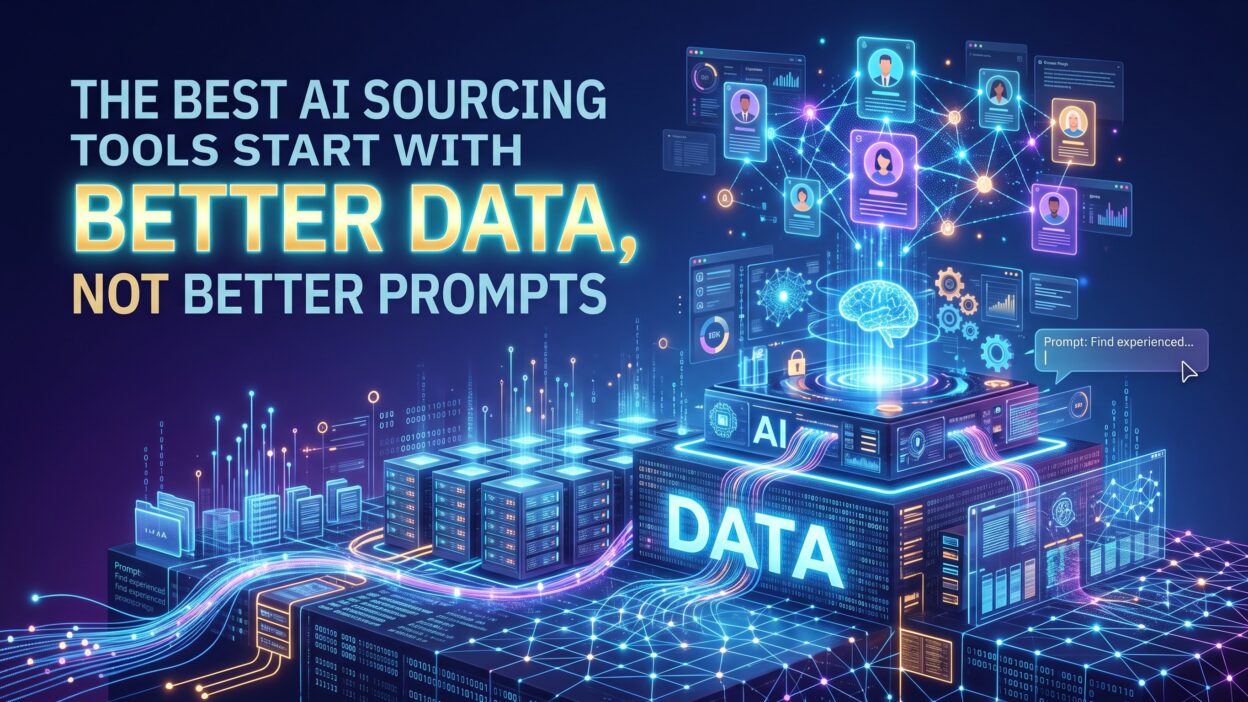
The prompt is rarely the problem. The data is. AI Sourcing Tools can only work with what they can see. Old profiles give old answers. Thin records give thin matches. Messy job titles give messy lists.
Table of Contents
What Are AI Sourcing Tools?
AI Sourcing Tools find candidates for open roles. They scan large pools of profiles. They match skills, experience, and location against a job description. They rank the results and often draft outreach messages.
Older tools relied on keywords. A recruiter typed a boolean string and scrolled through hits. Modern tools read meaning. They know that a “software engineer” and a “backend developer” may share skills. They learn from past hires and recruiter feedback.
How They Work Under the Hood
Most tools follow three steps. First, they collect profiles from public sources, internal databases, and partner networks. Second, they turn each profile into structured fields such as skills, titles, and tenure. Third, they compare those fields with the requirements of your role.
A model sits at the center. It scores each match and sorts the list. You see a clean ranking. Behind that ranking sits a lot of data work. Every step depends on the quality of the inputs.
Where They Fit in the Hiring Stack
These tools sit at the top of the funnel. They feed your applicant tracking system with fresh names. They connect to email, calendar, and messaging tools. They support recruiting automation by sending sequences and tracking replies.
They do not replace recruiters. They remove the slow parts of candidate sourcing. Recruiters then spend time on conversations, not on endless searching.
Why Prompts Get Too Much Credit
Prompts feel powerful. You type a request and see a result in seconds. The speed creates a sense of control. People assume a better prompt will fix a weak result.
A prompt can only steer. It cannot add what the data lacks. Ask for a senior data engineer in Pune with Spark experience. The tool searches its records. If those records skip Spark, the tool misses the best people. If they list outdated employers, the tool contacts the wrong ones.
The Limits of Clever Wording
Good prompts help at the edges. They clarify the role. They set the seniority and location. They rule out bad fits. Beyond that, extra detail brings little gain.
Teams often spend weeks testing prompt variations. They see small changes and call it progress. Meanwhile the database stays stale. A better use of that time is a data audit.
A Simple Test
Run the same prompt in two tools. If both return similar names, the data likely overlaps. If the lists differ, the data differs. Run two different prompts in one tool. If the lists look alike, the data limits the range.
This test shows where the real constraint lives. Most teams discover it sits in the records, not the request.
What Good Data Looks Like
Strong data shares five traits. It is accurate, complete, fresh, structured, and compliant. Each trait shapes the results you get from AI Sourcing Tools.
Accuracy
Accurate records match reality. The title is correct. The employer is current. The contact details work. An accurate record saves a recruiter from a bounced email and a wasted afternoon.
Errors spread fast. One wrong skill tag sends a candidate into the wrong shortlist. One duplicate profile makes a recruiter contact the same person twice. Trust drops with every error.
Completeness
Complete records include more than a name and a title. They list skills, projects, certifications, tenure, and location. They show career moves over time. Rich profiles give the model more signals to compare.
Thin records force the tool to guess. Guesses create noisy rankings. A recruiter who sees noise stops trusting the list.
Freshness
People change jobs often. Skills evolve. A profile that looked perfect two years ago may mislead you today. Fresh data reflects the current moment.
Passive candidates need special care. They do not update their profiles often. Tools must refresh their records through other signals such as public activity and company announcements.
Structure
Structure turns text into usable fields. A model cannot compare free text well. It compares clean fields with ease. A shared skills taxonomy helps. It maps “JS,” “JavaScript,” and “ECMAScript” to one skill. It maps job titles across companies to common levels.
Without structure, the same skill appears under ten names. The model treats them as different things and misses matches.
Compliance
Privacy laws govern candidate data. GDPR covers Europe. CCPA covers California. India has its own data protection law. Rules vary on consent, storage, and outreach.
Compliant data protects your brand. It also protects your team from fines. Ask every vendor where the data comes from and how they handle opt-outs.
How Bad Data Breaks AI Sourcing Tools
Bad data creates problems that look like software problems. Teams blame the tool. They switch vendors. The same issues follow them.
Bias Gets Baked In
AI Sourcing Tools learn from history. If your past hires skew toward one school, one city, or one profile, the model learns that pattern. It then suggests more of the same. Qualified people outside the pattern never reach your list.
Clean, broad data and careful monitoring reduce this risk. Review the output by group. Check who the tool surfaces and who it hides. Adjust the training data when you see gaps.
Duplicates and Ghosts
Duplicate records inflate your numbers. A pool of fifty thousand may hold thirty thousand real people. Ghost profiles belong to people who left the market or changed careers. Recruiters waste outreach on them.
Deduplication and regular refresh cycles solve most of this. Build them into your routine instead of treating them as a one-time cleanup.
Mismatched Titles and Skills
A “lead” at a startup differs from a “lead” at a bank. A “manager” in one firm manages ten people. In another, the same title manages none. Models that trust titles blindly produce poor matches.
Better tools weigh skills, scope, and company size alongside the title. They need data fields that capture those details. If your data lacks them, the model flies blind.
Silent Failures
Bad data rarely crashes a system. It quietly lowers quality. Reply rates slip. Hiring managers reject more profiles. Time to fill grows. Nobody traces the cause back to the records.
Track quality metrics so you notice the slide. Treat a rise in rejected shortlists as a data alarm.
Where Your Talent Data Comes From
Three sources feed most systems. Each has strengths and limits.
Your Own Data
Your applicant tracking system holds years of applicants, interviews, and hires. Your CRM may hold silver medalists and past referrals. This data reflects people who already showed interest in your company. It carries rich context such as interview notes and outcomes.
It also has weak spots. Old records decay. Notes vary by recruiter. Fields stay empty. Clean it before you point any AI at it.
Vendor and Network Data
Vendors collect profiles from public web sources, professional networks, and partners. This data covers far more people than you could ever gather alone. It opens new markets and niche skills.
Quality varies by vendor. Some refresh weekly. Some refresh yearly. Some cover your region well. Some barely touch it. Ask for proof before you sign.
Enrichment and Signals
Data enrichment fills gaps in existing profiles. It adds skills, company details, and contact information. Signals add timing. A layoff at a company, a promotion, or a new funding round can mark a candidate as open to a move.
Talent intelligence platforms combine these streams. They give recruiters a view of the market, not just a list of names.
How to Prepare Your Data Before You Buy
Most teams buy software first and fix data later. Reverse the order. A short prep phase lifts results from day one.
Audit What You Have
Pull a sample of five hundred records from your applicant tracking system. Check each for accuracy, completeness, and freshness. Count the duplicates. Note the empty fields. Measure how many records carry a valid email and a current employer.
The numbers give you a baseline. They also show which problems matter most. Share them with leaders. A clear picture wins budget.
Standardize Titles and Skills
Build or adopt a skills taxonomy. Map your job titles to a common level framework. Merge variants of the same skill. Tag each role with required and preferred skills.
This work takes effort. It pays back every time a recruiter runs a search. Models need consistent labels to find consistent patterns.
Remove Stale and Duplicate Records
Set rules for age. Archive records with no activity for three years. Merge duplicates by email, phone, and profile link. Flag records with bounced contact details.
Keep a clean audit trail. Know why you archived or merged each record. Legal teams appreciate that history.
Capture Better Data Going Forward
Fix the source of the mess. Make key fields required in the application form. Give recruiters short, structured note templates. Tag every candidate with skills and outcomes. Record why you rejected or advanced each person.
Small habits compound. A recruiter who tags ten candidates a day adds fifty clean records a week. In a year, your database gains thousands of useful profiles.
How to Choose AI Sourcing Tools
The market holds many options. Ignore flashy demos. Judge each one on data and fit.
Ask About the Data First
Ask where the profiles come from. Ask how often the vendor refreshes them. Ask how many profiles cover your target roles and regions. Ask how they verify contact details. Ask how they handle consent and opt-outs.
A vendor who answers clearly earns trust. A vendor who dodges these questions hides weak spots. Request a sample of records for a role you know well and judge the match yourself.
Check Integration
The best AI Sourcing Tools connect cleanly to your applicant tracking system, email, and calendar. They sync candidate status both ways. They avoid manual exports.
Weak integration brings duplicate work and fresh errors. Test the sync during the trial. Confirm that new candidates land in the right pipeline with the right fields.
Test With Real Roles
Pick three open roles. One should be easy to fill. One should be hard. One should be niche. Run each through two or three tools. Have recruiters and hiring managers rate the shortlists without knowing which tool produced them.
Measure the share of profiles that hiring managers accept. Measure reply rates on outreach. These numbers beat any sales pitch.
Review Transparency and Control
Good tools explain why they ranked a candidate. They let recruiters adjust weights and filters. They let you audit results for bias. Black boxes limit your control and raise risk.
Using AI Sourcing Tools Well
Good data sets the stage. Good habits finish the job.
Write Clear Role Briefs
Prompts still matter, just less than data. Start with a clear brief. Name the must-have skills. Name the nice-to-haves. State the level, scope, and location. Skip vague phrases like “rockstar” or “self-starter.”
A clear brief helps the model and the hiring manager. Both know what success looks like.
Keep a Human in the Loop
Review every shortlist. Spot-check the top and bottom of the list. Look for patterns you dislike. Give feedback to the tool through ratings and rejections. The model improves with that input.
Never send mass outreach without a review. A poor message costs you reputation in a small talent market.
Personalize Outreach
Candidates ignore generic messages. Use data to add real detail. Mention a project, a skill, or a recent move. Keep the message short. Explain why you chose them and what the role offers.
Passive candidates respond to relevance and respect. A message that shows effort earns a reply even when the timing is wrong.
Measuring the Results
Leaders fund what they can measure. Set your metrics before launch.
Track data health first. Watch bounce rates, duplicate rates, and the share of complete records. These numbers show whether your foundation holds.
Track sourcing efficiency next. Measure time to first shortlist, reply rate, and recruiter hours per hire. Better data should improve all three.
Track quality last. Measure hiring manager acceptance of shortlists, interview-to-offer ratio, and quality of hire. Compare roles sourced with AI Sourcing Tools against roles sourced by hand.
Run a controlled test. Split similar roles between two approaches. Use the same recruiter team. Compare results after ninety days. Share the findings in plain language.
Revisit the numbers each quarter. Retire tactics that stop working. Double down on the ones that deliver.
Common Mistakes to Avoid
Many teams buy tools before they fix their data. They expect software to solve a mess. It makes the mess faster.
Some teams chase prompt tricks. They share templates and ignore the database. Gains stay small.
Some teams trust the ranking blindly. They skip review. They miss strong candidates the model undervalued.
Some teams ignore privacy. They pull data from risky sources and send messages without consent. One complaint can cost more than any tool saves.
Some teams skip training. Recruiters do not know how to give feedback or read scores. The tool never improves. Run short sessions each quarter and share quick wins.
Some teams treat the launch as the finish line. Markets shift. Roles change. Models drift. Review the setup every quarter.
Where Sourcing Technology Is Headed
Models will grow smarter. They will read resumes, portfolios, and code samples with more depth. They will predict who is open to a move. They will draft outreach that sounds more human.
Data will matter even more. As models converge, the difference between vendors will come from the quality and range of their records. Teams with clean internal data will gain a unique edge.
Regulation will tighten. Laws on automated hiring decisions are emerging in several regions. Vendors will compete on transparency and fairness. Choose partners who prepare for that future.
Frequently Asked Questions
What are AI Sourcing Tools?
They are software products that find and rank candidates for open roles. They scan large profile databases, match skills to job needs, and often draft outreach messages. Recruiters use them to speed up candidate sourcing.
Why does data matter more than prompts?
Prompts steer the search. Data sets the boundaries. A perfect prompt cannot find a skill that the records never list. Better records give every prompt a better starting point.
How do I know if my data is good enough?
Audit a sample of records. Check accuracy, completeness, and freshness. Count duplicates and bounced emails. If more than a small share fail, clean the data before you buy anything.
Can AI Sourcing Tools reduce bias?
They can help or hurt. Models learn from history. Narrow data repeats old patterns. Broad data, regular audits, and human review reduce the risk. Choose vendors who share how they test for fairness.
How long until I see results?
A focused pilot can show gains in ninety days. Reply rates and time to shortlist improve first. Quality of hire needs a longer window.
Do small teams need them?
Yes. Small teams gain time they cannot spare. Start with one tool, one role type, and clean data. Prove the value, then expand.
Read More:-B2B Data Hygiene Best Practices for Accurate, Actionable CRM Data
Conclusion

Better prompts feel exciting. Better data wins. AI Sourcing Tools reflect the records behind them. Feed them accurate, complete, fresh, and structured data, and they deliver strong shortlists. Feed them a mess, and they deliver a faster mess.
The path is clear. Audit your records. Standardize titles and skills. Remove stale and duplicate profiles. Capture clean data at every step. Ask vendors hard questions about their sources. Test with real roles and let hiring managers judge.
Keep humans in the loop. Review shortlists, give feedback, and personalize outreach. Measure results and adjust each quarter. Protect candidate privacy at every stage.