Introduction
TL;DR Every salesperson, marketer, and founder has sent a cold email at some point. Some get replies. Most get ignored. The difference between the two often comes down to one thing — the structure and quality of the message itself Cold email templates give you a proven starting point. They remove the blank-page problem. They help you write faster, test smarter, and convert more prospects into actual conversations.
This guide breaks down what cold email templates are, why they matter, how to write them well, and which formats work best in 2026. It also covers common mistakes, secondary strategies, and answers the questions most people search for before they start sending.
Table of Contents
What Are Cold Email Templates?
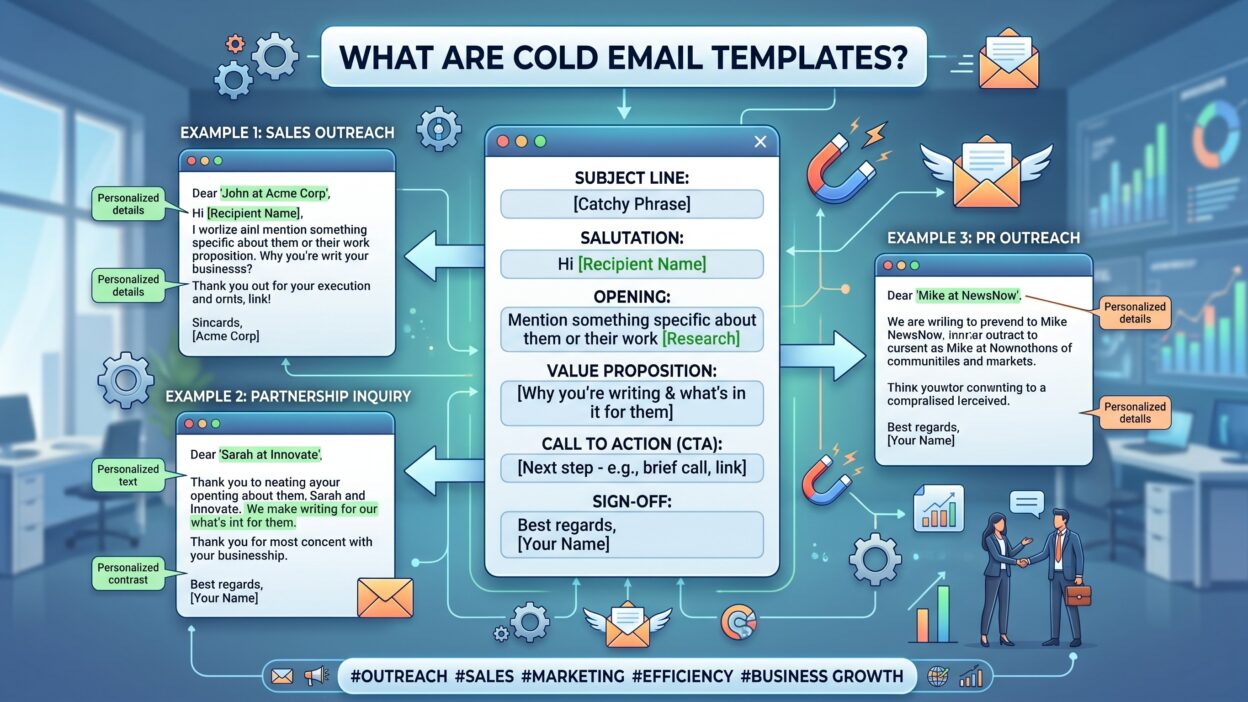
Cold email templates are pre-written email frameworks that sales reps, marketers, and business owners use to reach out to prospects who have never interacted with them before. They give the sender a structured message to work from instead of writing every outreach email from scratch.
A good cold email template is not a copy-paste script that goes out to thousands of people unchanged. It is a flexible framework. The sender fills in specific details about the prospect, the offer, and the context. The structure stays consistent. The personalization makes it feel human.
Cold email templates cover different stages of the outreach process. Some are designed for the very first touch. Others are follow-up messages. Some aim to book a meeting. Others aim to start a conversation. Each version serves a specific goal in the outreach sequence.
Why Cold Email Templates Matter for Sales and Marketing
Sending cold emails without a template is like driving without a map. You might eventually get there. But you will waste a lot of time and take a lot of wrong turns.
Cold email templates bring structure to outreach. They help teams maintain a consistent voice and message across every rep. They make it easier to test what works and what does not. When you change one element in a template and track results, you learn exactly what drives replies.
Templates also save time. A rep who writes every email from scratch spends hours on outreach that a template handles in minutes. That time goes back to selling, research, and follow-up instead.
For managers and team leaders, cold email templates create a standard. New reps ramp up faster. Experienced reps spend less time on admin. Everyone on the team sends messages that reflect the brand and strategy.
The Core Elements of Effective Cold Email Templates
Not every cold email template delivers results. The ones that work share a common set of qualities. Understanding these elements is the first step to writing templates that actually get replies.
A Subject Line That Earns the Open
The subject line is the first thing a prospect sees. It determines whether they open the email or delete it. Strong subject lines are short, specific, and relevant to the recipient. They do not sound like marketing copy. They sound like a message from a real person.
Subject lines that work tend to reference something specific about the prospect. Mentioning their company, a recent news event, or a mutual connection increases open rates significantly. Generic subject lines like “Quick question” still work in some contexts, but personalized ones consistently outperform them.
An Opening Line That Creates Immediate Relevance
The first sentence of any cold email template must give the prospect a reason to keep reading. Most reps waste this line on themselves. They say things like “My name is John and I work at Company X.” The prospect does not care yet.
Strong opening lines focus on the prospect. They reference something specific about their role, their company, or a challenge they are likely facing. This shows the sender did their research. It earns attention.
A Value Proposition That Is Clear and Concise
After the opening, cold email templates need to state the value quickly. The prospect wants to know what this email offers them. They do not want a feature list or a company history.
The best value propositions in cold email templates answer one question: what changes for the prospect if they reply? Frame the value around outcomes, not features. Talk about time saved, revenue gained, problems solved, or risks reduced.
A Call to Action That Is Specific and Low Friction
Every cold email template ends with a call to action. The best ones make it easy to say yes. Asking a prospect to “jump on a 30-minute call” requires real commitment. Asking a simple question or offering a one-click booking link removes friction.
Calls to action work best when they match the relationship stage. The first email should ask for something small. A reply. A quick yes or no. A chance to share a resource. Bigger asks come later in the sequence.
Types of Cold Email Templates That Work in 2026
Cold email templates come in several formats. Each serves a different goal and works better in different contexts.
The Problem-Agitate-Solution Template
This format starts by naming a problem the prospect is likely experiencing. It briefly amplifies why that problem is costly or frustrating. Then it presents the sender’s offer as the solution.
This cold email template works well when you have a clear understanding of your prospect’s pain points. It resonates with prospects who are actively aware of the challenge. It does not work well with prospects who do not yet recognize the problem.
The Personalized Research Template
This format leads with a specific observation about the prospect. The sender references a company announcement, a LinkedIn post, a job posting, or a recent award. This detail shows genuine research.
After the observation, the sender connects it to a relevant offer. The transition feels natural because the connection is real. This format of cold email templates takes more time to write but delivers consistently higher reply rates.
The Mutual Connection Template
This format mentions a shared contact, community, or experience at the start. Humans trust other humans more than brands. A mutual connection creates an instant layer of credibility.
The mutual connection cold email template works in professional networks, alumni communities, and event-based outreach. It loses effectiveness when the connection feels forced or irrelevant.
The Short and Direct Template
This format strips everything back to the essentials. It states who the sender is, what they offer, and what they want from the prospect. It does this in four to six lines total.
Short cold email templates perform well with busy senior executives. Decision-makers get hundreds of emails every day. They appreciate brevity. A short, clear message stands out in an inbox full of long pitches.
The Video Prospecting Template
This format replaces most of the written content with a personalized video thumbnail. The email contains a short text intro and a video link. The video delivers the pitch visually and personally.
Video cold email templates see significantly higher engagement in some industries. Technology, media, and creative sectors respond well to this format. The sender records a short video addressing the prospect by name and company.
The Value-First Template
This format delivers something useful before making any ask. The sender shares a relevant article, a custom audit, a competitive insight, or a useful tool. The ask comes after the value.
Value-first cold email templates build goodwill with cold prospects. They position the sender as a helpful resource rather than a vendor pushing a product. The conversion timeline is sometimes longer, but the relationship quality is higher.
How to Write Cold Email Templates That Get Replies
Writing a cold email template that actually works is a skill. It takes practice, testing, and a clear understanding of the audience.
Research the Prospect Before Writing
Every cold email template should start with research, not writing. Know the prospect’s role. Know their company size and industry. Know what challenges companies like theirs typically face. This research shapes every element of the template.
The more specific the research, the better the template performs. Even adding one personalized detail — a recent company milestone, a LinkedIn comment, a product they launched — can double reply rates.
Write Like a Human, Not a Marketer
Cold email templates that sound like sales copy get ignored. Write the way you speak. Use short sentences. Use plain words. Avoid buzzwords like “synergize,” “leverage,” or “best-in-class.” These words make emails feel impersonal and corporate.
Read your template aloud before sending it. If it sounds strange when spoken, it will feel strange when read. Adjust it until it sounds like something you would actually say to a colleague.
Keep It Short
Most cold email templates should be between 50 and 150 words. That is not much space. Every word must earn its place. Cut anything that does not directly serve the goal of the email.
Longer emails work in specific contexts — when the audience expects them, when the offer is complex, or when the relationship already exists. For first-touch cold outreach, shorter almost always performs better.
Personalize at Scale
Personalization does not mean rewriting every email from scratch. It means adding specific details to a flexible template. Most cold email templates have fixed sections and variable sections.
The fixed sections cover the value proposition, the social proof, and the call to action. The variable sections cover the opening line, the prospect’s name, and the specific reference point. Good outreach tools let you fill in variables automatically from a CRM or spreadsheet.
Test One Variable at a Time
Cold email templates improve through testing. Change the subject line and track open rates. Change the opening line and track reply rates. Change the call to action and track booking rates.
Testing multiple changes at once makes it impossible to know what drove the improvement. Discipline in testing leads to templates that compound their effectiveness over time.
Cold Email Template Sequences: Going Beyond the First Email
A single cold email template rarely closes a deal on its own. Most replies come from follow-up messages. A well-designed sequence increases the chances of getting a response without being annoying.
How Many Follow-Ups to Send
Research consistently shows that most replies in cold outreach come from the second, third, or fourth email in a sequence. The first email gets the attention. The follow-ups demonstrate persistence and provide additional value.
A standard sequence using cold email templates runs between four and six messages over two to four weeks. Each message adds something new — a different angle, a case study, a relevant insight. The sequence ends with a “break-up” email that gives the prospect one final chance to respond.
Spacing Between Emails
Sending follow-ups too quickly feels aggressive. Waiting too long lets the prospect forget the first message entirely. A standard cold email template sequence spaces messages three to five business days apart for the first few follow-ups.
Later in the sequence, longer gaps make sense. A message sent two weeks after the previous one feels less like pressure and more like a genuine check-in.
The Break-Up Email
The break-up email closes the sequence. It tells the prospect this is the last message. It removes all pressure. It gives them a clear way to say no with one click.
Break-up emails in cold email template sequences often generate replies from prospects who ignored every previous message. The finality creates a sense of urgency. People respond to closure.
Common Mistakes That Kill Cold Email Template Performance
Even well-written cold email templates fail when certain mistakes creep in. Knowing what to avoid is just as important as knowing what to include.
Talking About Yourself Too Much
The biggest mistake in cold outreach is making the email about the sender. Prospects do not care about your company’s founding story or award history. They care about what you can do for them.
Good cold email templates put the prospect at the center. Every sentence should connect back to the prospect’s goals, challenges, or opportunities.
No Personalization
Sending generic cold email templates with no personalization tells the prospect they are just a name on a list. Personalization does not have to be complex. Even one specific detail — a recent press release, a shared connection, a comment they made publicly — changes the tone of the entire email.
Too Many Links and Images
Cold emails with multiple links and images often land in spam folders. Email filters flag high-link-count messages as promotional. Keep cold email templates clean. One link at most. No heavy HTML formatting. Plain text usually outperforms designed templates in first-touch outreach.
A Vague or Pushy Call to Action
Asking a prospect to “hop on a call anytime this week” is too open-ended. Asking them to “commit to a 60-minute demo” is too demanding for a first email. Cold email templates perform best with a single, specific, low-friction call to action.
Ignoring Deliverability
A cold email template that never reaches the inbox does no good. Deliverability depends on domain reputation, sending volume, warm-up practices, and content quality. Teams that ignore deliverability see strong-looking templates produce zero results because the emails land in spam.
Tools That Work With Cold Email Templates
The right tools make cold email templates more effective and easier to deploy at scale.
Outreach and Salesloft
Both platforms let sales teams build multi-step sequences using cold email templates. They automate sending, track opens and replies, and integrate with CRMs. They are best suited for mid-size to enterprise sales teams.
Apollo.io
Apollo combines a B2B contact database with an outreach platform. Teams build cold email template sequences and send them directly to targeted prospect lists. The AI writing assistant helps personalize at scale.
Instantly and Lemlist
These tools specialize in cold email delivery and personalization. Lemlist is known for its image personalization feature, which adds the prospect’s name or company logo to images inside the email. Instantly focuses on high-volume sending with strong deliverability management.
HubSpot Sequences
HubSpot’s built-in sequence tool lets teams create cold email templates and automate follow-up directly inside the CRM. It works best for teams already using HubSpot for contact management.
Topics in Cold Email Strategy
Understanding the broader world of cold outreach helps teams build better strategies around their cold email templates.
Cold Email Subject Lines
Subject lines are the most tested element in cold outreach. The best ones are short, specific, and curiosity-driven. Teams that optimize subject lines alongside cold email templates see compounding improvements in open and reply rates.
Email Deliverability
Deliverability is the foundation of cold outreach. The best cold email templates in the world cannot help if they land in spam. Warming up domains, managing sending limits, and keeping bounce rates low are critical maintenance tasks.
Personalization at Scale
Using tools like Clay, Smartlead, or custom-built enrichment workflows, teams can personalize cold email templates with specific details from dozens of data sources. This approach delivers the feel of a handwritten email at the efficiency of automation.
B2B Cold Email Strategy
Cold email templates fit inside a broader B2B outreach strategy. They work alongside LinkedIn outreach, phone calls, and content marketing. The best results come from coordinated multi-channel sequences, not cold email in isolation.
A/B Testing Cold Emails
Testing is what separates teams that improve from teams that plateau. Systematic A/B testing of cold email templates reveals which subject lines, opening lines, and calls to action resonate with specific audiences.
FAQs About Cold Email Templates
What is a cold email template?
A cold email template is a pre-written email framework used to reach out to prospects who have never interacted with the sender before. It gives the sender a structured starting point and makes personalization faster and more consistent.
Are cold email templates legal?
Cold email templates for business-to-business outreach are legal in most countries when senders follow applicable laws. In the United States, the CAN-SPAM Act governs commercial email. In Europe, GDPR applies to personal data handling. Always include an unsubscribe option and a physical address.
How long should a cold email template be?
Most first-touch cold email templates should be between 50 and 150 words. Shorter emails perform better in cold outreach because they respect the prospect’s time and reduce the commitment required to read them.
How many cold emails should I send per day?
The safe sending limit depends on domain age and warm-up status. New domains should send no more than 20 to 30 emails per day. Established, warmed-up domains can send 100 or more without significant deliverability risk.
What is the best subject line for a cold email template?
The best subject lines are short, specific, and personal. Subject lines that reference the prospect’s company, a shared connection, or a timely observation consistently outperform generic alternatives.
How do I personalize cold email templates at scale?
Personalization at scale uses tools like Clay, Apollo, or Lemlist. These tools pull specific data about each prospect and insert it into variable fields within the template automatically. The result is a personalized-feeling email sent efficiently to hundreds of prospects.
What is a cold email sequence?
A cold email sequence is a series of cold email templates sent at timed intervals to the same prospect. Sequences typically run four to six messages over two to four weeks. They increase the overall chance of getting a reply compared to sending a single email.
Why are my cold email templates not getting replies?
Low reply rates usually come from a lack of personalization, a weak value proposition, poor subject lines, or deliverability problems. Audit each element separately. Test one change at a time. Use reply rate as the primary metric for improvement.
Read More:-The $2 Trillion Execution Gap: What’s Really Killing Your Pipeline
Conclusion

Cold outreach is not a game of volume. It is a game of relevance and precision. Cold email templates give sales teams the structure they need to send messages that feel personal, deliver clear value, and earn replies.
The best cold email templates start with research. They open with something specific to the prospect. They state the value clearly and quickly. They end with a simple, low-friction ask.
No template works forever. Markets change. Buyers evolve. The teams that stay ahead run systematic tests, track their results, and improve their cold email templates continuously.
Whether you are just starting your first outreach campaign or rebuilding a sequence that stopped working, the principles in this guide apply. Write like a human. Focus on the prospect. Be specific. Be brief. Follow up with purpose.
Cold email templates are one of the highest-leverage tools in any sales or marketing stack. Used well, they open doors that would otherwise stay closed. Start with a solid structure, personalize every message, and let your results guide every improvement from there.