Introduction
TL;DR Your customers expect personalized experiences everywhere they go. Netflix recommends shows based on viewing history. Amazon suggests products you actually want. Spotify creates playlists matching your exact taste.
Voice interactions lag far behind these digital experiences. Most phone calls feel generic and impersonal. Automated systems speak identical messages to every caller. Human agents lack context about who they’re speaking with.
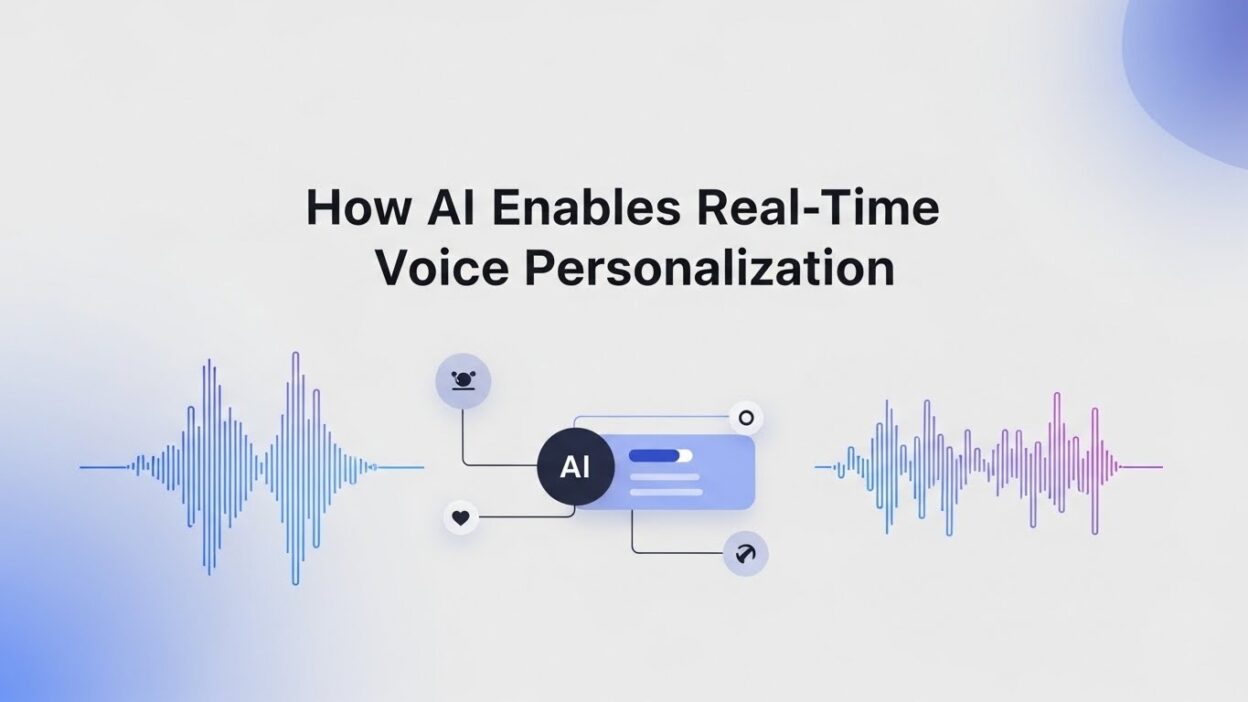
Voice personalization using AI changes this entire dynamic. The technology tailors voice interactions to individual preferences and behaviors in real time. Every caller experiences unique messaging designed specifically for them.
Customer satisfaction soars when people feel recognized and understood. Conversion rates climb dramatically with relevant, personalized outreach. Operational efficiency improves through smarter automation.
This revolution in voice technology affects contact centers, sales teams, customer service operations, and any business using phone communications. Understanding how it works becomes critical for competitive success.
Table of Contents
Understanding Voice Personalization Using AI
Artificial intelligence creates unique voice experiences for each individual caller. The system analyzes customer data to understand preferences, history, and context. It dynamically adjusts voice content, tone, pacing, and messaging based on this understanding.
Traditional IVR systems play identical recorded messages to everyone. A returning customer hears the same welcome message as a first-time caller. Voice personalization using AI creates custom greetings mentioning the customer by name and referencing their account status.
The technology operates across multiple dimensions simultaneously. Content personalization adjusts what the system says. Voice characteristic personalization changes how it sounds. Routing personalization determines which agent handles the call. Timing personalization optimizes when outbound calls occur.
Real-time processing enables instantaneous customization. The moment your system identifies the caller, AI generates appropriate personalized responses. No pre-recording of thousands of variations is needed. The synthesis happens on the fly.
Machine learning continuously improves personalization accuracy. The system tracks which personalization strategies succeed with different customer types. It learns from millions of interactions. Effectiveness compounds over time automatically.
Data integration from multiple sources enriches personalization capabilities. CRM systems provide purchase history and preferences. Marketing platforms reveal campaign engagement. Website analytics show browsing behavior. Voice personalization using AI synthesizes all available information.
Natural language generation creates conversational, human-like speech. Early text-to-speech systems sounded robotic and artificial. Modern AI voices are nearly indistinguishable from human speakers. Emotional inflection and natural pacing make interactions pleasant.
Core Technologies Behind Voice Personalization
Text-to-speech synthesis generates spoken audio from written text. Neural TTS systems use deep learning to produce natural-sounding voices. They capture subtle variations in pitch, tone, and rhythm. Multiple voice options support different languages and accents.
Voice cloning technology can replicate specific human voices. Companies create branded voices that match their identity. A financial services firm might use a trustworthy, authoritative voice. A youth-oriented brand could choose an energetic, casual tone.
Natural language understanding interprets caller intent and context. The AI comprehends what customers say despite variations in phrasing. It recognizes emotions, urgency levels, and sentiment. This understanding drives appropriate personalized responses.
Speech recognition converts audio input to text with high accuracy. Modern systems handle accents, background noise, and speech impediments well. They understand conversational speech patterns naturally. Recognition accuracy exceeds 95% in most scenarios.
Customer data platforms aggregate information from disparate sources. They create unified customer profiles combining demographics, behaviors, preferences, and history. Voice personalization using AI accesses these profiles instantly during calls.
Recommendation engines predict optimal messaging for each individual. They analyze patterns in successful interactions. They match customer characteristics with effective personalization strategies. Predictions improve outcomes measurably.
Real-time analytics track conversation flow and outcomes. The system measures engagement, sentiment shifts, and conversion success. It identifies which personalization approaches work best. Continuous optimization happens automatically.
API integrations connect AI systems with existing business tools. CRM platforms, marketing automation, phone systems, and databases all feed information to personalization engines. Seamless data flow enables sophisticated customization.
Benefits for Customer Experience
Recognition makes customers feel valued immediately. Voice personalization using AI greets callers by name and acknowledges their relationship with your company. People appreciate being treated as individuals rather than anonymous callers.
Relevance eliminates frustration with generic messaging. Customers hear information specifically applicable to their situation. A caller with an open support ticket hears about its status automatically. Someone who just made a purchase receives appropriate thank-you messaging.
Efficiency saves customer time dramatically. Personalized routing connects callers to the right department immediately. The system understands their likely need based on history. Wait times decrease when routing intelligence improves.
Context preservation prevents repetitive information gathering. The AI already knows account details, past interactions, and current issues. Customers don’t repeat themselves endlessly. Conversations start with relevant context already established.
Emotional resonance improves through tone matching. Voice personalization using AI can adjust speaking style based on customer preferences. Some people prefer formal, professional interactions. Others respond better to casual, friendly approaches.
Accessibility increases for diverse customer populations. The system can adjust speaking speed for elderly callers. It can switch languages based on customer preference. Visual impairment accommodations happen automatically.
Proactive service anticipates customer needs. The AI might mention an upcoming subscription renewal. It could suggest reordering frequently purchased items. Helpful reminders demonstrate attentiveness.
Brand consistency strengthens across all voice interactions. Whether customers reach IVR systems or live agents, they experience cohesive personalized treatment. Your brand promise manifests in every conversation.
Advantages for Sales Organizations
Conversion rates increase substantially with personalized outreach. Voice personalization using AI tailors sales messages to individual prospect characteristics. Product recommendations match actual customer needs. Objection handling addresses specific concerns effectively.
Lead prioritization becomes more sophisticated. The system predicts which prospects will respond best to personalized voice outreach. It identifies optimal contact timing for each individual. Sales teams work the highest-probability opportunities first.
Message relevance drives engagement immediately. Opening statements reference prospect behavior like website visits or content downloads. This relevance captures attention within the first seconds. Prospects listen rather than hanging up.
Relationship building happens faster with personalized interaction. The AI remembers details from previous conversations. It references past discussions naturally. Continuity makes prospects feel recognized and important.
Objection handling improves through predictive insights. Voice personalization using AI anticipates likely objections based on prospect profiles. It prepares agents with effective counter-arguments. Conversion blockers get addressed proactively.
Cross-selling and upselling become more targeted. The system identifies relevant additional products based on purchase history. Recommendations feel helpful rather than pushy. Acceptance rates climb significantly.
Agent productivity increases through automation of routine personalization. Reps don’t manually research each prospect before calling. The system surfaces relevant information automatically. More time goes to actual selling.
Win rates improve across the entire sales pipeline. Personalized interactions stand out in crowded markets. Prospects remember companies that treat them individually. Deal velocity accelerates through relevance.
Impact on Contact Center Operations
First-call resolution rates improve dramatically. Voice personalization using AI routes callers to agents with relevant expertise. It provides agents with complete customer context. Problems get solved faster without transfers.
Handle time decreases through intelligent automation. Routine inquiries receive personalized self-service responses. Customers resolve simple issues without agent involvement. Complex cases reach humans efficiently.
Agent satisfaction increases with better tools and information. Representatives see complete customer profiles instantly. They understand context before speaking. They feel prepared and confident. Job stress decreases.
Customer effort scores drop significantly. Personalized IVR navigation reduces menu complexity. Callers reach their destination in fewer steps. Voice personalization using AI eliminates frustrating generic pathways.
Queue management becomes more intelligent. High-value customers receive priority routing automatically. Urgent issues get expedited handling. Standard inquiries flow to appropriate resources. Wait time perceptions improve.
Quality scores benefit from enhanced customer experiences. Satisfied customers rate interactions higher. Agent performance improves with better context and tools. Quality assurance metrics trend upward.
Scalability reaches new levels through AI automation. The system handles volume spikes without degradation. Peak periods get managed smoothly. You serve more customers without proportional cost increases.
Cost per contact decreases over time. Automation handles increasing percentages of routine interactions. Agent time focuses on complex, high-value conversations. Operational efficiency compounds.
Implementation Strategies and Best Practices
Data foundation building comes first. You need clean, unified customer data for effective personalization. Audit existing data sources and quality. Implement customer data platforms if needed. Voice personalization using AI requires comprehensive information.
Use case prioritization focuses initial efforts. Start with highest-impact personalization opportunities. Common first projects include personalized IVR greetings, intelligent call routing, and targeted promotional messages. Prove value quickly.
Technology vendor selection determines long-term success. Evaluate platforms based on integration capabilities, voice quality, personalization sophistication, and scalability. Request demos with your actual use cases. Check customer references carefully.
Pilot programs test approaches before full deployment. Select a limited customer segment for initial rollout. Measure results rigorously against control groups. Refine based on learnings. Scale proven successes.
Agent training prepares teams for new workflows. Representatives need to understand how AI personalization works. They should know what information the system provides. They must learn to leverage insights effectively.
Customer communication manages expectations transparently. Inform customers about personalized experiences. Explain how data improves their interactions. Provide opt-out mechanisms. Build trust through openness.
Privacy compliance protects customer information and your business. Voice personalization using AI must respect regulations like GDPR and CCPA. Implement proper consent mechanisms. Secure data rigorously. Document compliance efforts.
Continuous optimization drives ongoing improvement. Monitor personalization performance metrics constantly. A/B test different approaches systematically. Retrain AI models with fresh data regularly. Never consider implementation complete.
Personalization Techniques and Approaches
Dynamic script generation creates unique conversation flows. The AI composes appropriate messaging based on customer attributes. A loyal customer receives different language than a new prospect. Purchase history influences product mentions.
Voice characteristic adjustment matches customer preferences. Speaking rate can slow for elderly callers. Tone can shift from formal to casual based on customer age. Accent options serve diverse populations.
Contextual routing connects callers with ideal agents. Voice personalization using AI considers customer value, issue complexity, agent skills, and past relationship history. Matches optimize for successful outcomes.
Predictive personalization anticipates customer needs. The system identifies likely reasons for calling based on recent activity. It prepares relevant information proactively. Customers feel understood immediately.
Sentiment-based adaptation responds to emotional states. The AI detects frustration, confusion, or satisfaction in real time. It adjusts tone and approach accordingly. Empathy increases through appropriate responses.
Multi-language personalization serves global customers. The system detects preferred language automatically. It switches seamlessly to appropriate voices. Cultural nuances get incorporated naturally.
Temporal personalization considers time-based factors. Morning callers might receive energetic greetings. Evening contacts get softer, calmer voices. Holiday periods trigger seasonally appropriate messaging.
Behavioral personalization reflects engagement patterns. Frequent callers receive abbreviated menus. Customers who prefer self-service get enhanced automation options. Channel preferences guide interaction design.
Integration with Existing Systems
CRM integration provides the richest personalization data. Salesforce, HubSpot, Microsoft Dynamics, and other platforms contain comprehensive customer information. Voice personalization using AI accesses this data in real time during calls.
Contact center platform connections enable intelligent routing. Five9, Genesys, NICE, and similar systems integrate with AI personalization engines. Call flows adapt based on customer data. Routing decisions become sophisticated.
Marketing automation platforms reveal campaign engagement. Information about email opens, content downloads, and website visits inform voice interactions. Outbound calling strategies leverage marketing intelligence.
Analytics tools track personalization effectiveness. Google Analytics, Mixpanel, and business intelligence platforms measure outcomes. You correlate personalization approaches with results. Data-driven optimization becomes possible.
E-commerce platform integration powers personalization for retail. Shopify, Magento, and other systems provide purchase history and browsing data. Product recommendations become highly relevant. Voice personalization using AI suggests items customers actually want.
Billing and subscription systems inform retention conversations. Upcoming renewals trigger proactive outreach. Payment issues generate appropriate follow-up. Account status shapes interaction approaches.
Knowledge management systems enhance self-service personalization. AI accesses help articles, FAQs, and documentation. It delivers relevant information based on customer questions. Resolution happens faster.
Workforce management tools optimize agent scheduling. Personalization data helps forecast volume by customer segment. Staffing matches predicted demand. Service levels improve through intelligent planning.
Measuring Success and ROI
Customer satisfaction scores provide direct feedback. Compare CSAT before and after implementing personalization. Measure changes by customer segment. Track sentiment during personalized interactions. Improvements typically range from 15-40%.
Net Promoter Score reflects loyalty impact. Voice personalization using AI strengthens customer relationships. Promoter percentages increase as detractor percentages decrease. NPS gains of 10-20 points are common.
Conversion rate improvements demonstrate sales effectiveness. Track how many personalized outbound calls result in sales. Compare against non-personalized baselines. Lifts of 25-50% happen frequently.
First-call resolution increases through better routing and context. Measure how often issues resolve without callbacks or escalations. Personalization typically improves FCR by 20-35%.
Average handle time decreases with enhanced efficiency. Agents spend less time gathering context. Customers explain issues faster when systems understand them. AHT reductions of 15-30% are achievable.
Self-service containment rates climb dramatically. More customers resolve issues through personalized IVR. Fewer calls reach live agents. Containment improvements of 30-50% drive significant savings.
Revenue impact calculations quantify financial returns. Measure increased sales, reduced churn, and operational cost savings. Calculate customer lifetime value improvements. ROI often exceeds 300% within 18 months.
Cost per contact drops through automation and efficiency. Divide total contact center costs by number of interactions. Voice personalization using AI reduces this metric substantially. Savings compound over time.
Privacy and Ethical Considerations
Consent requirements vary by jurisdiction. GDPR mandates explicit opt-in for many data uses. CCPA requires disclosure and opt-out capabilities. Understand regulations affecting your customer base. Build compliant systems from the start.
Data minimization reduces risk and complexity. Collect only information necessary for meaningful personalization. Voice personalization using AI works effectively with focused datasets. Avoid gathering data you don’t need.
Transparency builds customer trust. Explain how you use data to improve experiences. Describe personalization benefits clearly. Provide examples of what customers can expect. Openness prevents concerns.
Security protections safeguard sensitive information. Encrypt data in transit and at rest. Implement strict access controls. Monitor for unauthorized usage. Regular security audits catch vulnerabilities.
Opt-out mechanisms respect customer preferences. Some people prefer generic interactions. Provide easy ways to decline personalization. Honor choices consistently. Never penalize customers who opt out.
Bias prevention ensures fairness across demographics. Voice personalization using AI must treat all customers equitably. Test for disparate impacts across groups. Adjust algorithms to eliminate unfair bias.
Purpose limitation restricts data usage. Information collected for one purpose shouldn’t fuel unrelated personalization. Clear boundaries prevent scope creep. Customers deserve predictable, limited data usage.
Retention policies delete data appropriately. Don’t store personalization data indefinitely. Establish reasonable retention periods. Purge old information systematically. Compliance and security both benefit.
Common Challenges and Solutions
Data quality issues undermine personalization effectiveness. Incomplete profiles produce generic experiences. Outdated information causes embarrassing mistakes. Solution: Implement robust data governance. Verify critical information regularly. Build data quality dashboards.
Integration complexity delays implementation. Legacy systems lack modern APIs. Data silos prevent unified views. Solution: Use middleware platforms. Consider customer data platforms. Budget adequate time for technical work.
Voice quality concerns affect customer perception. Robotic-sounding AI damages brand image. Unnatural phrasing feels awkward. Solution: Use premium neural TTS systems. Test voice quality extensively. Collect customer feedback regularly.
Over-personalization creeps out some customers. Too much familiarity feels invasive. Obscure data references seem creepy. Solution: Calibrate personalization intensity carefully. Test different levels. Let customers control personalization depth.
Agent resistance emerges during transitions. Representatives fear AI will replace them. They distrust automated recommendations. Solution: Emphasize augmentation over replacement. Involve agents in design. Share success stories highlighting how AI helps them.
Cost justification challenges secure budget approval. Executives question ROI on untested technology. Competing priorities vie for resources. Solution: Start with limited pilots. Demonstrate concrete results. Build business cases with conservative assumptions.
Technical failures damage customer experience. System outages eliminate personalization capabilities. Fallback to generic experiences frustrates customers. Solution: Design robust failover mechanisms. Test disaster recovery thoroughly. Voice personalization using AI needs reliability engineering.
Privacy concerns limit data usage. Strict interpretations of regulations restrict personalization. Legal teams block initiatives. Solution: Work with privacy experts early. Design privacy-first solutions. Document compliance rigorously.
Industry-Specific Applications
Healthcare organizations personalize appointment reminders. Voice personalization using AI mentions specific doctors and appointment times. It adjusts messaging for different patient types. It handles prescription refill coordination automatically.
Financial services firms tailor fraud alerts. Suspicious transaction notifications include specific details. Voice characteristics match customer preferences. Authentication happens seamlessly through voice biometrics.
Retail companies personalize order status updates. Customers hear about their specific purchases. Delivery windows get communicated clearly. Upsell recommendations match purchase history.
Telecommunications providers customize retention offers. At-risk customers receive targeted save attempts. Offer selection matches usage patterns and preferences. Win-back rates improve dramatically.
Insurance companies personalize claims status communications. Policyholders hear updates specific to their claims. Next steps get explained clearly. Anxiety decreases through proactive information.
Travel and hospitality businesses enhance booking experiences. Voice personalization using AI references past trips and preferences. It suggests relevant destinations and accommodations. Booking conversion rates increase substantially.
Education institutions personalize student communications. Prospective students hear program-specific information. Current students receive relevant academic updates. Alumni get appropriate engagement messaging.
Government agencies improve citizen services. Callers hear information specific to their situations. Language preferences get honored automatically. Accessibility needs receive appropriate accommodation.
Future Trends and Innovations
Emotion AI will deepen personalization capabilities. Technology will detect subtle emotional states during conversations. Voice personalization using AI will adapt tone and approach in real time. Empathy will reach new levels through emotional intelligence.
Hyper-realistic voice cloning will become standard. AI voices will be indistinguishable from humans. Companies will create multiple branded voice personalities. Voice quality concerns will disappear entirely.
Predictive personalization will anticipate needs before customers articulate them. AI will understand likely call reasons from context. It will prepare relevant information proactively. Conversations will feel remarkably prescient.
Multi-modal personalization will combine voice with text and video. Customers will switch channels seamlessly while maintaining personalization. Visual elements will enhance voice interactions. Experiences will become richer.
Generative AI will create entirely new personalization dimensions. Large language models will compose unique, contextually perfect responses. Voice personalization using AI will transcend pre-defined scripts completely. Creativity will merge with personalization.
Voice biometrics will enable frictionless security. Identity verification will happen through natural conversation. No more annoying authentication questions. Security will improve while customer experience gets better.
Ambient computing will blur lines between devices. Personalized voice experiences will follow customers from phone to smart speaker to car. Continuity will span all voice interfaces. Your brand will recognize customers everywhere.
Quantum computing might enable real-time processing of impossibly complex personalization. Every micro-second of conversation could influence ongoing adaptation. Responsiveness will reach unprecedented levels. The technology remains years away but promises transformation.
Read More:-Why SaaS Startups Need Smart Call Routing
Conclusion

Voice personalization using AI represents a fundamental shift in customer communication. Generic, one-size-fits-all interactions give way to individually tailored experiences. Every customer feels recognized, understood, and valued.
The technology delivers measurable business results across multiple dimensions. Customer satisfaction increases as people receive relevant, personalized treatment. Sales conversions improve through targeted, contextual outreach. Operational efficiency gains compound through intelligent automation.
Implementation requires thoughtful planning and execution. Data infrastructure must support comprehensive personalization. Technology platforms need careful selection and integration. Organizations must navigate privacy and ethical considerations responsibly.
Start with focused pilot programs that prove value quickly. Demonstrate ROI through measurable improvements. Build organizational confidence through early successes. Scale proven approaches systematically.
The competitive landscape increasingly favors personalization leaders. Companies delivering exceptional voice experiences win customer loyalty. Organizations stuck with generic interactions lose ground. Voice personalization using AI creates sustainable differentiation.
Customer expectations will only increase over time. People experience sophisticated personalization everywhere else. Voice interactions must meet these rising standards. Generic phone experiences feel increasingly outdated.
Privacy and ethics require ongoing vigilance. Technology capabilities race ahead of regulatory frameworks. Responsible companies build trust through transparent, respectful data practices. Short-term gains from aggressive tactics damage long-term relationships.
The future of voice communication is undeniably personalized. Advances in AI, voice synthesis, and data integration accelerate constantly. Capabilities that seem futuristic today will become standard tomorrow. Early adopters gain advantages that compound.
Your customers deserve better than generic voice experiences. They want recognition and relevance. They expect convenience and efficiency. Voice personalization using AI delivers all these benefits simultaneously.
The technology exists and works today. Proven platforms serve thousands of organizations successfully. Implementation barriers continue falling. Costs decrease while capabilities expand. The question isn’t whether to adopt but when and how.
Start evaluating your options immediately. Research available platforms and vendors. Calculate potential ROI for your specific situation. Talk with peers about their experiences. Build your roadmap toward personalized voice experiences.
Your brand promise should manifest in every customer interaction. Voice personalization using AI makes this possible at scale. No customer feels like just another number. Everyone receives individually appropriate treatment.
The investment pays dividends across customer lifetime value. Satisfied customers buy more frequently. They remain loyal longer. They recommend your company enthusiastically. Personalization strengthens relationships that drive sustainable growth.
Transform your voice interactions from generic commodities to personalized experiences. Leverage AI capabilities to understand and serve each customer individually. Create memorable interactions that build lasting relationships. Let voice personalization using AI become your competitive advantage.
The time to act is now. Technology matures rapidly. Competition intensifies constantly. Customer expectations continue rising. Organizations that move quickly capture the greatest benefits. Your personalized voice future starts today.