Introduction
TL;DR Voice assistants have become ubiquitous in modern life. They live in our phones, cars, and homes. Alexa answers questions. Siri sets reminders. Google Assistant controls smart devices. These technologies touch millions of people daily.
Most companies rush to deploy voice AI without strategic planning. They focus on functionality alone. The assistant works, but it lacks personality. It sounds generic and forgettable. Users interact when necessary but feel no connection.
Voice brand identity for voice assistants separates memorable experiences from forgettable ones. Your voice AI represents your company in intimate moments. It speaks directly into users’ ears. It enters their homes and personal spaces. This proximity demands careful identity design.
A strong vocal identity creates recognition and loyalty. Users remember distinct voices. They develop preferences. They choose one assistant over another based on personality and communication style. Your voice becomes a competitive differentiator in crowded markets.
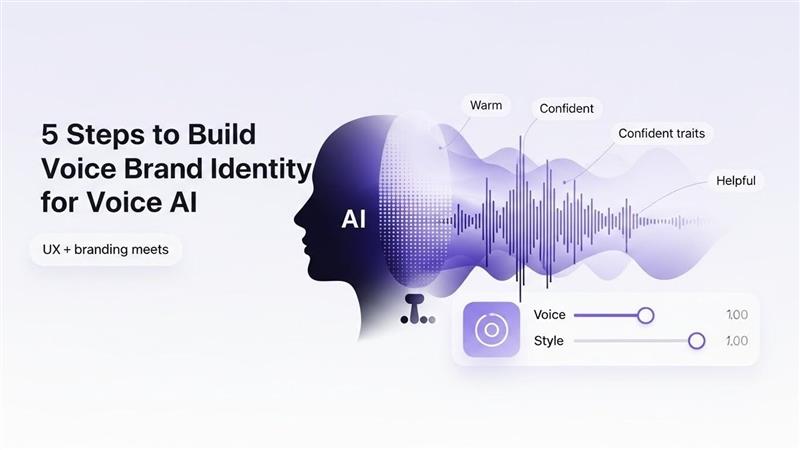
This comprehensive guide presents five essential steps for building powerful voice brand identity for voice assistants. Each step builds on the previous one. You’ll learn how to define, design, implement, test, and refine your voice AI’s unique character. The strategies work across industries and use cases.
Table of Contents
Why Voice Brand Identity Matters More Than Ever
The voice AI market continues exploding. Smart speaker adoption grows yearly. Voice commerce increases exponentially. Companies without voice strategies risk obsolescence. Those with generic implementations blend into noise.
Voice brand identity for voice assistants creates differentiation in saturated markets. Users encounter dozens of voice interfaces daily. Banking apps have voice features. Shopping sites offer voice search. Food delivery uses voice ordering. Standing out requires intentional identity design.
The Psychology of Voice Recognition
Human brains process voices differently than text. We evolved to recognize individuals through vocal characteristics. Pitch, rhythm, and tone convey enormous information. These elements trigger emotional responses before conscious thought.
Voice creates intimacy that text cannot match. Someone speaking directly to you feels personal. The experience mimics human conversation. Users anthropomorphize voice assistants naturally. They assign personalities whether designers intend this or not.
Brand associations transfer through voice. A warm, friendly voice suggests approachable brand values. A professional, authoritative voice conveys expertise. Mismatched vocal identity confuses users about brand positioning. Alignment between vocal and visual identity strengthens overall brand perception.
Trust builds through consistent vocal presence. Users recognize familiar voices instantly. This recognition creates comfort. People trust what they know. A distinctive voice identity accelerates trust formation compared to generic alternatives.
Business Impact of Strong Voice Identity
Customer satisfaction increases with memorable voice experiences. Users enjoy interactions with well-designed assistants. They rate companies higher when voice interfaces feel polished. These positive associations extend beyond the voice channel itself.
Brand recall improves dramatically with distinctive voices. Users remember conversations with personality. Generic assistants fade from memory immediately. Distinctive ones create lasting impressions. This recall drives repeat usage and word-of-mouth recommendations.
Competitive positioning strengthens through unique voice. When customers can identify your assistant instantly, you’ve achieved brand recognition. This auditory branding works like visual logos. It creates mental shortcuts that benefit marketing efforts.
Usage frequency grows with appealing voice identity. Users return to assistants they enjoy. They explore features they might otherwise ignore. They tolerate minor errors when they like the personality. Strong identity drives engagement metrics that matter.
Define Your Voice Brand Personality
Building voice brand identity for voice assistants begins with clear personality definition. You must know who your assistant is before designing how it sounds. This foundational work guides every subsequent decision.
Many teams skip this crucial step. They jump straight to voice selection. This approach produces inconsistent, confusing results. Start with strategy, not tactics.
Aligning Voice with Brand Values
Your existing brand values provide the starting foundation. List your company’s core values explicitly. What does your organization stand for? What principles guide decisions? These values must translate into voice characteristics.
Map values to personality traits systematically. If innovation is a core value, your voice might sound forward-thinking. If reliability matters most, consistency becomes paramount. Create direct connections between abstract values and concrete characteristics.
Consider your brand’s positioning carefully. Premium brands require different voice approaches than budget alternatives. B2B companies need different tones than B2C entertainment products. Industry context shapes appropriate personality choices.
Examine competitor voice strategies honestly. What personalities do they project? Where are gaps in the market? Your voice brand identity for voice assistants should differentiate while remaining authentic to your brand. Copying competitors wastes the opportunity.
Creating Detailed Personality Profiles
Character development techniques from fiction writing apply perfectly. Create a detailed biography for your voice assistant. Give it a background story. Define its education level. Determine its interests and quirks.
Personality dimensions provide useful frameworks. Is your assistant introverted or extroverted? Serious or playful? Formal or casual? These spectrums help define boundaries. They guide writers and voice actors toward consistency.
Create specific scenarios to test personality fit. How does your assistant respond to user frustration? What happens when someone tells a joke? How does it handle sensitive topics? Work through edge cases during definition, not production.
Document everything in a comprehensive personality guide. This document becomes the bible for all voice-related decisions. Include examples of appropriate and inappropriate expressions. Provide sample dialogues demonstrating the personality in action.
Voice Persona Worksheets
Start with demographic basics even though your assistant isn’t human. Age perception matters significantly. A young-sounding voice projects different attributes than a mature one. Define the perceived age range.
Educational background influences vocabulary and complexity. A professor sounds different than a helpful neighbor. Determine appropriate sophistication levels for your audience. Match education perception to user expectations.
Interests and hobbies humanize your assistant. These details inform conversational references and metaphors. A sports-loving personality uses different analogies than a book-focused one. These touches create authenticity.
Values and beliefs guide behavioral choices. What matters to your assistant? Efficiency? Helpfulness? Accuracy? These priorities shape how it handles conflicts between competing goals.
Design Vocal Characteristics and Audio Elements
Personality definition complete, you now design the actual vocal expression. Voice brand identity for voice assistants comes to life through specific audio characteristics. These decisions transform abstract personality into concrete experience.
Voice design involves numerous technical and creative choices. Each element contributes to overall perception. Misaligned elements create cognitive dissonance that damages user experience.
Selecting the Right Voice Type
Gender selection carries significant implications. Male voices traditionally convey authority. Female voices often sound more approachable. Non-binary and gender-neutral voices increasingly provide alternatives. Choose based on brand positioning and user research, not assumptions.
Age perception affects trustworthiness and relatability. Younger voices sound energetic and contemporary. Older voices suggest wisdom and experience. Match perceived age to your brand’s desired position.
Accent choices communicate geographic and cultural identity. Regional accents create immediate associations. Standard American or British accents sound neutral to most. Consider your target market carefully when selecting accent.
Voice quality encompasses timbre and texture. Smooth voices sound polished and professional. Slightly rough voices convey authenticity and warmth. Technical specifications like frequency range impact emotional response.
Crafting Vocal Delivery Patterns
Speaking rate significantly impacts perception. Fast speech sounds energetic but potentially anxious. Slow speech conveys thoughtfulness but risks boring users. Find the sweet spot for your personality and use case.
Pitch range creates emotional variety. Monotone delivery sounds robotic regardless of other qualities. Natural pitch variation conveys engagement and emphasis. Define appropriate pitch modulation for your brand.
Volume dynamics add expressiveness. Subtle volume changes emphasize key words. They create conversational rhythm. Completely flat volume sounds mechanical and unnatural.
Pausing strategically improves comprehension and naturalness. Brief pauses separate ideas. Longer pauses allow users to process complex information. Strategic silence is as important as sound.
Audio Branding Beyond Voice
Sonic logo integration reinforces brand recognition. Short audio signatures can precede responses. They create instant brand identification. These elements should complement, not overpower, the voice.
Sound effects enhance interaction feedback. Subtle sounds confirm actions. They provide status updates. These auditory cues improve usability when designed thoughtfully.
Background audio sets emotional tone. Gentle ambient sounds can create atmosphere. Music snippets reinforce brand associations. Use sparingly to avoid distraction from primary content.
Silence serves important functions. Knowing when not to add sound matters. Quiet moments let users think. They reduce cognitive overload. Resist the urge to fill every moment.
Create Comprehensive Voice Guidelines
Documentation transforms good intentions into consistent execution. Voice brand identity for voice assistants requires detailed guidelines that team members can follow. These documents ensure consistency across time and contributors.
Many organizations create minimal documentation. They assume people will “just know” how the voice should sound. This assumption guarantees inconsistency. Invest time in thorough guideline creation.
Writing the Voice Style Guide
Define linguistic patterns explicitly. What sentence structures does your assistant prefer? Does it use contractions? What about colloquialisms? These choices shape perceived personality significantly.
Vocabulary guidelines prevent inappropriate word choices. Create approved and prohibited word lists. Some terms may clash with your brand values. Others may confuse your target audience.
Grammar rules establish consistency. Will your assistant use complete sentences always? Can it use fragments for effect? What about starting sentences with conjunctions? Define these standards clearly.
Punctuation impacts vocal delivery. Exclamation points signal excitement. Question marks indicate rising intonation. Ellipses suggest trailing off. Train writers to punctuate intentionally for voice rendering.
Response Templates and Examples
Greeting variations demonstrate personality. Show multiple ways to say hello. Include appropriate greetings for different times of day. Demonstrate how personality infuses even simple acknowledgments.
Error handling examples prove crucial. Mistakes happen in every system. How does your assistant apologize? How does it redirect? These moments reveal character under pressure.
Confirmation patterns ensure users feel heard. Provide examples of acknowledging user input. Show how to confirm understanding before proceeding. These templates maintain conversational flow.
Sign-off options end conversations appropriately. Multiple closing phrases prevent repetition. They should feel natural and on-brand. Include options for different conversation outcomes.
Tone Adjustment Matrix
Context requires tone variation. Customer support needs empathy. Sales scenarios benefit from enthusiasm. Technical support demands clarity. Create a matrix showing tone adjustments by situation.
Emotional response protocols handle user feelings. What changes when users express frustration? How should the assistant respond to joy? Map emotional contexts to appropriate vocal adjustments.
Formality spectrum defines range boundaries. Some situations require formal language. Others benefit from casual warmth. Define when to use each level. Provide examples across the spectrum.
Cultural sensitivity guidelines prevent offense. Different cultures have different communication norms. Document these variations if serving global audiences. Respect creates better experiences.
Implement and Train Your Voice System
Guidelines complete, implementation brings voice brand identity for voice assistants to life. This technical phase requires collaboration between designers, developers, and voice talent. Each role contributes essential expertise.
Implementation quality determines whether your carefully designed identity actually reaches users. Poor execution wastes excellent planning. Invest appropriately in this critical phase.
Voice Talent Selection and Direction
Casting voice actors requires careful consideration. Audition multiple candidates against your personality profile. Listen for natural alignment with your defined characteristics. Some voices simply fit better than others.
Provide comprehensive direction during recording. Share your personality guide and style documentation. Explain the brand story. Help talent understand the character they’re embodying. Better direction produces better recordings.
Record multiple takes of each line. Variations provide editing flexibility. They ensure you capture the right emotional tone. Voice actors appreciate knowing you’ll choose the best performance.
Create reference recordings for synthetic voices. Many modern systems use recorded samples for training. High-quality source material produces better synthesis. Invest in professional recording environments.
Text-to-Speech Configuration
Modern TTS systems offer extensive customization. Adjust speaking rate precisely. Modify pitch range and baseline. Fine-tune emphasis patterns. These parameters significantly impact perceived personality.
SSML markup enables detailed control. Speech Synthesis Markup Language lets you specify pronunciation, pauses, emphasis, and prosody. Learn to use these tools effectively. They transform generic output into branded voice.
Custom lexicons handle brand-specific terms. Add company names, product names, and industry jargon. Specify exact pronunciations. This prevents awkward stumbles over important words.
Continuous improvement loops refine synthesis quality. Monitor real-world output regularly. Identify problematic renderings. Update configurations iteratively. Voice brand identity for voice assistants improves through ongoing attention.
Integration Across Touchpoints
Consistency across platforms strengthens identity. Your assistant should sound the same on mobile apps, smart speakers, and websites. Users should recognize your voice instantly regardless of device.
Response variation prevents repetition fatigue. Generate multiple versions of common responses. Rotate through them to maintain freshness. Repetition damages even excellent voice identity.
Context-aware responses demonstrate sophistication. The assistant should adjust slightly based on conversation history. It should remember what’s been discussed. This memory creates more natural interactions.
Fallback strategies maintain brand during errors. When systems fail, fallback responses still represent your brand. Design these carefully. They’re often the last impression users receive.
Test, Measure, and Refine Continuously
Launch doesn’t mean completion. Voice brand identity for voice assistants requires ongoing refinement. User feedback reveals gaps between intention and reality. Data shows what works and what doesn’t.
Many companies launch and forget. They move to the next project. This approach wastes the opportunity for excellence. Commit to continuous improvement.
User Testing Methodologies
Recruit diverse testing participants. Include various demographics, technical skill levels, and accents. Different users perceive voice identity differently. Comprehensive testing reveals broader patterns.
A/B testing compares identity variations. Try different vocal characteristics with user subsets. Measure preference and engagement differences. Data trumps opinions about what works.
Longitudinal studies track perception over time. Initial reactions may differ from long-term impressions. Test how voice identity holds up after repeated exposure. Some characteristics wear better than others.
International testing prevents cultural missteps. What works in one market may fail in another. Test voice identity across target geographies. Adjust as needed for cultural contexts.
Key Metrics to Monitor
Brand recognition measures identity strength. Can users identify your assistant from voice alone? This metric directly reflects identity distinctiveness. Track improvement over time.
Emotional response indicates personality effectiveness. Do users feel the intended emotions? Survey methods and sentiment analysis reveal emotional impact. Aim for alignment with brand values.
Engagement duration suggests appeal. Users spend more time with assistants they enjoy. Track average session length. Monitor how it changes with voice identity refinements.
Completion rates reveal usability. Even appealing voices must enable task completion. Monitor whether personality enhances or hinders functionality. Balance is essential.
Iterative Refinement Process
Regular voice audits identify inconsistencies. Review sample interactions monthly. Listen for deviations from brand guidelines. Catch problems before they become patterns.
User feedback integration closes improvement loops. Create easy channels for voice-specific feedback. Analyze comments systematically. Prioritize changes based on frequency and impact.
Seasonal updates keep voice relevant. Language trends evolve. Cultural references age. Update your voice brand identity for voice assistants to stay contemporary without losing core identity.
Technology upgrades enable improvements. As TTS and voice AI advance, leverage new capabilities. Better synthesis quality, more natural intonation, and improved emotional range become possible.
Common Voice Identity Mistakes to Avoid
Many organizations make predictable errors when developing voice brand identity for voice assistants. Learning from these mistakes saves time and resources. Recognizing problems early prevents costly corrections later.
Some mistakes damage user experience immediately. Others erode brand perception gradually. All deserve attention during planning and implementation.
Inconsistency Across Experiences
Different teams creating voice content without coordination produces chaos. The assistant sounds different depending on which feature users access. This inconsistency confuses users and damages brand perception.
Platform-specific implementations diverge without governance. Mobile sounds different from smart speakers. Web interfaces use another personality entirely. Users cannot recognize your brand across touchpoints.
Version updates accidentally change personality. New features introduce different writers. The voice drifts from original intent. Strong governance and documentation prevent this common problem.
Multilingual implementations often fail consistency. Translations occur without considering voice personality. Different languages end up with completely different characters. This breaks international brand cohesion.
Over-Engineering Personality
Excessive quirks become annoying quickly. A personality trait that seems charming initially grows irritating with repetition. Subtle personality beats over-the-top theatricality.
Forced humor falls flat regularly. Not every brand should be funny. Poorly executed jokes damage credibility. Conservative approaches often outperform aggressive attempts at humor.
Inappropriate informality alienates users. Some contexts demand respect and formality. Financial services and healthcare especially require appropriate register. Know when personality should be restrained.
Personality at the expense of clarity fails users. If personality makes responses harder to understand, you’ve gone too far. Clarity always trumps cleverness.
Neglecting Accessibility
Assuming one voice works for everyone ignores diversity. Some users may have hearing difficulties. Others may have cognitive differences affecting comprehension. Design voice identity with accessibility in mind.
Speaking too quickly excludes some users. Older adults and non-native speakers need slower pace. Provide speed controls where possible. Default to inclusive rates.
Complex vocabulary limits understanding. Match language sophistication to audience capabilities. Clear communication matters more than impressive vocabulary.
Lack of visual alternatives forces audio-only interaction. Some users cannot or prefer not to use voice. Provide text alternatives. Voice brand identity for voice assistants should complement, not replace, other modalities.
Industry-Specific Voice Identity Considerations
Different industries require different approaches to voice brand identity for voice assistants. Healthcare demands different qualities than entertainment. Financial services need different personality than retail. Understanding sector-specific needs prevents generic solutions.
Regulatory requirements in some industries constrain choices. User expectations vary dramatically across sectors. Successful voice identity aligns with industry context.
Healthcare and Medical Applications
Trust and professionalism are essential in medical contexts. Users share sensitive health information. The voice must inspire confidence. Warmth should balance authority appropriately.
Empathy becomes critically important. Health concerns cause anxiety. The voice should acknowledge emotions without sounding condescending. Appropriate concern demonstrates care.
Clarity prevents dangerous misunderstandings. Medical terminology must be pronounced correctly. Instructions must be unambiguous. Personality never compromises comprehension in healthcare.
Privacy considerations shape interaction design. The voice should feel private and confidential. Avoid behaviors that feel invasive or overly familiar. Respect boundaries carefully.
Financial Services and Banking
Authority establishes credibility with money matters. Users need confidence in financial guidance. The voice should convey competence and reliability. Uncertainty damages trust quickly.
Security consciousness should be evident. Financial transactions require careful authentication. The voice should reinforce security without creating friction. Balance protection with usability.
Discretion matters when discussing finances. Money is a sensitive topic. The voice should never feel judgmental about spending or savings. Neutral professionalism works best.
Complexity management helps users navigate options. Financial products can be confusing. The voice should simplify without oversimplifying. Clear explanations build understanding.
Retail and E-Commerce
Enthusiasm drives purchase motivation. Shopping should feel exciting. The voice can express appropriate excitement about products. Energy encourages engagement.
Helpfulness positions the assistant as ally. Users want guidance, not pressure. The voice should assist discovery without pushy sales tactics. Support rather than sell.
Personalization creates relevant experiences. The voice should acknowledge user preferences and history. Recognition makes users feel valued. Generic interactions miss opportunities.
Efficiency respects user time. Shopping often has time pressure. The voice should enable quick transactions when desired. Allow depth for browsers while accommodating quick shoppers.
The Future of Voice Brand Identity
Voice brand identity for voice assistants continues evolving rapidly. Emerging technologies enable more sophisticated implementations. Understanding trends helps teams prepare for coming changes.
Early adoption of new capabilities provides competitive advantages. Waiting until technologies mature risks falling behind. Balance innovation with reliability.
Emotional Intelligence and Adaptation
Sentiment detection enables real-time adjustment. The system detects user emotional states. Voice characteristics adapt appropriately. Frustrated users receive different treatment than happy ones.
Personality matching creates rapport. Some users prefer formal interactions. Others want casual friendliness. Advanced systems will adapt to individual communication preferences.
Context awareness deepens over time. Systems learn from interaction history. They develop understanding of individual users. This knowledge personalizes voice identity to each relationship.
Proactive empathy anticipates needs. Rather than just reacting, future assistants will predict emotional states. Voice adjustments will happen before users even express feelings.
Multimodal Voice Experiences
Visual and voice coordination strengthens brand identity. On-screen elements reinforce vocal personality. Animations sync with speech patterns. The unified experience amplifies impact.
Gesture integration adds expression dimensions. On devices with cameras, gestures can complement voice. An assistant that sees and speaks creates richer interactions.
Environmental awareness shapes responses. Knowing whether users are alone or with others affects appropriate personality expression. Privacy and social context influence ideal voice behavior.
Spatial audio creates presence. 3D sound positioning makes assistants feel located in space. This physical sensation strengthens personality perception.
Personalization at Scale
Individual voice preferences allow customization. Users select from personality variants. Some prefer efficiency. Others want entertainment. Choice empowers users while maintaining brand consistency.
Learning systems refine over time. The assistant discovers what each user likes. It emphasizes appreciated personality traits. It minimizes annoying characteristics. This individual tuning improves satisfaction.
Demographic adaptation serves diverse audiences. The same base personality adjusts slightly for different user groups. Age-appropriate communication varies. Cultural adjustments maintain appropriateness.
Dynamic complexity matching helps all users. The assistant speaks simply to those who prefer it. It uses sophisticated language with those who appreciate it. Adaptation happens automatically.
Read More:-AI Voice Debugging Tools for Monitoring Live Conversations
Conclusion

Voice brand identity for voice assistants transforms technology into memorable experiences. Generic implementations blend into the background. Distinctive voices create lasting impressions. Users remember, return, and recommend assistants with strong identities.
The five-step process provides a comprehensive roadmap. Start by defining personality based on brand values. Create detailed personas that guide all decisions. Design specific vocal characteristics that express personality audibly. Document everything in comprehensive guidelines that ensure consistency.
Implementation brings design to life through careful voice selection and configuration. Choose talent that naturally embodies your personality. Configure TTS systems with precision. Maintain consistency across all platforms and touchpoints.
Testing reveals gaps between intention and reality. Recruit diverse participants to evaluate your voice identity. Monitor key metrics that indicate success. Refine continuously based on data and feedback.
Common mistakes damage voice identity in predictable ways. Inconsistency confuses users. Over-engineered personality becomes annoying. Neglecting accessibility excludes important user groups. Learn from others’ errors to avoid them.
Industry context shapes appropriate voice choices. Healthcare demands trust and empathy. Finance requires authority and discretion. Retail benefits from enthusiasm and helpfulness. Align your voice brand identity for voice assistants with sector expectations.
Future technologies will enable even more sophisticated voice identities. Emotional intelligence will allow real-time adaptation. Multimodal experiences will coordinate voice with visual elements. Personalization will serve individual preferences at scale.
Start building your voice brand identity today. Define who your assistant should be. Make intentional choices about every vocal characteristic. Document thoroughly to ensure consistency. Implement carefully with attention to quality.
Test extensively before and after launch. Real user feedback reveals what works. Data shows where improvements are needed. Iterate continuously to refine and enhance.
Remember that voice represents your brand in intimate moments. Users invite your assistant into private spaces. They interact during vulnerable moments. This privilege demands thoughtful, respectful identity design.
Invest appropriately in voice brand development. The returns justify the effort. Strong voice identity drives recognition, preference, and loyalty. These outcomes directly impact business results.
Collaborate across disciplines for best results. Designers, writers, developers, and voice talent all contribute essential perspectives. Include users throughout the process. Their input prevents costly mistakes.
Measure success through user behavior and brand metrics. Track recognition, engagement, and satisfaction. Monitor how voice identity impacts overall brand perception. Connect voice investments to business outcomes.
The voice revolution continues accelerating. Companies with strong voice brand identity for voice assistants will lead their industries. Those with generic implementations will struggle for relevance. The choice is clear.
Your voice assistant speaks for your brand every day. Make sure it says exactly what you want, exactly how you want it said. Strong voice brand identity turns technology into relationship.