Introduction
TL;DR Corporate training teams share a universal frustration. Content goes stale the moment it ships. A policy changes. A product updates. A regulation shifts. The training video from six months ago is already wrong.
Rebuilding that video means booking a studio, re-engaging a production company, coordinating schedules, reviewing drafts, and waiting three weeks. By the time the update is ready, something else has changed. The cycle never ends.
Most L&D teams cope by accepting the gap. They let outdated content sit in the LMS because updating it costs too much time and money. Learners watch videos that describe processes their company no longer uses. Compliance training references regulations that have already been superseded.
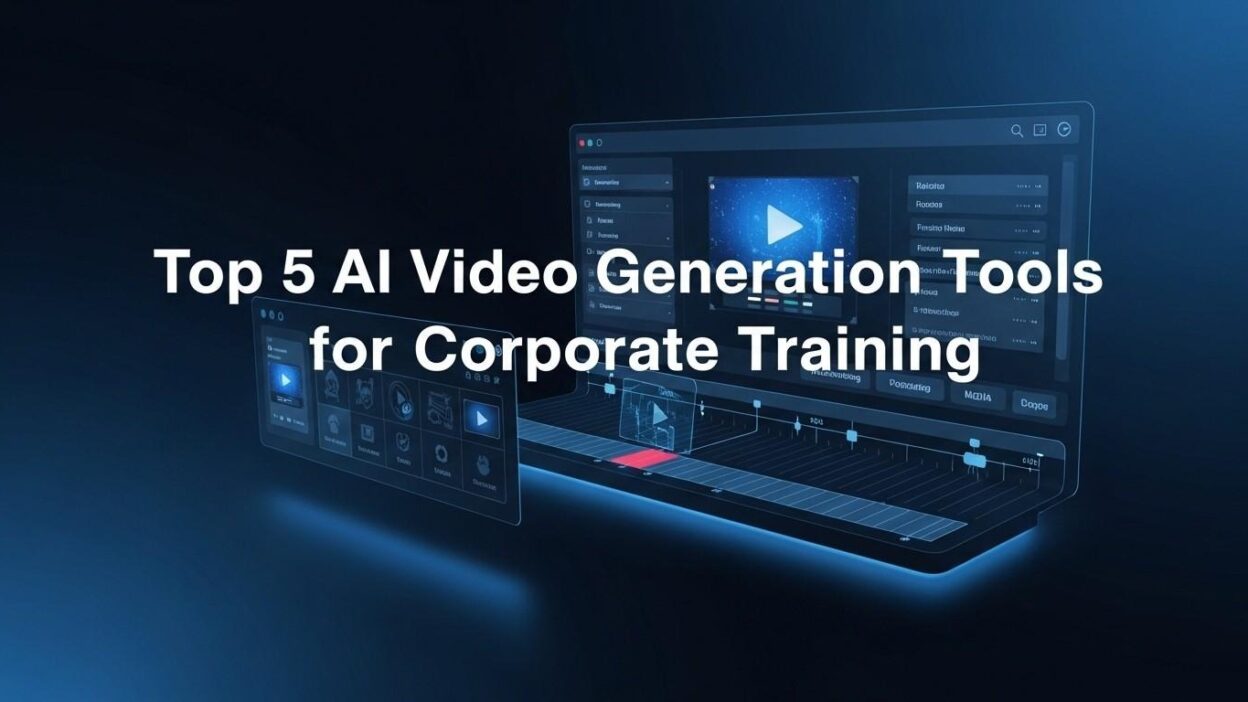
AI video generation tools for corporate training break this cycle. They put video production directly in the hands of L&D professionals. No studio booking. No production agency. No scheduling nightmare. You write a script, configure an AI presenter, and export a finished video in under two hours.
The market for AI video generation tools for corporate training has matured rapidly. What started as novelty technology a few years ago now powers enterprise training programs at global companies. The avatar quality is professional. The workflow is practical. The output integrates with major LMS platforms. The case for adoption is strong.
This guide covers the five platforms that stand out from the crowded field. Each one gets a detailed breakdown covering features, ideal use cases, strengths, and honest limitations. You will finish this blog knowing exactly which platform matches your team’s workflow, budget, and training content requirements.
Table of Contents
The Real Business Case for AI Video Generation Tools for Corporate Training
Investing in new technology requires a clear business case. The case for AI video generation tools for corporate training is built on four measurable pillars: production cost, update speed, content reach, and learner outcomes.
Production Cost Reduction
Professional video production agencies charge between three thousand and twelve thousand dollars per finished minute of training content. A ten-module onboarding program with five minutes of video per module costs between one hundred fifty thousand and six hundred thousand dollars. That budget is out of reach for most corporate L&D teams.
AI video generation tools for corporate training restructure this math entirely. Enterprise platform subscriptions typically run between four hundred and two thousand dollars per month. That flat cost covers high-volume production with no per-minute charges. The cost per finished video minute drops from thousands of dollars to tens of dollars. Teams produce more content for less money.
Content Update Velocity
Speed matters as much as cost. The regulatory landscape changes. Product features evolve. Company policies update. Competitor moves shift best practices. An L&D team that can update training videos the same day a change happens keeps the organization aligned. A team waiting three weeks for a production agency update creates a window where employees act on outdated information.
AI video generation tools for corporate training compress update timelines to hours. You edit the script. You regenerate the narration. You export the updated video. Same day. Every time.
Global Content Reach
Multinationals face a content equity problem. English-language training content works for headquarters employees. It does not serve teams in Germany, Japan, Brazil, or Korea with the same effectiveness. Professional dubbing in multiple languages is prohibitively expensive using traditional production methods.
AI video generation tools for corporate training include multilingual capabilities that make global reach practical. The same script renders into dozens of language versions with AI narration in each language. Every regional team gets native-language content on the same production timeline.
Learner Engagement Data
Video consistently outperforms text-based training on engagement and knowledge retention metrics. Learners complete video-based modules at higher rates. They demonstrate better recall on post-training assessments. They apply skills more accurately in on-the-job scenarios. Switching to video-based training using AI production tools delivers learner outcome improvements that text and slide-based content cannot match.
Key Evaluation Criteria for AI Video Generation Tools for Corporate Training
Choosing among platforms requires evaluating the dimensions that actually matter for enterprise L&D use. These criteria separate tools built for corporate training from those built for consumer content creators.
Presenter Realism and Diversity
Avatar quality determines whether learners engage with or tune out training content. Poor lip sync and unnatural gestures distract learners and undermine message credibility. High-quality avatars blend into the learning experience naturally. Learners focus on the content rather than the presenter’s awkward movements.
Diversity representation matters in enterprise training. A global workforce expects to see avatars that reflect their own demographics. The best AI video generation tools for corporate training offer avatar libraries that span multiple ethnicities, genders, age ranges, and professional presentations.
Script Integration and Editing Workflow
Production speed depends on how cleanly scripts translate into video output. Some platforms require manual scene configuration after every script edit. Others render video changes automatically when you update text. For teams producing dozens of videos monthly, workflow efficiency multiplies into days of saved time across a full production calendar.
LMS and SCORM Compatibility
Training videos must live inside your existing LMS infrastructure. Platforms that export SCORM 1.2, SCORM 2004, or xAPI packages integrate with every major enterprise LMS. Direct integrations with Workday Learning, SAP SuccessFactors, Cornerstone, and Docebo save additional steps. Verify compatibility with your specific LMS before committing to any platform.
Security and Data Handling
Enterprise procurement teams scrutinize vendor security documentation. Corporate training content often contains sensitive business information — internal processes, compensation structures, proprietary methodologies. The best AI video generation tools for corporate training offer enterprise data agreements, SOC 2 certification, and clear data retention policies that satisfy IT security reviews.
Scalability for High-Volume Teams
A team producing five videos per month has different needs than one producing five hundred. Platform pricing tiers, rendering speed, collaboration features, and content library organization all scale differently. Evaluate platforms against your realistic production volume rather than your current volume alone. Plan for growth.
Tool 1: Synthesia — Enterprise-Grade at Scale
Synthesia holds the strongest market position among AI video generation tools for corporate training. It built its product specifically for enterprise L&D teams and has the customer list to prove it. Adobe, Teleperformance, Reuters, and hundreds of other global companies use Synthesia for high-volume training content production.
Platform Strengths
The avatar library exceeds two hundred presenters. Quality sits at the top of the market. Lip synchronization accuracy across all supported languages is exceptionally tight. Gestures feel natural rather than mechanical. The overall presenter realism creates the kind of professional impression that builds learner trust.
Language support covers one hundred forty languages and accents. This breadth makes Synthesia a natural fit for any organization running training programs across multiple geographies. A single production team can serve the entire global workforce without routing content through regional production vendors.
The SCORM export function works reliably with all major LMS platforms. Synthesia also offers an API that allows technically sophisticated L&D teams to automate video generation within larger content pipelines. Custom avatar creation lets organizations build a branded AI presenter based on a real company spokesperson or host. This presenter consistency strengthens the training brand identity across a large content library.
Ideal Corporate Training Use Cases
Synthesia performs at its best for compliance training, regulatory certification, product knowledge programs, and large-scale onboarding curricula. Teams producing fifty or more videos per month find the platform’s workflow and template system handle volume without degradation. The ability to update individual scenes without re-rendering entire videos saves hours when content requires frequent revision.
Among AI video generation tools for corporate training, Synthesia offers the most mature enterprise feature set. Template libraries, brand kit customization, team collaboration workspaces, and detailed usage analytics all exist at a level of refinement competitors have not yet matched.
Limitations to Know
Enterprise pricing requires a direct conversation with the sales team. Starter plans limit monthly video production minutes and restrict avatar selection. Teams with high production volumes on a tight budget may find the cost-to-output ratio challenging at entry-level tiers. Organizations should request a production volume estimate from their L&D team before pricing conversations to ensure the right plan tier appears in the proposal.
Tool 2: HeyGen — Best for Translation and Interactive Learning
HeyGen has built the strongest feature set for organizations prioritizing multilingual content and interactive training experiences. It competes closely with Synthesia on avatar quality and has added differentiating capabilities that make it the top choice for specific corporate training scenarios.
Platform Strengths
The video translation feature is HeyGen’s most distinctive capability. You upload an existing training video recorded in any language. HeyGen translates the audio, re-syncs the presenter’s lip movements to match the translated narration, and outputs a localized version of the original video. Organizations with existing video libraries can localize years of content without re-recording a single scene. This feature alone justifies evaluation for any company with a significant non-English-speaking workforce.
Interactive avatar technology enables AI-powered real-time conversation experiences. Learners interact with an AI presenter that responds to their questions and prompts. This capability opens scenario-based training formats where learners practice conversations with a simulated customer, manager, or colleague. Interactive practice improves skill transfer to real-world performance significantly compared to passive video viewing.
Custom avatar creation from a brief video recording produces a high-fidelity digital presenter. Organizations can feature real subject matter experts or executives as AI avatars without requiring those individuals to record every future training update.
Ideal Corporate Training Use Cases
HeyGen excels at sales enablement training, customer service skill development, and diversity and inclusion programs requiring authentic representation in multiple languages. The interactive avatar capability makes it the leading choice among AI video generation tools for corporate training for teams building scenario-based and role-play learning experiences.
Global onboarding programs benefit enormously from HeyGen’s translation capabilities. A new hire cohort in twelve countries receives the same onboarding content in their native language. Comprehension improves. Engagement improves. Time-to-productivity for new employees shortens.
Limitations to Know
LMS integration options remain less comprehensive than Synthesia’s ecosystem. SCORM export is available but the number of native LMS integrations is smaller. Enterprise security documentation is developing but may not yet satisfy the most stringent IT security requirements. Teams with complex procurement standards should request security documentation early in the evaluation process.
Tool 3: Descript — The Best Choice for Camera-Based Teams
Descript approaches the challenge from a different angle than most AI video generation tools for corporate training. It does not generate AI avatars from scripts. It helps teams work faster and smarter with real recorded video content. The AI capabilities are powerful. The workflow is unlike anything else in the market.
Platform Strengths
Text-based video editing is Descript’s core innovation. You record or upload a video. Descript transcribes it automatically. The video timeline and the transcript synchronize perfectly. Editing the transcript edits the video. Delete a sentence from the transcript. That segment disappears from the video. No timeline scrubbing. No frame-by-frame cutting. Editors work at the speed of text editing rather than video editing.
Voice cloning through the Overdub feature transforms the update workflow for recorded content. You train a voice model on a sample of the presenter’s voice. When the script requires changes — a new product name, a revised policy number, an updated process step — you retype the changed text. Descript regenerates that audio segment in the presenter’s voice. No re-recording session needed. No scheduling the presenter. No studio booking.
Automatic filler word removal detects and strips every instance of um, uh, and similar hesitations from recorded audio. This feature alone saves hours of manual editing work per recording session. AI-powered background removal and automatic caption generation complete a suite of production tools that dramatically reduce post-production time.
Ideal Corporate Training Use Cases
Descript suits L&D teams that film real presenters and need AI tools to accelerate editing and simplify updates. Executive leadership messages, subject matter expert interviews, department head training addresses, and authenticity-driven culture content all benefit from Descript’s capabilities. Among AI video generation tools for corporate training, Descript delivers the strongest solution for organizations committed to human presenter-led content.
Organizations with large existing video libraries find Descript particularly valuable. Updating a legacy content library becomes a manageable project rather than a complete re-production effort. The voice cloning feature handles narration updates. Text-based editing handles structural changes.
Limitations to Know
Descript does not generate AI avatar videos from text scripts. Teams that need pure script-to-video production without filming anyone should look at Synthesia, HeyGen, or Colossyan. Descript works best as a complement to avatar-based tools or as the primary solution for camera-based teams. It does not replace avatar generation. It excels at a different and equally important part of the corporate training video workflow.
Tool 4: Colossyan — Built Specifically for Instructional Designers
Most video AI platforms build for content creators broadly. Colossyan built specifically for L&D professionals. The product decisions reflect deep familiarity with instructional design workflows, learning management system requirements, and the types of content corporate training programs actually need.
Platform Strengths
Branching scenario capability is Colossyan’s most distinctive feature. You build a training video with decision points. At key moments, learners choose between options. The video branches to different outcomes depending on their choice. A compliance training scenario shows what happens when an employee reports a violation properly versus improperly. A customer service training module lets learners practice different response strategies and see the resulting customer reactions. Branching video drives active learning rather than passive consumption.
Multi-presenter scenes let two or more AI avatars appear simultaneously and interact. You stage a dialogue, a meeting, a conflict, or a coaching conversation between AI characters. This format variety prevents the monotony of single-presenter videos across long training programs. Learners experience more dynamic, realistic simulations of real workplace interactions.
The team collaboration workspace enables multiple L&D professionals to work on the same project concurrently. Review workflows, commenting, and approval routing are built into the platform. For organizations where training content requires sign-off from legal, compliance, or subject matter experts, the built-in collaboration tools eliminate the back-and-forth that normally slows production.
Ideal Corporate Training Use Cases
Colossyan performs at its best for scenario-based learning, ethics and compliance training with consequence branching, soft skills development, and leadership training programs. The multi-presenter capability makes it the most versatile choice among AI video generation tools for corporate training for instructional designers who need realistic interpersonal dynamics in their content.
The L&D-specific template library accelerates production for common training formats. New hire orientation, safety certification, product knowledge modules, and performance management training all have template starting points designed around corporate training conventions rather than generic video content formats.
Limitations to Know
Avatar realism, while solid, sits slightly below Synthesia and HeyGen at comparable price points. The integration ecosystem is narrower than the market leaders. Organizations using niche LMS platforms should verify compatibility before purchasing. Customer support response times during peak periods have drawn occasional criticism in user reviews. Enterprise procurement teams should verify support SLA commitments during contract negotiations.
Tool 5: Pictory AI — The Accessible Entry Point for L&D Teams
Pictory AI takes a different approach from the avatar-focused platforms. It specializes in converting text-based content — scripts, articles, blog posts, and documents — into video automatically using stock footage, AI narration, and dynamic visual assembly. For corporate training teams starting their AI video journey, Pictory offers an accessible and affordable entry point.
Platform Strengths
The script-to-video conversion engine is fast and intuitive. You paste a script or upload a document. Pictory analyzes the content. It selects relevant stock footage clips to match each section. It applies AI narration in the voice and language you choose. It assembles the result into a complete video with captions. The entire process takes minutes rather than hours for straightforward content types.
The existing video highlight reel feature is valuable for repurposing long-form corporate content. You upload a recorded webinar, a town hall recording, or a product demonstration video. Pictory identifies the most relevant segments for training purposes and assembles a condensed highlight version automatically. This repurposing capability extends the value of existing recorded content without additional production investment.
Caption and subtitle automation at this quality level was previously a post-production expense. Pictory generates accurate captions automatically. This accessibility feature improves comprehension for non-native speakers and enables content consumption in sound-sensitive environments without additional workflow steps.
Ideal Corporate Training Use Cases
Pictory works best for informational and awareness-building training content. New policy announcements, benefits enrollment explanations, company news and cultural communications, and process overview training all suit Pictory’s stock-footage-driven video assembly approach. Among AI video generation tools for corporate training, Pictory delivers the fastest production for teams creating informational content that does not require a human-like AI presenter.
Small L&D teams with limited budgets find Pictory an accessible first step. The learning curve is gentle. The pricing is lower than avatar-based platforms. The output quality for the right content type satisfies learner engagement expectations.
Limitations to Know
Pictory lacks AI avatar presenters. Stock footage has creative limitations — finding footage that accurately represents specific industries, roles, or cultural contexts can be difficult. For training content requiring a credible on-screen expert or branded presenter, Pictory is not the right fit. It works for informational content where environmental imagery supports the message but cannot serve use cases requiring a professional human-like presenter.
Comparing the Five Platforms Side by Side
Each platform serves a distinct primary use case. Choosing correctly requires matching those strengths to your specific training program requirements.
For Enterprise Scale and Language Breadth
Synthesia leads for organizations producing high volumes of structured training content across many languages. The enterprise feature depth, avatar quality, and integration ecosystem make it the most reliable choice for large L&D operations running compliance, onboarding, and product knowledge programs at global scale.
For Interactive and Multilingual Experiences
HeyGen wins when your program requires interactive scenario practice and translation of existing content at speed. Sales teams, customer service departments, and global onboarding programs gain the most from HeyGen’s differentiating capabilities among AI video generation tools for corporate training.
For Real Presenter Content With AI Efficiency
Descript is the clear choice for L&D teams filming actual people. Voice cloning, text-based editing, and automatic cleanup tools make it the fastest workflow for camera-based production. Subject matter expert content, leadership communications, and culture-focused training all benefit from Descript’s workflow.
For Scenario-Based and Decision-Driven Learning
Colossyan outperforms the field for instructional designers building branching scenarios, multi-character dialogues, and consequence-based learning experiences. Ethics training, soft skills development, and leadership programs achieve the most impact through Colossyan’s interaction-focused capabilities.
For Budget-Conscious Teams Starting With AI Video
Pictory offers the most accessible entry point for informational content at the lowest price. Teams converting documents and scripts into illustrated video content find Pictory sufficient for awareness and communication training without the investment required for avatar-based platforms.
Frequently Asked Questions
Q1: How much do AI video generation tools for corporate training typically cost?
Pricing ranges significantly across platforms and plan tiers. Entry-level plans on major platforms run from thirty to one hundred twenty dollars per month. These plans limit production minutes and avatar access. Professional plans serving mid-size L&D teams cost between one hundred fifty and five hundred dollars monthly. Enterprise plans with custom avatars, API access, and dedicated support require custom pricing conversations. Most platforms offer annual billing discounts of fifteen to twenty-five percent. Request a production volume estimate from your L&D team before pricing conversations so vendors can recommend the appropriate tier.
Q2: Can AI-generated training videos achieve the same learner outcomes as traditionally produced videos?
Research comparing AI avatar videos to traditionally produced training videos shows comparable engagement and knowledge retention for informational and procedural content. Learners in controlled studies do not show significant preference differences between AI presenter videos and human presenter videos for skills-based and compliance training. High-emotion content — leadership development, mental health awareness, culture programs — still benefits from authentic human presence on screen. The best L&D programs use AI video generation tools for corporate training for scalable informational content and reserve human-presenter video for high-stakes emotional learning experiences.
Q3: How long does it take to produce a five-minute training video using these platforms?
An experienced L&D professional working on a platform they know well can produce a polished five-minute training video in sixty to ninety minutes from script to export. This includes avatar selection, scene configuration, voice review, and export. First-time users typically need two to three sessions to reach this production speed. Complex videos with branching scenarios, custom animations, or multiple presenters take longer. Simple talking-head compliance videos with one avatar and basic backgrounds hit the sixty-minute mark reliably on mature platforms.
Q4: Do these tools integrate with our existing LMS?
Most major AI video generation tools for corporate training export SCORM 1.2 and SCORM 2004 packages. These universal formats upload into every enterprise LMS without custom development. Platforms like Synthesia and HeyGen also offer direct integrations with Workday Learning, SAP SuccessFactors, Cornerstone OnDemand, and Docebo. Verify your specific LMS against each platform’s documented integration list before signing a contract. LMS compatibility is a non-negotiable requirement for enterprise L&D workflows.
Q5: Are AI-generated training videos secure for sensitive corporate content?
Enterprise-tier plans on major platforms include data processing agreements, SOC 2 Type II certification, and data residency options that satisfy most corporate IT security requirements. Review each vendor’s security documentation carefully during procurement. Verify data retention policies, subprocessor lists, and encryption standards against your organization’s security baseline. For highly sensitive content involving regulated data, request a security questionnaire response from the vendor before committing.
Q6: Can we create custom AI avatars that represent our own employees or brand?
Synthesia, HeyGen, and Colossyan all offer custom avatar creation. The process involves recording a short video of the real person following the platform’s guidelines. The platform builds an AI model of that person’s appearance and voice. Future training videos can feature that person’s avatar without requiring additional recording sessions. Custom avatars reinforce brand identity and are particularly valuable when featuring executives, department heads, or subject matter experts who appear across multiple training modules.
Q7: What content types are not well suited for AI video generation tools for corporate training?
Highly technical hands-on skills training — surgical procedures, equipment operation, physical safety protocols — benefit from real-world demonstration footage that AI avatar videos cannot replicate with sufficient credibility. Deep culture and values content where authentic human connection matters for message reception also performs better with real human presenters. Crisis communication and emotionally sensitive training topics benefit from genuine human presence. Use AI video generation tools for corporate training for information delivery and use human presence for content where authenticity drives the learning outcome.
How to Pilot AI Video Generation Tools for Corporate Training
A structured pilot eliminates guesswork from the platform selection decision. Three to four weeks of hands-on evaluation with real training content produces data that no product demo can replicate.
Define Your Pilot Scope Before You Start
Select three to five real training videos you need to produce during the pilot period. Choose content that represents your most common production types. Compliance videos, onboarding modules, and product knowledge content are good pilot candidates. Avoid selecting your most complex or sensitive projects for the initial trial. Let the team build platform confidence before tackling mission-critical content.
Measure What Matters During the Pilot
Track four metrics during the evaluation. Production time per video is the clearest efficiency indicator. Output quality assessed against your brand standards reveals how much post-production refinement is required. LMS integration success rate shows whether the export workflow fits your infrastructure. Learner feedback from a small test group of actual employees reveals how the audience responds to AI-generated content in your specific organizational context.
Involve Your Reviewers and Approvers Early
Training content typically requires review from legal, compliance, subject matter experts, and leadership before publication. Involve your standard review chain in the pilot. Understand how they respond to AI-generated video content. Their comfort level and their feedback on quality determine whether the platform output is production-ready for your organization’s standards.
Read More:-GitHub Copilot Extensions vs. Native Cursor Features: A Deep Dive
Conclusion
Video-based corporate training delivers measurably better outcomes than text-based alternatives. Learner engagement is higher. Knowledge retention improves. Skill application on the job is faster and more accurate. The research is consistent and the organizational results confirm it.
The historical barrier was production cost and time. That barrier no longer exists. AI video generation tools for corporate training have removed the production bottleneck that kept most organizations from building the video-rich training programs their workforces deserve.
The five platforms covered in this guide each solve a real problem for a specific type of L&D team. Synthesia handles enterprise-scale, high-volume production across a hundred and forty languages. HeyGen enables interactive scenarios and rapid multilingual localization of existing content. Descript accelerates and simplifies real presenter video production through AI editing and voice cloning. Colossyan empowers instructional designers building branching, scenario-driven learning experiences. Pictory provides an accessible entry point for informational content conversion at a lower price threshold.
No platform wins for every team. The right choice depends on your production workflow, your content types, your learner demographics, your LMS infrastructure, and your budget. The evaluation framework in this guide gives you the criteria to make that decision clearly.
Run a structured pilot with real content. Measure production time, output quality, and learner response. The platform that serves your team’s actual workflow will reveal itself quickly through hands-on use.
Your L&D team is capable of producing professional-grade video training content at scale. AI video generation tools for corporate training make that capability accessible regardless of your team’s production background or technical expertise. The tools are ready. Your workforce is waiting for better training content. Start building it today.