Introduction
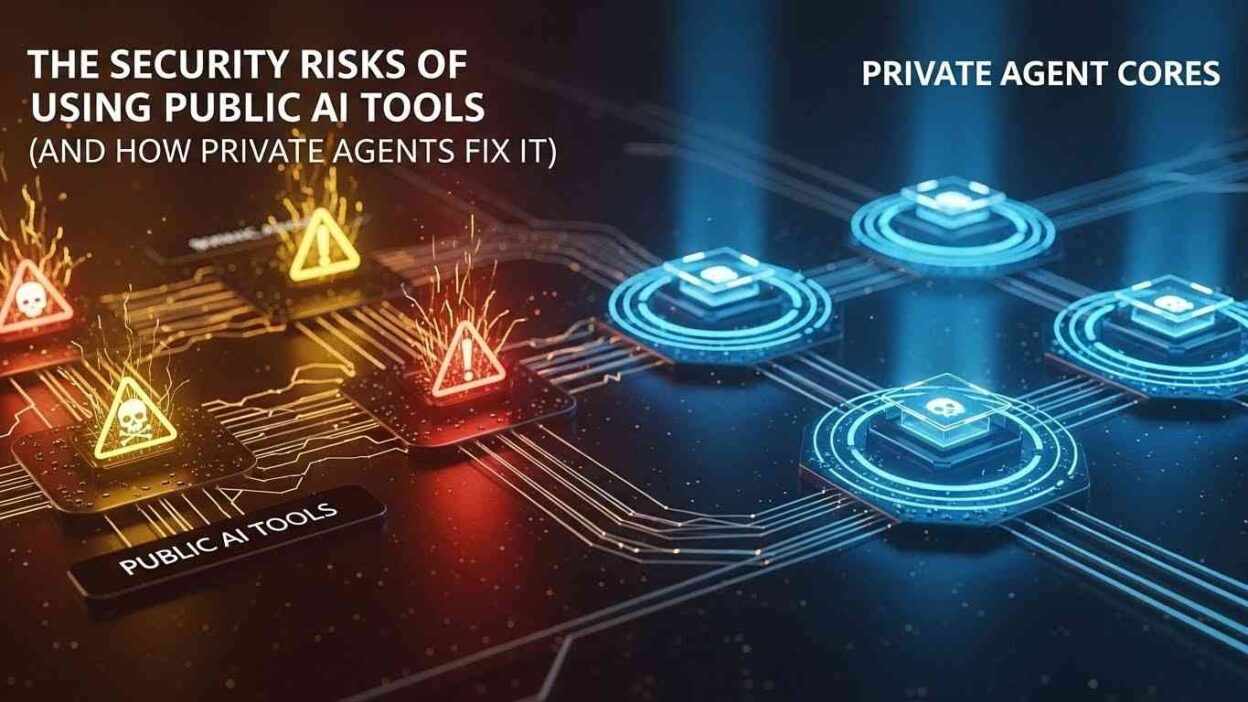
TL;DR Your employees copy sensitive data into ChatGPT daily. Proprietary code goes straight into public AI interfaces. Confidential customer information flows through open platforms. Every paste creates a permanent security vulnerability. Companies lose control of their most valuable assets without realizing the damage. Public AI tools security risks threaten businesses across every industry. The convenience of free AI comes with hidden costs that could destroy your company. Let’s examine the real dangers lurking in public AI platforms.
Table of Contents
The Explosive Growth of Public AI Tool Usage
ChatGPT reached 100 million users faster than any application in history. Employees discovered productivity gains through AI assistance. Complex tasks suddenly required minutes instead of hours. The efficiency improvements felt transformative. Management rarely noticed the adoption happening beneath them.
Google Bard, Claude, and countless other platforms joined the race. Workers now juggle multiple AI tools simultaneously. Marketing teams draft campaigns using public interfaces. Developers debug code through open chatbots. Finance professionals analyze sensitive data in shared environments. The usage spread organically without proper oversight.
Shadow IT haunts modern organizations silently. Employees bypass official software approval processes. Free AI tools require no purchase orders or approvals. Teams start using powerful capabilities immediately. IT departments discover the usage months later. The data already left your secure perimeter.
Remote work accelerated this uncontrolled adoption. Home networks lack enterprise security controls. Personal devices access company information freely. Employees see no difference between sanctioned and unsanctioned tools. The boundaries between personal and professional computing dissolved. Your intellectual property exists on servers you don’t control.
Understanding Public AI Tools Security Risks
Public AI platforms collect every query you submit. Your prompts become training data for future models. Competitors might benefit from your strategic thinking. Sensitive business logic trains algorithms you don’t own. The platforms retain rights to your inputs indefinitely.
Data storage locations remain opaque to users. Cloud servers might sit in foreign jurisdictions. Legal protections vary dramatically across countries. Governments can potentially access stored information. Your confidential data might face unexpected exposure. Compliance teams cannot audit what they cannot see.
Third-party integrations multiply the risk factors. Public AI tools connect with numerous external services. Each integration creates another potential breach point. APIs share data across interconnected systems. The attack surface expands beyond the original platform. Hackers target the weakest link in the chain.
Employee behavior creates the most significant vulnerability. People paste entire documents without reviewing content. API keys and passwords accidentally get included. Customer databases get uploaded for analysis. The convenience blinds users to security implications. One careless moment can trigger massive breaches.
Data Privacy Violations
Public AI tools security risks include severe privacy breaches. Personal information of customers enters public systems. GDPR violations occur without employee awareness. Healthcare providers accidentally share protected health information. Financial institutions expose account details unknowingly. The liability falls on your organization regardless of intent.
User consent becomes impossible to obtain retroactively. Customers never agreed to AI processing of their data. Privacy policies don’t cover third-party AI usage. Your organization violates its own terms of service. Legal consequences arrive long after the damage occurs. Class action lawsuits can destroy company reputations.
Data residency requirements get completely ignored. European data must stay within EU borders legally. Asian countries mandate local data storage increasingly. Public AI tools store information globally without distinction. Your company breaks laws in multiple jurisdictions simultaneously. The fines accumulate faster than you can track them.
Children’s data receives special legal protections. Schools upload student information to public platforms. COPPA violations carry severe penalties. Educational institutions face lawsuits from concerned parents. The reputational damage extends beyond financial costs. Trust takes years to rebuild once broken.
Intellectual Property Theft
Patents pending get disclosed prematurely through public queries. Employees describe innovations while seeking AI assistance. Prior art searches suddenly become public knowledge. Your competitive advantage evaporates before protection arrives. Competitors monitor AI platforms for strategic intelligence. They discover your plans before you execute them.
Trade secrets lose legal protection after public disclosure. Manufacturing processes described in prompts become available. Proprietary algorithms get explained to public systems. The secrecy requirement for trade secret status disappears. Your legal remedies vanish with the disclosure. Competitors can freely use your innovations.
Copyright implications remain murky and evolving. AI models train on copyrighted material regularly. Your creative work might appear in competitor outputs. Attribution becomes impossible to track or enforce. The legal frameworks lag behind technological capabilities. Courts struggle to apply existing laws to AI scenarios.
Source code represents particularly vulnerable intellectual property. Developers paste functions for debugging assistance. Entire codebases get uploaded for optimization suggestions. Public AI tools security risks include code theft specifically. Your software architecture becomes publicly accessible. Hackers gain insights into your security implementations.
Compliance and Regulatory Violations
Financial services face strict data handling requirements. Public AI tools violate SOX compliance easily. Banking regulations prohibit sharing customer financial data. Securities laws restrict information disclosure timing. Your organization faces regulatory sanctions automatically. Compliance officers discover violations during routine audits.
Healthcare providers must maintain HIPAA compliance strictly. Patient information shared with public AI breaks federal law. The penalties range from fines to criminal prosecution. Medical licenses can face suspension or revocation. Insurance refuses to cover intentional compliance violations. The costs extend far beyond initial fines.
Government contractors handle classified and controlled information. ITAR regulations prohibit foreign access to defense data. Public AI servers might sit in adversarial nations. Your contract gets terminated for security violations. Debarment prevents future government work entirely. The business consequences prove catastrophic.
Industry-specific regulations add additional complexity. Payment card industry standards govern credit card data. Energy sector regulations control critical infrastructure information. Telecommunications companies face strict privacy requirements. Public AI tools security risks violate multiple frameworks simultaneously. The regulatory burden becomes overwhelming quickly.
How Public AI Platforms Handle Your Data
Most platforms claim they don’t train on your conversations. The privacy policies contain important exceptions. Enterprise agreements differ from free user terms. The distinctions confuse even careful readers. Marketing messages rarely match legal reality. Your data might receive different treatment than advertised.
Retention periods vary across different platforms. Some keep conversations indefinitely by default. Others claim to delete after specific timeframes. The actual deletion practices remain unverifiable. Backup systems might retain data longer. Recovery becomes impossible once you lose access.
Employee access to your conversations creates risks. Platform staff might review flagged content manually. Customer support can read your conversation history. Security teams analyze patterns in user queries. Your sensitive business discussions have human audiences. The privacy you assumed never actually existed.
API logging captures every interaction silently. Developers need logs for debugging and optimization. The logs contain your complete prompt history. Storage locations and access controls remain unknown. Your API usage creates a permanent record. The audit trail exists outside your control.
Data Sharing with Third Parties
Advertising networks receive anonymized usage data. The anonymization proves reversible with additional information. Your query patterns get sold to marketing platforms. Competitors might target you based on AI usage. The data monetization happens without explicit consent. Your queries generate revenue for platform owners.
Research partnerships share data with academic institutions. Scientists study user behavior and query patterns. Your business strategies become academic research subjects. Published papers might describe your specific use cases. The anonymization provides limited actual protection. Competitors read the same research publications.
Government requests for data happen regularly. National security letters demand user information. International law enforcement agencies issue requests. The platforms comply with legal requirements. Your sensitive queries might face government scrutiny. The disclosure happens without notification to you.
Acquisition or bankruptcy changes everything. New owners gain access to historical data. Privacy policies can change retroactively. Your data becomes an asset in corporate transactions. The control you never had becomes even more theoretical. Previous commitments might not survive ownership changes.
Real-World Security Breach Examples
Samsung employees leaked confidential source code accidentally. Engineers used ChatGPT for code optimization assistance. Proprietary semiconductor designs entered public systems. The company immediately banned ChatGPT usage. The damage already occurred before the policy existed. Competitors potentially gained years of research value.
A major law firm exposed client privileged communications. Associates drafted legal documents using public AI. Attorney-client privilege faced serious legal questions. The firm faced potential malpractice lawsuits. Bar associations investigated ethical violations. The reputation damage exceeded any single case value.
Healthcare providers accidentally shared patient diagnoses. Medical staff sought second opinions from AI tools. Protected health information flowed to public platforms. HIPAA violations numbered in the thousands. Federal investigations launched automatically. The settlement costs reached tens of millions.
Financial advisors disclosed client portfolio information. Investment strategies got analyzed by public AI. Insider trading concerns emerged from the disclosures. SEC investigations examined the information flows. Trading licenses faced potential suspension. Client lawsuits claimed breach of fiduciary duty.
The Hidden Costs of Public AI Tool Usage
Direct financial losses from breaches devastate balance sheets. Data breach costs average $4.45 million per incident. Legal fees multiply rapidly with regulatory investigations. Settlement payments drag on for years. Insurance coverage rarely covers intentional violations. The total costs often exceed annual revenues.
Reputation damage lingers far longer than immediate costs. Customer trust evaporates after security incidents. Media coverage amplifies the negative perception. Potential customers choose competitors instinctively. Recruiting top talent becomes significantly harder. The brand value decline proves difficult to quantify.
Competitive advantages disappear overnight completely. Public AI tools security risks include strategic exposure. Market positioning strategies become competitor knowledge. Product roadmaps leak before official announcements. Pricing strategies get revealed prematurely. The losses compound across multiple business dimensions.
Opportunity costs mount from lost business relationships. Enterprise customers demand strict security standards. Public AI usage disqualifies you from consideration. Government contracts require certified compliance. Partnership agreements include security requirements. Revenue opportunities vanish before sales conversations start.
Introduction to Private AI Agents
Private AI agents run within your secure infrastructure. The models operate on your own servers. No data ever leaves your controlled environment. Your IT team manages access and permissions. Security policies apply consistently throughout deployment. The architecture prioritizes data protection fundamentally.
Deployment options suit different organizational needs. On-premises installations provide maximum control. Private cloud instances balance flexibility and security. Hybrid models accommodate specific use cases. The choice depends on your risk tolerance. Each option eliminates public exposure completely.
Open-source models enable private deployment. LLaMA, Mistral, and Falcon run locally. Your team fine-tunes models on proprietary data. The training stays entirely within your systems. Performance matches or exceeds public alternatives. The capabilities continue improving rapidly.
Enterprise vendors offer managed private solutions. Azure OpenAI Service provides isolated instances. AWS Bedrock delivers secure AI capabilities. Google Cloud Vertex AI enables private deployments. The cloud providers handle infrastructure management. Your data remains isolated from other customers.
Key Features of Private AI Solutions
Network isolation prevents unauthorized data access. Private networks separate AI systems from internet. Firewall rules control all inbound connections. VPN requirements add authentication layers. The network architecture mirrors banking security. Only authorized personnel reach the systems.
Encryption protects data throughout its lifecycle. Data at rest uses enterprise-grade encryption. Communications encrypt using modern protocols. Key management follows security best practices. The encryption survives storage and transmission. Unauthorized access yields only encrypted data.
Access controls implement least privilege principles. Role-based permissions limit functionality access. Multi-factor authentication verifies user identities. Audit logs track every system interaction. The controls prevent insider threats effectively. Compliance teams gain complete visibility.
Data retention policies match your requirements. Automatic deletion occurs on defined schedules. Long-term storage accommodates legal needs. Backup systems follow the same security standards. Recovery procedures include security verification. The lifecycle management stays consistent.
Customization and Control Benefits
Fine-tuning creates domain-specific expertise. Your proprietary data trains the models. Industry terminology gets understood perfectly. Company-specific processes receive native support. The AI learns your business deeply. Performance exceeds generic public alternatives.
Prompt engineering optimizes organizational workflows. Templates ensure consistent quality outputs. Guardrails prevent inappropriate responses. The system aligns with company values. Customization reflects your unique requirements. Public tools cannot match this precision.
Integration with existing systems happens securely. CRM data enhances customer interactions. ERP systems provide operational context. Document repositories become queryable naturally. The integration respects security boundaries. Your tech stack works together seamlessly.
Model selection gives you architectural control. Different models suit different use cases. Smaller models run faster for simple tasks. Larger models handle complex reasoning. You balance cost and capability deliberately. Public platforms limit your choices.
Implementing Private AI Agents Successfully
Assessment starts with understanding your needs. Identify use cases with highest business value. Determine data sensitivity requirements clearly. Calculate acceptable cost thresholds realistically. The planning phase prevents expensive mistakes. Stakeholder buy-in requires concrete justifications.
Infrastructure planning considers current capabilities. Server capacity might require upgrades. GPU availability affects model selection. Network bandwidth impacts user experience. Storage systems must scale appropriately. The technical requirements vary significantly.
Security architecture design comes first. Define network segmentation carefully. Plan authentication mechanisms thoroughly. Design audit logging comprehensively. Consider disaster recovery scenarios. The security foundation supports everything else.
Vendor evaluation requires detailed comparisons. Assess technical capabilities objectively. Examine security certifications carefully. Review customer references thoroughly. Compare total cost of ownership. The selection impacts long-term success.
Migration Strategies from Public Tools
User education prevents resistance to change. Explain public AI tools security risks clearly. Demonstrate private alternative capabilities. Provide hands-on training sessions. Create internal champions organically. The cultural change requires patience.
Phased rollout minimizes disruption risks. Start with pilot programs in one department. Gather feedback and refine approaches. Expand gradually to additional teams. Monitor adoption metrics continuously. The incremental approach allows course corrections.
Policy development establishes clear boundaries. Define acceptable AI usage explicitly. Specify prohibited activities unambiguously. Document consequences for violations. Communicate policies regularly. The governance framework prevents future incidents.
Technical enforcement supplements policy guidance. Block access to public AI platforms. Deploy monitoring for unauthorized usage. Provide approved alternatives prominently. Make compliance easier than violations. The technical controls reinforce cultural changes.
Cost-Benefit Analysis of Private AI Solutions
Initial implementation costs appear significant. Hardware purchases require capital investment. Software licenses involve recurring expenses. Consulting services add professional fees. Training programs consume time and money. The upfront costs deter some organizations.
Operational expenses continue indefinitely. Cloud hosting incurs monthly charges. Maintenance requires dedicated personnel. Updates and patches need regular application. Energy costs for on-premises deployments. The ongoing costs require budget allocation.
Risk reduction delivers quantifiable value. Breach prevention saves millions in potential costs. Compliance violations get avoided completely. Intellectual property remains protected. Competitive advantages stay secure. The risk mitigation justifies significant investment.
Productivity gains offset implementation costs. Employees work faster with AI assistance. Decision-making improves with better insights. Innovation accelerates with secure experimentation. Customer service quality increases measurably. The productivity benefits compound annually.
Industry-Specific Security Requirements
Healthcare organizations face HIPAA mandates. Patient privacy requires absolute protection. Medical devices need FDA cybersecurity compliance. Research data has confidentiality requirements. Clinical trial information demands security. Private AI agents meet these standards.
Financial services navigate complex regulations. Customer financial data needs strict safeguards. Trading information has disclosure restrictions. Anti-money laundering systems require security. Fraud detection tools process sensitive data. Public AI tools security risks prove unacceptable.
Legal firms protect attorney-client privilege. Case strategies cannot enter public systems. Discovery documents contain confidential information. Negotiation positions must stay secret. Client identities deserve protection. Private deployment preserves legal protections.
Government agencies handle classified information. National security depends on data protection. Citizen privacy carries legal obligations. Critical infrastructure requires special security. Public AI tools violate clearance requirements. Private agents enable secure AI usage.
Future-Proofing Your AI Security Strategy
Regulatory landscapes evolve constantly. New laws address AI-specific concerns. Existing regulations get interpreted for AI contexts. International standards emerge gradually. Your security strategy must adapt. Private infrastructure provides flexibility.
AI capabilities advance rapidly. Model sizes grow exponentially. New architectures emerge regularly. Deployment options multiply continuously. Your infrastructure needs upgrading paths. Private systems offer controlled evolution.
Threat landscapes shift unpredictably. Hackers develop new attack methods. Social engineering tactics target AI systems. Adversarial attacks manipulate AI outputs. Your defenses require continuous improvement. Private deployment enables rapid responses.
Business needs change over time. Market conditions demand agility. Competitive pressures require innovation. Regulatory requirements become stricter. Your AI strategy must accommodate change. Private infrastructure adapts more easily.
Frequently Asked Questions
What are the biggest public AI tools security risks?
Data leakage represents the primary threat. Employees paste sensitive information into public interfaces. The platforms retain your data indefinitely. Training processes might expose your business intelligence. Intellectual property protection disappears completely. Compliance violations occur without employee awareness. Competitors potentially gain access to strategic information. The risks multiply across every business dimension.
How do private AI agents prevent data breaches?
Private agents run entirely within your infrastructure. No data ever leaves your controlled environment. Network isolation prevents external access. Encryption protects information throughout processing. Access controls limit who reaches the systems. Audit logs track every interaction. The architecture eliminates public exposure. Your IT team maintains complete control.
Are private AI solutions more expensive than public tools?
Initial costs exceed free public alternatives. Infrastructure requires capital investment. Ongoing maintenance adds operational expenses. The total cost of ownership includes personnel. Public AI tools security risks carry hidden costs. Breach expenses often exceed implementation budgets. Compliance violations result in massive fines. Private solutions prove cheaper long-term.
Can private AI agents match public tool capabilities?
Modern open-source models rival proprietary alternatives. LLaMA and Mistral deliver excellent performance. Fine-tuning on your data improves accuracy. Domain-specific training enhances relevance. Private deployments often outperform public tools. The customization creates superior experiences. Your use cases receive dedicated optimization.
How long does private AI implementation take?
Timeline varies by deployment complexity. Simple cloud instances launch within weeks. On-premises infrastructure requires several months. Custom integrations extend implementation periods. Organizational change management takes time. Pilot programs should run before full rollout. Expect three to six months typically.
Do employees resist switching from public to private AI?
Initial resistance happens frequently. Users enjoy the convenience of public tools. Change management strategies overcome objections. Demonstrating equivalent capabilities helps adoption. Explaining security risks motivates behavior change. Providing training ensures competence. Most employees adapt within weeks.
What compliance standards do private AI agents meet?
Private deployments support all major frameworks. HIPAA compliance becomes achievable with proper configuration. SOX requirements get satisfied through controls. GDPR mandates become enforceable practically. Industry-specific standards receive native support. Your compliance team controls the implementation. Auditors can verify security measures.
Can private AI systems integrate with existing tools?
Integration capabilities exceed public alternatives. Private APIs connect to any system. Authentication protocols match your standards. Data flows respect security boundaries. Custom connectors handle unique requirements. Your entire technology stack works together. The integration preserves security controls.
What happens if a private AI system gets breached?
Incident response follows your existing procedures. Containment happens within your infrastructure. Forensics examine internal systems exclusively. Notification requirements follow standard protocols. The breach scope stays limited. Recovery uses established processes. Private breaches prove easier to manage.
How do updates work for private AI models?
Update strategies depend on deployment type. Managed services receive automatic updates. Self-hosted systems require manual application. Security patches get prioritized appropriately. Feature updates follow testing protocols. Your team controls update timing. The process matches other infrastructure.
Read more:-Why Off-the-Shelf AI Tools Fail for Complex Business Workflows
Conclusion

Public AI tools security risks threaten every organization using them. Your employees paste sensitive data into shared platforms. Intellectual property flows to servers beyond your control. Competitors potentially access your strategic thinking. Regulatory violations occur without anyone noticing. The convenience masks catastrophic vulnerabilities.
Data breaches cost millions in direct expenses. Reputation damage extends far beyond immediate losses. Customer trust evaporates after security incidents. Partnership opportunities vanish from compliance failures. The hidden costs exceed most implementation budgets. Your business faces existential threats.
Private AI agents eliminate these security nightmares. Models run entirely within your infrastructure. Network isolation prevents unauthorized access. Encryption protects data throughout processing. Access controls limit system reach. Your IT team maintains complete control.
Implementation requires upfront investment and planning. Infrastructure costs prove significant initially. Operational expenses continue indefinitely. The effort demands executive commitment. Change management challenges arise naturally. Success requires organizational alignment.
The benefits justify the investment overwhelmingly. Breach prevention saves massive potential costs. Compliance violations get avoided completely. Intellectual property stays protected securely. Competitive advantages remain confidential. The risk reduction provides immense value.
Productivity gains offset implementation expenses. Employees work faster with AI assistance. Decision quality improves with secure insights. Innovation accelerates without security concerns. Customer service reaches new levels. The business benefits compound continuously.
Industry regulations increasingly mandate private solutions. Healthcare organizations cannot use public platforms. Financial services face strict requirements. Legal firms must protect privilege. Government agencies handle classified data. Private deployment becomes mandatory.
Future-proofing demands control over infrastructure. Regulatory landscapes evolve constantly. AI capabilities advance rapidly. Threat vectors multiply continuously. Your security needs will change. Private systems adapt more easily.
Take action now before incidents occur. Assess your current AI usage honestly. Identify public AI tools security risks specifically. Calculate potential breach costs realistically. Present findings to leadership clearly. Secure budget for private implementation.
Start with pilot programs in critical areas. Choose departments handling sensitive information. Deploy private agents to replace public tools. Gather feedback and refine approaches. Expand gradually across the organization. Monitor adoption metrics carefully.
Develop comprehensive governance policies. Define acceptable AI usage explicitly. Specify prohibited activities clearly. Document consequences for violations. Communicate regularly and consistently. Enforce policies technically where possible.
Your competitors already recognize these risks. Forward-thinking companies deployed private solutions. They gain competitive advantages safely. Their innovation happens without exposure. Market leaders protect their assets. The gap widens every quarter.
The choice seems obvious when examined carefully. Public AI tools create unacceptable risks. Private agents deliver equivalent capabilities. The security benefits prove invaluable. Your organization’s future depends on this. Make the transition before disasters strike.
Waiting guarantees eventual security incidents. Public AI tools security risks only increase. Adoption spreads without oversight currently. The exposure multiplies daily. Prevention costs less than recovery. Act decisively to protect your business.